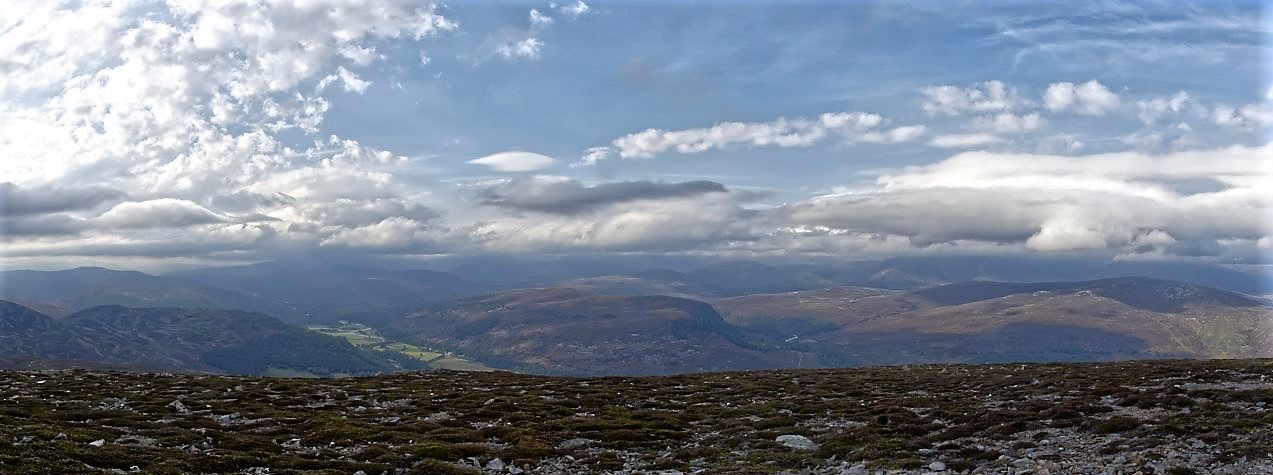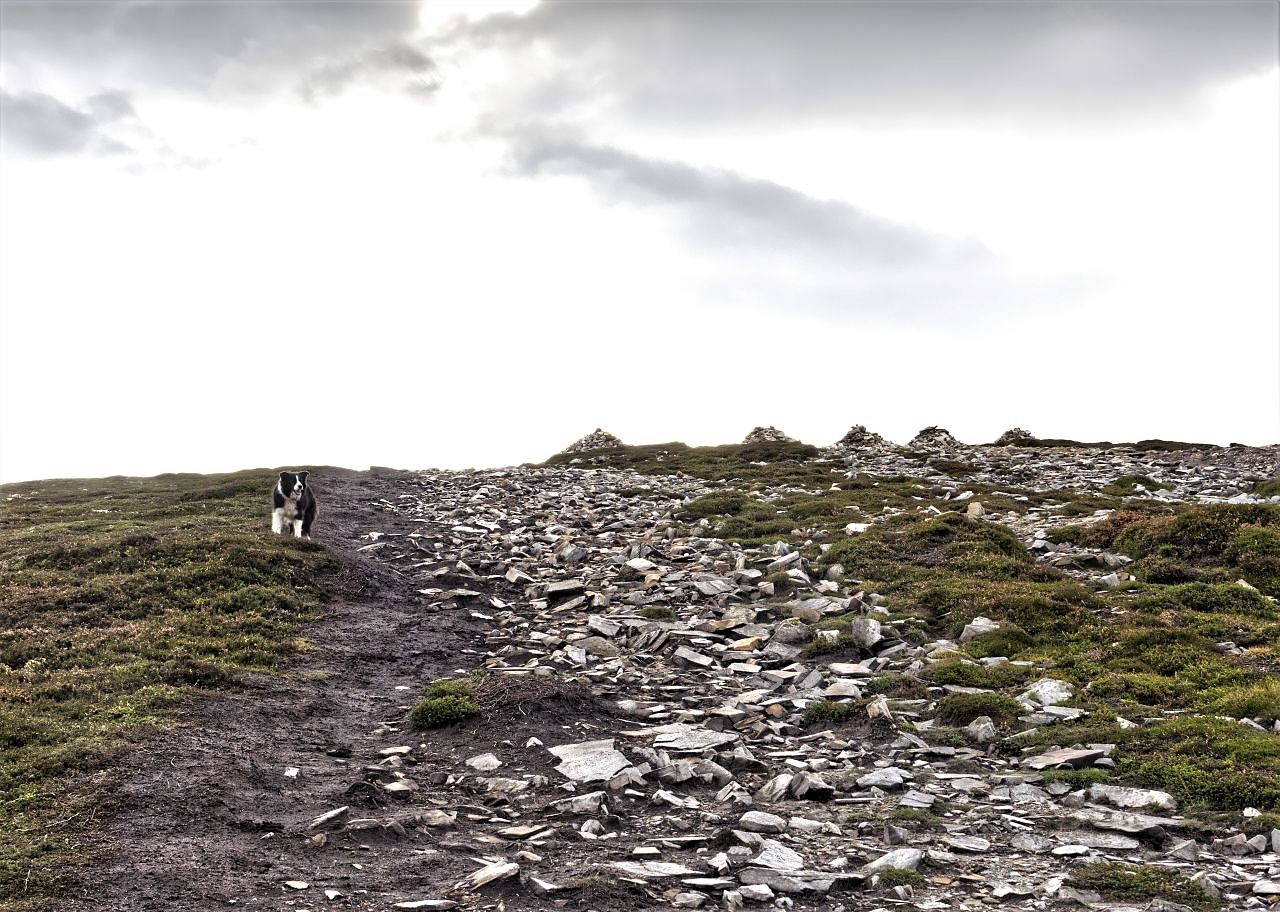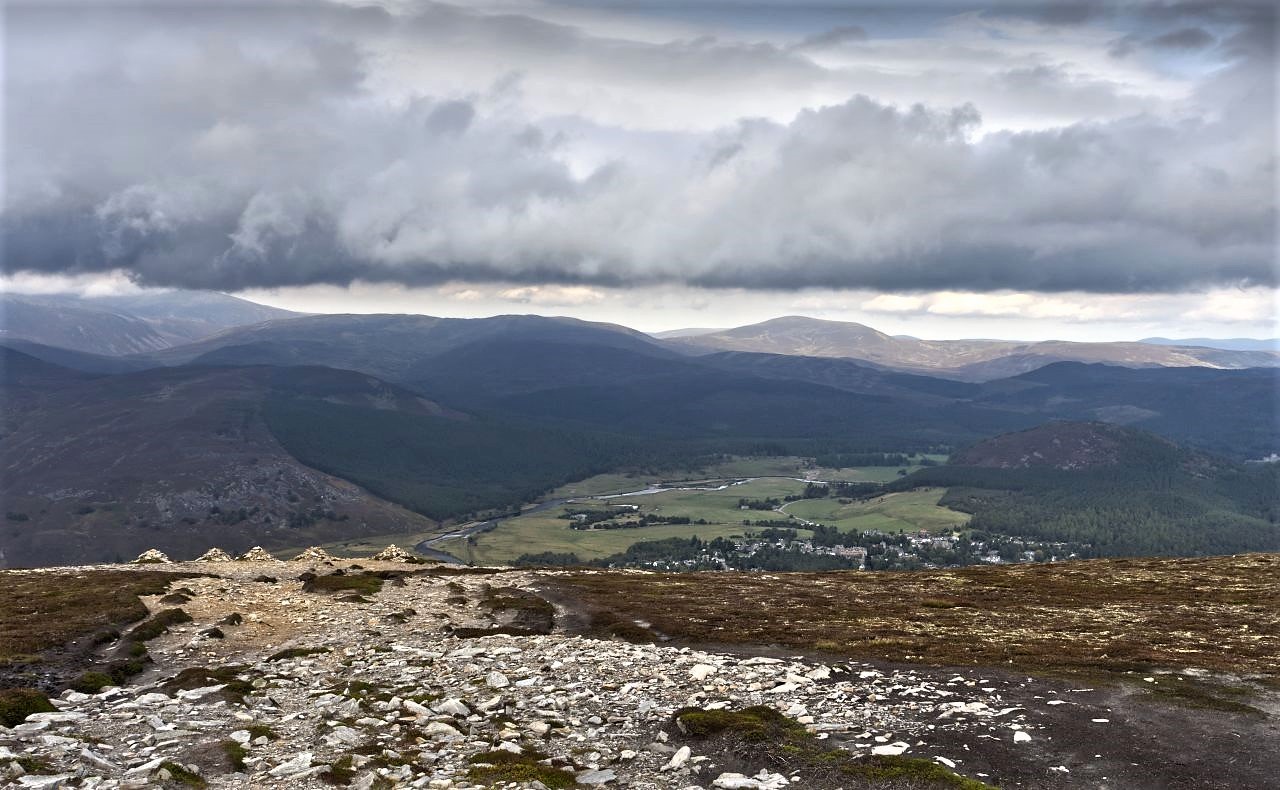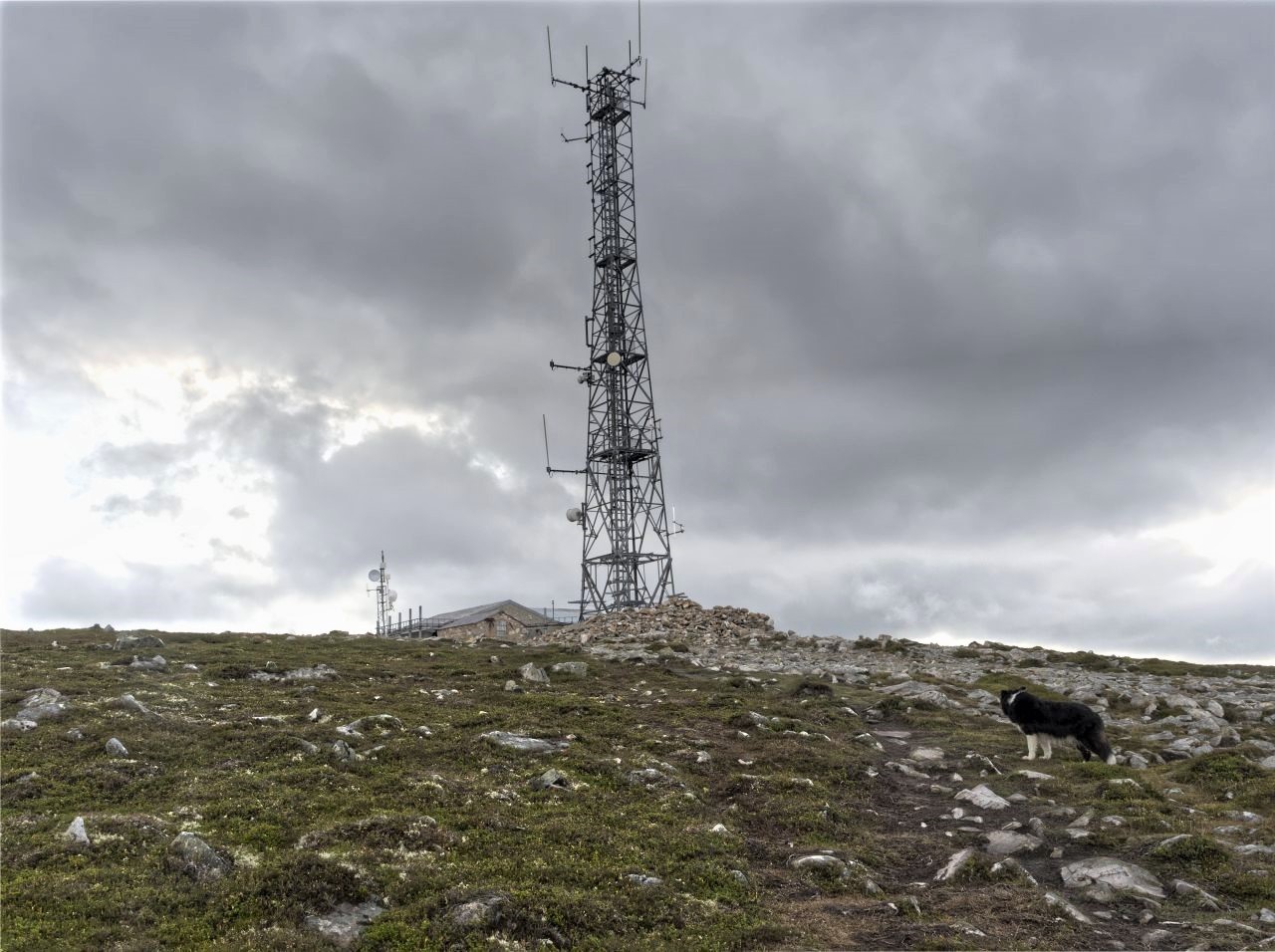
#289 – Cùl Mòr – A bit more Assynt

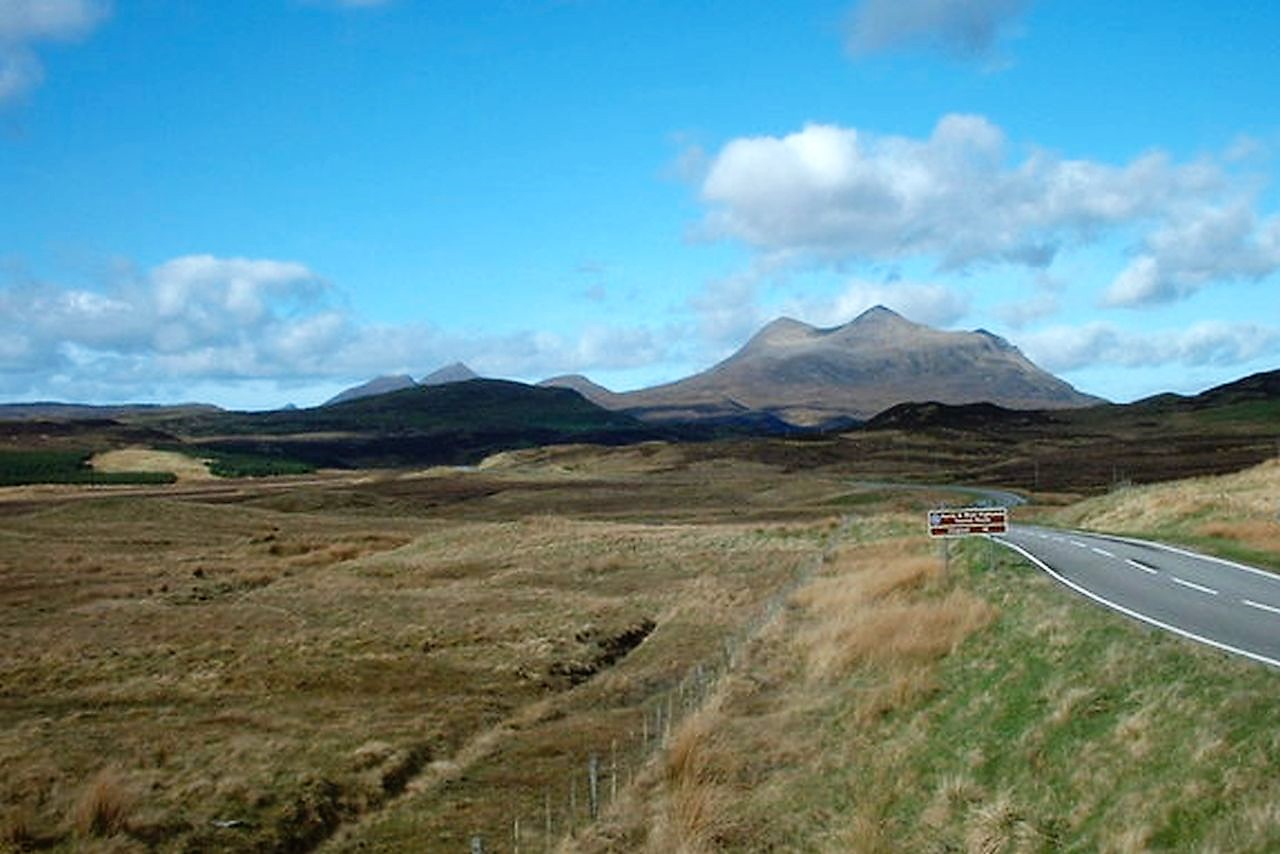
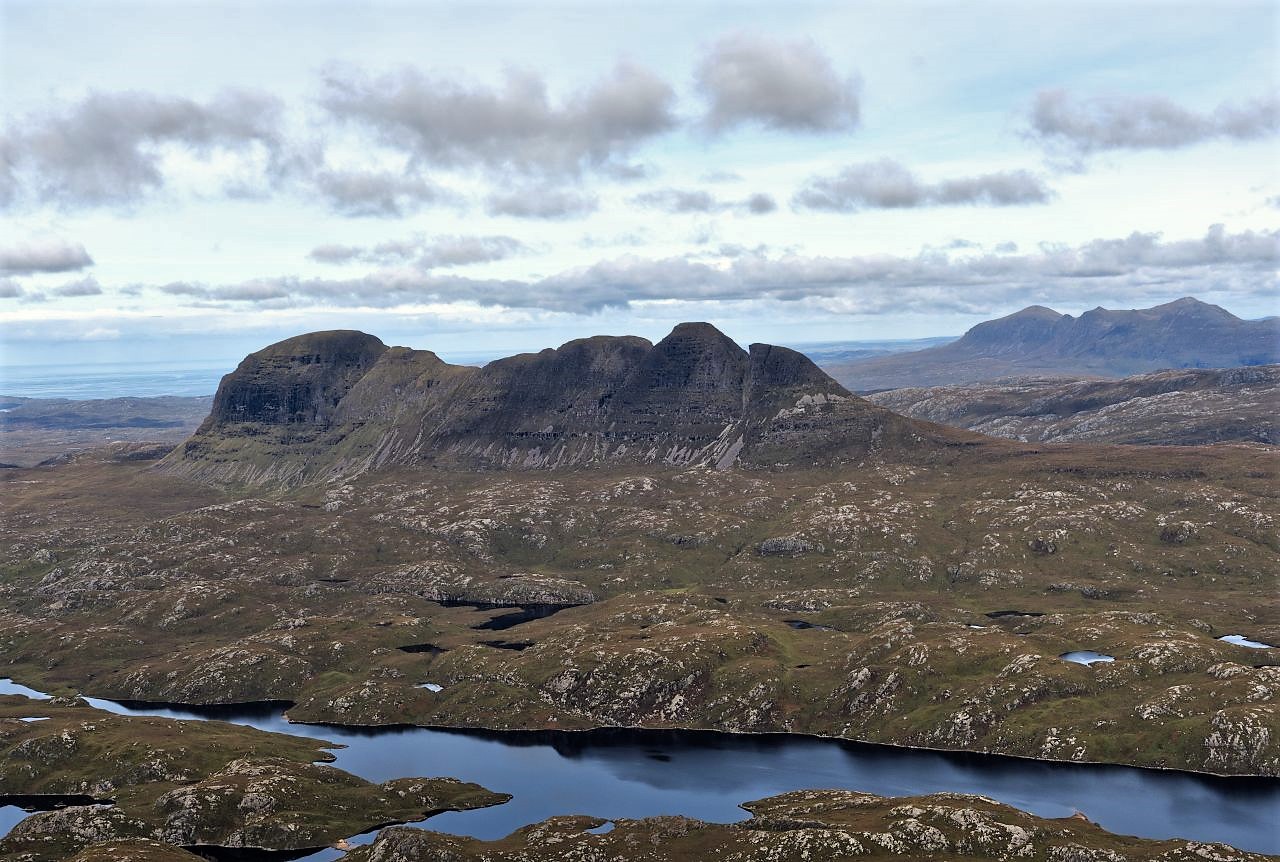
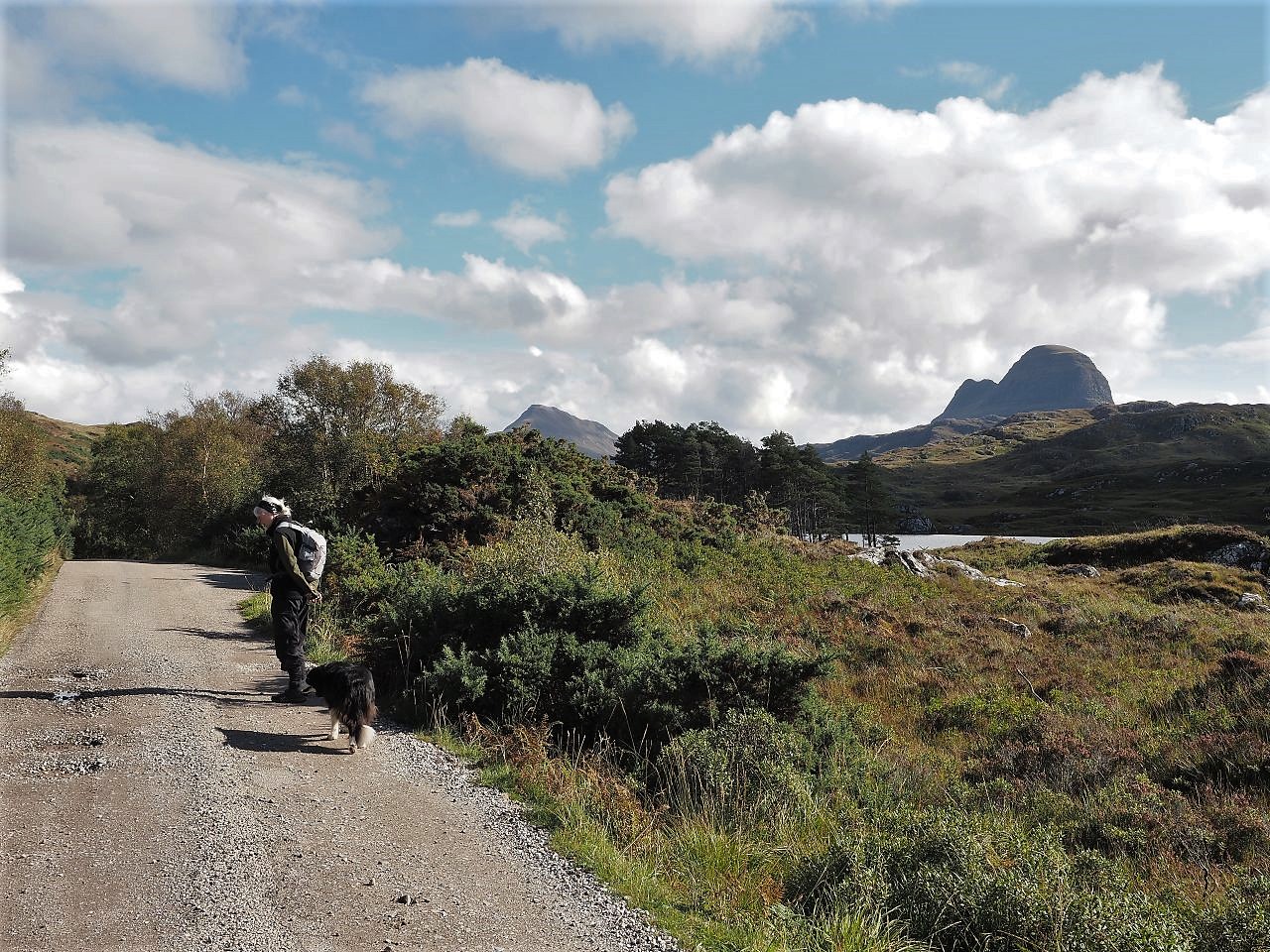
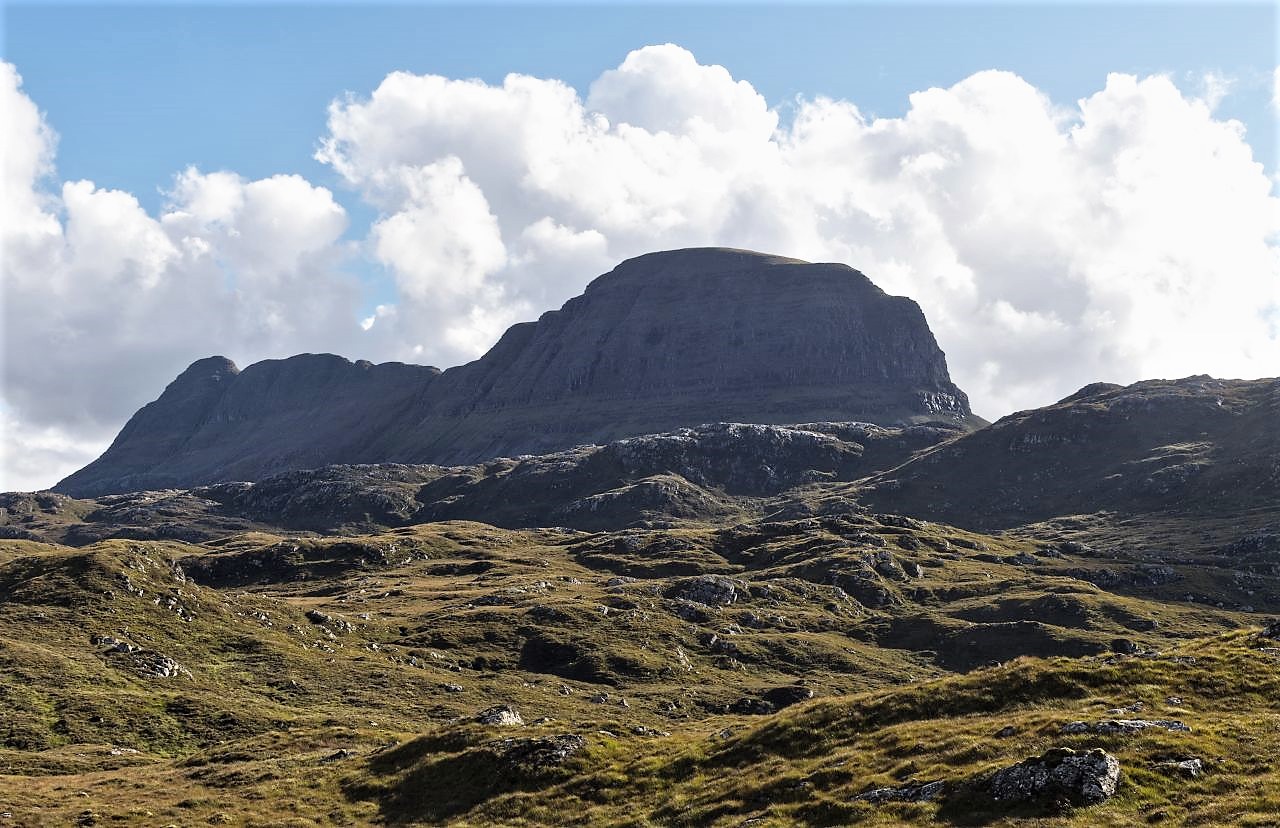
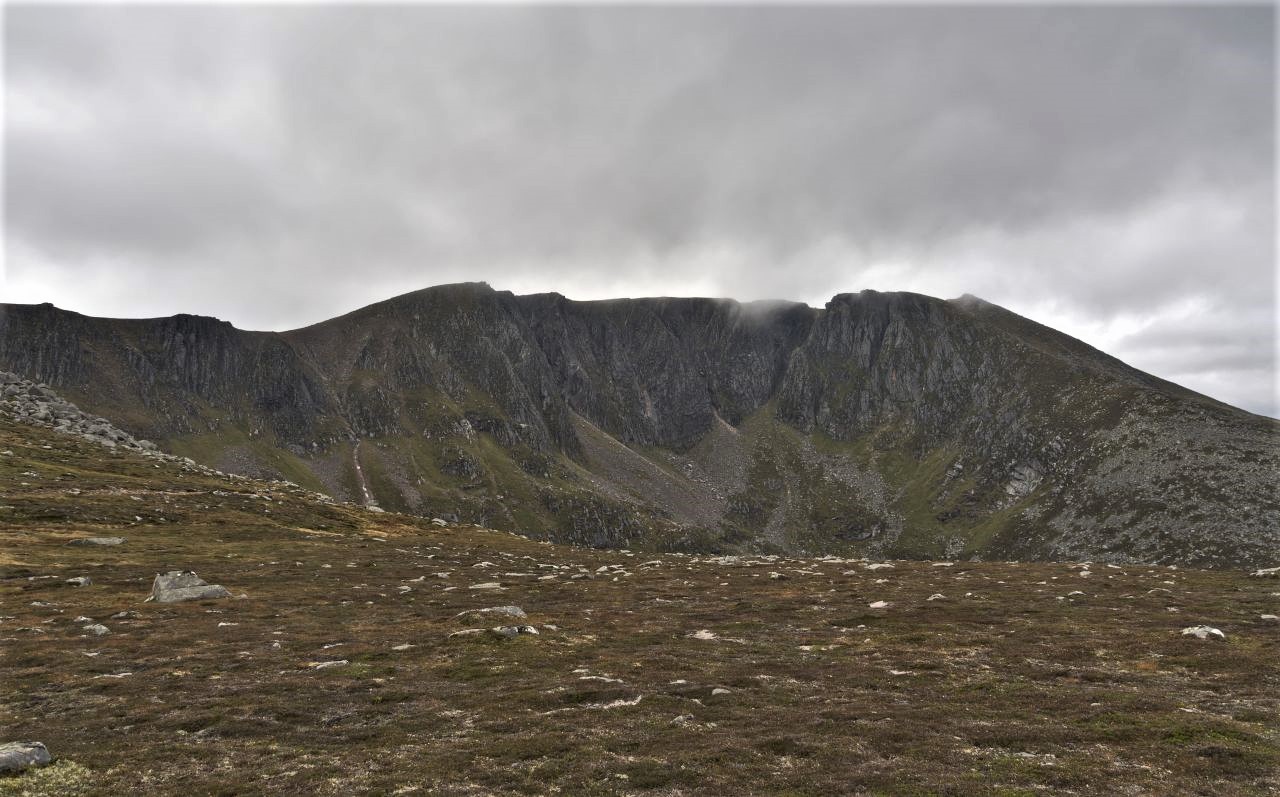
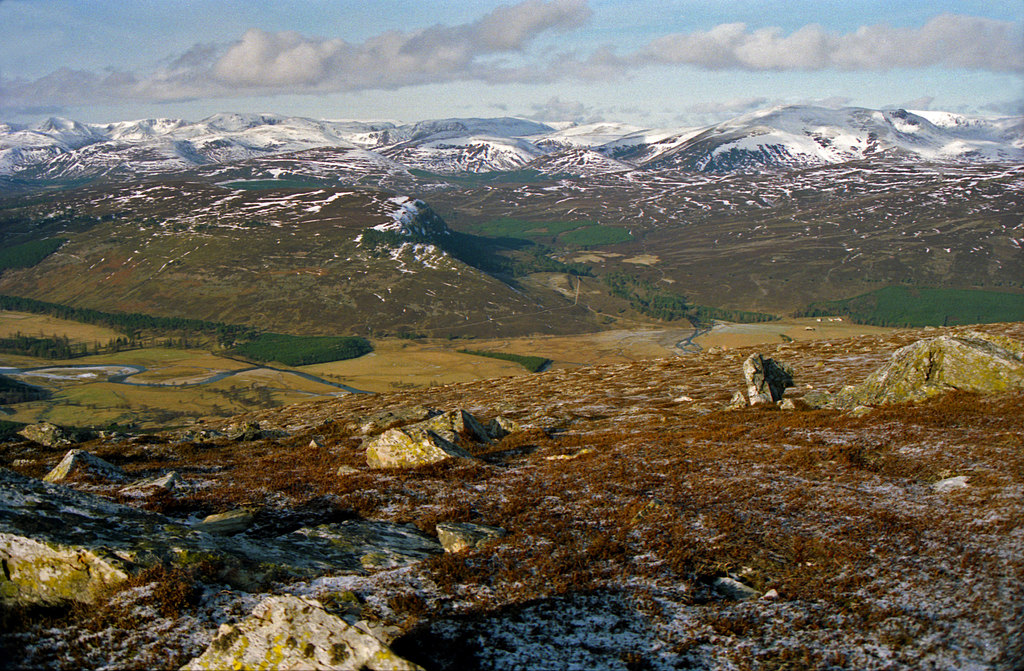
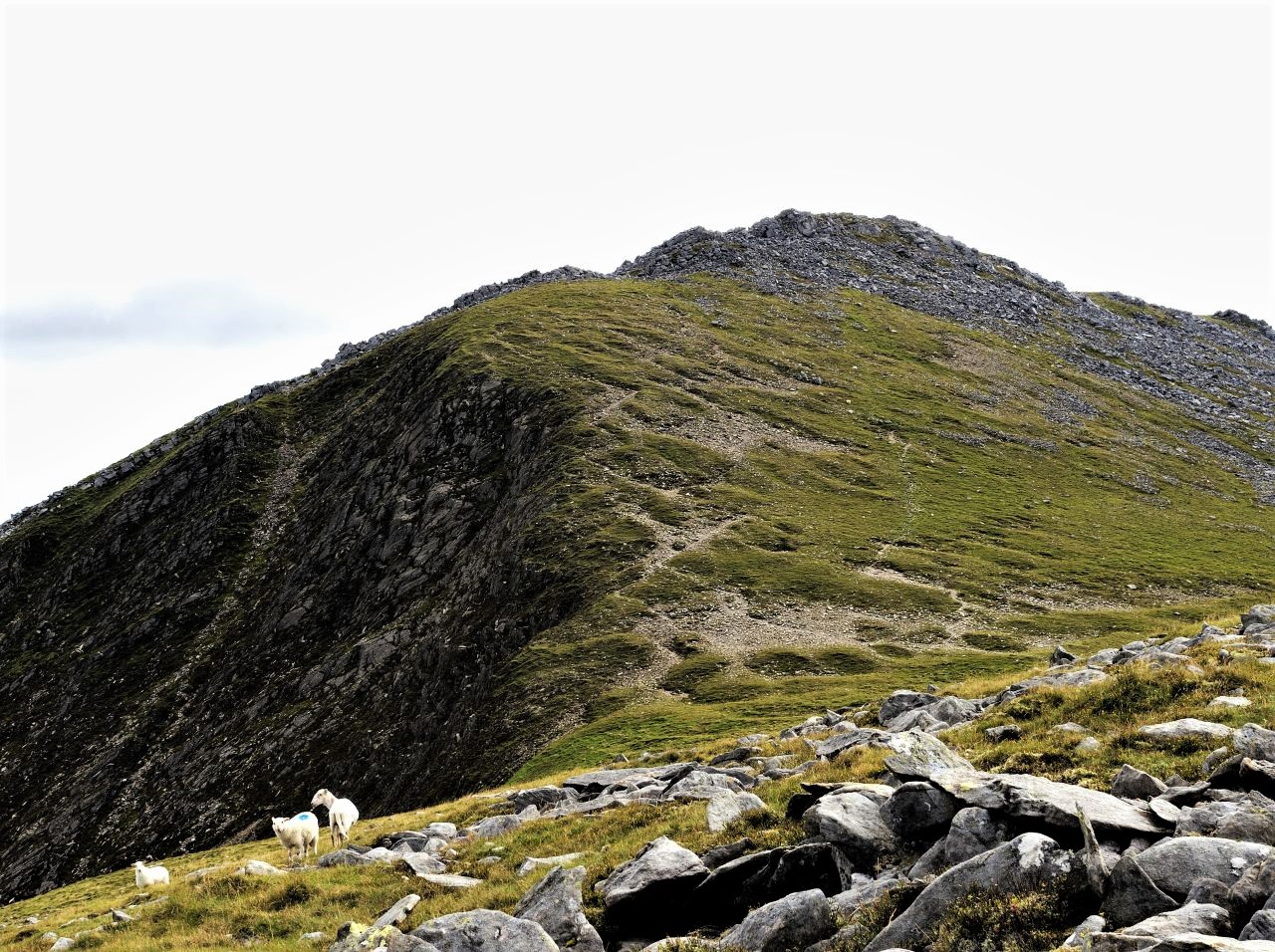
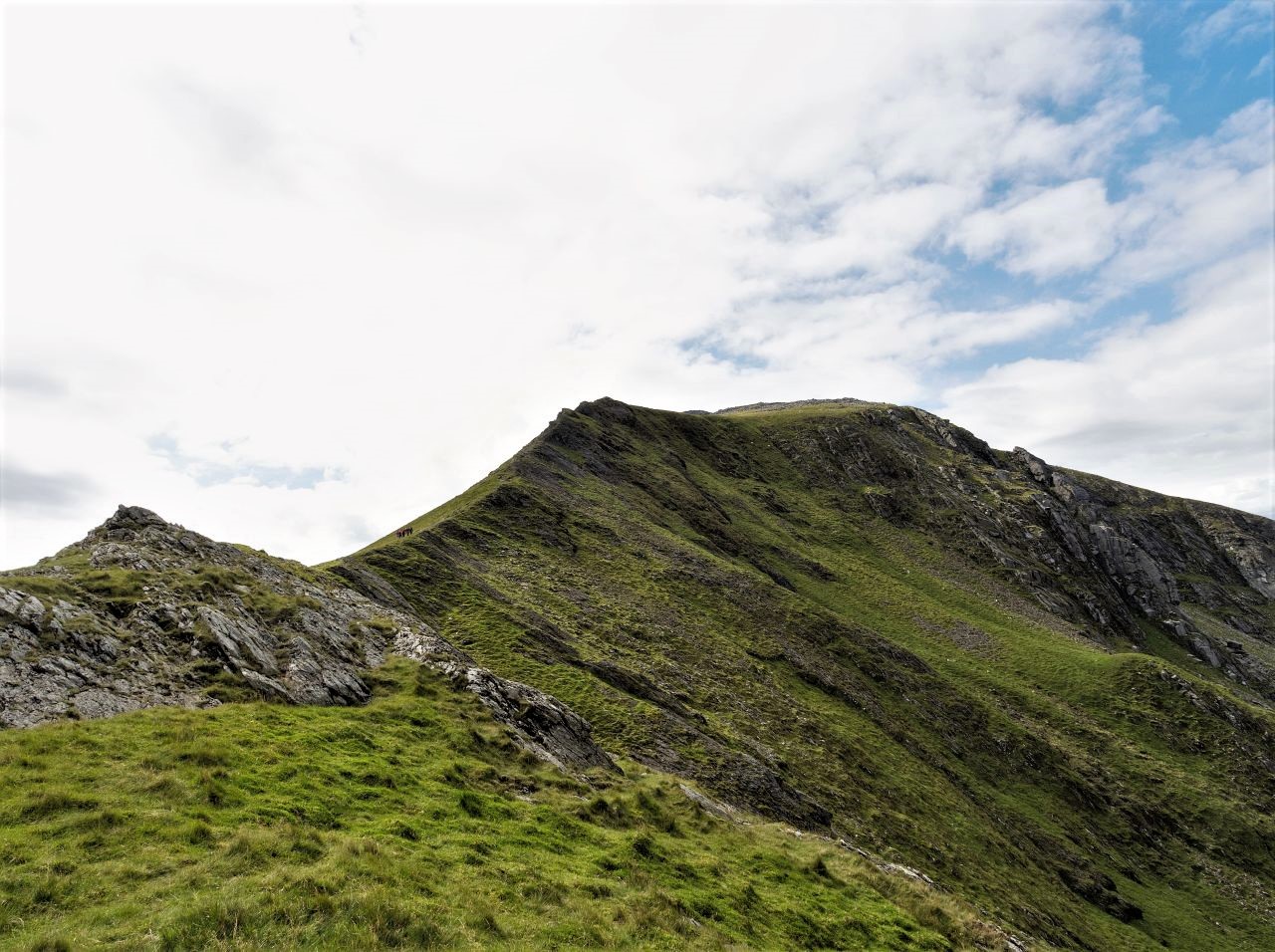
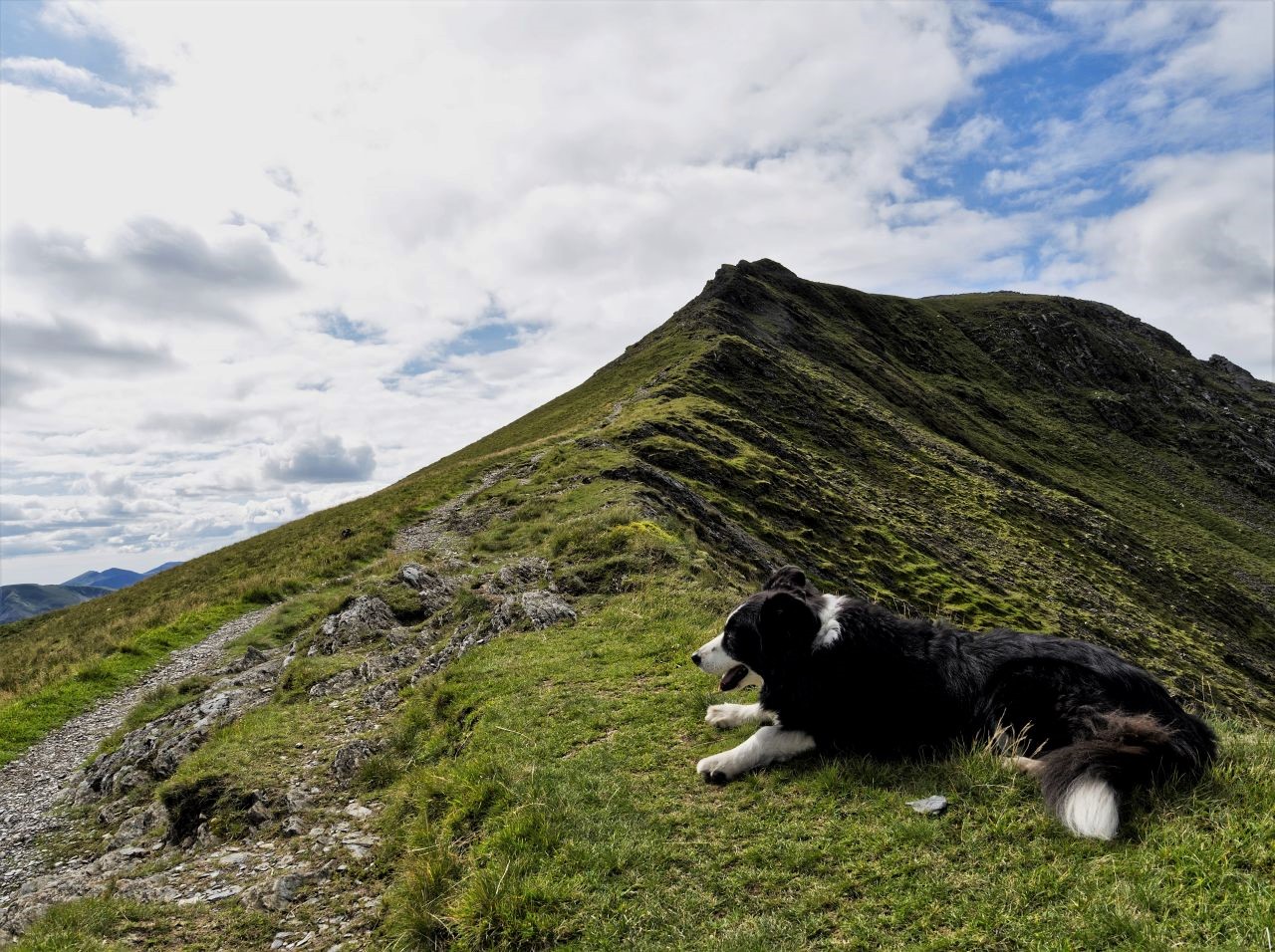
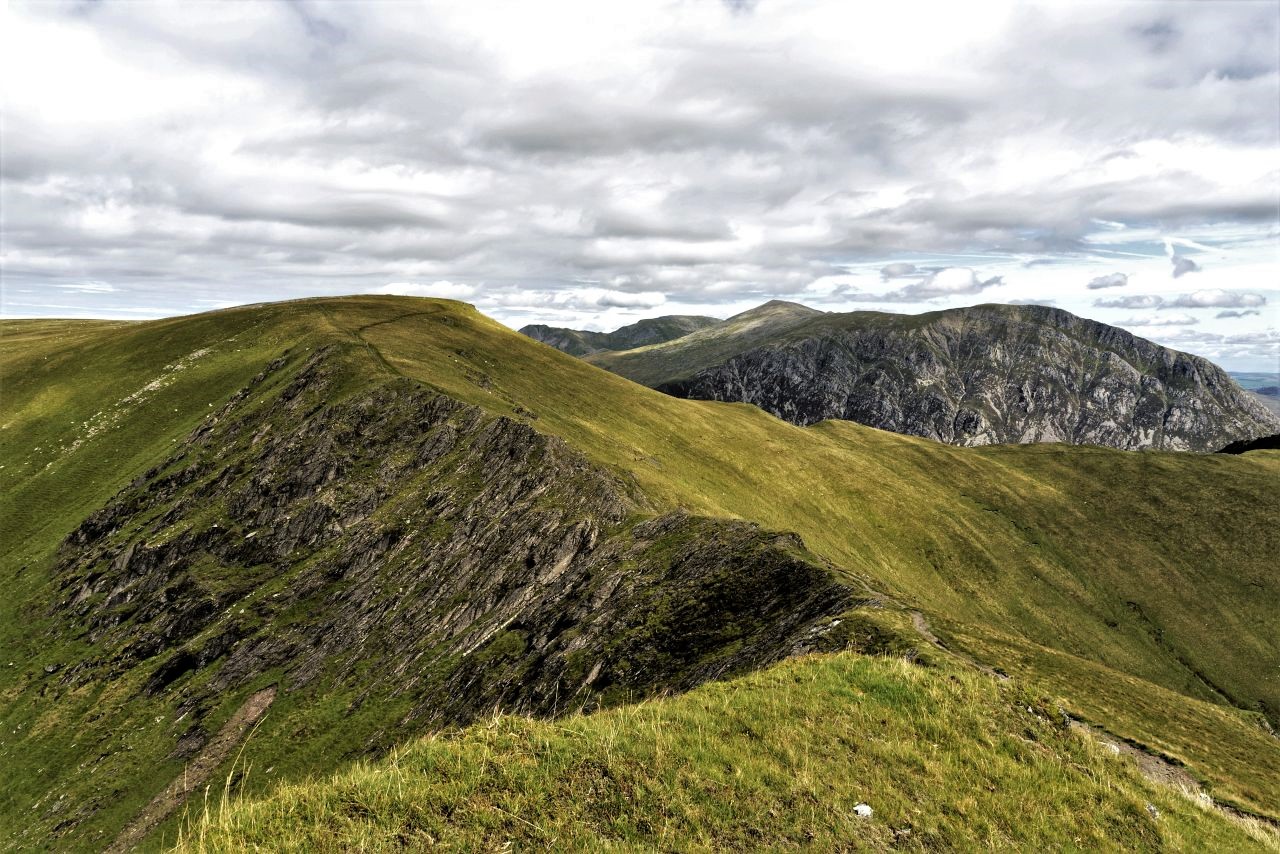
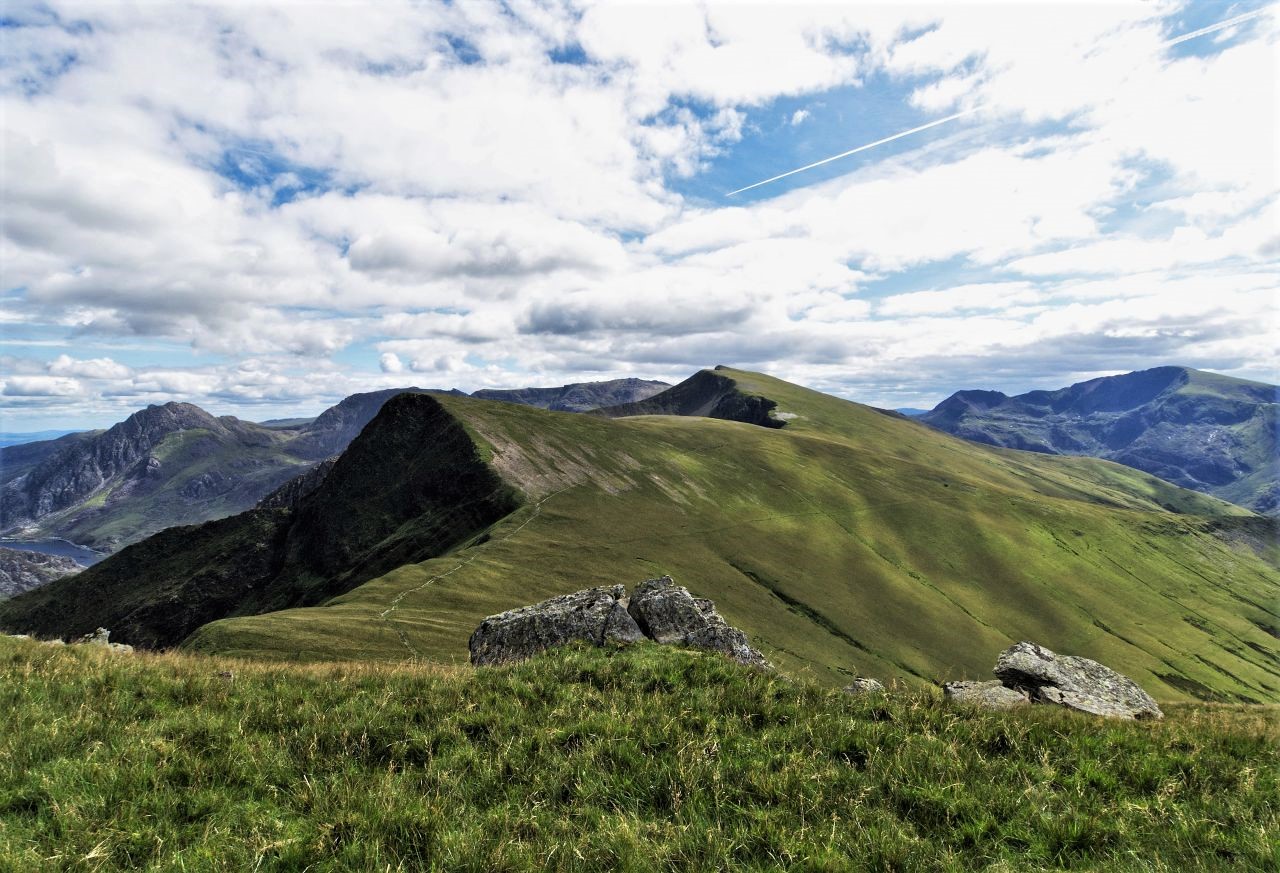
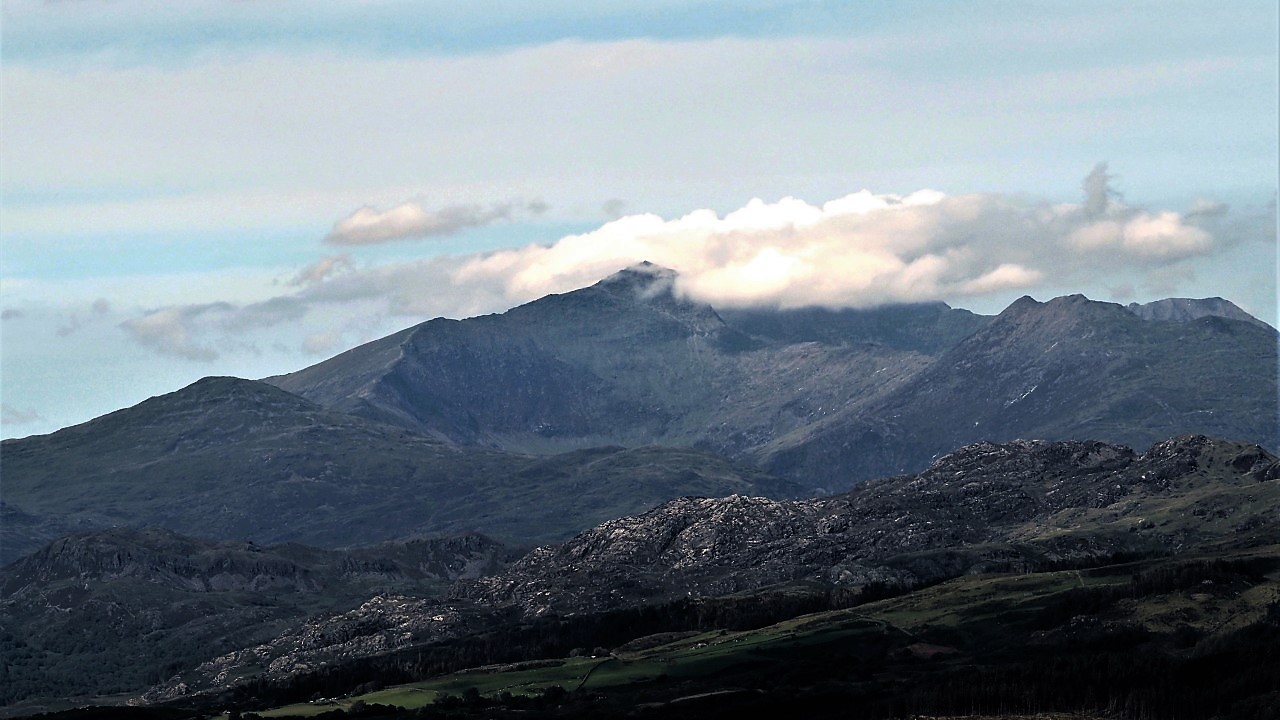
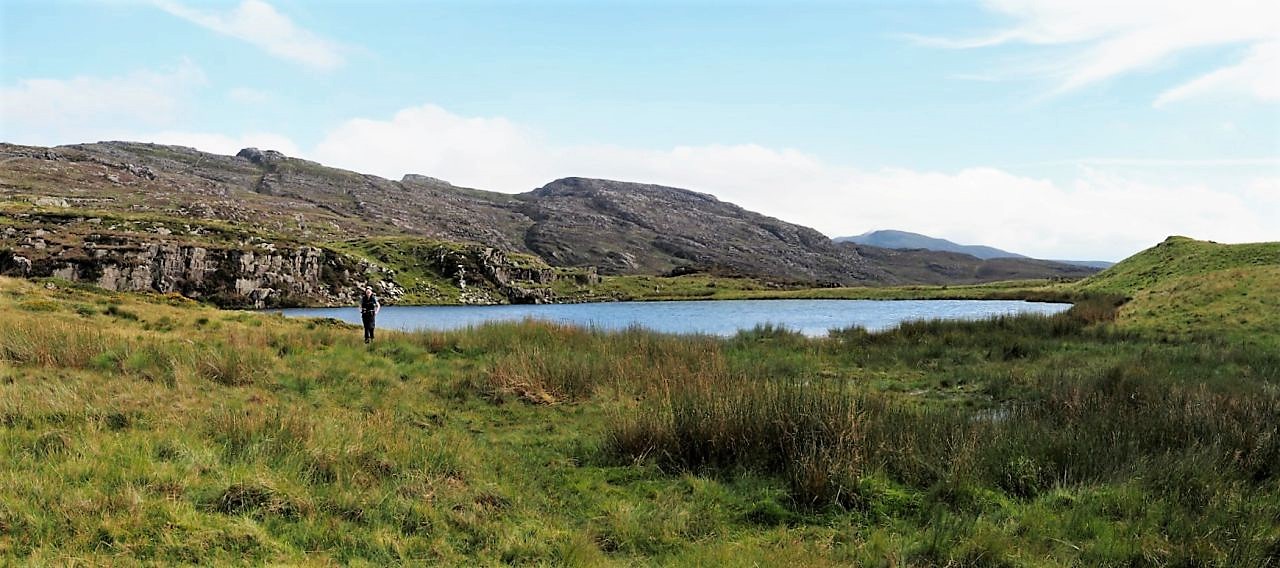
Cùl Mòr above the small lake of Lochan an Ais at Knockan Crag

(For the best viewing experience, left-click the images and maps to zoom in, then use your browser return arrow to go back – go on, it really does work!)

Assynt in North-West Scotland

The mountains of Assynt

It was a bit of a wrench to leave Assynt after several days stravaiging (a Scots word meaning ‘wandering’) but we hadn’t quite finished yet.   I fancied a longer mountain day, so it was time to visit new ground, and to grab a new peak – Cùl Mòr would do nicely, thank you!

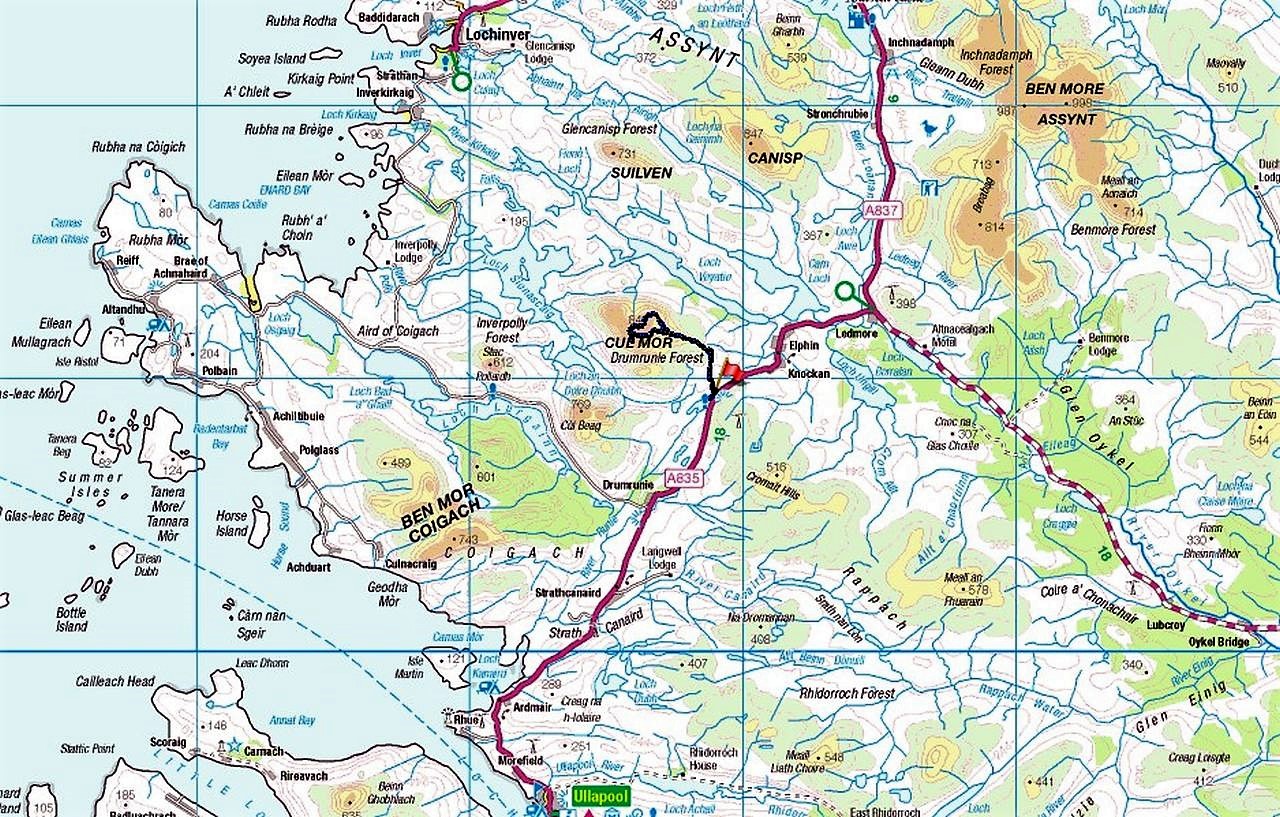
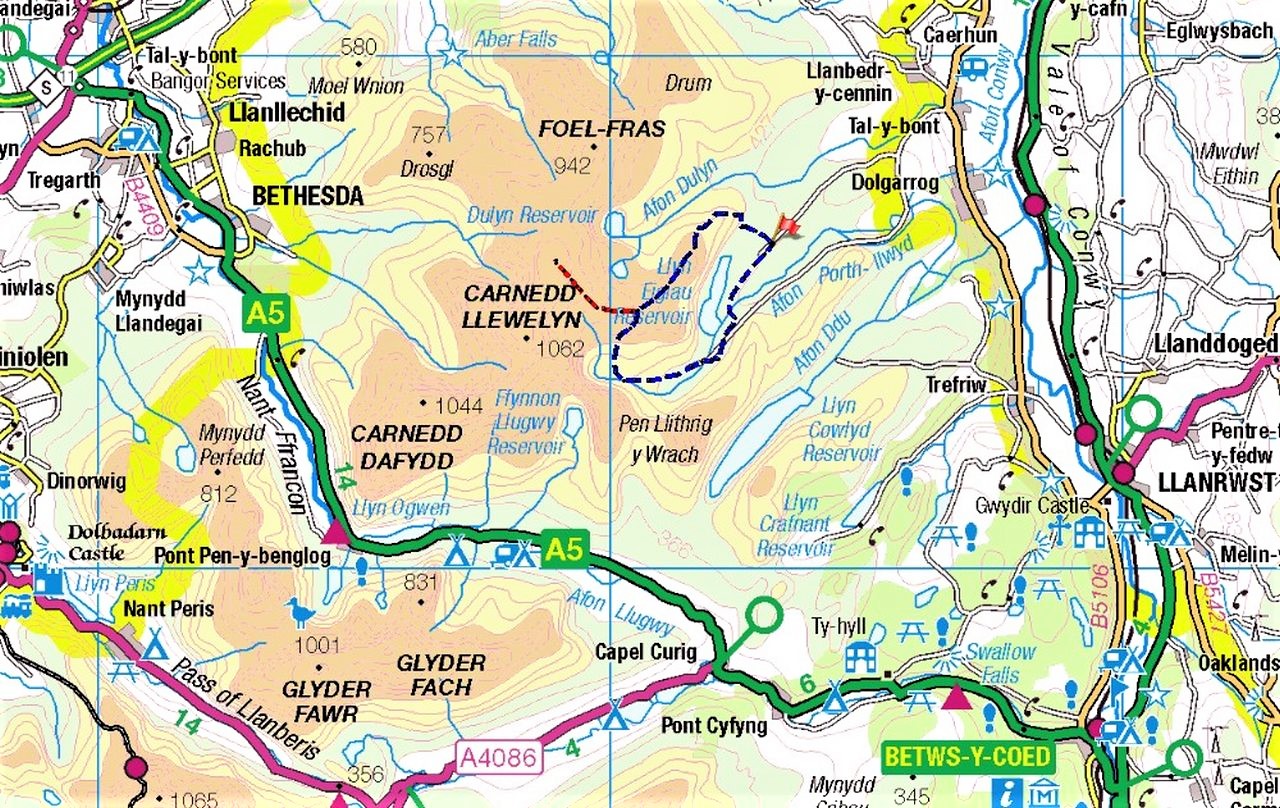
The Cùl Mòr route – clockwise round the two summits

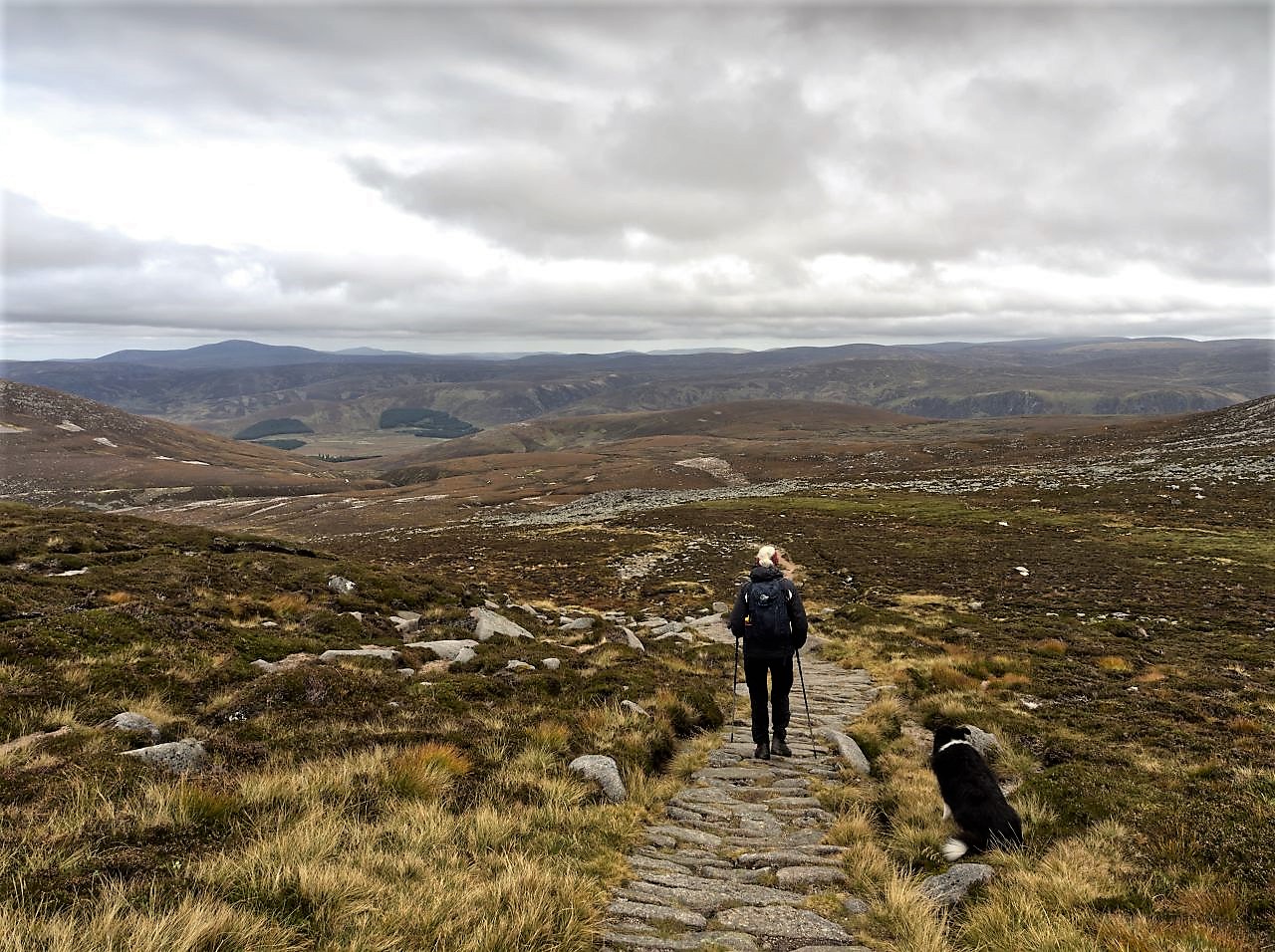
I usually go solo for the bigger, higher days, so Chris decided to take a wander around the nature reserve at Knockan Crag while I set off with Border Collie ‘Mist’ to Cùl Mòr – on the solo days I aim to go for ‘Further, Faster’, to pinch the Montane motto and, as usual, ‘Mist’ also seemed up for it.

Cùl Mòr seen from the A835 – proof that the sun does shine occasionally in Scotland! © C Mackay

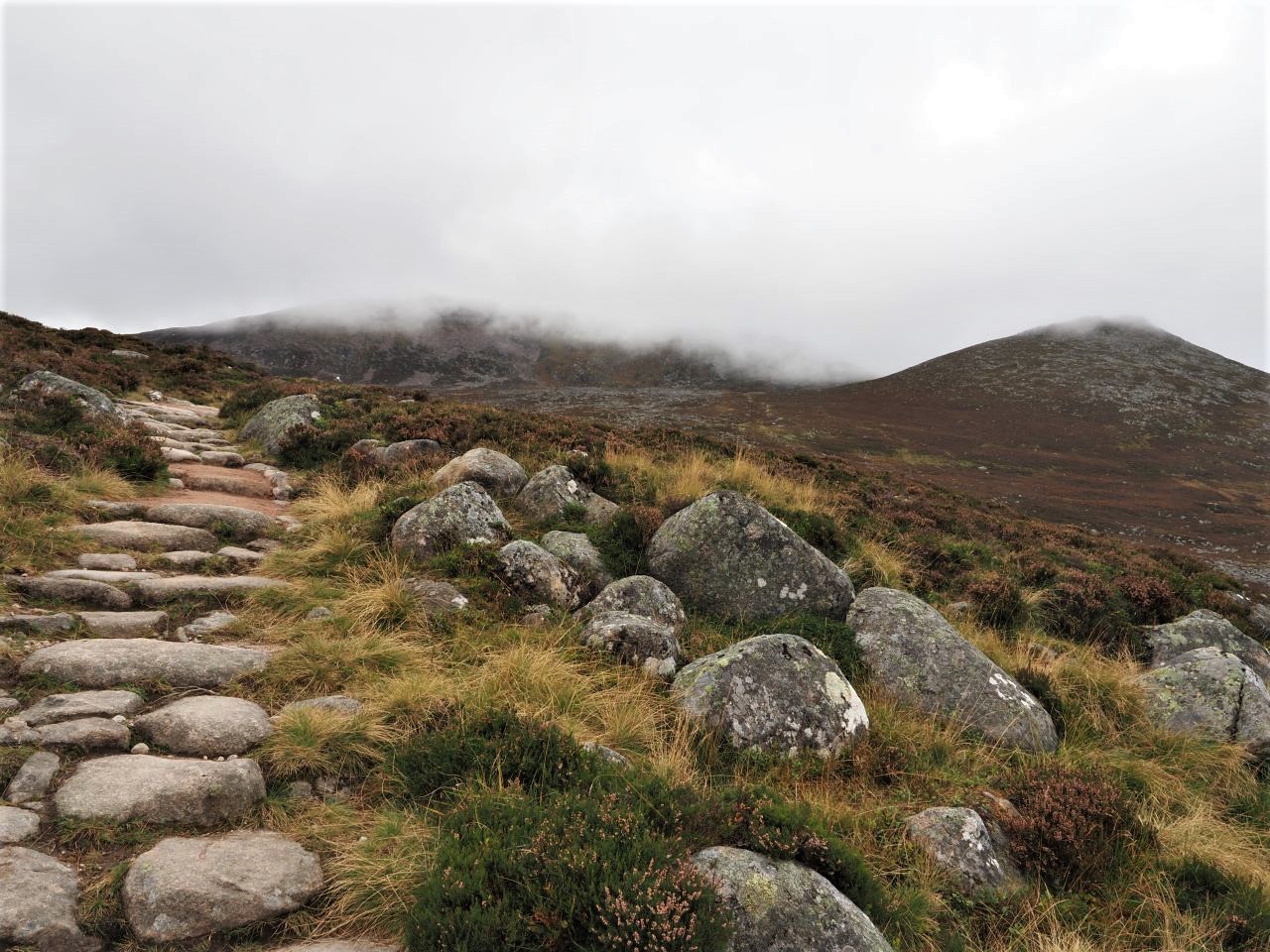
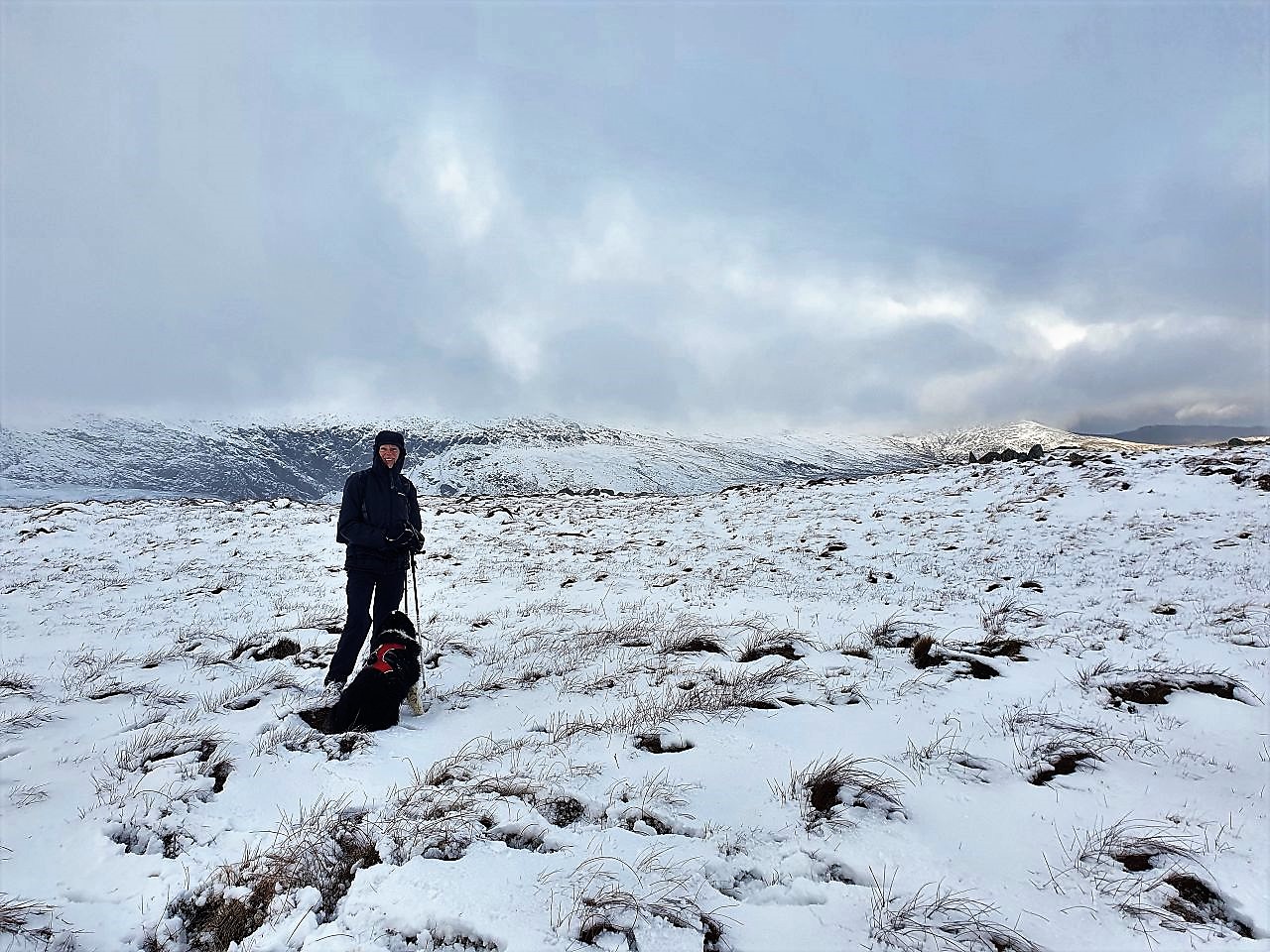
Not quite as sunny on my trip – soon after setting out from Knockan Crag

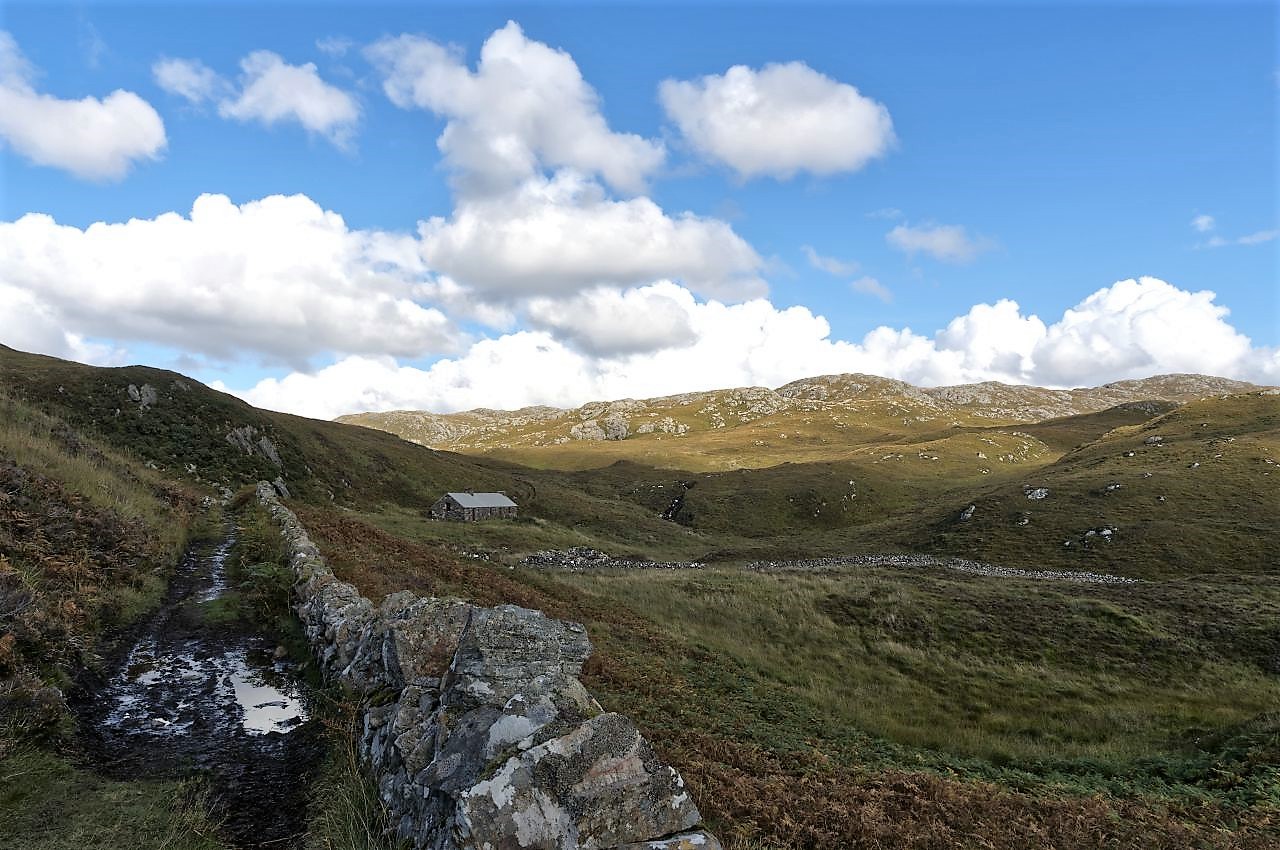
The stalkers path

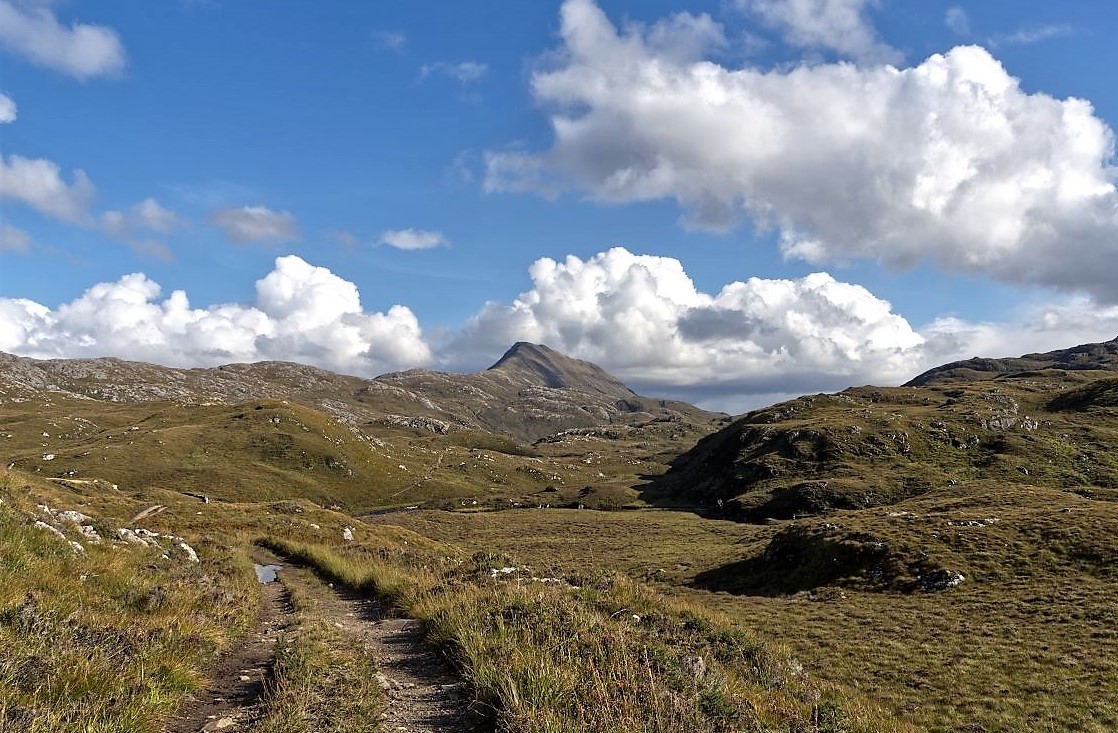
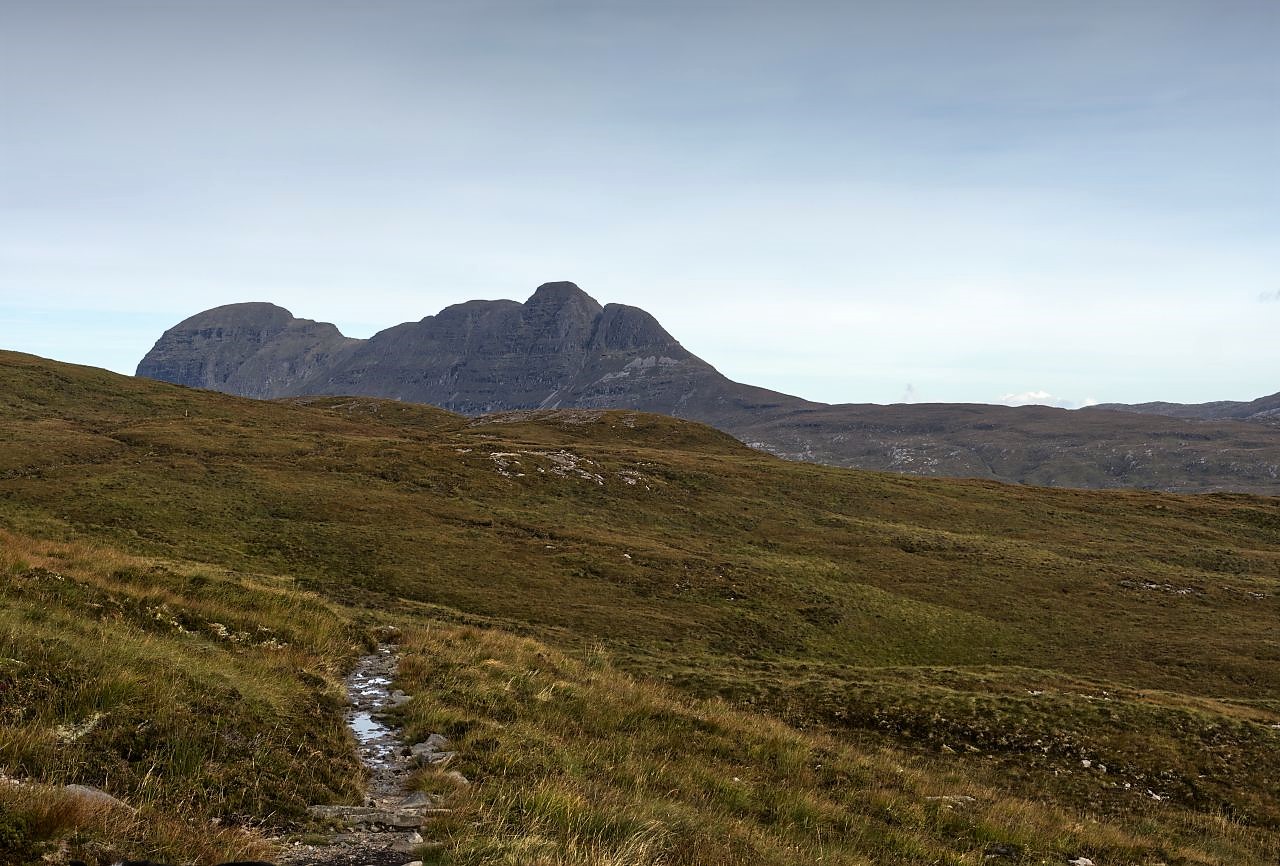
First view of Suilven from the stalkers path ….

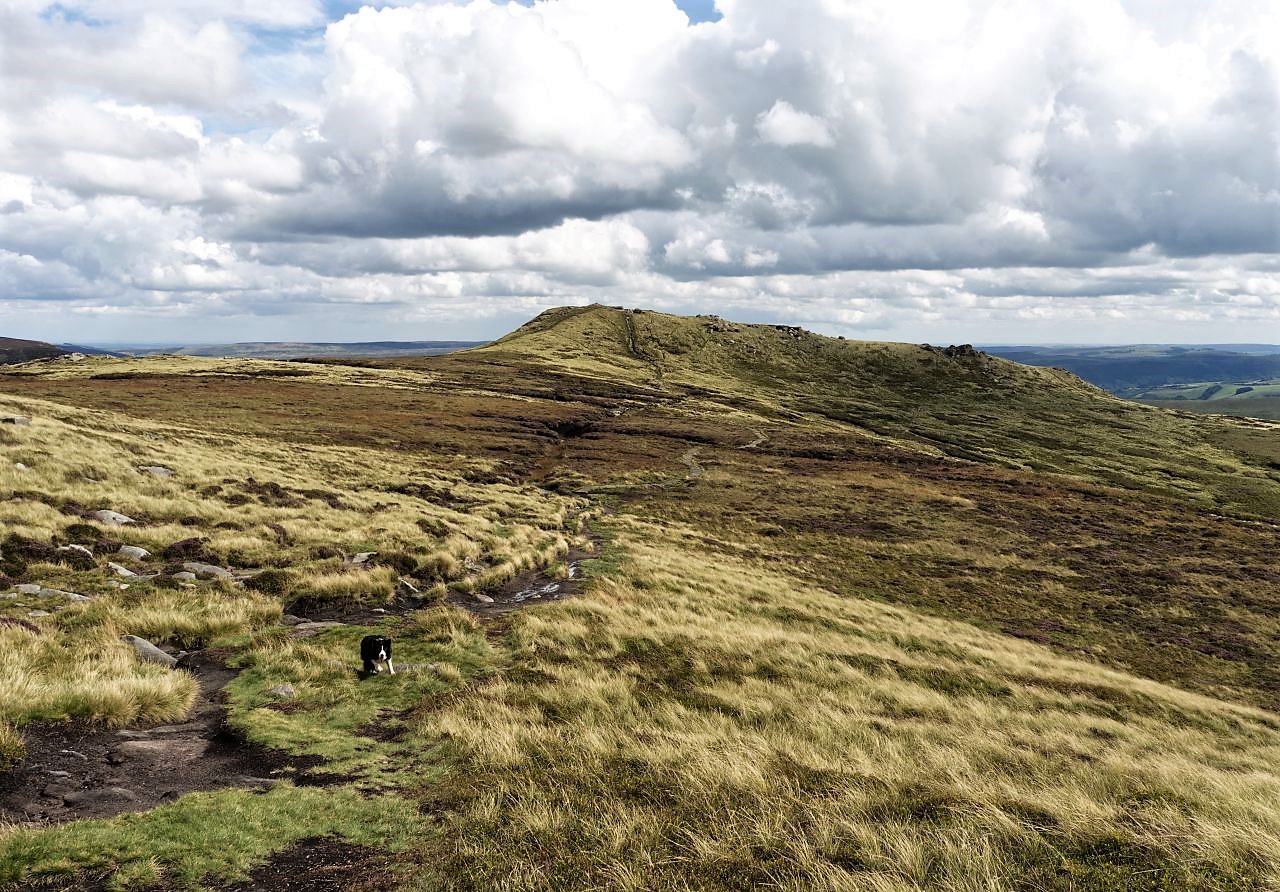
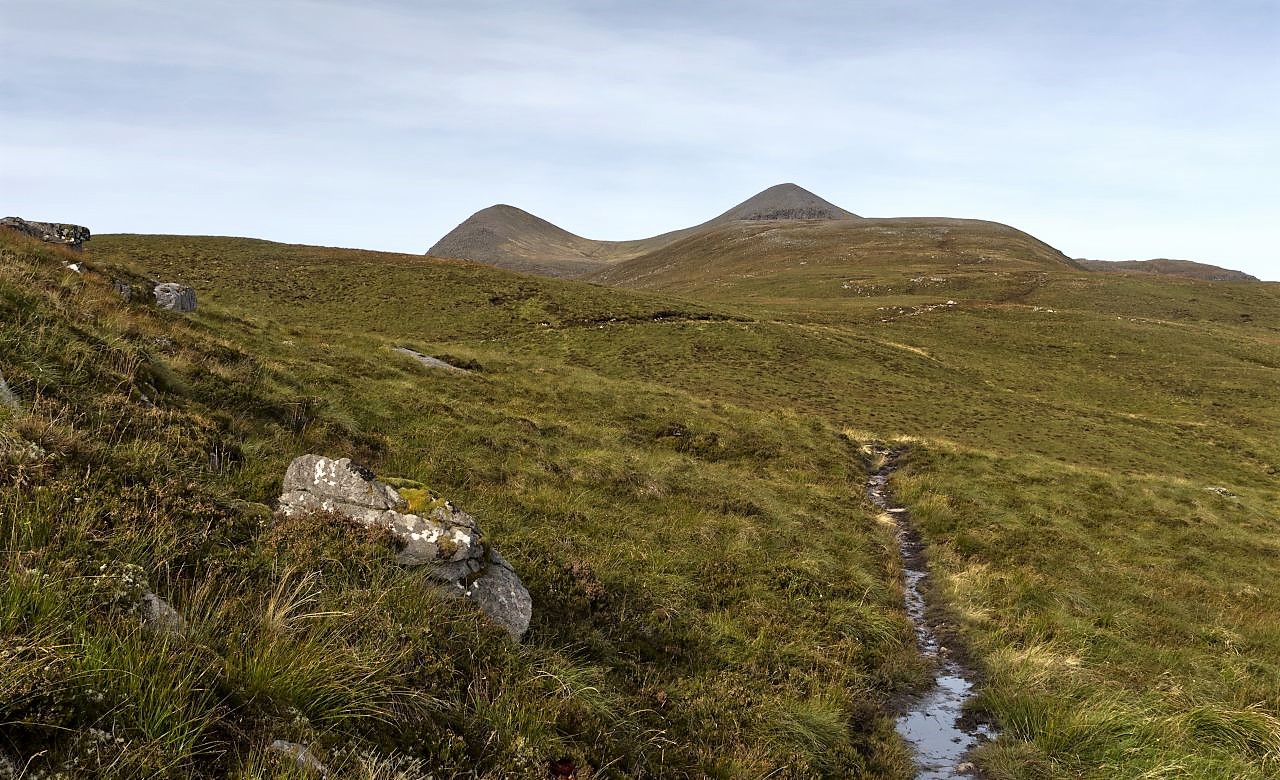
…. and the first view of Cùl Mòr since setting out across the moor

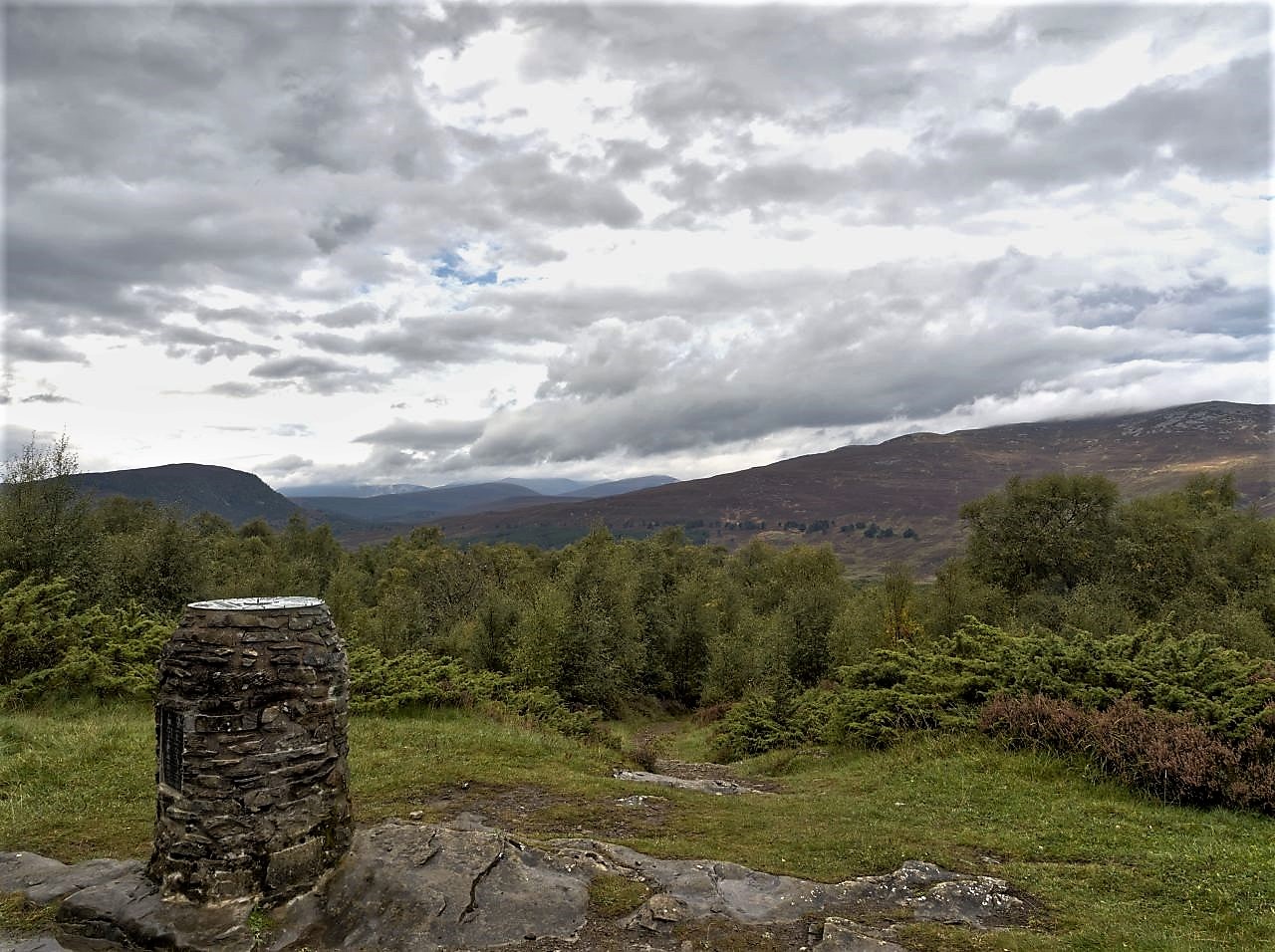
Cùl Mòr looks good seen from the A835 road, though the weather started dull at first, with the skies starting to clear as I went on.   From the parking at Knockan Crag, a great stalkers path gave rapid access – the guys who first trod these paths were not heading out for fun, they were working, and they didn’t waste effort wandering about.    Before long I was enjoying views of Suilven, before Cùl Mòr came back into view.

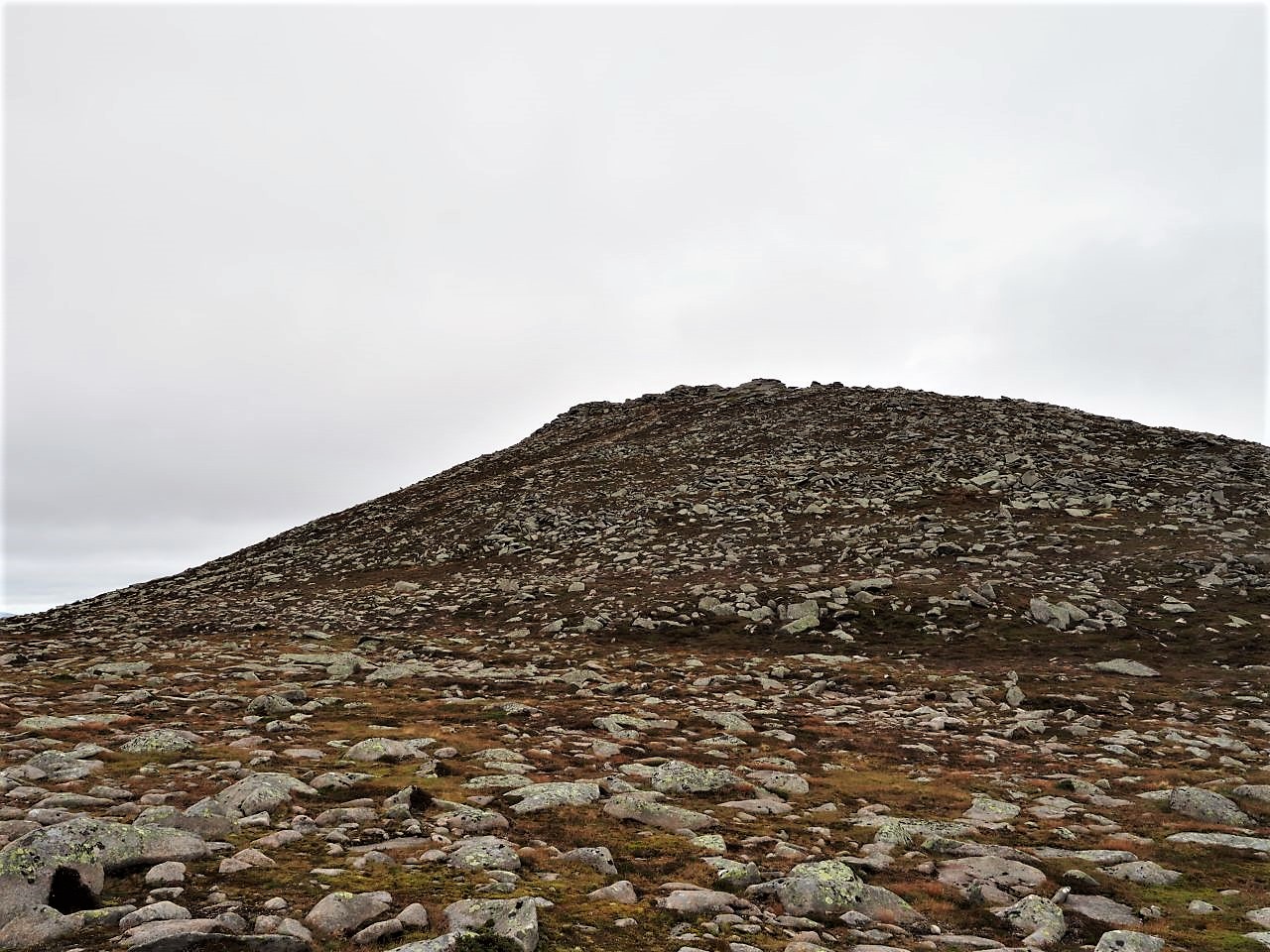
The stony ascent of Meallan Dìomhain with Suilven (left), Quinag (distant centre) and Canisp (Right)

My route from Meallan Dìomhain to the col between Creag nan Calman and Cùl Mòr  © Nigel Brown

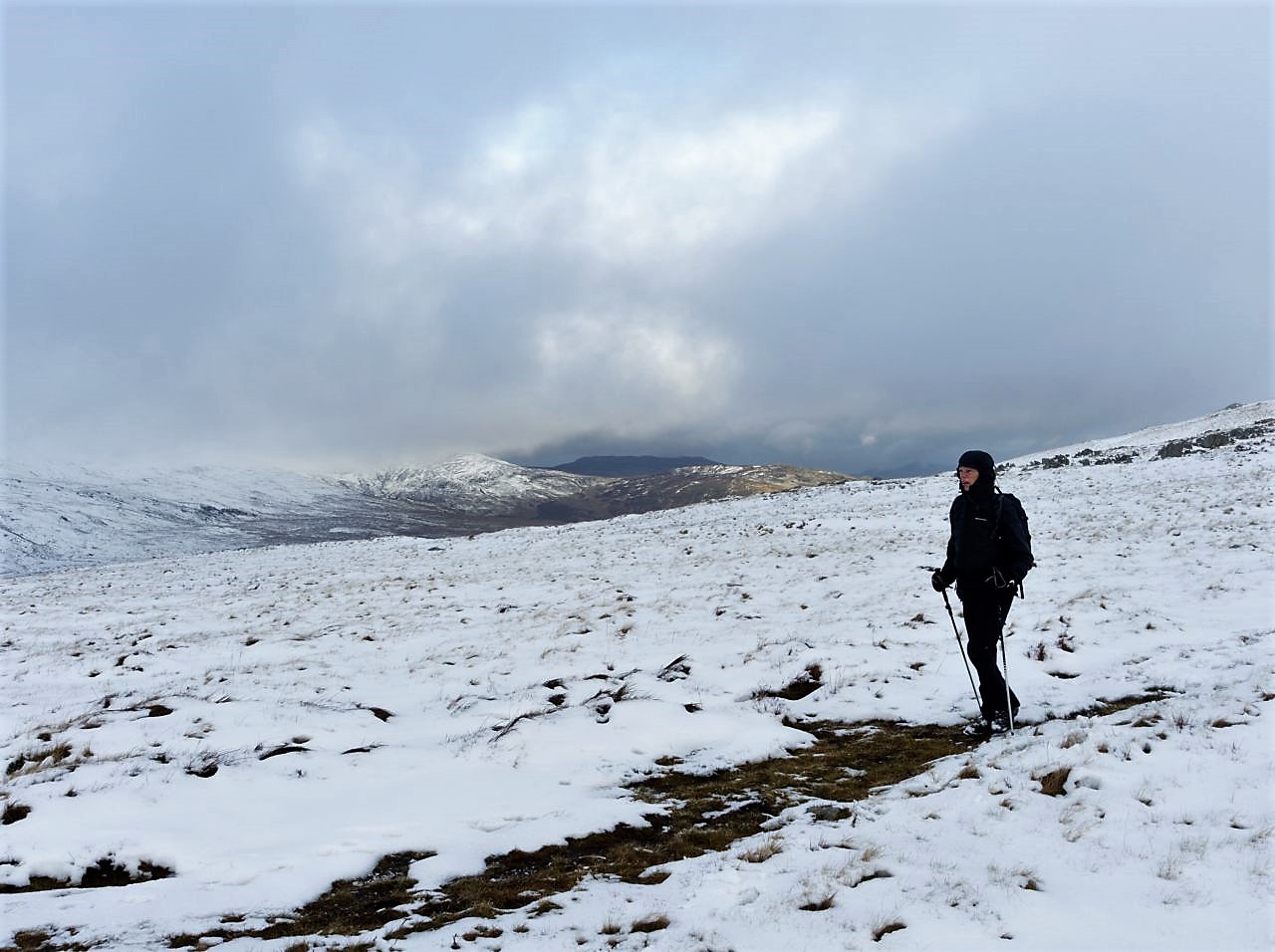
The stony little lump of Meallan Dìomhain (609 metres/1998 ft) gave a good view of what was to come.   Another hiker caught me up there, and we had a chat about the route alternatives.    I was heading west into the broad corrie between Creag nan Calman and Cùl Mòr, whilst he was going around the north shoulder of Cùl Mòr, going the opposite way round to my route.

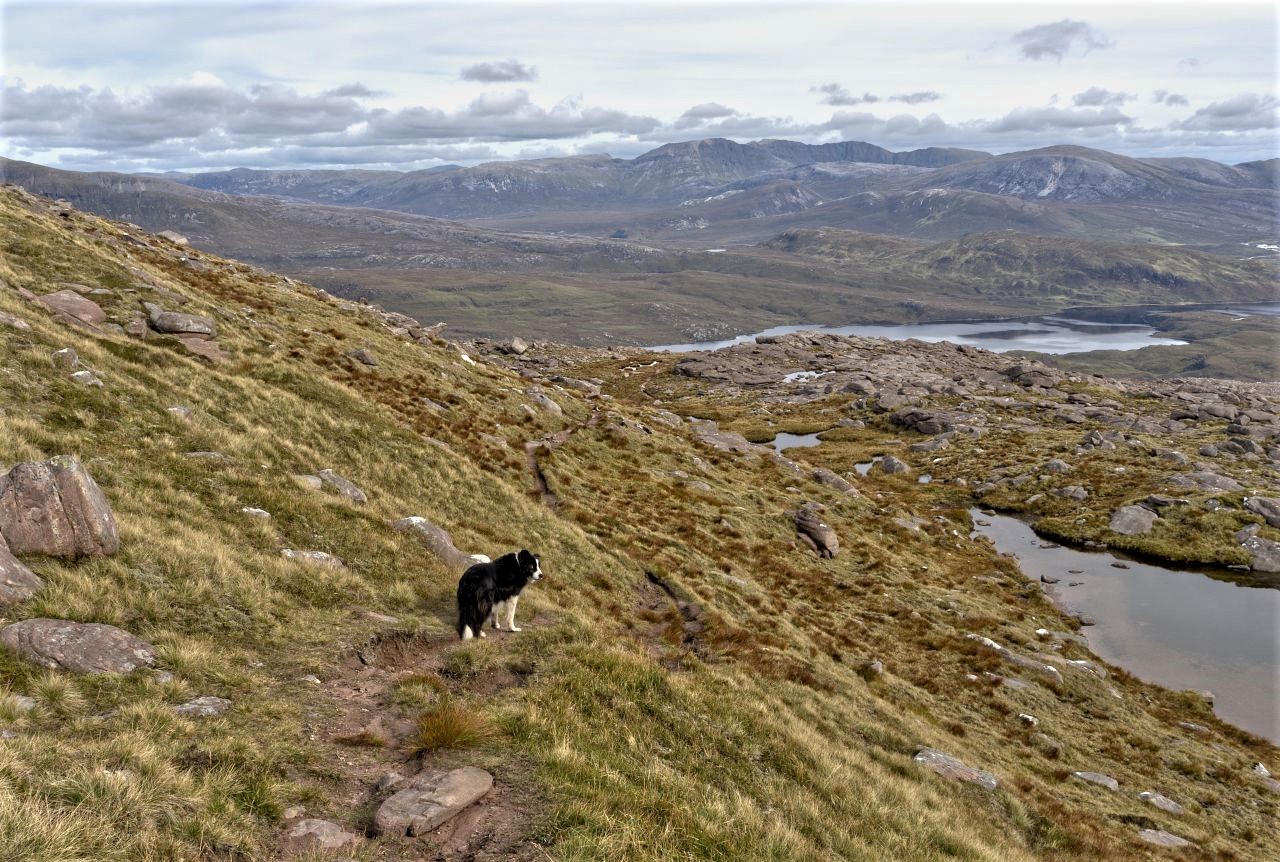
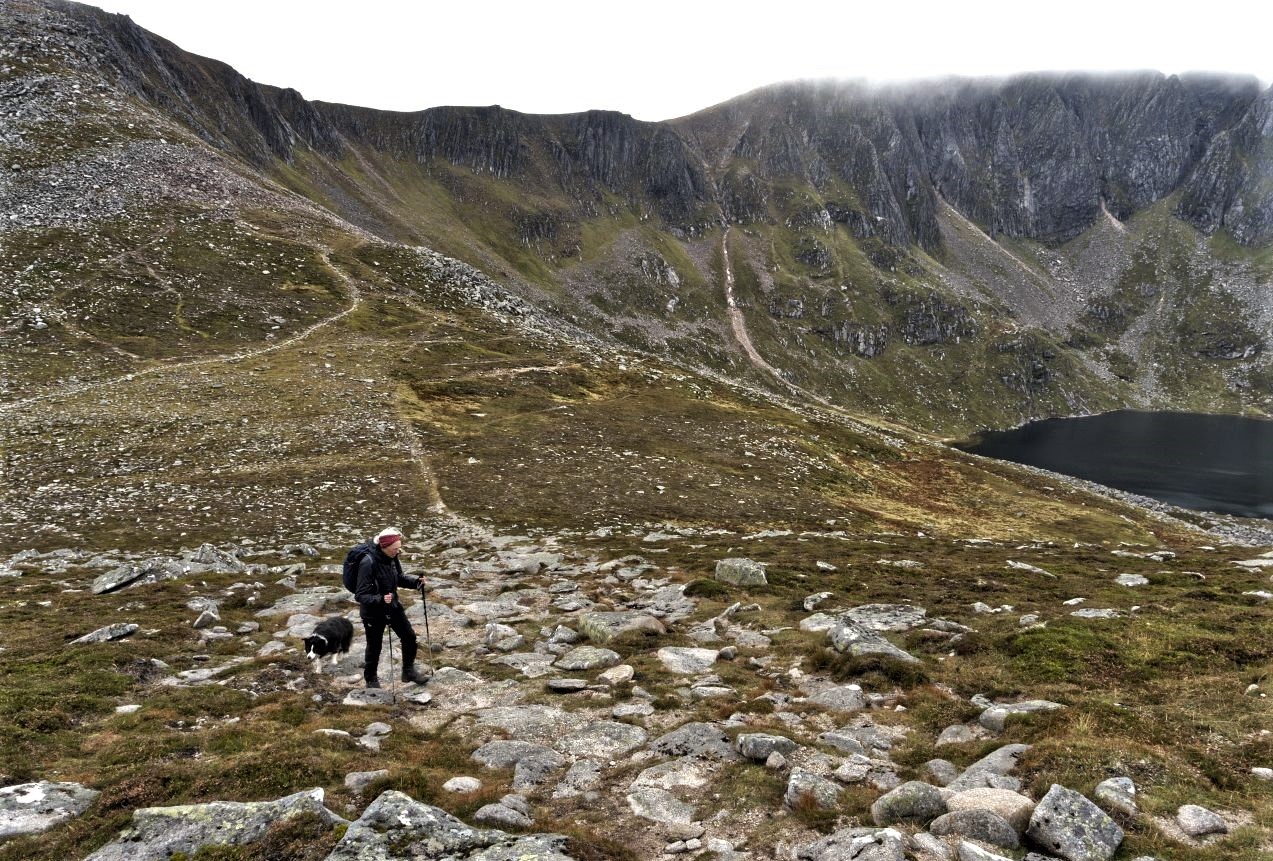
Border Collie ‘Mist’ next to the stream, heading up to the broad corrie

Up past the steeper stream section, entering the broad corrie with the col ahead

The col and the first view of Stac Pollaidh in the distance

The view from Creag nan Calman summit to Cùl Beag (left) and Stac Pollaidh (right)

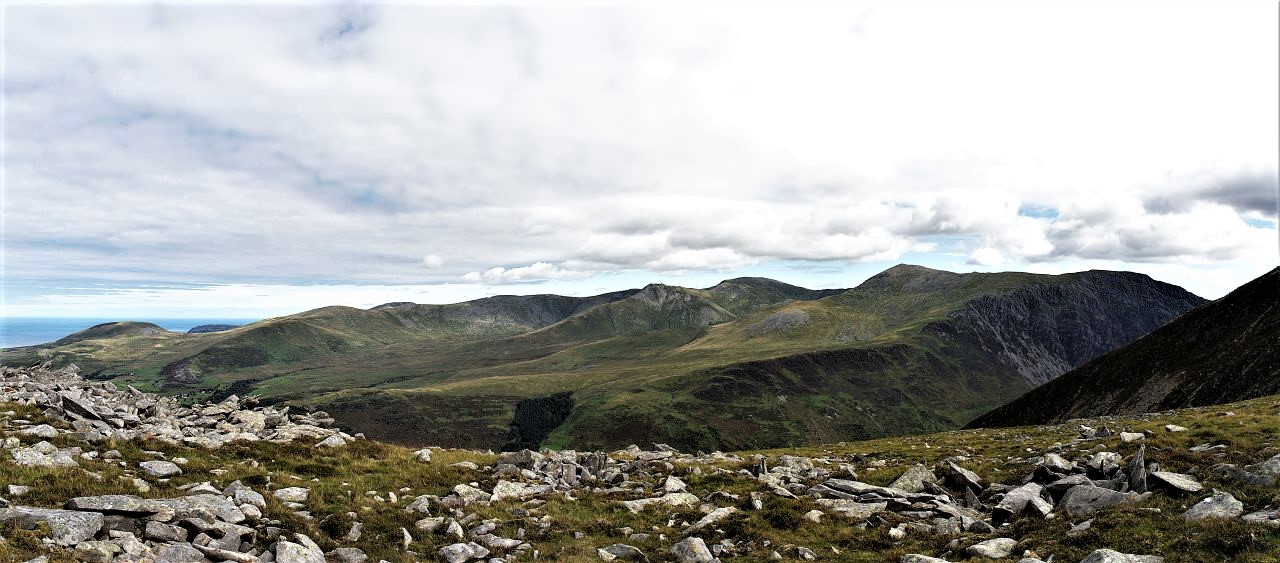
An obvious line led me on a traverse of the hillside before heading up a steeper section next to a stream – it looked like this route isn’t used a great deal, but the way was always obvious.    The steeper stream section eventually opened out into a broad corrie, leading up to a col.   The lower summit of Creag nan Calman (828 metres/2716 ft) was a mere 45 metres higher than the col, so it made sense to collect it – my reward at the summit were great views across to Cùl Beag and Stac Pollaidh.

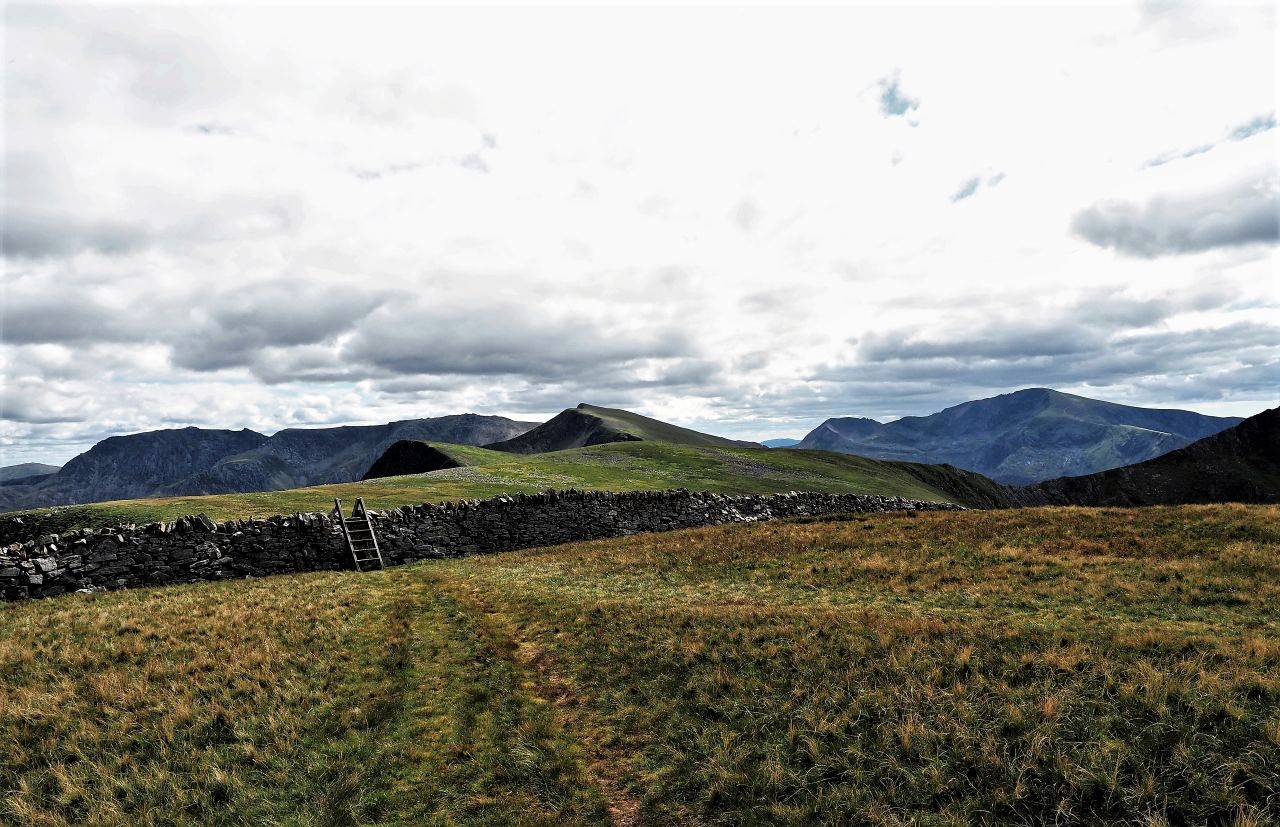
Heading for Cùl Mòr summit with Suilven (centre) with Quinag in the distance (right)

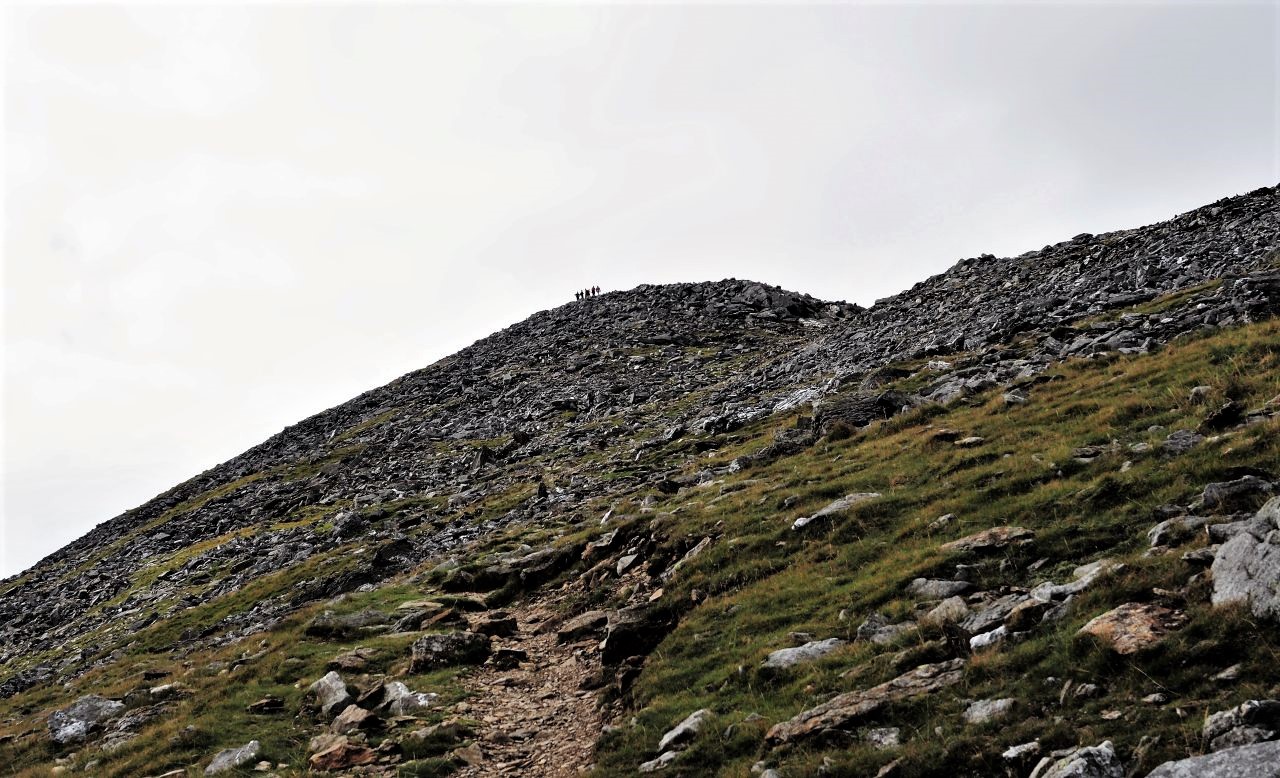
From Creag nan Calman I could also see a tiny figure on the summit of Cùl Mòr (849 metres/2785 ft)  and as I retraced my steps to the col and headed up to Cùl Mòr summit, it turned out to be the solo hiker I had chatted to earlier, heading in the opposite direction to me.    From the top of Cùl Mòr, he had also seen me and the dog on Creag nan Calman and asked if it was worth the detour – I assured him it was.

The boulder field descent

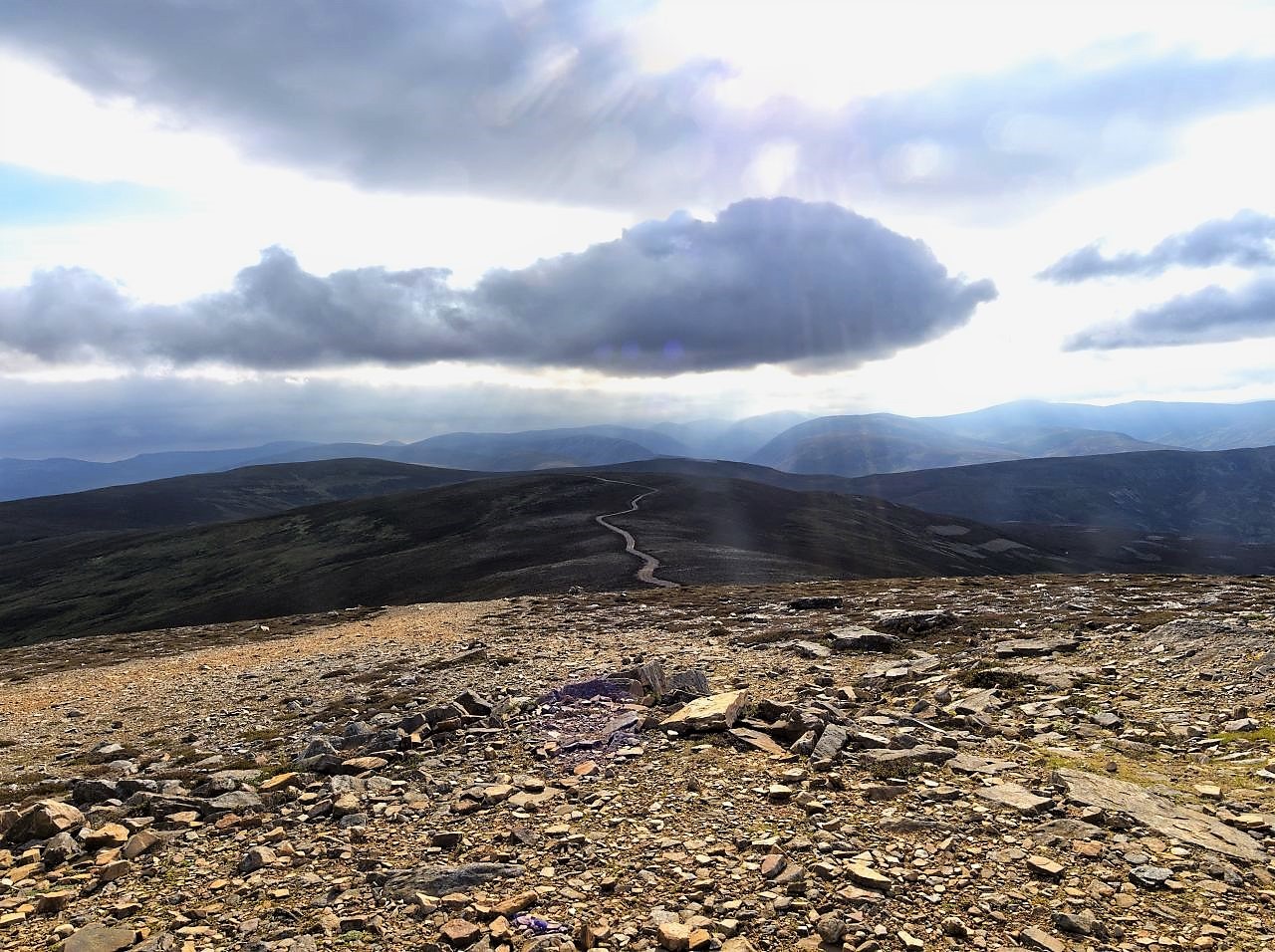
Closer view of Suilven on my descent, with Quinag in the distance

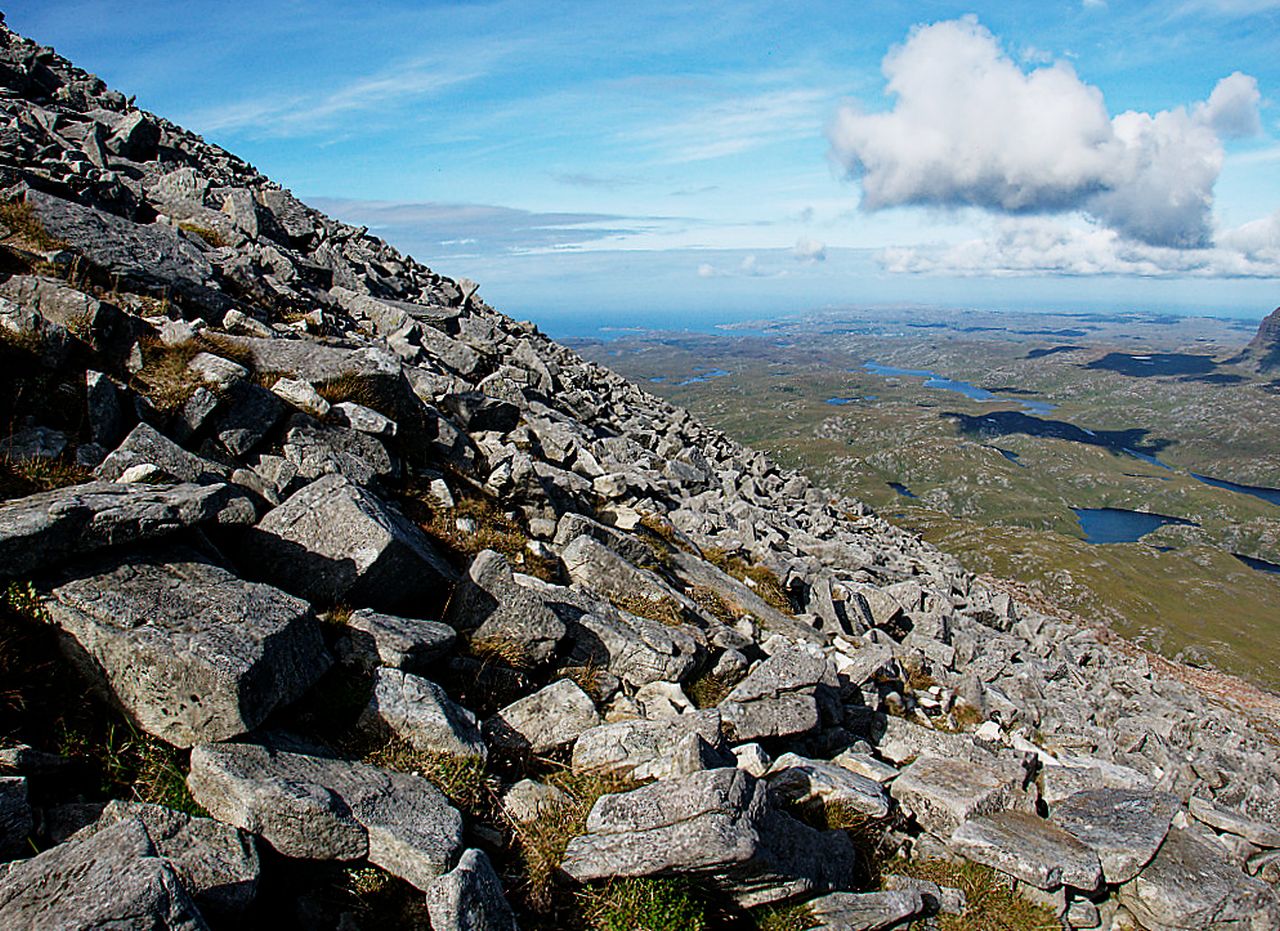
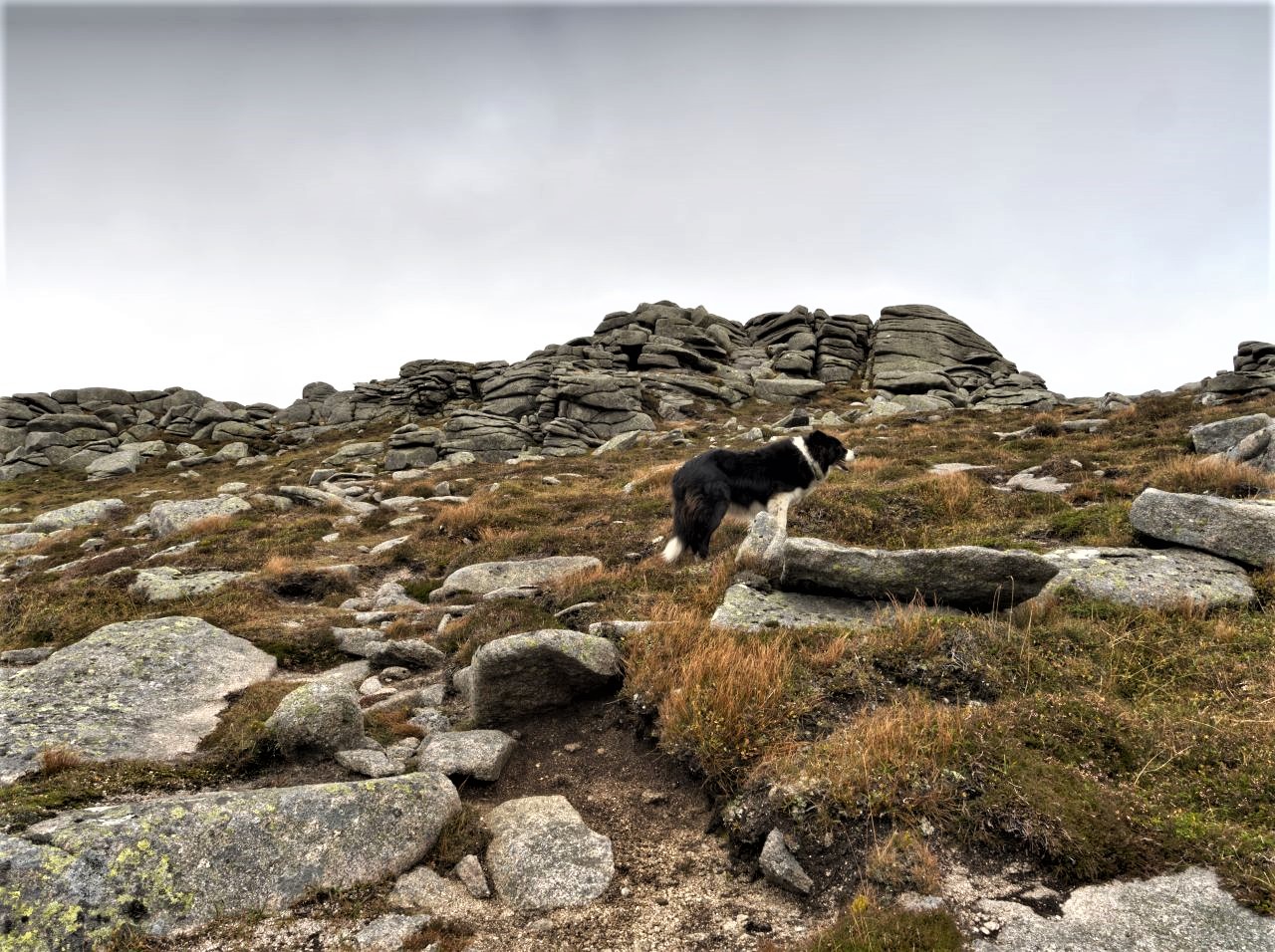
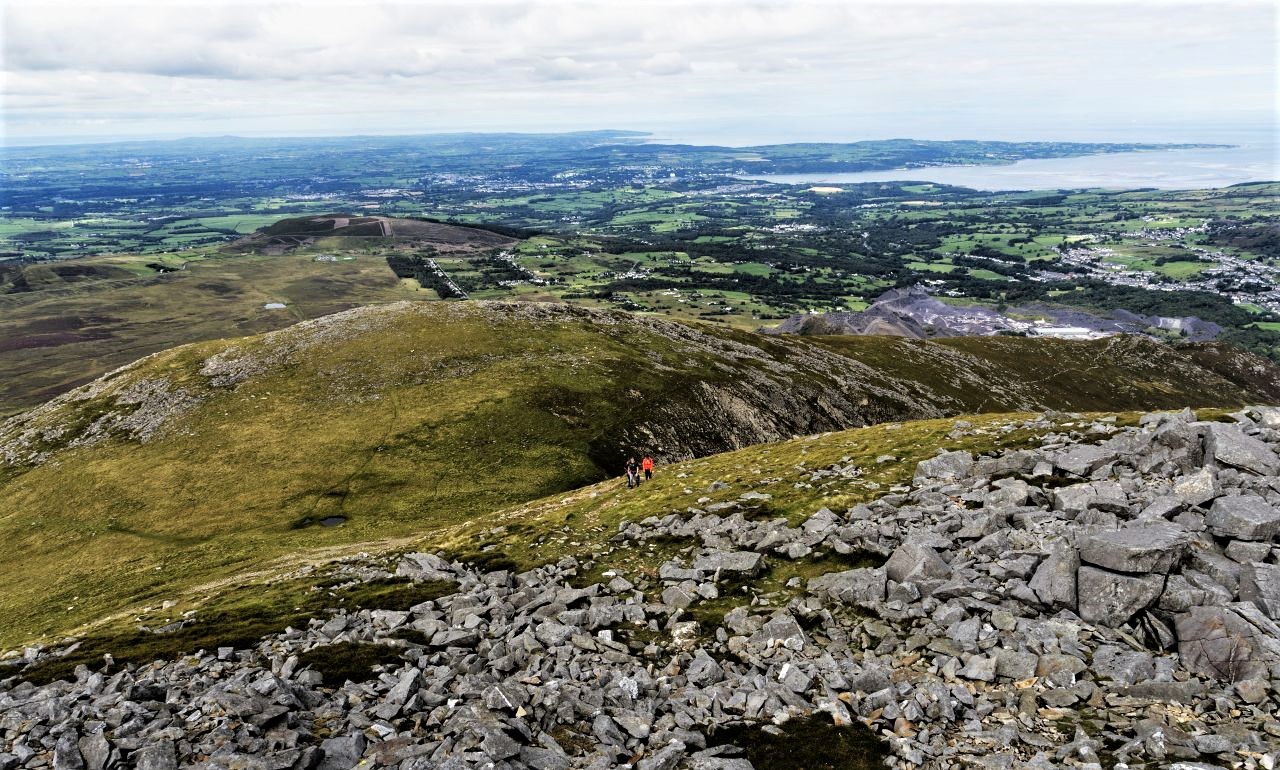
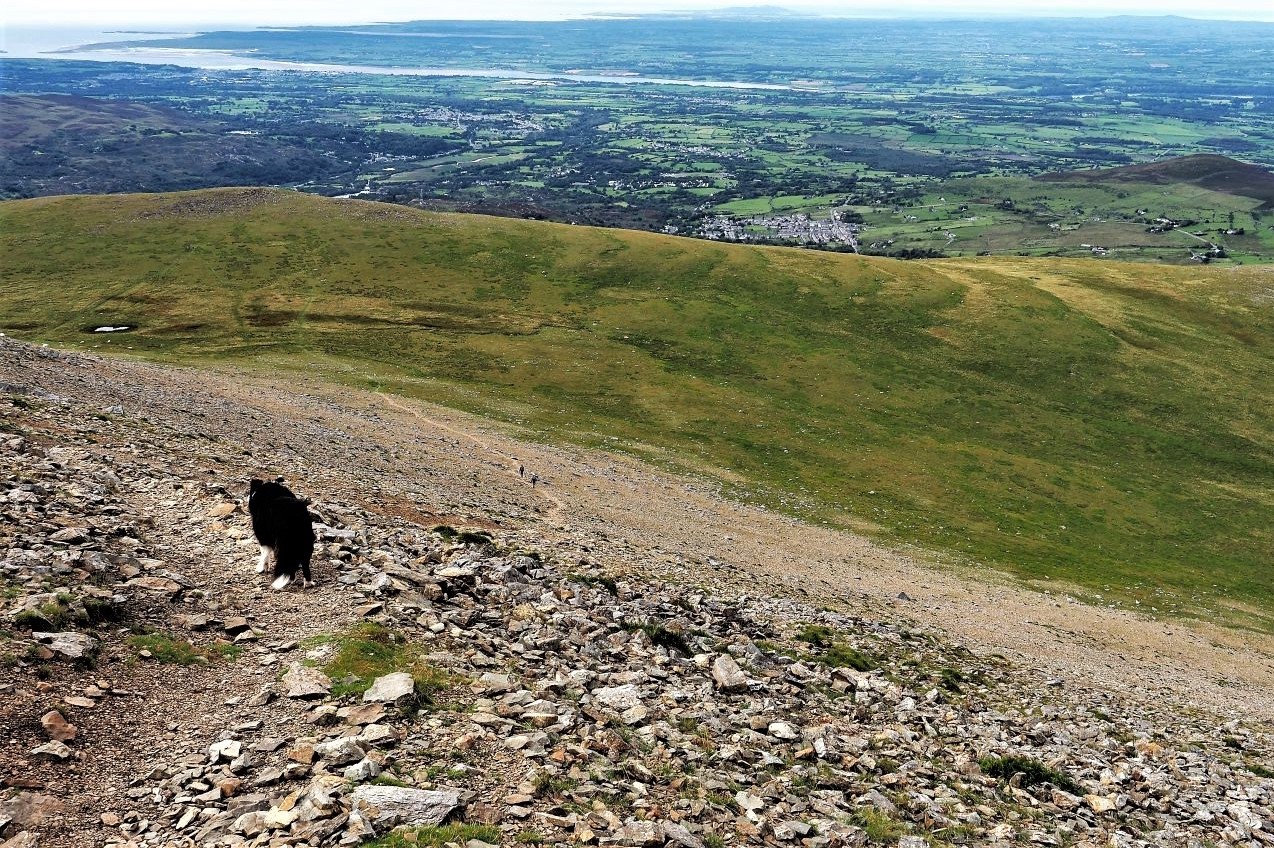
Before we parted, he added that there was a beast of a boulder field on the north side of Cùl Mòr – as the only way for me to avoid it would be to return the same way I had hiked in, I decided to give it a go.    It was an absolute monster, though as I was looking down the slope, I was better able to pick out a sensible route than the other guy would have been going up – I was glad to get clear of it though.

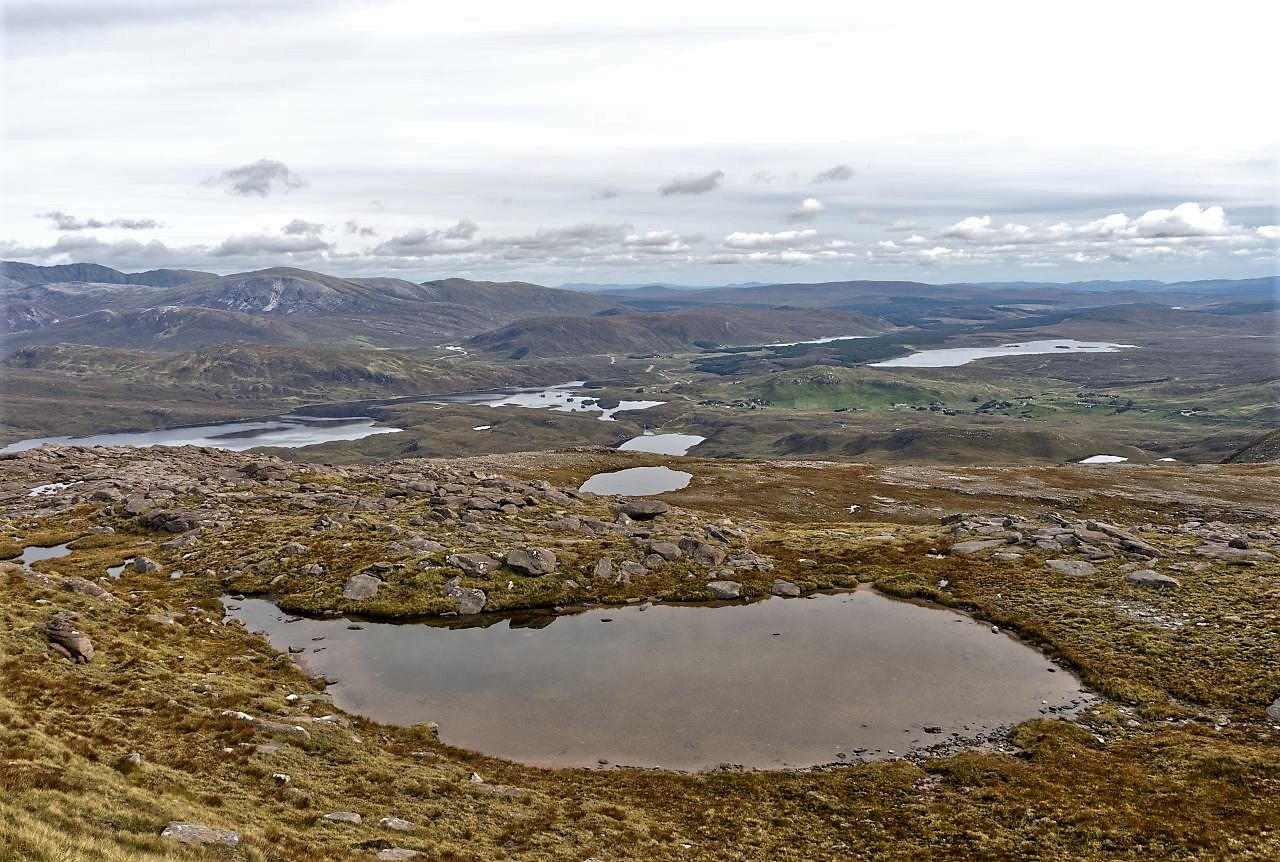
On the descent looking east towards Elphin

Once free from the boulders, it was an easy enough route back towards stony little Meallan Dìomhain, where for the last time that day I saw the solo hiker – apparently he also believes in the ‘Further, Faster’ motto, and the only view I had of him was the rear view, as he pulled away until he was finally out of sight.

Must be time to head for home

Text and images © Paul Shorrock, except where stated otherwise, and which are taken from the Geograph Project and reproduced under a Creative Commons Licence

http://www.geograph.org.uk/

Posted in 1. Scotland | Tagged , , , , , , | 1 Comment

#288 – Assynt assignations (and dog walks)

The mountains of Assynt – left to right Canisp, Suilven, Cul Mor, Cul Beag and Stac Pollaidh

(For the best viewing experience, left-click the images and maps to zoom in, then use your browser return arrow to go back – go on, it really does work!)

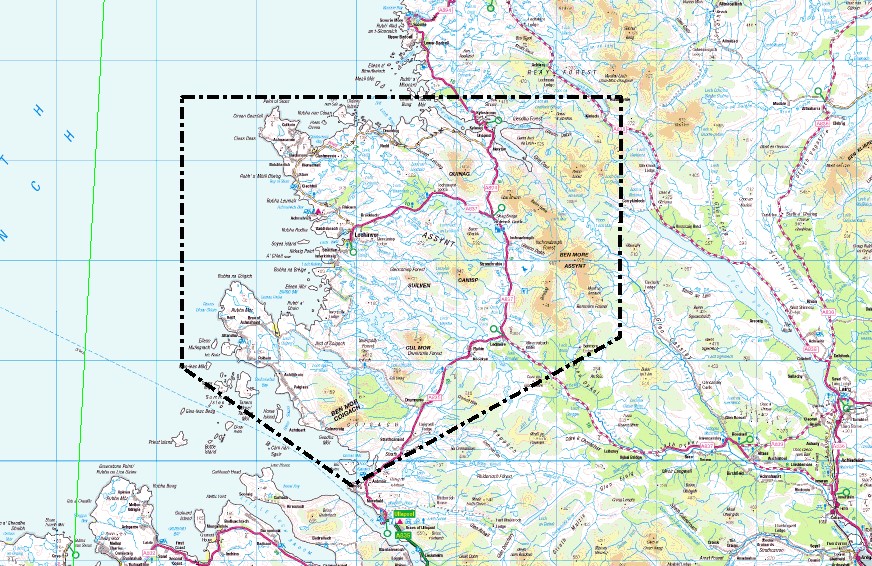
Assynt in the far North-West of the Scottish Highlands

If you ask me what my favourite part of the Scottish Highlands is, be prepared to hang around whilst I try to decide. In my early rock-climbing days, my favourite area was Skye (plus Glencoe because that was on the way to Skye). When I discovered Torridon and Wester Ross in the 1990’s I was completely bowled over, and in the past couple of years, I rediscovered the Cairngorms and wondered why I didn’t go there more often.

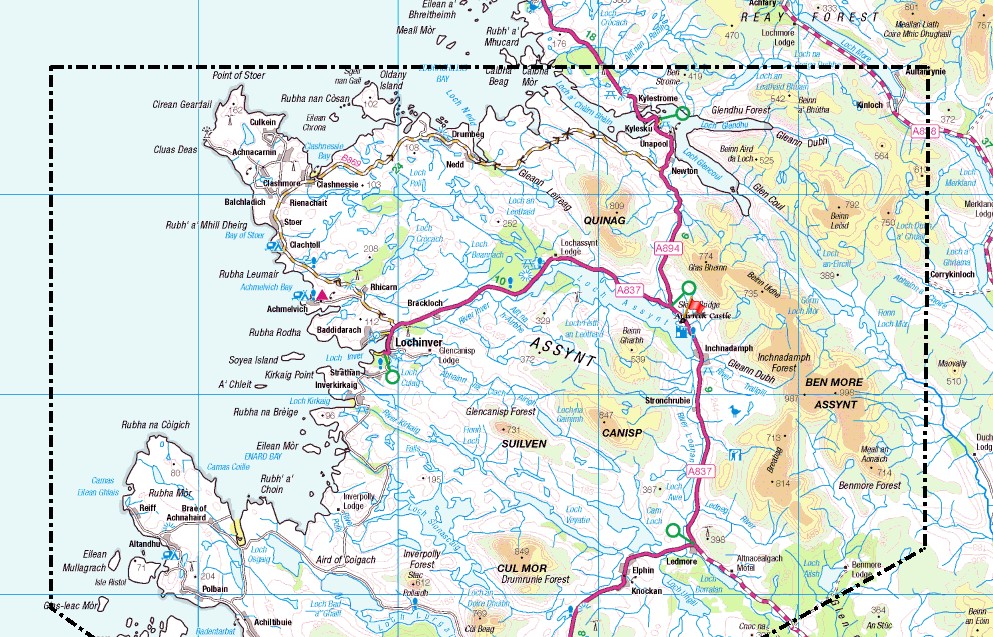
Closer view of the Assynt area

I first discovered Assynt about twenty years ago and started kicking myself for not doing so earlier. Our Autumn 2020 Highland trip in the camper took in most of the familiar places I know and love, plus some new ones besides, but Assynt grabbed us, so we stayed and mooched around for a while. It’s good to have a mountain day as an objective, but sometimes just mooching around on a long dog walk with ‘Mist’ is more than good enough.

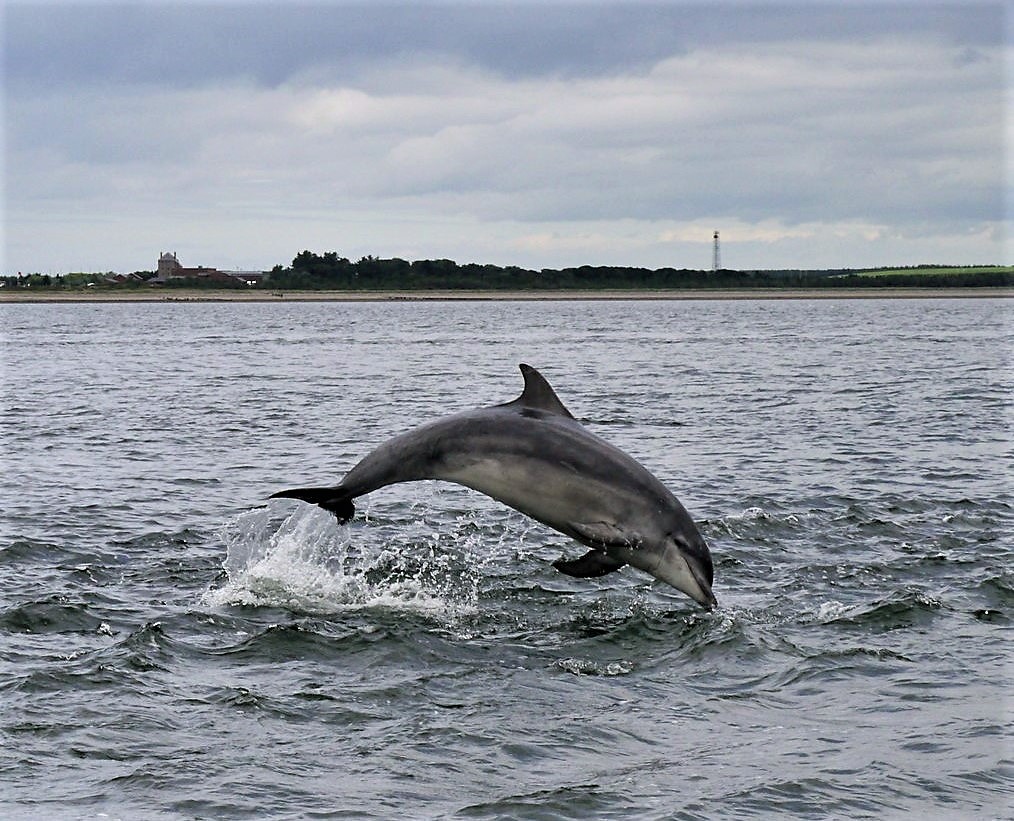
Dolphin at Chanonry Point, the Black Isle – © Craig Wallace

After our East Cairngorm outings (see posts #286 and #287) I had tried my hand at wildlife photography at Chanonry Point on the East Coast, but it was a ‘no show’ by the dolphins on the two mornings I tried for a photo. ‘Mist’ had enjoyed the extended dog-walks on the beach, but the West Coast was calling, so it was time to take the A837 road through Strath Oykel to Assynt.

Ardvreck Castle location on Loch Assynt (the red flag marks the spot)

The coast road through Assynt is part of the now famous (or should that be infamous!) NC500 road trip. For years, the road around the west and north coasts of Scotland was known to just a few of us enthusiasts and had been ‘undiscovered’ by the masses. Well, they’ve been discovered now that’s for sure, and over the summer months the roads are rammed with campervans, many of them hire vans with inexperienced drivers, who don’t have a clue how to drive on narrow Highland roads.

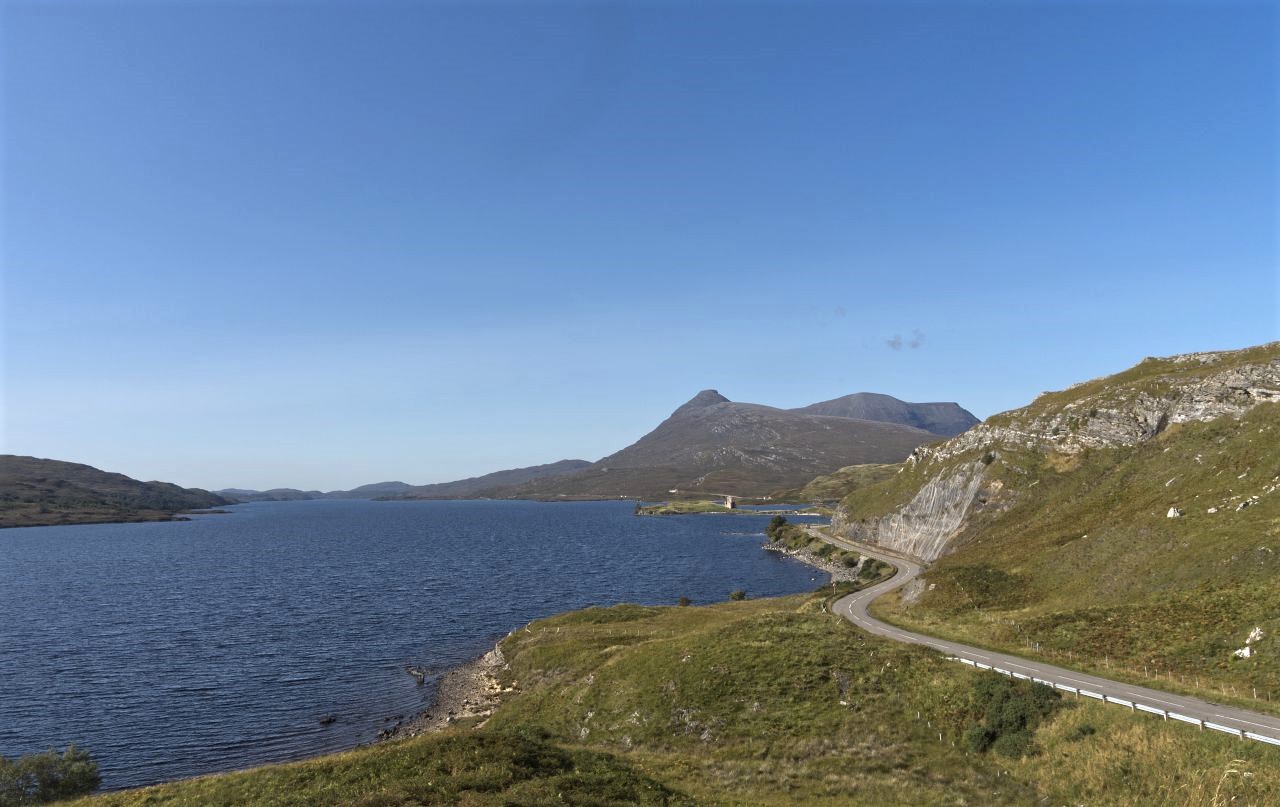
Loch Assynt, with Ardvreck Castle in the middle ground and Quinag beyond

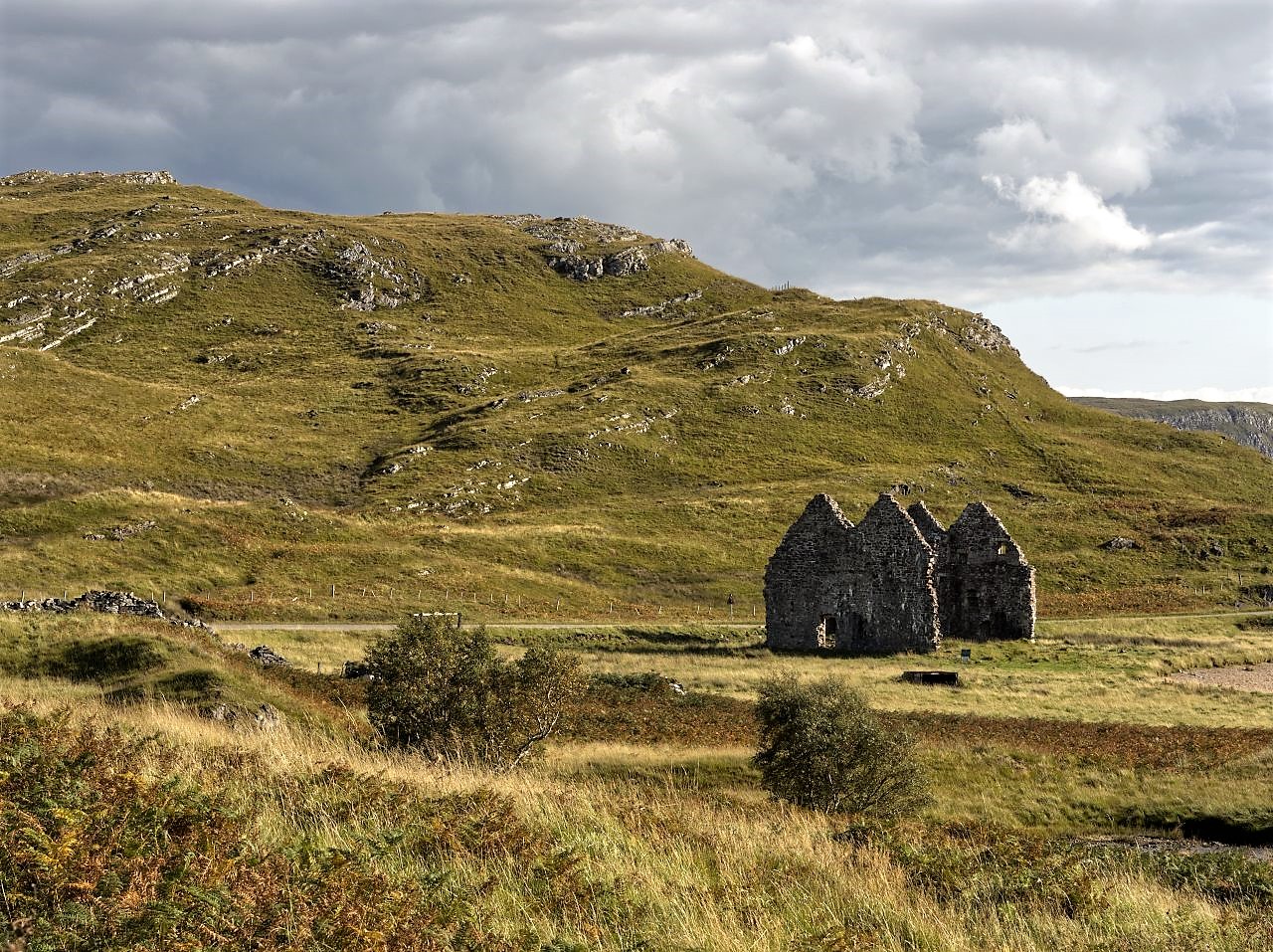
The ruins of Calda House ….

…. near to the ruins of Ardvreck Castle

I was ready for the possibility that Assynt could be busy, and as I’ve no more right to be there than anyone else, I was prepared and ready to have to share the joy with the hordes. Luckily, the tourist season seems to correspond loosely with the midge season, and by the time we arrived at Loch Assynt, the number of vans in the area was nearer to the way things used to be twenty years ago.

Calda House with Beinn an Fhurain (left) and Conival (right) rising behind

Ardvreck Castle with Calda House behind

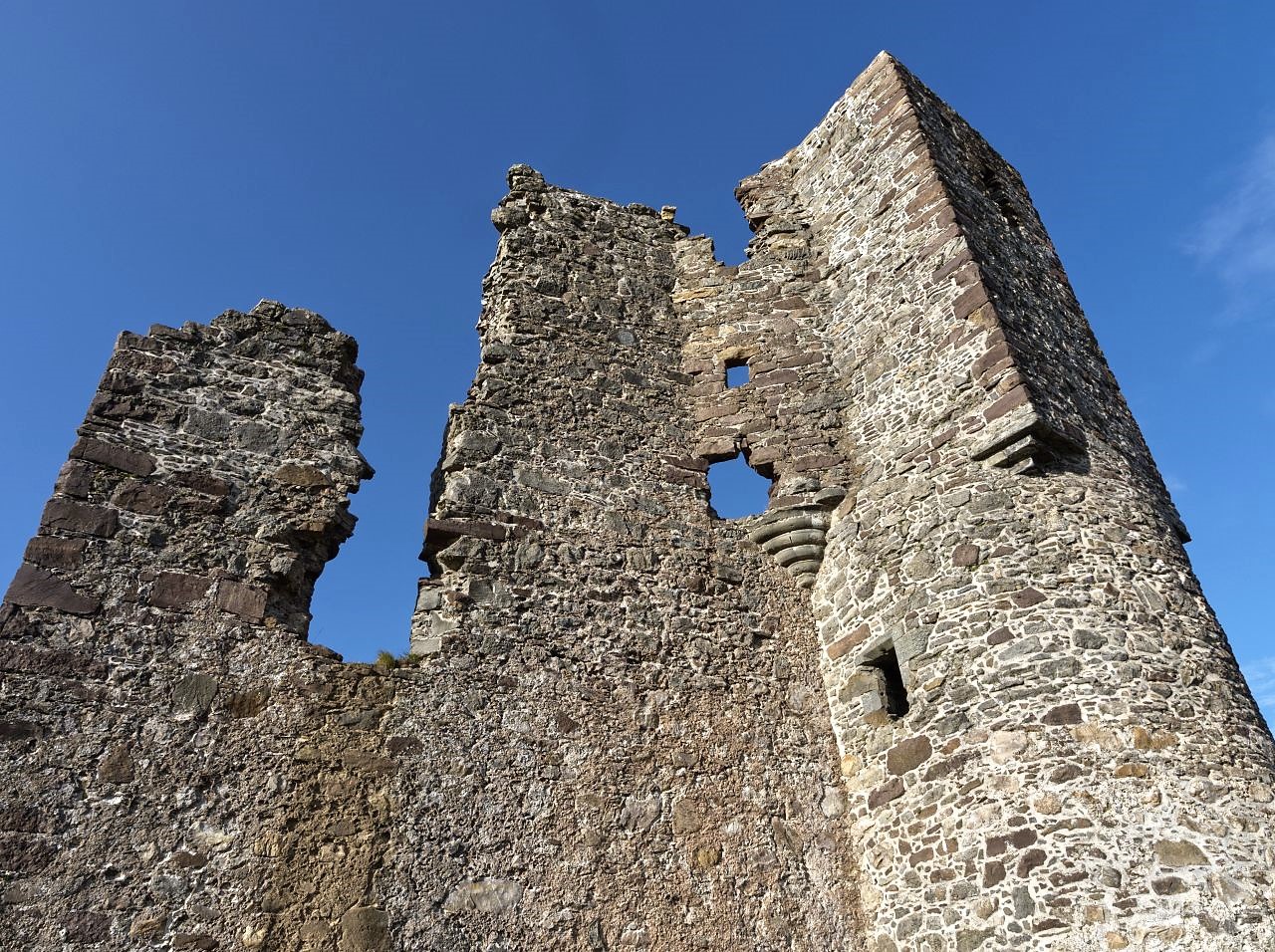
The ruins of the castle

We spent a short half-day around the ruins of Ardvreck Castle and Calda House, places we had previously driven past, but never had a close look at. The castle was built in 1590 by the MacLeods of Assynt, but the Mackenzie clan took the castle in 1672, later taking control of the whole of Assynt. In 1726 they decided to go ‘upmarket’ and built a modern manor house at Calda, but this was burned down in 1737 and both now stand in ruins.

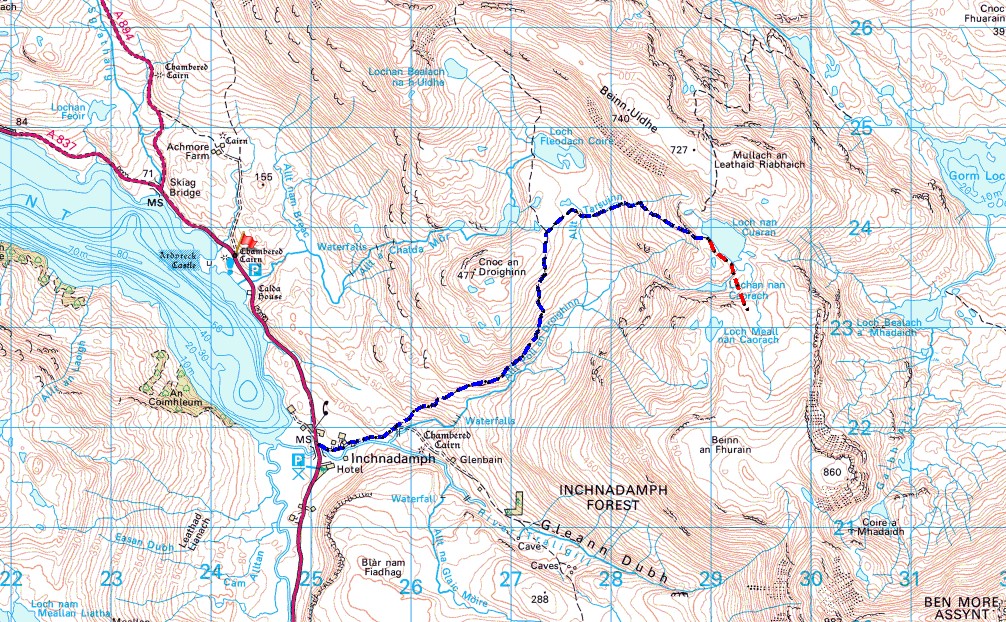
The route out to the Anson crash site near Loch nan Cuaran

Setting out near Inchnadamph

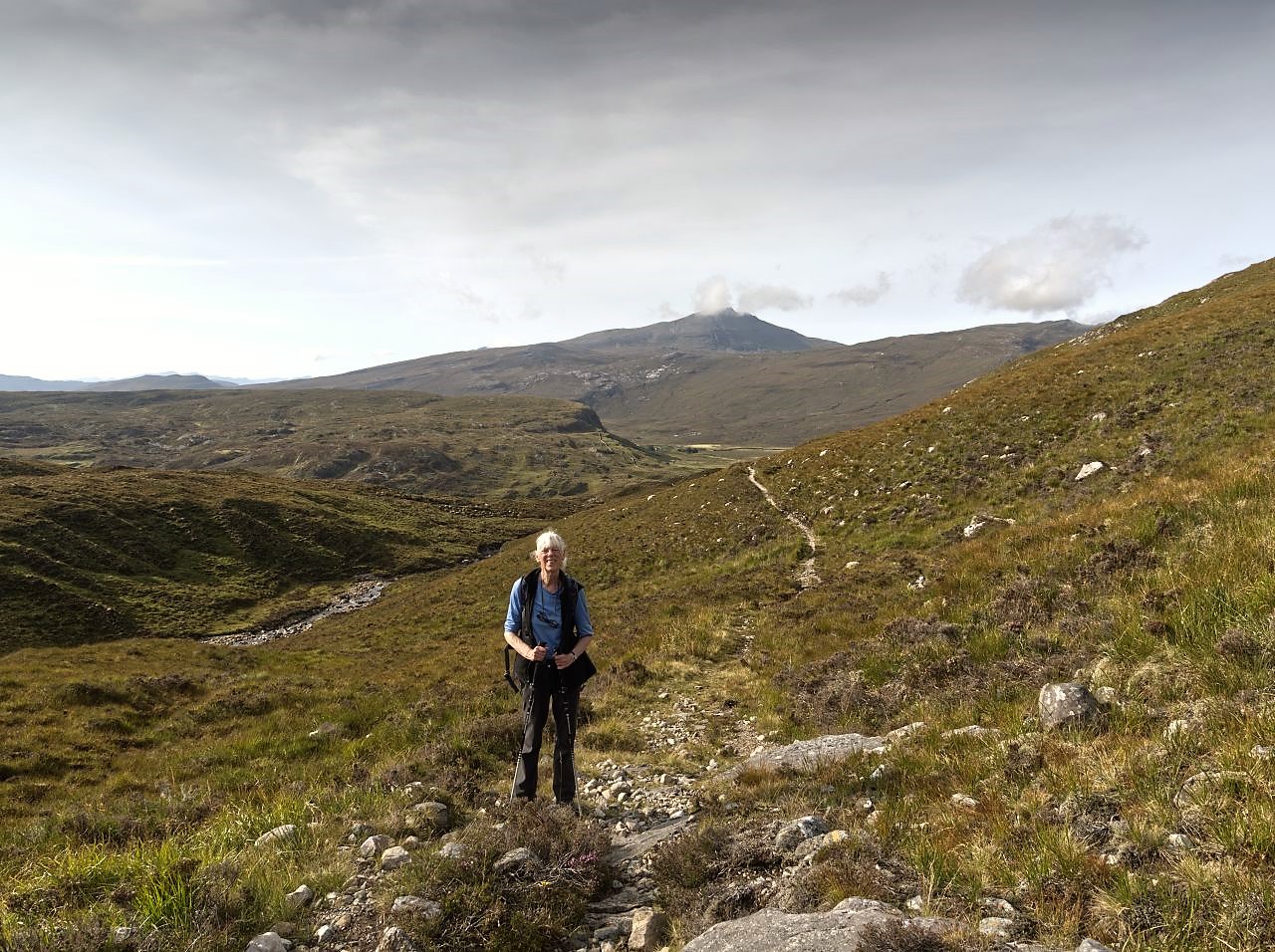
Heading up the narrow stalkers path

Loch Assynt was also a convenient base for a walk out from Inchnadamph. The stars of the show in this part of Assynt are Conival and Ben More Assynt (so named to distinguish it from other Ben Mores), but our objective was to take a trip out to an aircraft crash site dating back to 1941. We took the stalkers path out from Inchnadamph and set off for Loch nan Cuaran, which made a good place to take a break.

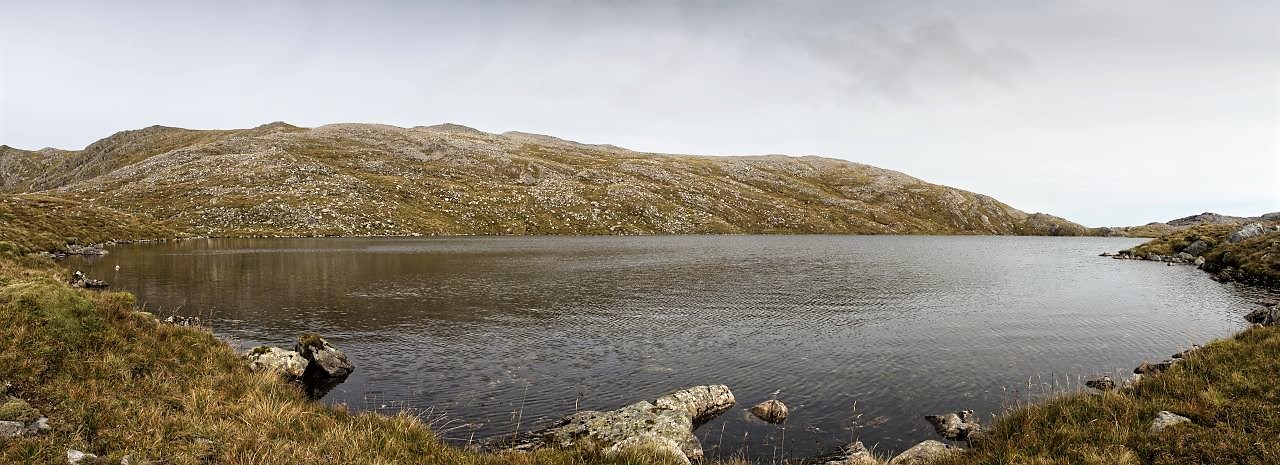
Loch nan Cuaran – as far as we went (route shown in blue on the map above)

Various sections of the walk had been quite wet, and the next bit looked like being even worse. Time was also moving on, and the cloud base was coming down to meet us, so a decision was made to bale out and return to the valley, leaving the visit to the crash site for another day – we made it down before the rain started.

* * * * *

Avro Anson training aircraft © Oren Rozen

The Avro Anson was used as a training aircraft all through WW2 and beyond. Because of its use as a trainer, the aircraft type is frequently found at crash sites in the hills and mountains of the UK, not because it was an unsafe aircraft but because there were a lot of them flying in the war years. On 13th April 1941, Anson N9857 set out from RAF Kinloss on a long training flight out to the Isle of Lewis. On the return leg, the aircraft was forced to climb to avoid bad weather, and a message was received by a ground station, saying that the aircraft was losing power due to icing.

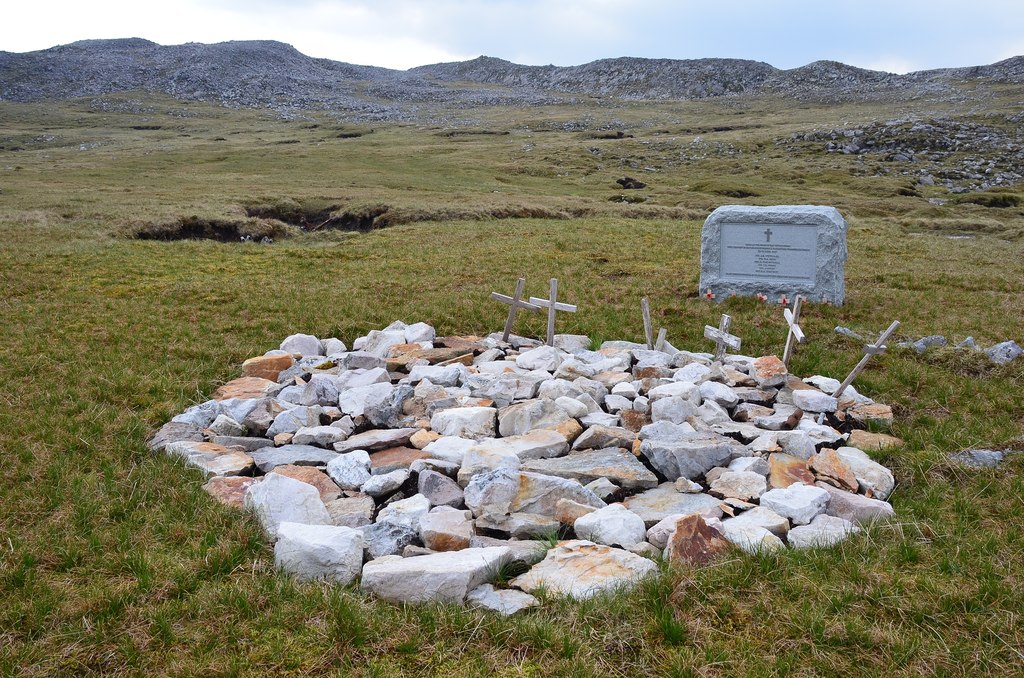
The crash site and grave (route there shown in red on the map) © Jim Barton

The Anson was posted as overdue later that day, but searches failed to locate the aircraft, which was eventually found by a shepherd over a month later. Of the crew of six, at least three appeared to have survived the initial impact and the body of a fourth was found near to the wreck, possibly after trying to go for help – they all appear to have died from hypothermia, during what had been the most severe blizzard in the area in 100 years. The task of recovering the bodies was beyond the resources of the time and they were buried at the crash site, at what is now the highest grave in the UK.

* * * * *

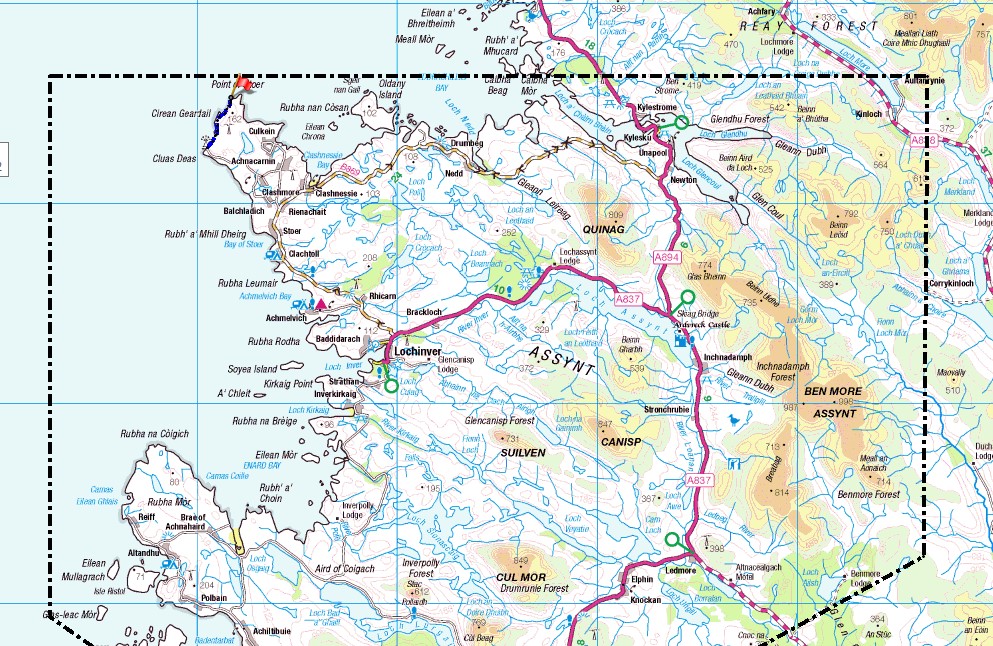
Assynt with Stoer Head and the Old Man of Stoer at the top left

The lighthouse at Stoer Head

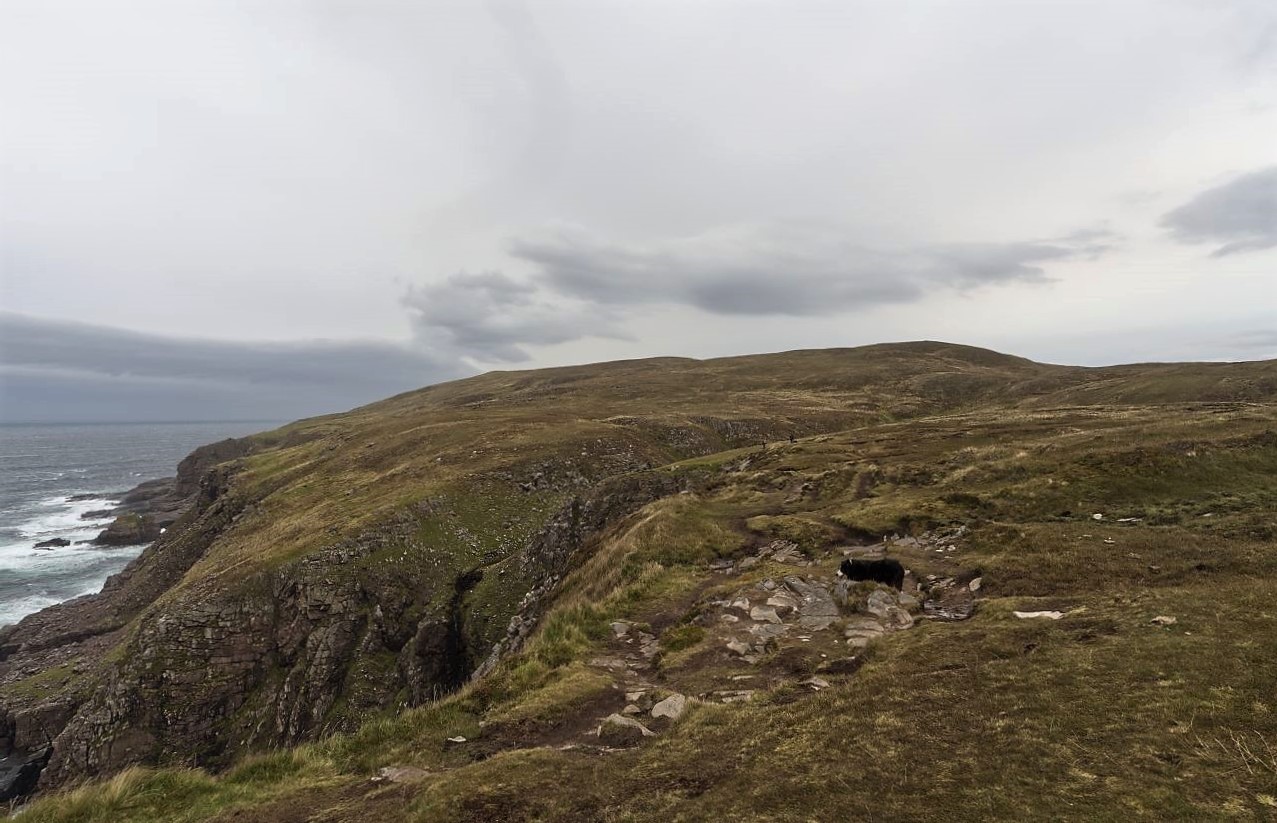
A couple of days later found us out at Stoer Head at the northwest corner of Assynt, after a drive along some of the narrowest roads in Scotland – it must be chaos in the height of the tourist season, as this is part of the aforementioned NC500. The lighthouse at Stoer Head is the most obvious attraction on arrival, but the reason most tourists come here is for the walk out to the Old Man of Stoer.

A muddy walk over the moor

The Old Man of Stoer comes into view

Closer view of the sea stack

The Old Man is a 60 metres (nearly 200 ft) high sea stack, which appears to defy gravity as well as the West Coast storms. As well as being a good dog walk (well, ‘Mist’ seemed happy enough) it is also a popular rock climb, with the first ascent in 1966 by Brian Henderson, Paul Nunn, Tom Patey and Brian Robertson. Getting to the foot of the stack can be a bit of an epic apparently, requiring either a swim or a rope traverse. No, we didn’t bother.

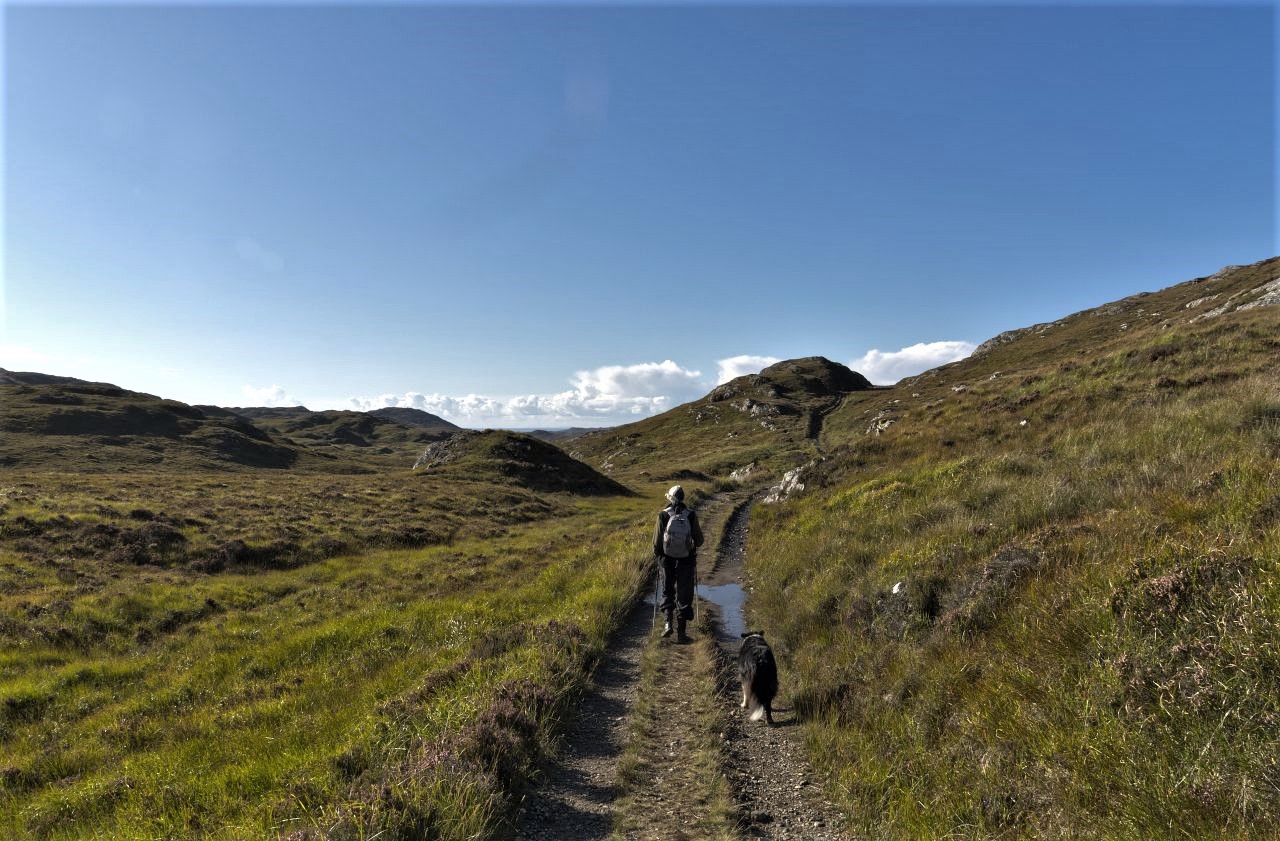
The route out to Suileag Bothy

Setting out towards Glencanisp Lodge with Canisp (centre) and Suilven rising in the distance

Canisp (left) and Suilven (right) – plus a certain Border Collie!

The track to the bothy with Canisp behind

Suilven rising above, looking very impressive

Our Scottish trips wouldn’t be complete without at least one bothy visit, with Suileag Bothy in Assynt being a contender (for those who don’t know about bothies in the UK, follow this link). Suileag is ideally placed for trips up Suilven and Canisp, and many hikers use the bothy overnight to make the ascent day shorter – both summits are about three miles from the bothy.

The approach to Suileag bothy, seen in the shadows just left of centre

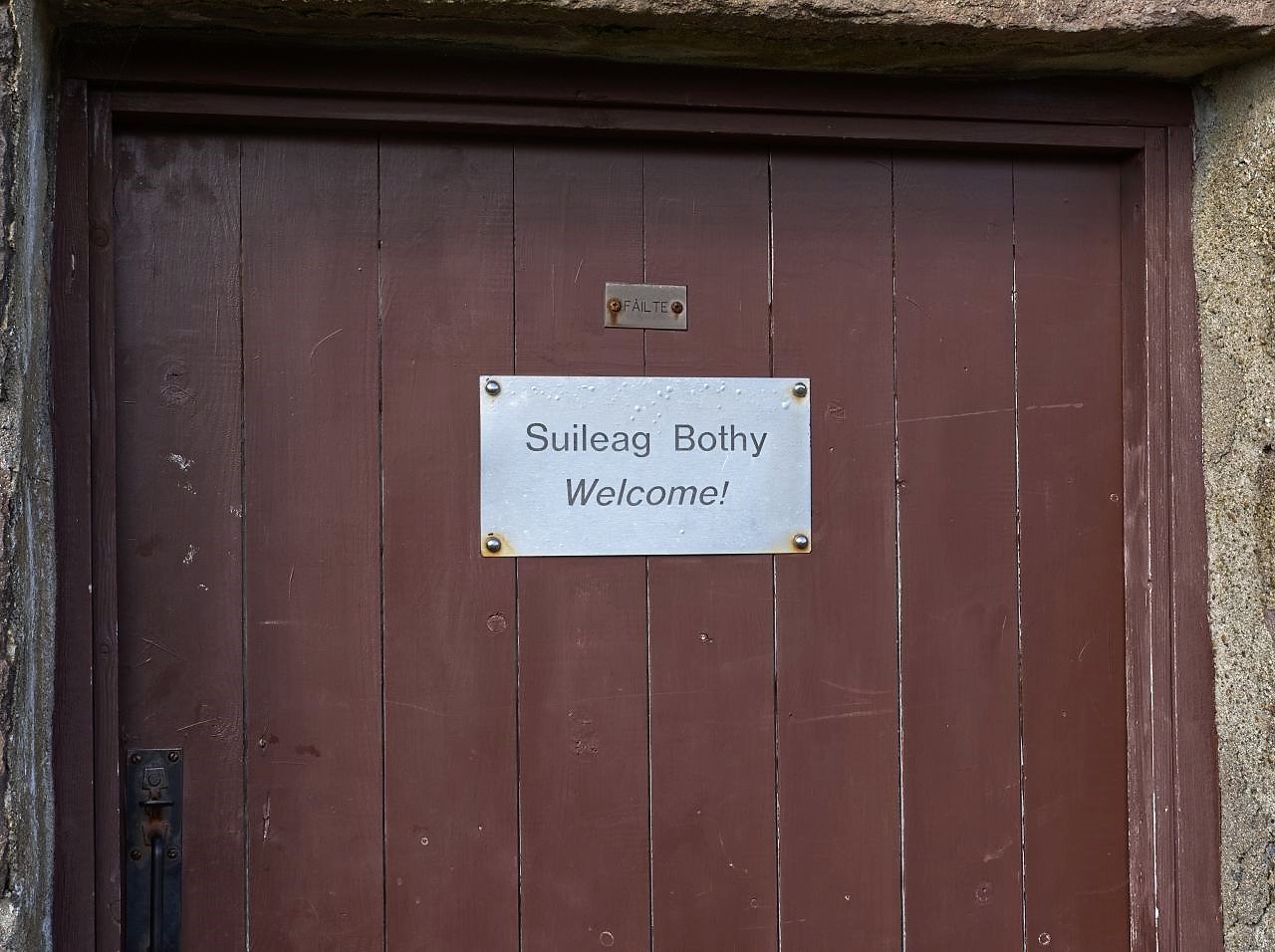
“Welcome” (After the end of lockdown that is!)

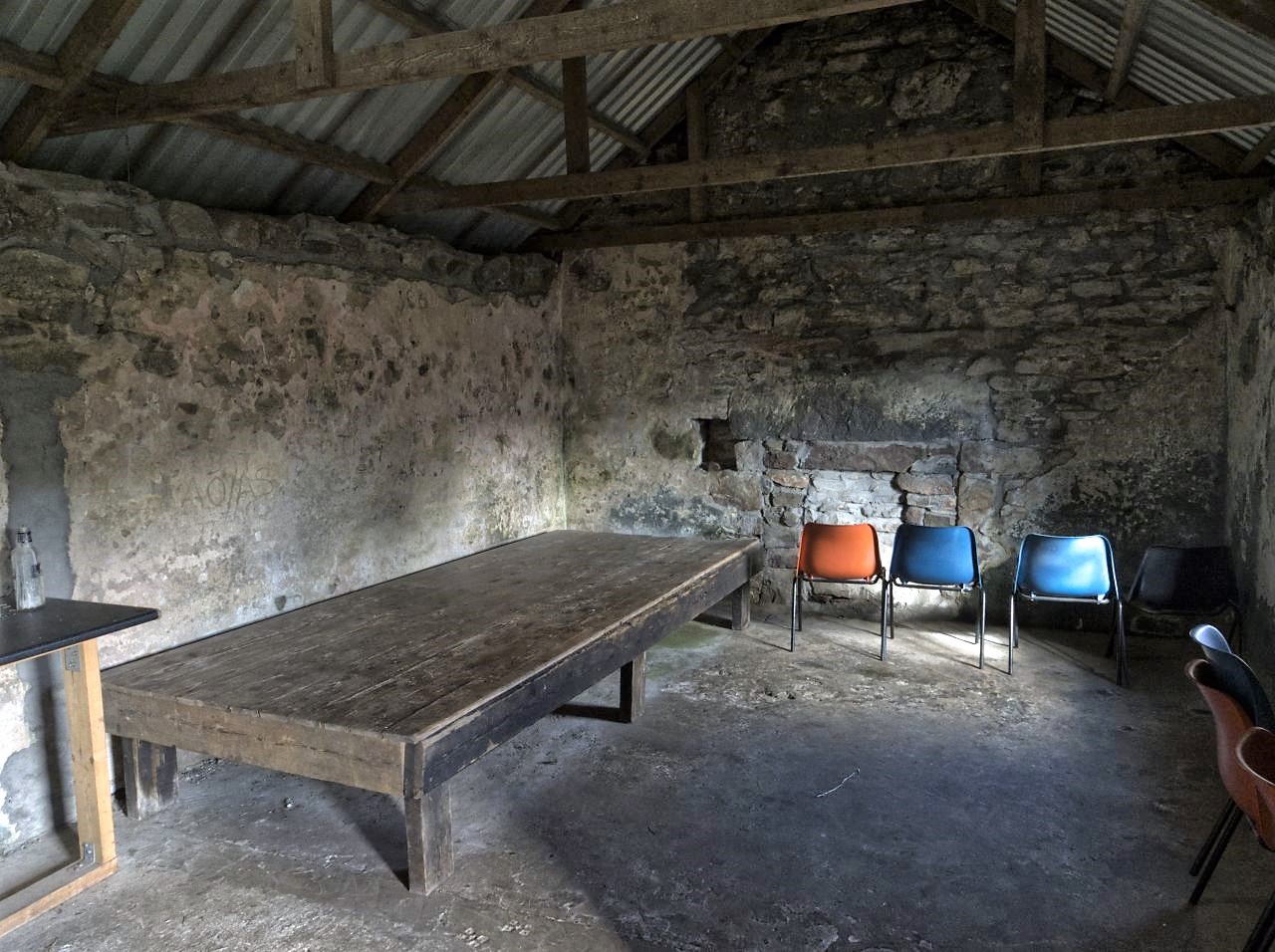
Entrance room with sleeping platform

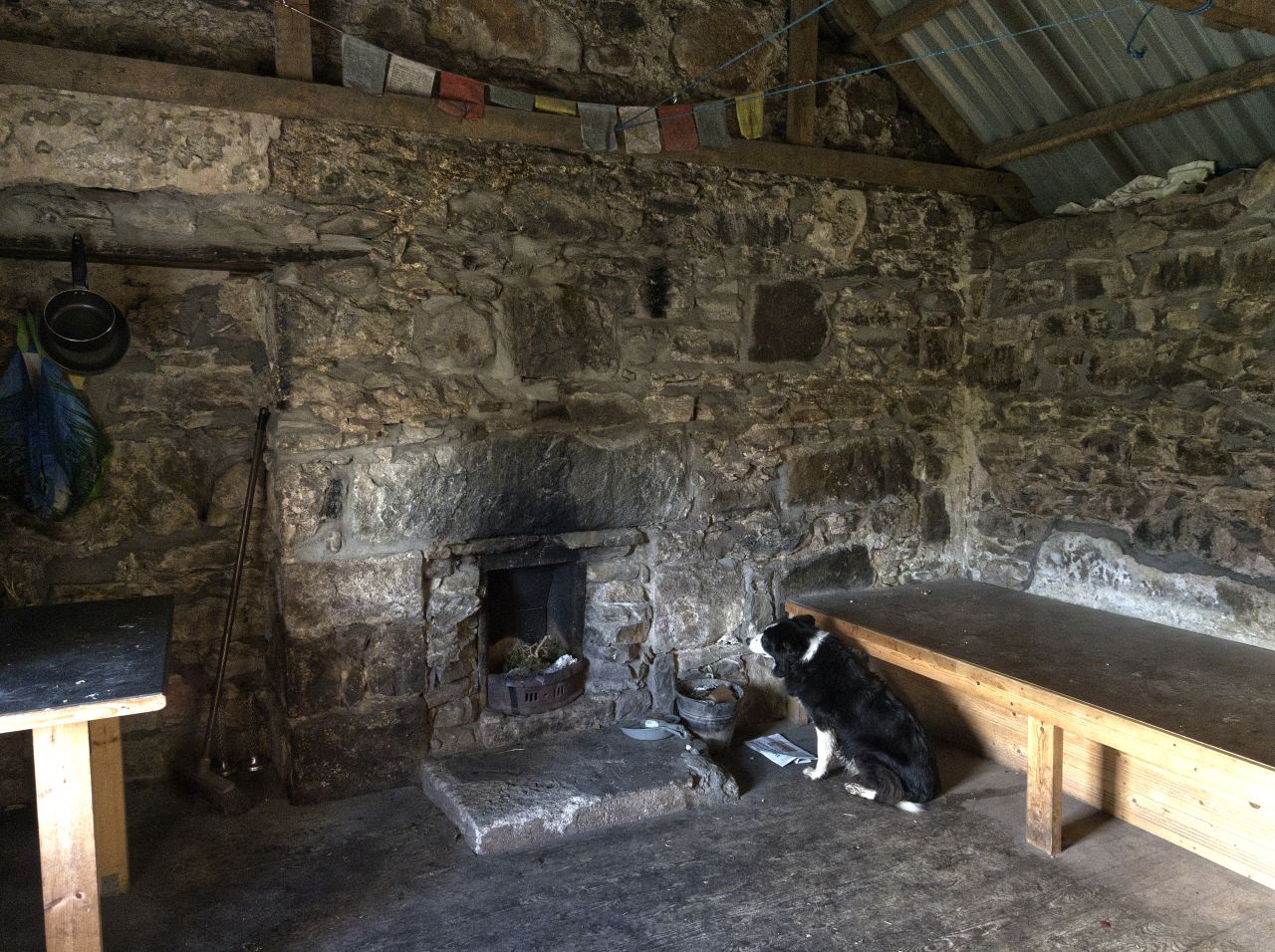
Border Collie ‘Mist’ checking out the fireplace

Suileag is a popular bothy with hikers, cyclists and mountaineers, but during the Covid-19 emergency, all bothies maintained by the Mountain Bothies Association have been placed off-limits. So, after a quick peek inside for a couple of photos, we turned round for the return to the car park near Glencanisp Lodge. Suilven was just as impressive on the way back as it had been on the way out to the bothy, but ‘Mist’ was much more impressed by the sound of her dinner dish being topped up when we arrived back at the van.

One final view of Suilven, then it’s ….

…. time to head for home

Text and images © Paul Shorrock except where otherwise indicated. Images tagged Craig Wallace and Jim Barton are taken from the Geograph Project and are reproduced under a Creative Commons Licence.
Posted in 1. Scotland, Aircrash Sites, Bothy days | Tagged , , , , , , , | Leave a comment

#287 – Loch Muick and ‘Dark Lochnagar’

The crags of ‘Dark Lochnagar’

(For the best viewing experience, left-click the images and maps to zoom in, then use your browser return arrow to go back – go on, it really does work!)

“Gasherbrum, Masherbrum, Distighil Sar,
All are good training for dark Lochnagar!”

Tom Patey

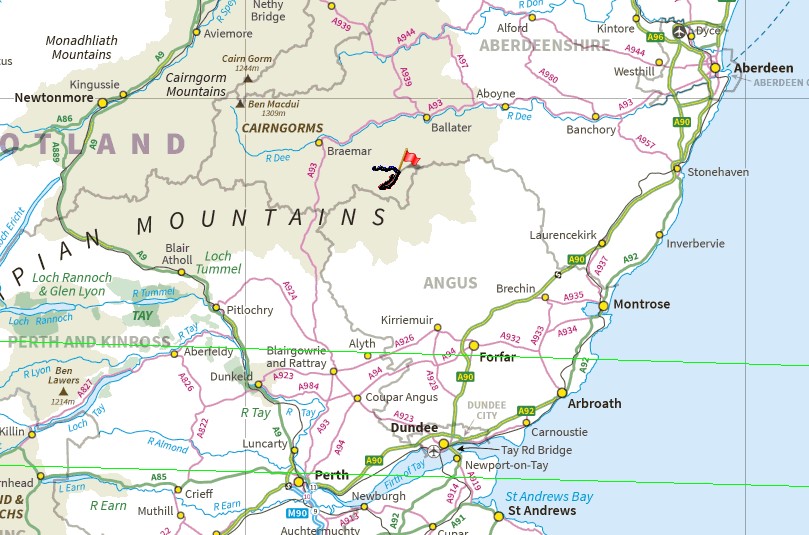
Loch Muick and Lochnagar in the Eastern Cairngorms (red flag marks the start point for both routes)

We were properly in the mountains now, and as it was mid-September (2020), we were not to be troubled by the dreaded midge, and the ones we had encountered the night before our day out on Morrone (see post #286) were the only ones we came across on our six-week Scottish trip.

The Eastern Cairngorms showing the Lochnagar area

Things were not entirely trouble-free though – on a couple of occasions on the trip, the starter battery for the van had let us down, and we had been saved by the solar panel topping up the battery while we went on an extended dog walk.   We would have to get it fixed, which is why one sunny morning we were driving to Aberdeen rather than the hills.

The routes – Red (clockwise) round Loch Muick and blue (there and back) to Meikle Pap, Lochnagar

By lunchtime we were sorted (thanks Kwik-Fit), with half a day still available.   ‘Plan A’ had been to drive to Ballater in the Dee Valley, then up Glen Muick to walk out to Lochnagar. Half a day wouldn’t give us enough time for ‘Plan A’, especially as we were still in Aberdeen, but it would be long enough for ‘Plan B’, which was to walk around Loch Muick. Which is exactly what we did. (Red route on the map above)

The Spittal of Glenmuick car park, full to bursting!

Over the summer, the road through Glen Muick (pronounced ‘Mick’) had been closed by the police on several occasions.   The lifting of the national Covid-19 lockdown had seen tourist attractions throughout the UK absolutely mobbed – people who had never shown the slightest interest in remote places and mountains suddenly swarmed there like lemmings, infected not with Covid but with the ‘Fear Of Missing Out’, and the Glen Muick road had been blocked by traffic more than once.

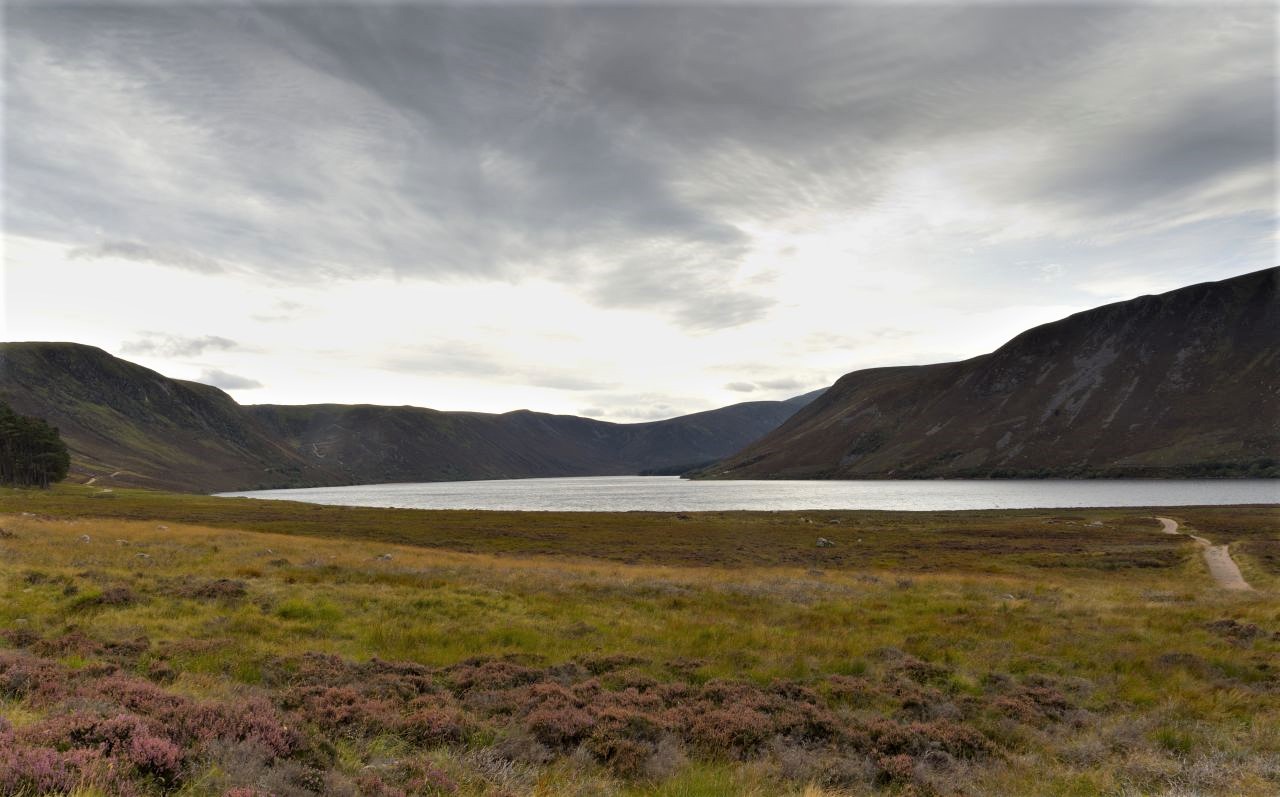
Loch Muick from Spittal – our route started by the track just visible on the far left

Reports of big crowds and anti-social behaviour was another reason why we had waited until September to take the trip, but kids were now back in school and parents were heading back to work.    So, we set out up the narrow Glen Muick road travelling hopefully. The road itself was quiet enough, but the car park at Spittal of Glen Muick was full to bursting, at a time of year when it could be expected to be less busy.   Fortunately, there were no buses making the trip and the coach car park had been made available for overspill parking.

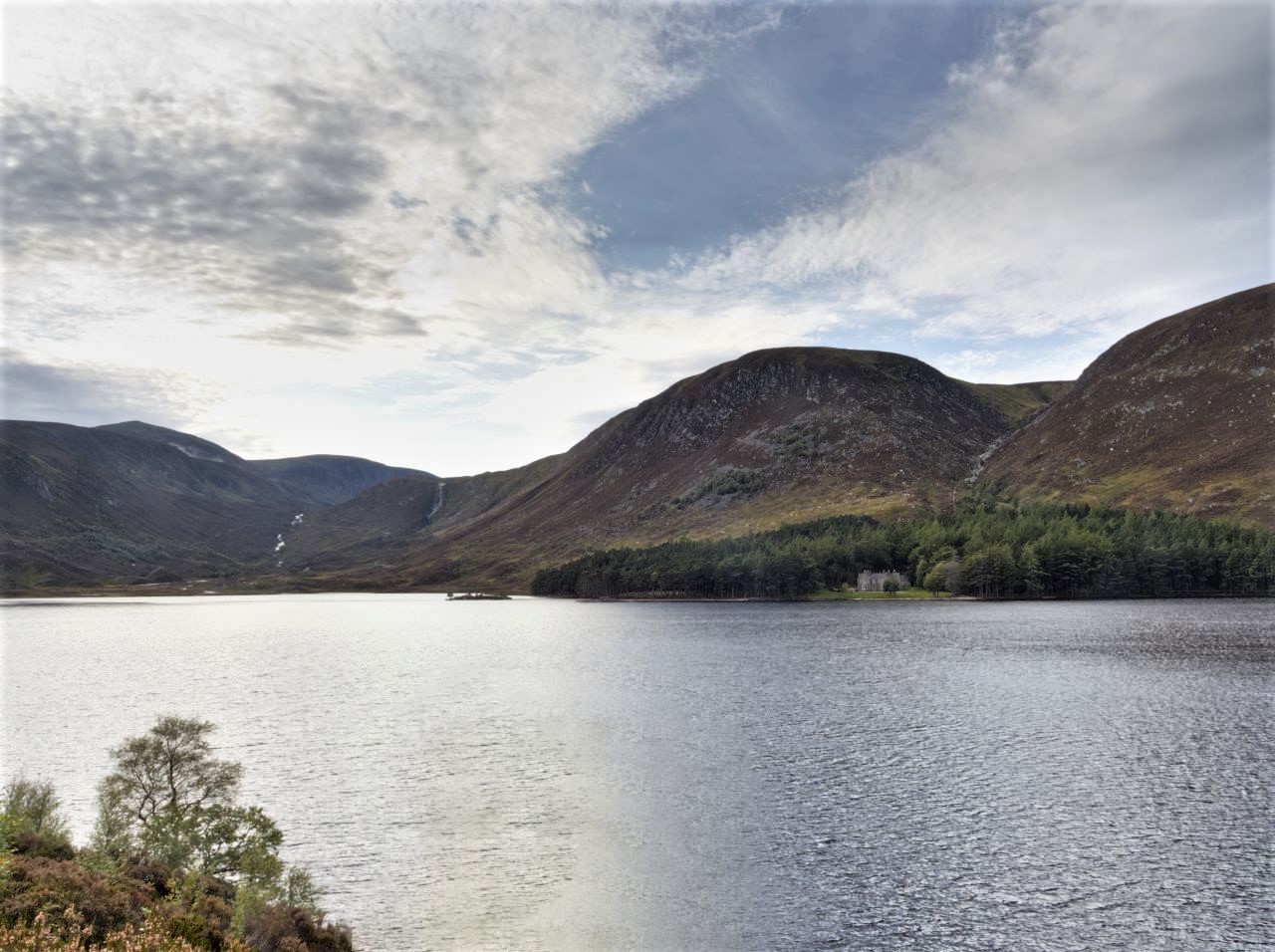
The lodge and wood at Glas allt Shiel seen across Loch Muick

Having lost more than half a day having a new van battery fitted, we didn’t waste much time hitting the trail for a hike around Loch Muick.   Going clockwise, we initially had the advantage of a good Landrover track to speed things up – as time was limited, we left the track before it rises up towards Broad Cairn, and instead followed the narrow path that follows the edge of the loch to the broad delta at its head.

Glas allt Shiel viewed from the far (west) side of Loch Muick

From the path we had a view across the loch to the lodge at Glas allt Shiel.   The original lodge, built in 1851 for one of the estate gillies, was a simple two-room affair.   Soon after it was built, the estate was leased to Queen Victoria (yep, that one!) who fell in love with what she and Albert called their “little bothie”.   There was a room set aside for royal parties, and the queen so loved it that she arranged to re-home the gillie and family near to Balmoral Castle.   The “little bothie” she loved so much was then demolished to be replaced by the current fifteen-room building!

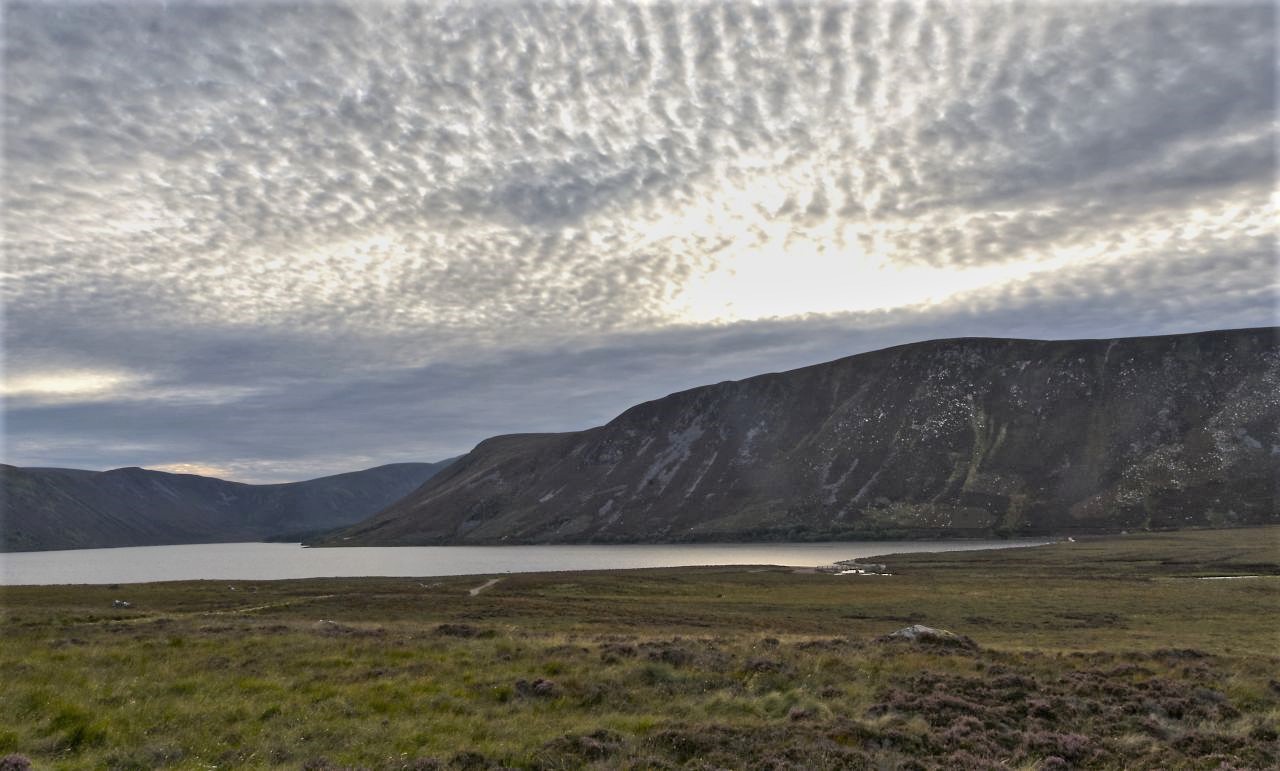
Looking from Spittal along the length of Loch Muick with afternoon turning to evening

The lodge is now part of the Balmoral estate, and is owned personally by Queen Elizabeth II.   As well as the usual estate facilities, it includes a building set aside as a free bothy for climbers and mountain walkers (out of use when we passed, due to Covid-19 restrictions). From Glas allt Shiel lodge we had a steady walk back to the car park at Spittal, just as the afternoon was turning to evening. Having rescued what could have been a wasted day, we decided to return a couple of days later for our original Plan A to walk up to Lochnagar.

* * * * *

This wouldn’t be the first time I had walked up to Lochnagar from Spittal.   In 1975 I was a member of 45 Commando Royal Marines, stationed at Arbroath on the East Coast of Scotland.  When the unit wasn’t deployed, weekends were free for recreational climbing and mountaineering, and as 45 was the premier British Mountain and Arctic Warfare unit at the time, this was actively encouraged.

The crags of Lochnnagar, Eagle Ridge in the centre © Unknown

In June 1975, four of us left Spittal in the early evening, to bivouac overnight on Meikle Pap.   The next day we crossed the corrie to climb Eagle Ridge, one of the finest rock climbs in Scotland.   The four smaller images above show (clockwise from top left) – The view of the crag from the bivi site (me in the centre with hair!), Brian climbing the snow slope (snow, in June!) to the foot of the climb, yours truly on the first pitch of the climb and Graham on the final pitch.   Happy days!

* * * * *

Setting out from Spittal to Lochnagar, with the woods and buildings at Allt na Giubhsaich ahead

The track gets a bit rougher ….

…. before we left it to take the path up to the corrie

First view of Lochnagar from the col below Meikle Pap

The start of the track from Spittal of Muick car park was pretty much as I remembered it from 1975, passing the buildings and woods at Allt na Giubhsaich on the way.   From there the track became a bit rougher as we started gaining height, before reaching a col where the track started descending towards Balmoral, and we branched off on a narrower path after a brew stop.   From there, a steady 1½ km climb brought us to the col below Meikle Pap.

Leaving the Meikle Pap col behind ….

…. and heading for Meikle Pap summit

Border Collie ‘Mist’ out front as usual

Sheltering from a chilly breeze on the summit

Our mountain trips in 2020 had been limited by the Covid lockdown, so Chris and I had decided that on this trip we wouldn’t push things too far and would only go as far as the summit of Meikle Pap, where we would have a good view of Lochnagar across the corrie. As it was, we would have been fine going on to Lochnagar summit, but our route for the day was a respectable 12½ kms with over 600 meters height gain – a chilly breeze made sure we didn’t hang around too long on the summit.

Time to head for home ….

…. but we have company!

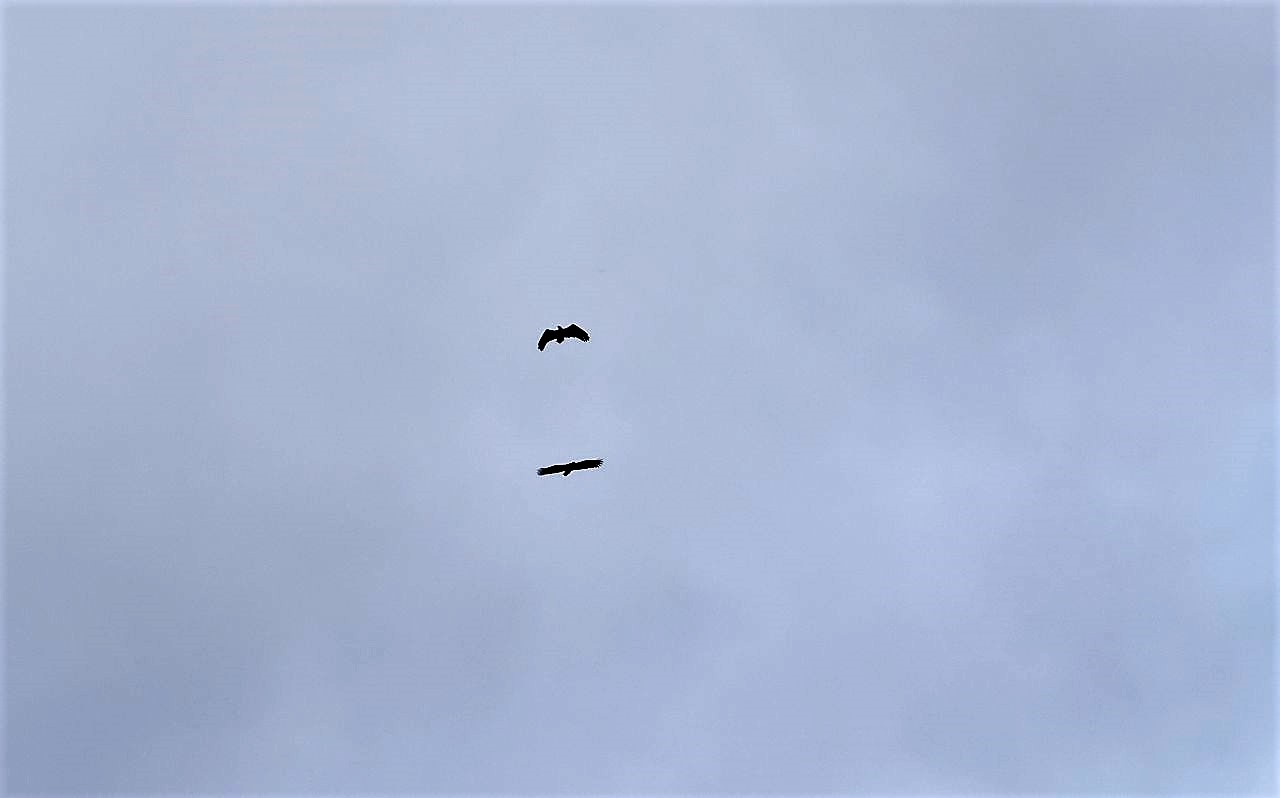
A pair of golden eagles ….

…. who stay with us for a few minutes

Then it was time to retrace our steps and head for home.   We had only just left the col when I saw that we had company – a pair of golden eagles.   I did my best to get some photos, but working with a focal length equivalent of 80mm, I was never going to get any pics with good detail unless the birds decided to land in front of us!   Still, the shots I did get shown the unmistakable silhouettes of these magnificent birds.  Even better are the memories of them soaring overhead – I think even Border Collie ‘Mist’ was impressed!

Then it really is time to head for home

Text and images © Paul Shorrock
Posted in 1. Scotland, Wildlife | Tagged , , , , , , , | 4 Comments

#286 – Morrone, Braemar and the Upper Dee Valley

The view from Morrone looking west towards Mar Lodge, with the Cairngorms beyond

(For the best viewing experience, left-click the images and maps to zoom in, then use your browser return arrow to go back – go on, it really does work!)

Braemar and the Upper Dee Valley is one of my favourite locations in the North East of Scotland – if only one reason had to be given, it would be the availability of a couple of spots where it’s possible to park a campervan overnight without annoying (or being annoyed by)  anyone else (see post #258).

Braemar in the Upper Dee Valley

When we arrived, our favourite spots had already been grabbed by a couple of vans, but I had another likely location up my sleeve, tucked away on the edge of a wood – it was the only place on our six-week autumn trip of 2020 where we encountered the dreaded Scottish midge, and these were few in number and docile by standards.  All we needed now was somewhere interesting for a hike the next day.

The route, anti-clockwise from Braemar

The obvious contender was the isolated mountain of Morrone, standing 859 metres in altitude.    The map shows a path from Braemar up the northeast shoulder of the hill, with what appeared to be a vehicle track descending southwest from the summit.   The Scots Gaelic name Morrone translates as ‘Big Nose’, which given its shape and location was fair enough.

Viewpoint on the route out of Braemar, with a cloudy looking sky

Looking down to Braemar

Glen Quoich, where it joins the Dee Valley

Part of the aim of our extended Scottish trip was to get around to a few locations recommended for their photographic potential – although Morrone isn’t the kind of hill to raise excitement levels unduly, it was said to have great views of the nearby mountains of the Cairngorms.

The view of the Cairngorms from the slopes of Morrone © Alan Findlay

Most of the best photographers, the ones who make a living out of it, will plan a shoot well in advance, researching where the sun will be at different times in order to get the best image.    I’m more of an opportunist – I’ll research some promising looking views, but then travel hopefully.    Sometimes this comes together, other times the light is disappointing or the cloud base intrusive.

The view of the Cairngorms that we had

This might appear a bit slap-dash, but it makes you look for opportunities which might otherwise be missed  – it’s also more fun, a bit like going hunting for the sake of the chase.  On this trip, the nearby Cairngorms were obscured by poor light and low cloud, but fortunately I don’t need to sell an image to pay for dinner.    However, the trip was a good recce for the future, and I’ll probably be back sometime when the light is more promising.

‘Mist’ and the ‘Five Cairns’

Four of the Five Cairns

The view looking back to the Five Cairns

In the meantime, Border Collie ‘Mist’ was having a great time doing her own hunting – there must have been a multitude of interesting scents and smells, going by the way she was ranging.   Then, at around the 740-metre contour, we came across a mysterious looking line of five cairns.    An internet search later provided the solution to the mystery – it’s probably nothing more complicated or mysterious than a load of stones dumped to repair the path!

Near the summit, approaching the communications mast

The summit is much more interesting, though purists might not like the addition of a communications mast and associated outbuildings.  The first structure built here was a radio relay installed by the Braemar Mountain Rescue Association in memory of Brian Goring who died from hypothermia in the Cairngorms in April 1967.

View of the other side of the mast and outbuildings © Gordon Brown

The next addition was a small research station installed in the 1970s by the Institute of Environmental and Offshore Medicine at Aberdeen University, to research the treatment of hypothermia in the field.  This was followed by an automatic weather station, similar to the one on the summit of Cairngorm (see post #253).

Memorial plaque on the radio relay hut © Nigel Corby

All these are sufficient in my mind to justify the summit buildings, but if you still aren’t convinced, ask yourself this question – why do you think there is such a good 4G mobile phone signal in the surrounding area?   There can be little doubt that the combined Morrone installations will have saved lives over the past 50 years.

About to leave the summit, with the view southeast to Loch Callater

We didn’t linger long at the summit – there was a chill breeze, and one of the few sheltered nooks in the buildings was already occupied by a group taking a lunch break out of the wind.   There was just enough time and motivation to grab a quick shot of Loch Callater (see post #259) about 7 kms (4 miles) away to the southeast.

The track heading southwest from the summit

Looking back to the summit of Morrone from the track

The Landrover track that serves the summit installations allowed us to make rapid progress, losing height at the same time as generating warmth – I bet the researchers who worked on the hypothermia project on Morrone could have told us that, but I already had a good idea that might be the case.

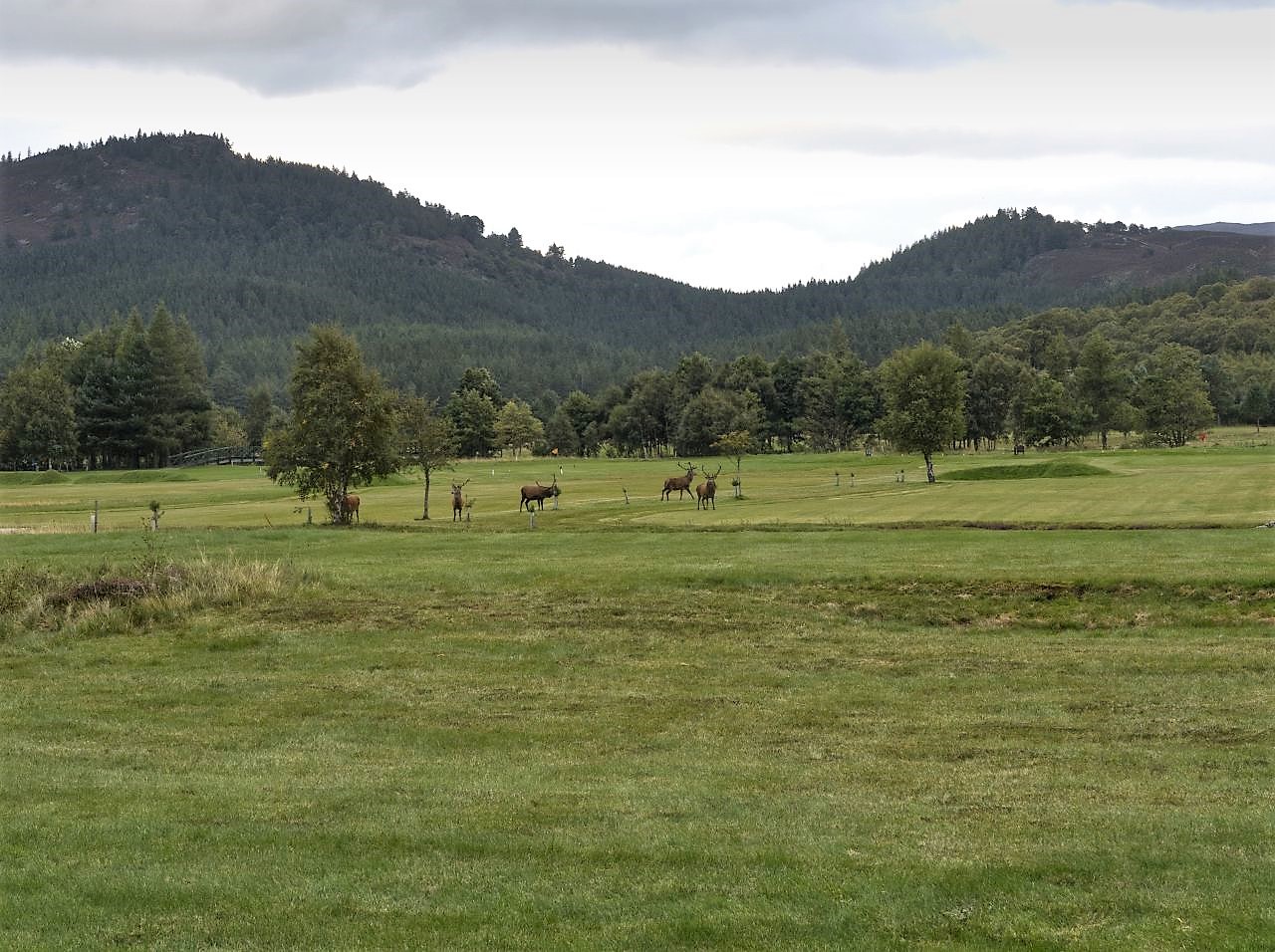
Red deer on Braemar golf course

Lower down we joined a quiet minor road, constructed in 1748 as part of the network of military roads built after the rebellion of 1745 but now bypassed by the faster A93 road on the other side of Clunie Water.   From there it didn’t take us long to reach Braemar, passing through the golf course on the way.    The main party on the course was a group of young red-deer males – I’ll bet you they aren’t members!

I bet they aren’t members!

Text and images © Paul Shorrock, except the images tagged Alan Findlay, Gordon Brown and Nigel Corby, which are taken from the Geograph Project and are reproduced here under a Creative Commons Licence.

http://www.geograph.org.uk/

p.s. More from the North East in the next post.

Posted in 1. Scotland, Wildlife | Tagged , , , , , , | 8 Comments

#285 – Wheels and Water Spirits

The mountains of Assynt in the far Northwest of Scotland

(For the best viewing experience, left-click the images and maps to zoom in, then use your browser return arrow to go back – go on, it really does work!)

2020 was a year to remember, but for all the wrong reasons!   The Covid-19 lockdown managed to coincide with the best spring weather conditions enjoyed in the UK for years, and it was frustrating to have to put a planned trip to the Scottish Highlands on the backburner.

The River Avon as seen from Tomintoul, with the Cairngorms in the distance

Travel restrictions were finally lifted in Wales in July, and plans were made to head north to Scotland.  The only factor to delay us was midge season!  Those who have never endured a full-on swarm of Scottish midgies can’t understand what a complete pain in the arse they are – suffice it to say that 20% of working days in the Scottish forestry industry are lost each year due to midge activity.

Glencoe – Gearr Aonach (left) and Aonach Dubh (right) with Stob Coire nan Lochan rising behind

The Scottish midge season is at its worst from the beginning of June to the middle of September, definitely a time to avoid the Highlands.   So we wouldn’t be going in July then!    On the other hand, delaying too long would bump into autumn, with the chance of the good weather going down the pan.   Then Chris had the idea of mooching up the East Coast of Scotland, seeing places we don’t normally see.

Coire na Ciste and the North Face of Ben Nevis on a murky day

The title of this blog (One Man’s Mountains – One Pillock’s Hillocks) is a bit of a clue as to where my main outdoor interests lie.   Still, we could set off for the (usually) midge-free East Coast and see some of the sights, before heading for the mountains when the midge season was over.    Which is exactly what we did, eventually taking a six-week trip where we visited all the places in the photos above and more besides (blog posts to follow).   But, before the mountains, we went to see a wheel and a couple of water spirits.

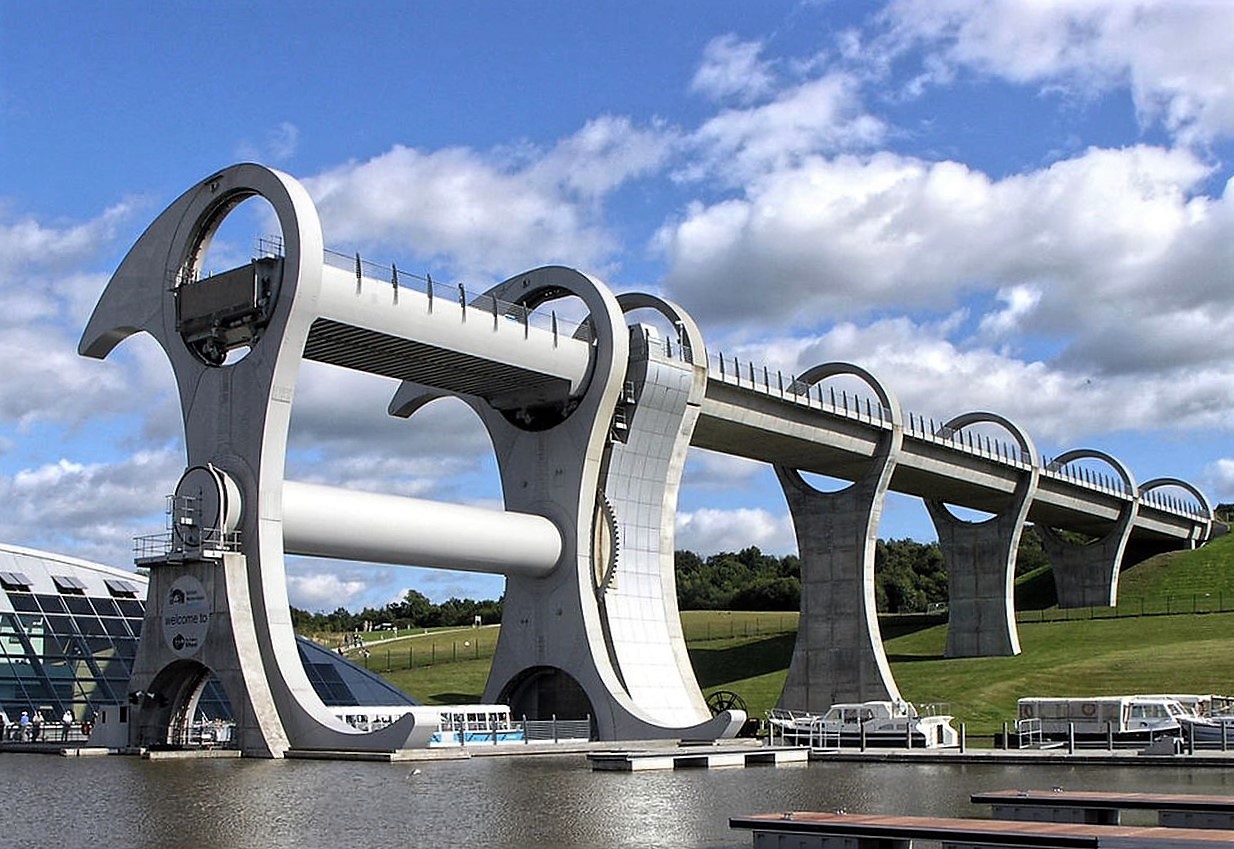
The Falkirk Wheel on a sunny day (© Sean McClean)

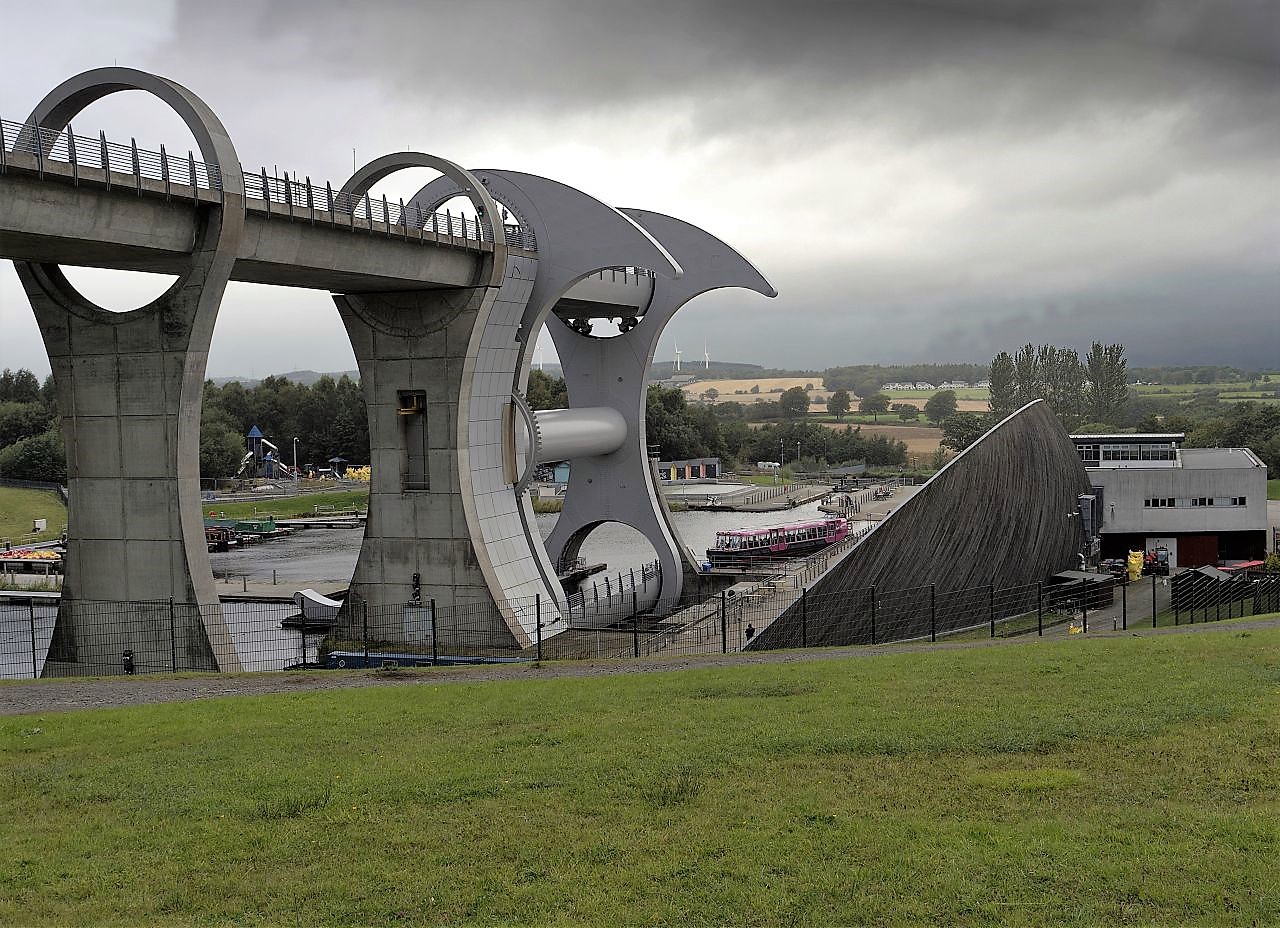
Not sunny on our visit! (Note the boat just below centre about to enter the Wheel)

The Falkirk Wheel is a rotating boat lift which has been described as “the largest piece of functional sculpture you will ever see”.    It was opened in 2002 as the ‘Millennium Link’, joining the Union Canal and the Forth and Clyde Canal for recreational boating.   The lift is 35 metres (115 ft) high and replaces what was previously a series of eleven locks in the 19th Century.

The Wheel in action, with the gondola lifting the canal boat to the upper level

Closer view of the boat in the lift

The wheel consists of two gondolas, each containing 300 tonnes of water, meaning that the wheel moves 600 tonnes on each lift, but as the gondolas balance each other, the wheel can raise or lower the boats using just 1.5 kWh of energy, no more than it would take to boil the water in eight domestic kettles.   After watching a couple of canal boats making the transfer, it was time to give Border Collie ‘Mist’ a run – near to the Wheel is one of the best-preserved sections of the Antonine Wall, built by the Romans nearly 2000 years ago, and the engineering feat of its time.

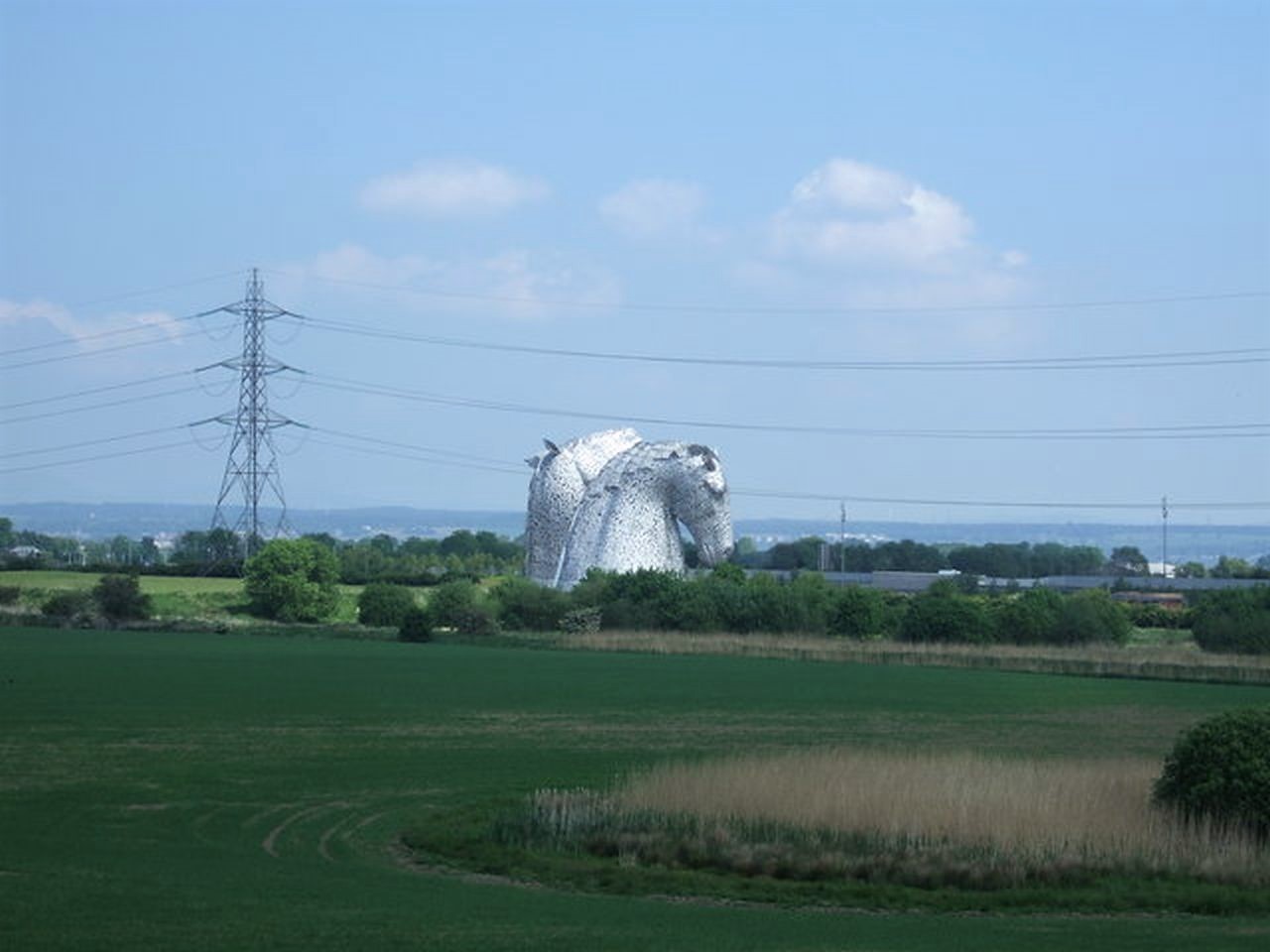
A view of strange horses, seen from the M9 Motorway (© J Thomas via the Geograph Project)

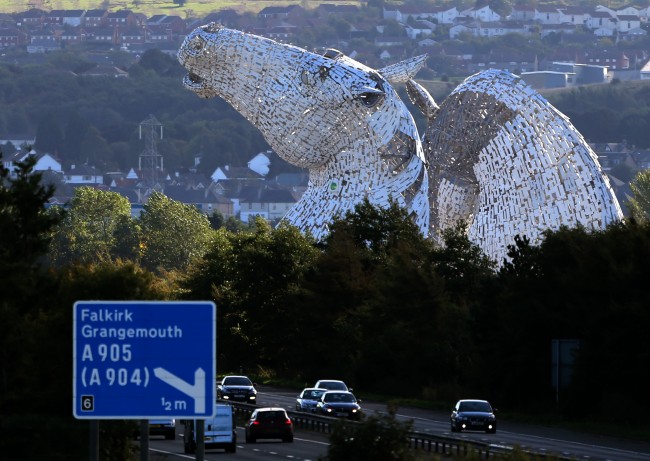
As seen from the M9 Motorway (© unknown)

It’s about a 20 km (12½ mile) walk from the Falkirk Wheel to the Kelpies, but we were driving there as we had discovered that overnight parking in campervans is permitted.  Our route took us through a mundane urban sprawl that could have been anywhere in the UK, but for drivers travelling on the M9 Motorway between Edinburgh and Stirling, the view of two strange horse-like beasts is anything but mundane.

The Kelpies by day, an amazing sight

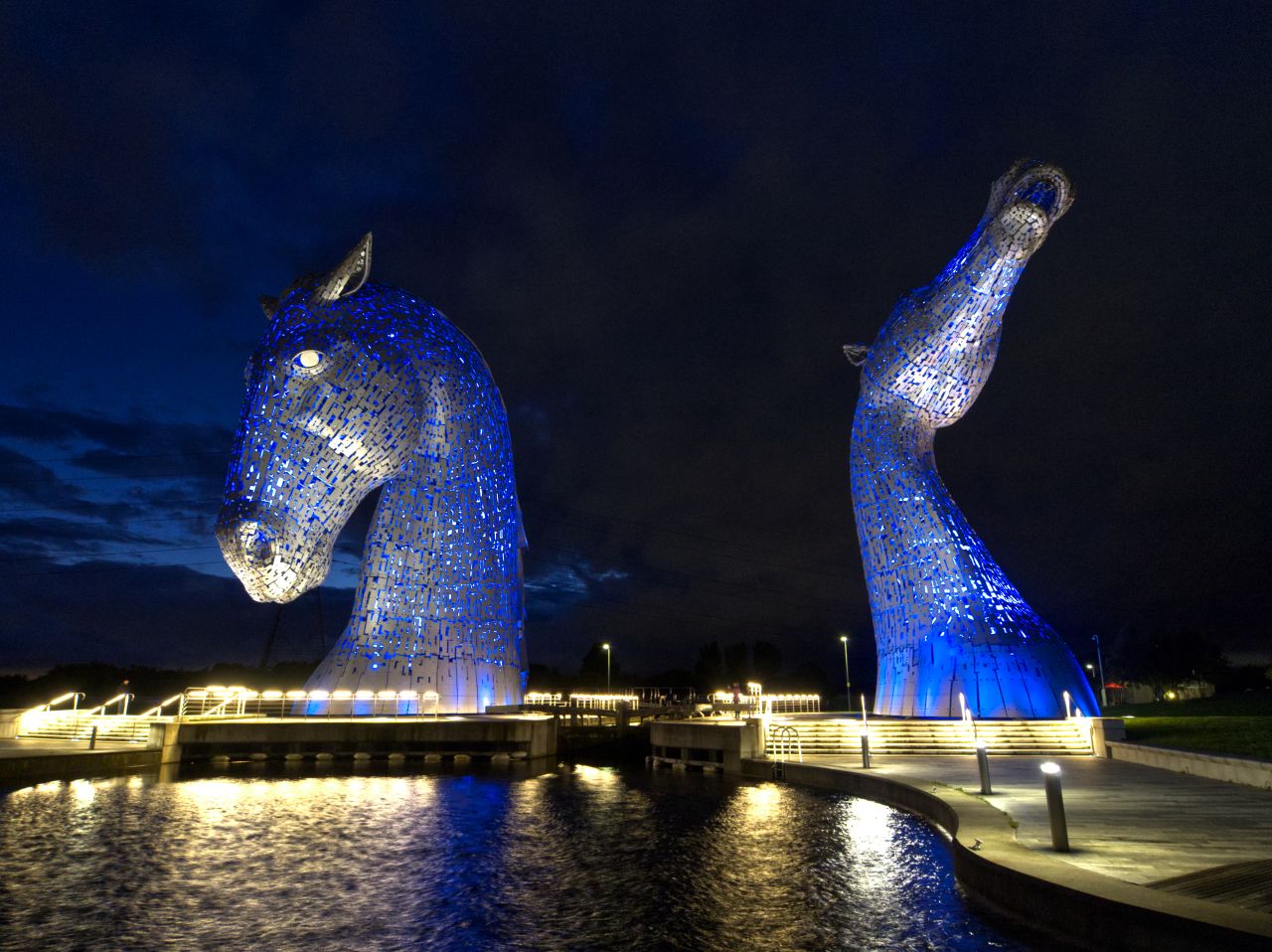
The two Kelpies are each 300 tonnes of structural steel with a stainless-steel cladding, standing 30 metres high (almost 100 ft).  The horse head sculptures, inspired by Clydesdale drought horses, depict shape-shifting water spirits, described in Scottish folk tales and myths.    Knowing that beforehand still doesn’t quite prepare you for an amazing sight.

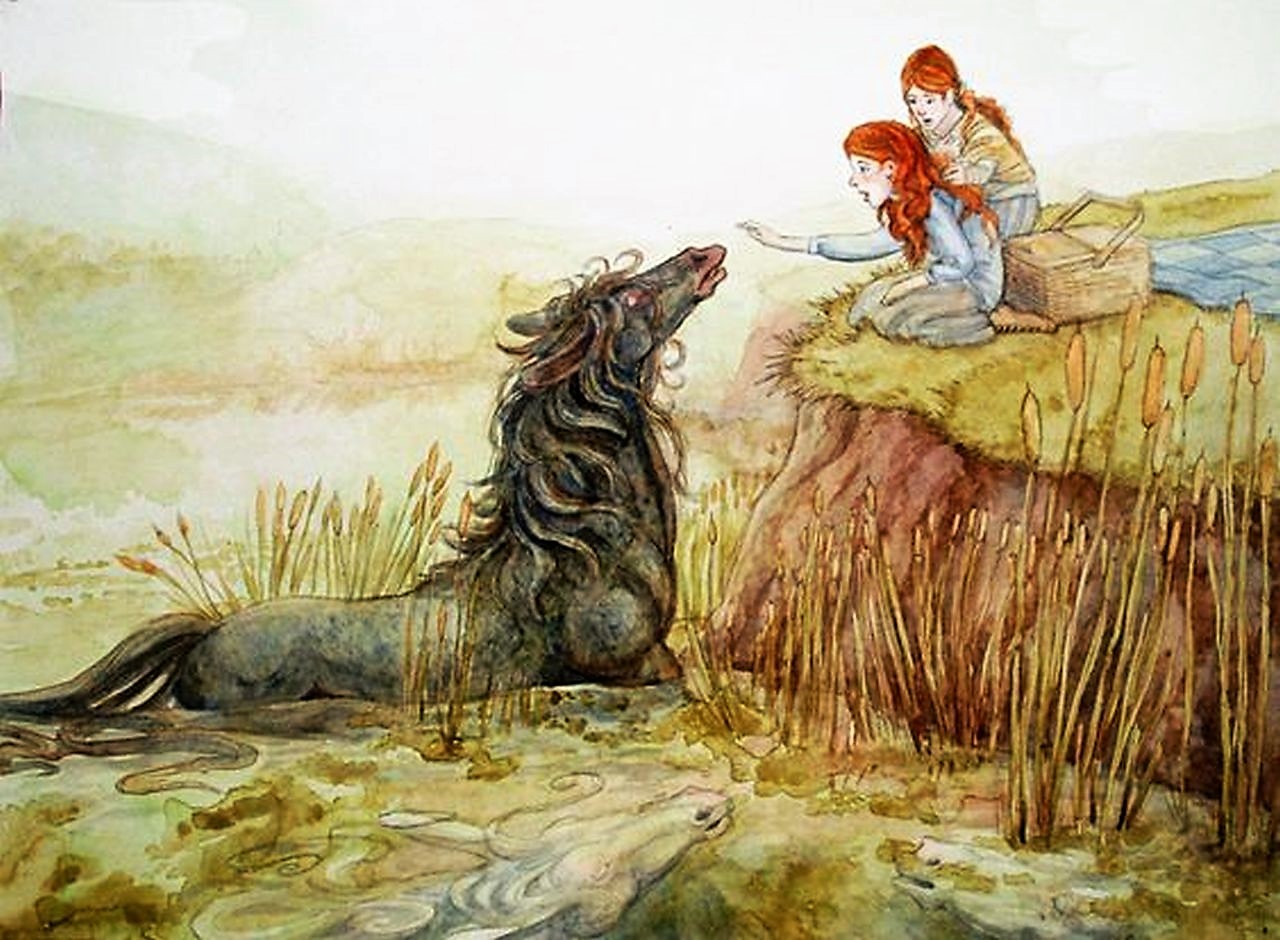
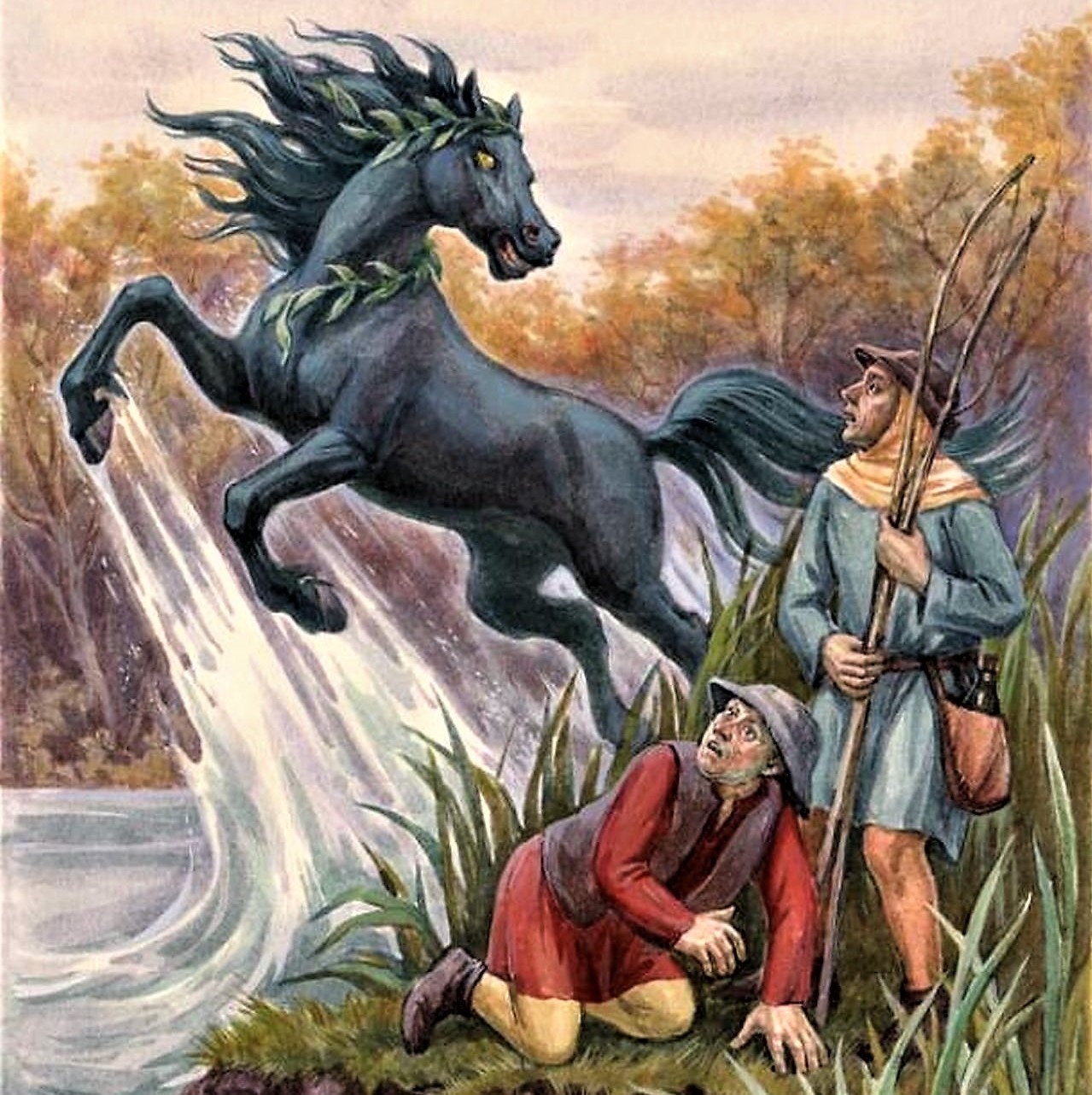
Kelpies in myth and legend

Kelpies in myth and legend

In Scottish folklore, Kelpies are spirits usually in the shape of a horse, who are said to haunt deep pools in rivers and streams.   We are not talking about ‘My Little Pony’ here though.    They have the strength of a hundred horses, and anyone foolish enough to try to ride one will find themselves unable to dismount – once trapped, the victim is dragged into the river and eaten!   They may also materialize as a beautiful woman, hoping to lure young men to their death.    There, you’ve been warned!

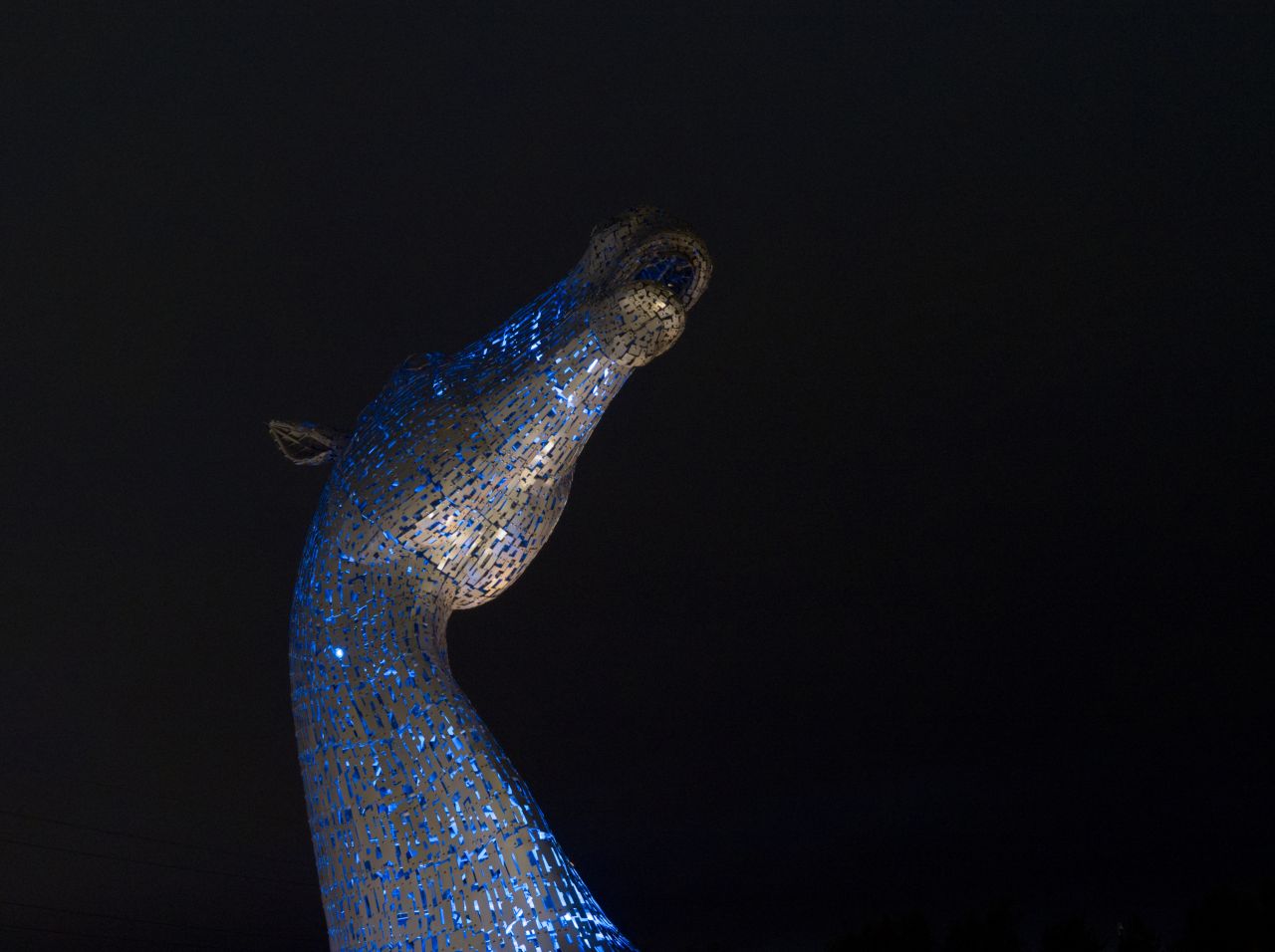
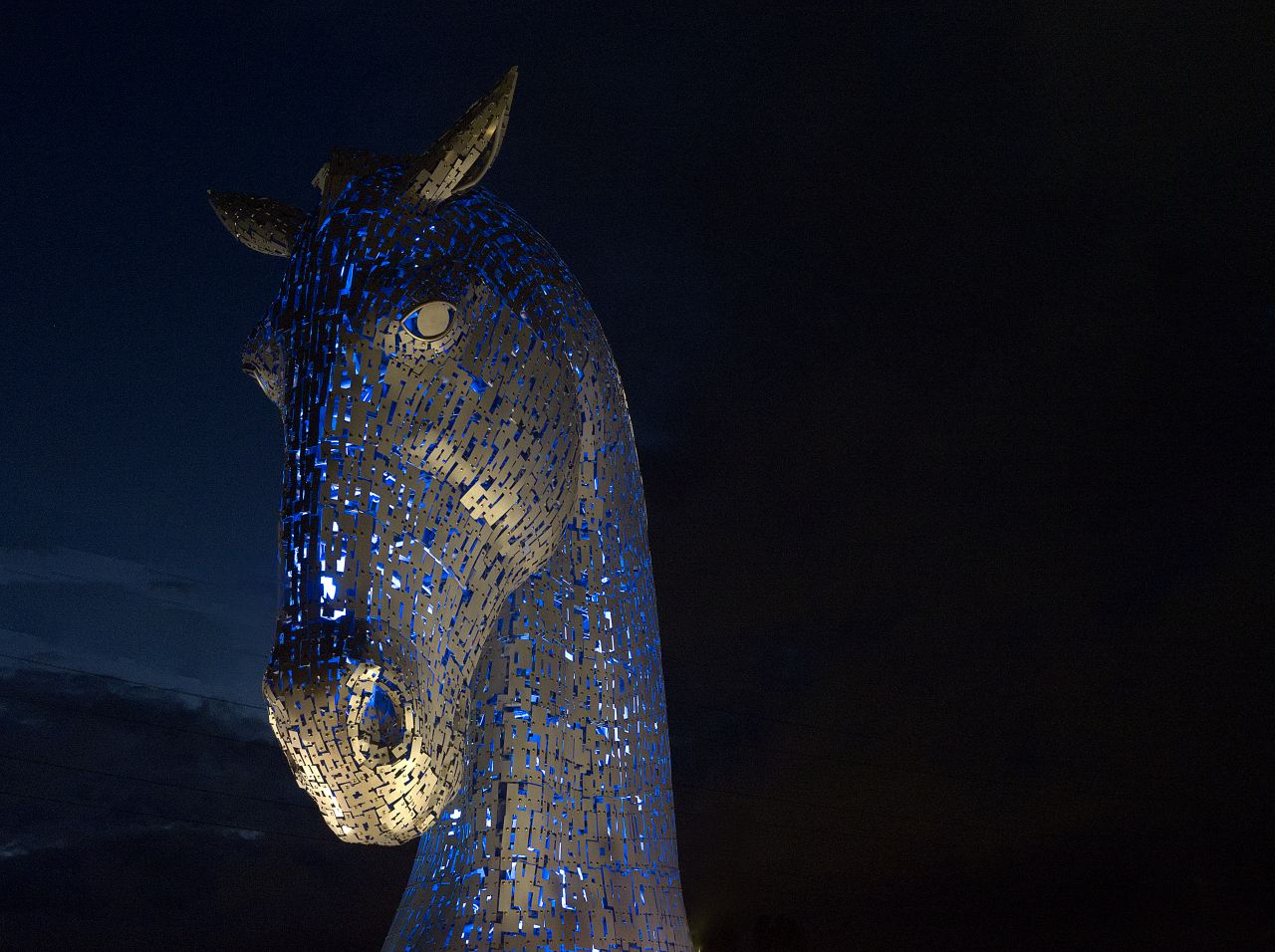
Even more impressive at night

The two sculptures stand as the gateway guardians to the Forth and Clyde Canal, and if they are impressive by day, they are doubly so at night when they are illuminated.    ‘Mist’ was especially impressed, as a night visit for photographs meant yet another dog walk – good enough reason for the Border Collie to like kelpies.

The Kelpies at night showing the canal basin, the gateway to the Forth and Clyde Canal

Text and images © Paul Shorrock except where indicated otherwise

p.s.  Yes, we did get amongst the mountains in the Highlands – drop into the next few posts for the stories

Posted in 1. Scotland, Uncategorized | Tagged , , , , , | 3 Comments

#284 – Cwm Eigiau in the Eastern Carneddau

Craig yr Ysfa in upper Cwm Eigiau

(For the best viewing experience, left-click the images and maps to zoom in, then use your browser return arrow to go back – go on, it really does work!)

2020 is going to go down as one of the strangest years ever – and that’s me being polite! April, May and early June were blessed with the best UK hill and mountain conditions for years, but due to the Covid-19 lockdown, the mountains were out of reach unless you actually lived within walking distance of them. Sure, we got to know our own local hills a bit better (see posts #275 and #276) but Snowdonia was out of reach despite being only 40 km (25 miles) away from home.

The Carneddau

The route in blue, anti-clockwise from the cap park (the red alternative to Foel Grach was abandoned)

As the end of 2020 came racing towards us, I realised that I hadn’t been on my favourite Welsh Mountains, the Carneddau, for almost two years. A favourable sounding weather forecast held the promise of a good day out, so Chris and me (plus Border Collie ‘Mist’) set our sights on Foel Grach, one of the easier mountains on the east side of the Carneddau range.

Looking towards lower Cwm Eigiau, near to the start point

First snow of the winter at about 600 metres on Cefn Tal Llyn Eigiau

A rare photo of the author!

Coming off Cefn Tal Llyn Eigiau to the Gledrffordd plateau ….

…. where the weather starts closing in

The road to the start point of the walk must be one of the narrowest in North Wales, a land with more than its fair share of narrow roads. The plan was to follow a route we have taken before (see post #134) following the broad Cefn Tal Llyn Eigiau ridge to a low plateau at Gledrffordd, then up to Foel Grach on the rough line of a Right of Way path shown on the map. We would then follow the RoW path down to Cwm Eigiau and return to the car by the old quarry track. Well, that was the plan.

The refuge on Foel Grach, seen on a visit in June 2013

The refuge isn’t obvious as it blends in with the rocks (June 2013)

Chris getting comfortable (June 2013)

Not big – but big enough to escape a storm (June 2013)

At an altitude of 977 metres (3205 ft), Foel Grach (translates as ‘bare, scabby hill’) is fairly unremarkable despite being the eighth highest mountain in Wales. The main highlight of the visit is a small but substantial stone shelter, where it’s possible to escape the wind and rain to enjoy dry sandwiches. That aside, the shelter has probably saved lives over the years, as the Carneddau Plateau is wild, open and exposed.

Difficult snow and iffy weather – it’s decision time!

It’s just a 10 km hike to complete the Gledrffordd /Cwm Eigiau circuit, leaving an option of an extra 3-4 kms diversion to and from Foel Grach. As we reached the 600-metre contour, it became obvious that Mr Snow had paid a visit – at first it was soft and slushy, followed by powdery, which slowed down progress more than a bit.

Taking the detour to the descent to Cwm Eigiau

The main problems came with the frozen sections – several metres of good, hard snow would help us pick up the pace a bit, but just as we came to trust the frozen crust, it would collapse. Time was slipping away, so it wasn’t a difficult decision to miss out Foel Grach, and to head straight to the descent to upper Cwm Eigiau.

The first view of the climbers’ crag of Craig yr Ysfa, hiding in the murk

Craig yr Ysfa in full view as we descended into the cwm

Closer view of Craig yr Ysfa

The navigation was a doddle, even with poor visibility. There are two ring contours at around 730 metres on the Gledrffordd plateau– a rough bearing of South West followed the faint snow-covered path, and the two ‘bumps’ indicated where we were. When we started to gain height for the third time, it was time to ‘hang a left’ and to follow the contour. The GPS came in useful towards the end, where the descending RoW path to Cwm Eigiau is vague at the best of times, but the sight of the climbers’ crag of Craig yr Ysfa, confirmed that we were on the right track.

The last bit of the descent to the remains of the old quarry in upper Cwm Eigiau

Looking back to Craig yr Ysfa, with the sun just about to go down

The descent to the remains of the old quarry buildings was as soggy as I have ever seen it, probably due to meltwater as much as rain. The sun was about to go down as we took the quarry track back to the car, but the light remained good all the way back – more’s the pity, as I like a night walk. More importantly, the rain held off, and I only felt the first drops as I took one last photo of the night creeping in – now, that’s good timing!

The walk out of the upper cwm – time to head for home

Night creeps in just as we get back to the car

Text and images © Paul Shorrock

Posted in 5. North Wales, Bothy days | Tagged , , , , , , , , | 5 Comments

#283 – Elidir Fawr revisited

Elidir Fawr standing above the small lake of Marchlyn Mawr (Olympus E-M10 with ultra-wide lens)

(For the best viewing experience, left-click the images and maps to zoom in, then use your browser return arrow to go back – go on, it really does work!)

It was near the end of August 2020, and we had planned for a long trip away to Scotland in the camper, with the hopes of getting in some mountain walking days. The problem was, neither Chris and I (or Border Collie ‘Mist’ for that matter) had been getting in any mountain hikes during the Covid-19 restrictions. I felt the need for a good solo yomp, and I had just the hill in mind – Elidir Fawr.

Snowdonia with the Glyderau central, the Carneddau (North) and Snowdon Range (South)

The last time I had been on the mountain had been, incredibly, a long eight years earlier (see post #90) when I had gone up from Nant Peris. The thing is, from that direction, Elidir Fawr is a bit of a one-trick pony, but there’s another approach from the Deiniolen side of the mountain – that would do nicely!

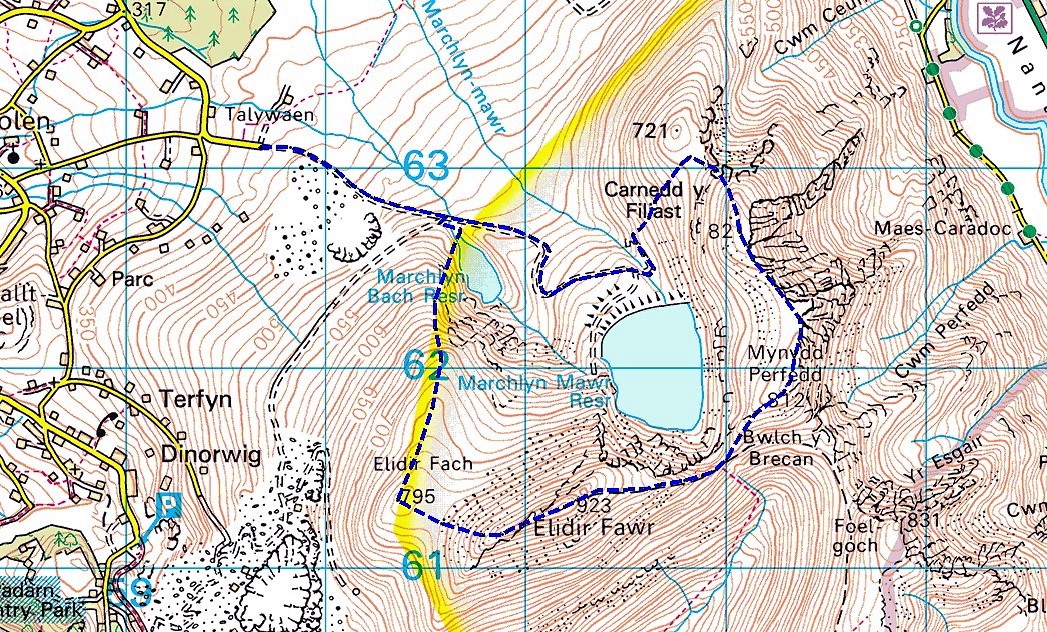
The Route, clockwise starting at Talywaen near Deiniolen

I also wanted to make it a photographic trip – I’m very much an Olympus fan, and my regular camera is the E-M5 Mk3, which is weatherproof. The day was looking to be fair though, and the trip wasn’t very long, so I decided to take along my non-weatherproof E-M10 as well, with an ultra-wide lens to save the trouble of constant lens swapping – to give an idea of the width possible, the first image in this post was taken using the E-M10 and the ultra-wide lens. (I’ll put some notes at the end of this post for the camera geeks amongst you)

The road up to Marchlyn Mawr, with Carnedd y Filiast standing above

The route starts with a walk up a road, and as ‘Mist’ and I walked up we were passed by several cyclists on what is a fairly steep climb! The road seems a bit out of place unless you have looked at the map for the area – it’s there to service the reservoir of Marchlyn Mawr. Unlike many Welsh reservoirs that provide water for distant towns (and not all of them in Wales) Marchlyn Mawr is part of a power station.

Carnedd y Filiast (right) with the unnamed top, aka Spot Height 721 metres

Dinorwig power station has become a tourist attraction in its own right, known to the world as ‘Electric Mountain’. Cheap off-peak electricity is used to pump water from Llyn Peris in the valley up to Marchlyn Mawr. When there’s a sudden surge of demand for electricity (tea breaks during important televised football matches are typical) the water can be released to provide almost instant power.

The start of the height gain up to Spot Height 721

Before too long I had left the hardy cyclists behind on the service road and set off up the slopes of an unnamed summit at a height of 721 metres. Although totally unremarkable in many ways, the altitude of 721 metres is above the arbitrary 2000 ft (610 metres) that in the UK designate a hill as being a mountain – poor old 721 might not have a name, but it is the most northerly mountain in the Glyderau Range.

The view across to Elidir Fawr ….

…. and the mountains of the Carneddau on the other side

The northern slope of Carnedd y Filiast seen from Spot Height 721

From Spot Height 721 I had a great view across to my main objective, Elidir Fawr, and in the other direction I had a panorama of the Carneddau Mountains (you really will have to left-click the image to see it properly 😊). Ahead was a bit of a steeper section up to the summit of Carnedd y Filiast (Cairn of the Greyhound Bitch) at 821 metres altitude.

Looking back to Spot Height 721 from the boulder field of Carnedd y Filiast

The Glyderau – Foel Goch and Y Garn nearest, Tryfan and Glyder Fach and Fawr further away

The mountains of the Carneddau still looking very tempting – but not on the menu for today!

Carnedd y Filiast provided even more extensive views. Behind me was Spot Height 721 and a group of young hikers who became my ‘stalkers’ for the next part of the trip – I never succeeded in leaving them behind but they never seemed to get any closer to overtaking me. In the other direction, the Glyderau stretched out in front of me with the Carneddau still present on my left.

Looking back to Carnedd y Filiast, my ‘stalkers’ still following

Looking ahead – Foel Goch and Y Garn ….

…. but I’m heading to Elidir Fawr and Marchlyn Mawr ….

…. so it’s a right turn down to Bwlch y Marchlyn

From Carnedd y Filiast I carried on to the less interesting Mynydd Perfedd (812 metres). Straight ahead was the escarpment of Foel Goch and Y Garn, which manages to look interesting from wherever you look at it, even from the valley bottom at Ogwen. I wasn’t going that way today though – it was time to take a right turn towards Big Elidir.

Approaching the final ridge to Elidir Fawr

The start of the final ascent

Looking back down to Bwlch y Marchlyn ….

20

….and a final view of Foel Goch and Y Garn (Olympus E-M10 with ultra-wide lens)

Between me and Elidir was the pass of Bwlch y Marchlyn, which involved a height loss of over 60 metres before a height gain of 175 metres to reach the summit of Elidir Fawr (924 metres). The final ascent looks as interesting as that Foel Goch/Y Garn edge, with what looks like a narrow ridge, but close up it’s just a long plod upwards – still, it gave the opportunity for more photos on the way, with the E-M10 and ultra-wide lens coming into use again.

Group ahead of me at the summit of Elidir Fawr

View down to Marchlyn Mawr reservoir (Olympus E-M10 with ultra-wide lens)

On the way to the summit there were views down to the Marchlyn reservoir, but the main focus was on the long ridge ahead. Then all of a sudden I was there, on the high point of the route. From there it was a steady descent to the waiting car and an equally steady drive back home …. and dinner time for the waiting Collie.

Time to head for home

Text and images © Paul Shorrock
p.s. Ah, the photographic gear – for those who are interested.

Olympus cameras and lenses use a system called ‘Micro Four Thirds’ or M43 for short. By using smaller sensors in the camera, Olympus (and Panasonic) produce gear that is lighter and smaller, with a slight payoff of less resolution, which is no problem at all for most hobby photographers or for quite a few professionals who don’t want to carry a ton of gear all day. The bottom line is – unless you want to print an image the size of a dinner table, you probably wouldn’t notice the difference

If you are familiar with the conventional 35mm sizing of film cameras and full frame digital cameras, the focal length of the M43 lenses seems to reads strangely – you get the same view in the viewfinder, but the focal length is halved, so a 40mm M43 lens sees the same view as an 80mm full-frame lens.

I mostly use a 12-40mm ‘Pro’ lens on the E-M5 camera. Both are weatherproof and rugged, and the setup gives me the focal range of a full-frame 24-80mm lens – versatile and great for landscapes. On the non-weatherproof E-M10, I used an ultra-wide 9-18mm lens on this trip (also non-weatherproofed) giving me a focal range of 18-36mm – now, that’s wide!

p.p.s. I mentioned the trip to Scotland at the beginning of the post – I came back with loads of photos, some of which I’m still sorting out – they will be featured over the next couple of months or more.

Posted in 5. North Wales | Tagged , , , , , , | 3 Comments

#282 – Grindsbrook Clough, Edale

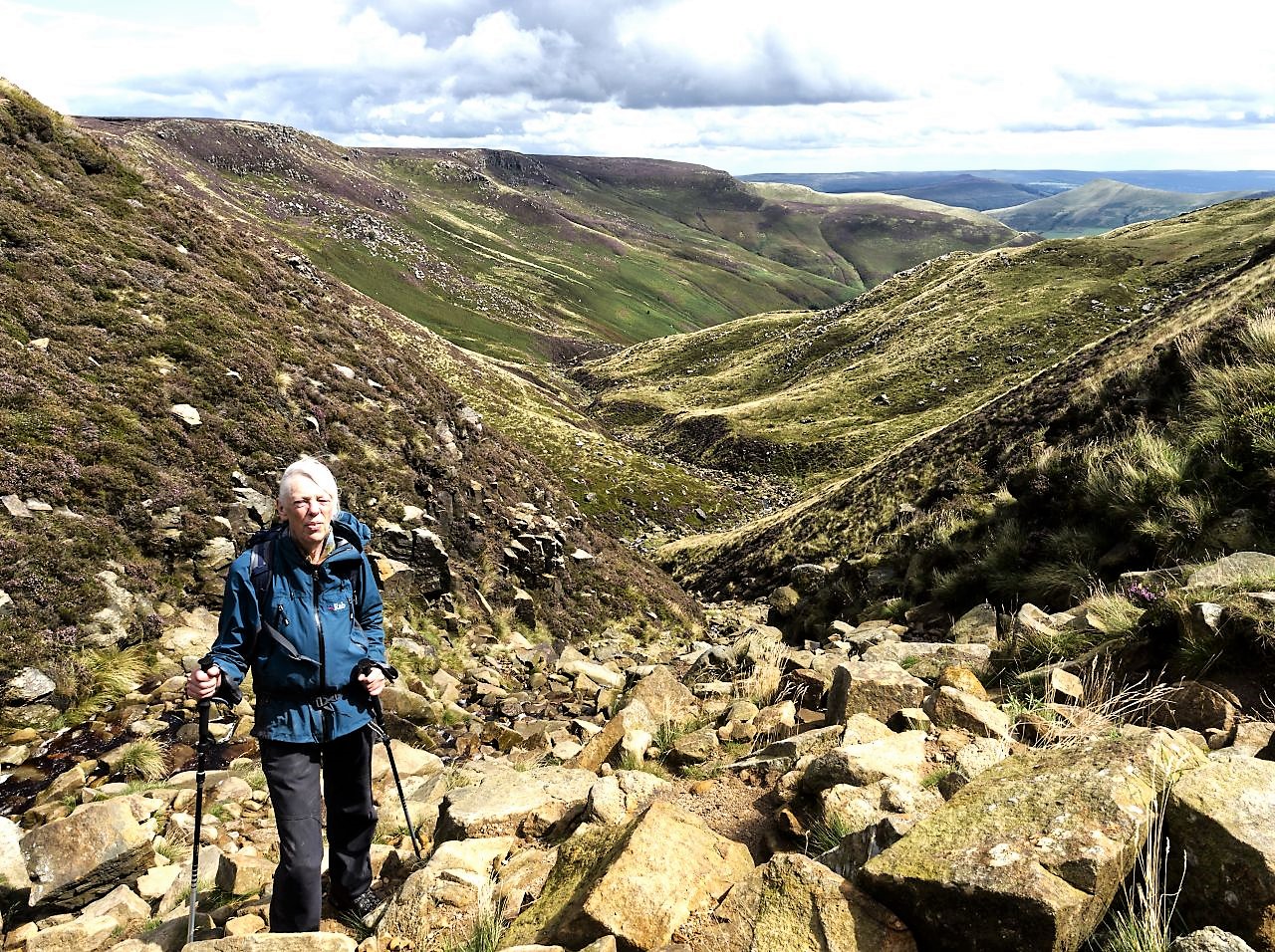
Heading up Grindsbrook Clough near Edale

(For the best viewing experience, left-click the images and maps to zoom in, then use your browser return arrow to go back – go on, it really does work!)

 In August 2020 we were looking for somewhere suitable to head for in the camper van – regular readers will know that Chris and I (plus the ever-present Border Collie ‘Mist’) try to avoid campsites, not because we are too tight to pay but because we want to escape from crowds, not join them.    Sadly, the actions of some going ‘wild camping’ during the Covid-19 lockdown, had brought criticism from local communities, and no wonder!    So, we thought we might be pushing our luck a bit to go off-grid and opted instead for one of the campsites at Edale in the Peak District.

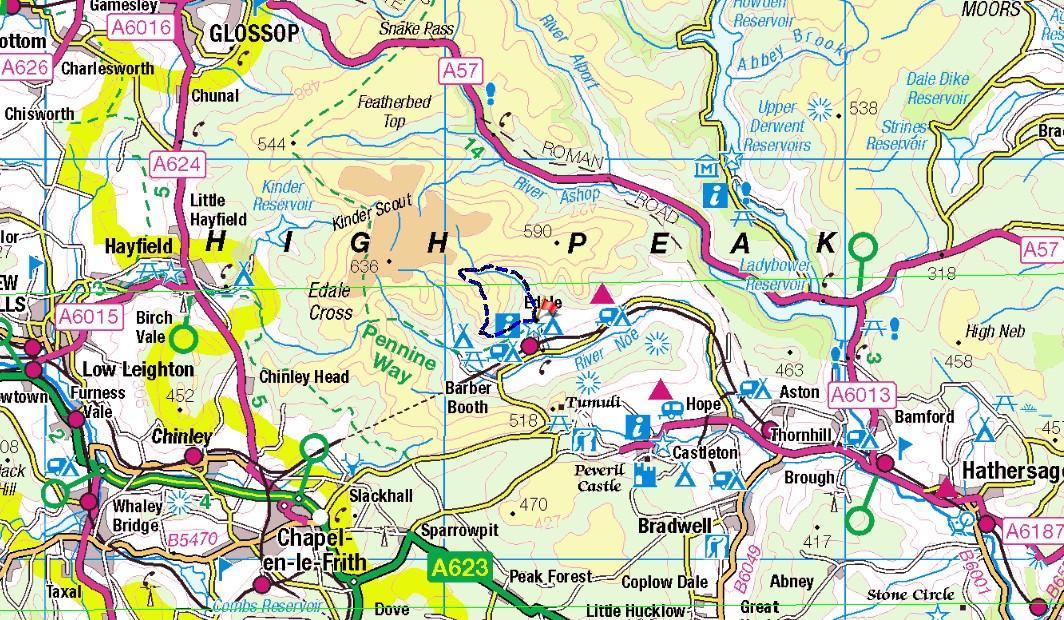
The area around Edale

Newfold Farm, previously known as Coopers Camping, was the choice.   Now, it has to be said that before he retired, Mr Cooper was one in a million, but for all the wrong reasons!  For someone making a living in the hospitality sector, Mr Cooper had a manner that was, at best, eccentric and at worst positively rude!    The thing is, the campsite is in a great location, with the hills of Edale Edge starting as soon as you walk out of the village.

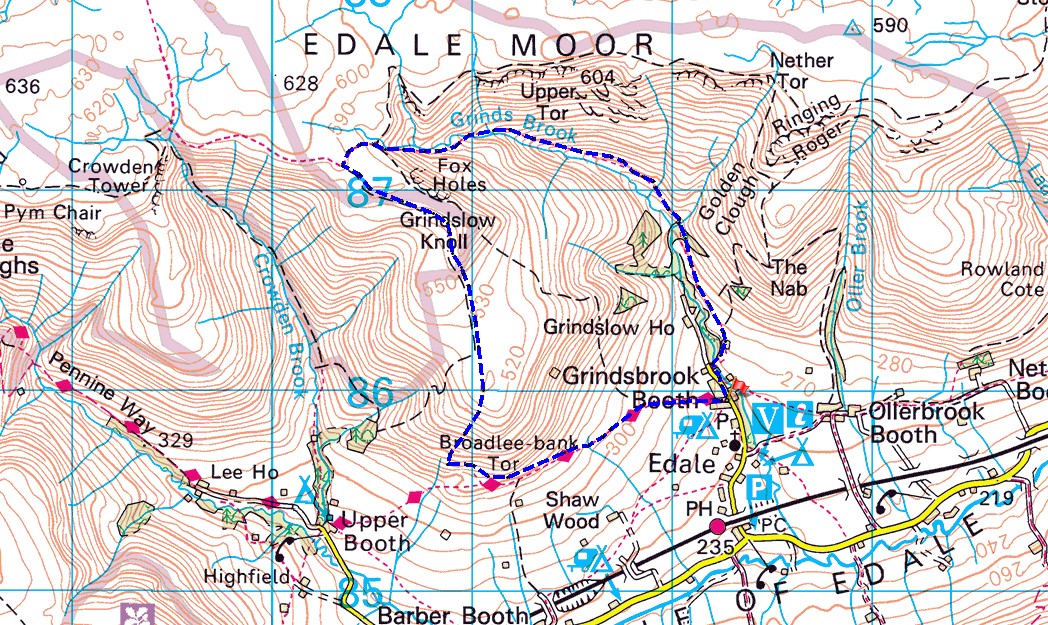
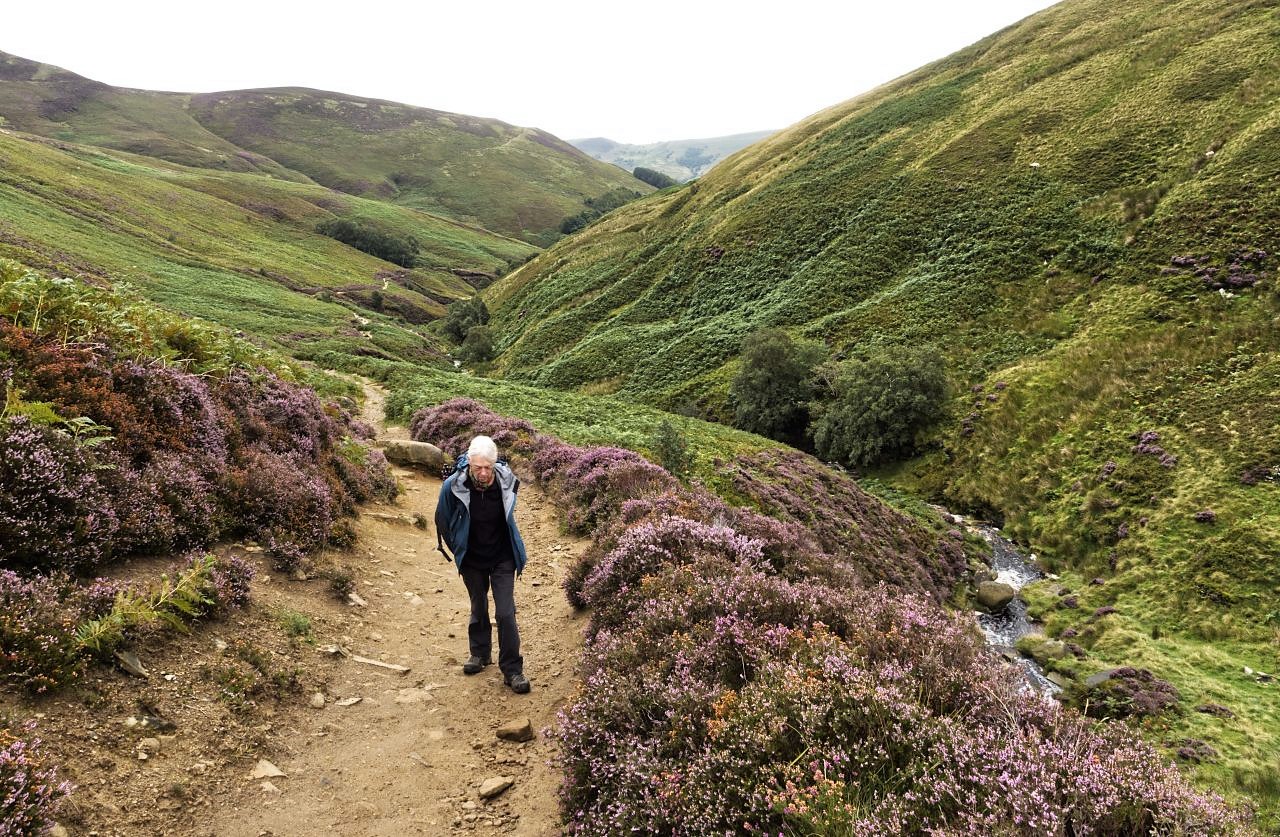
The route – clockwise from Edale village

The start (and finish!) – The Old Nags Head

So we took a chance, and found the new campsite owners to be friendly and welcoming.  The two village pubs were both adopting to Covid rules and there was a cracking walking route out of the village, heading up Grindsbrook Clough – in short, we had all the ingredients for a good couple of days.  What’s not to like!

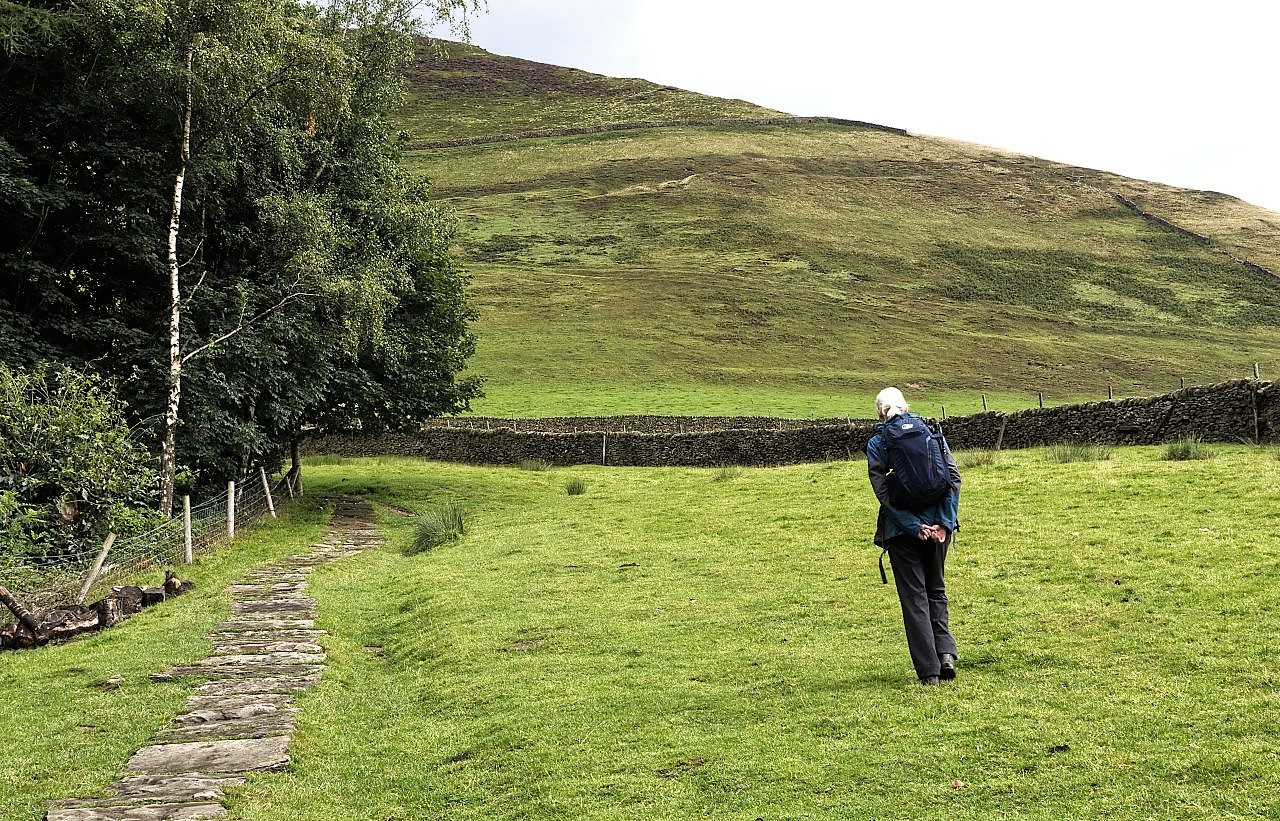
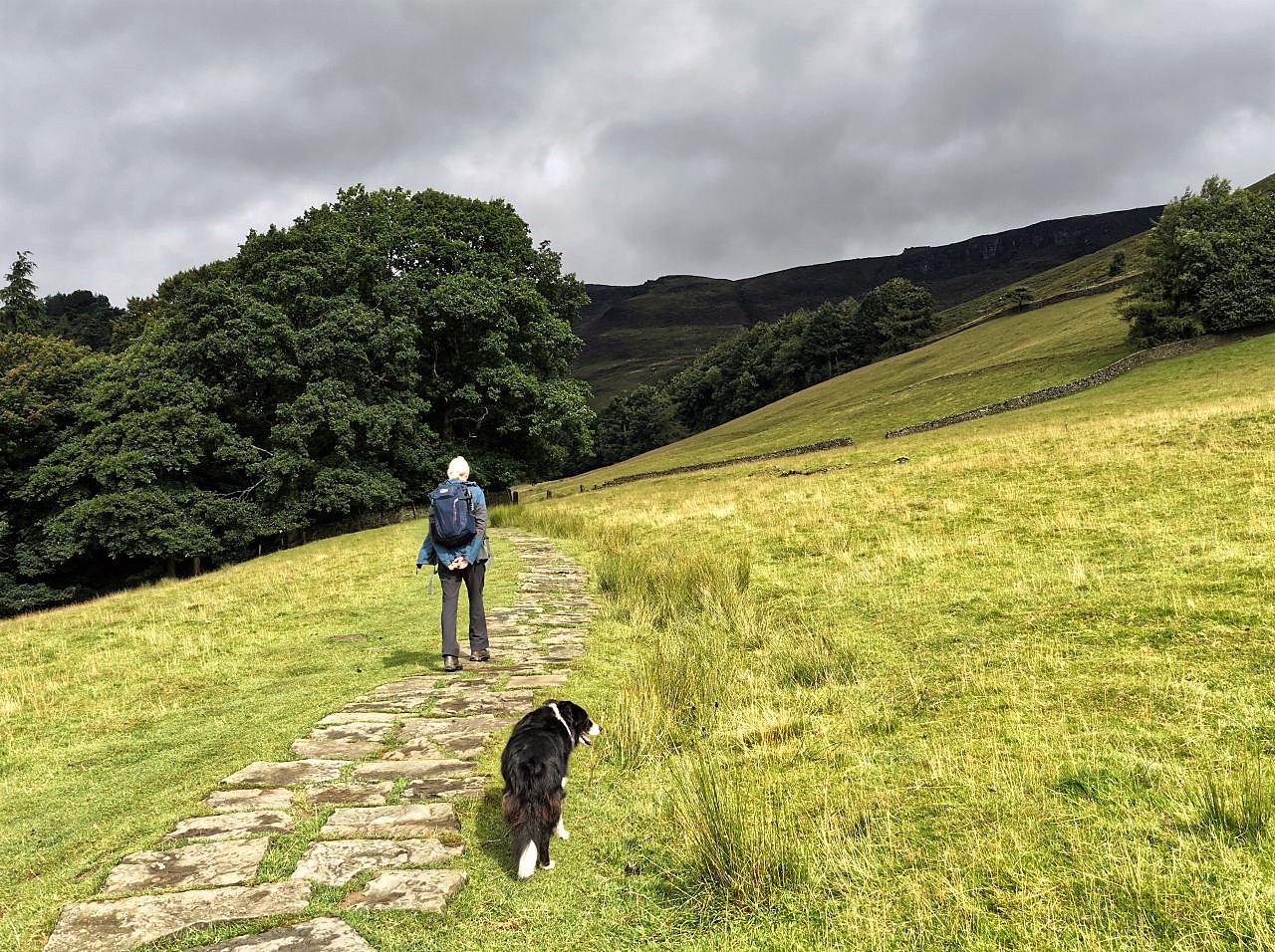
Heading out from the village on the original Pennine Way trail

Paved path to start with ….

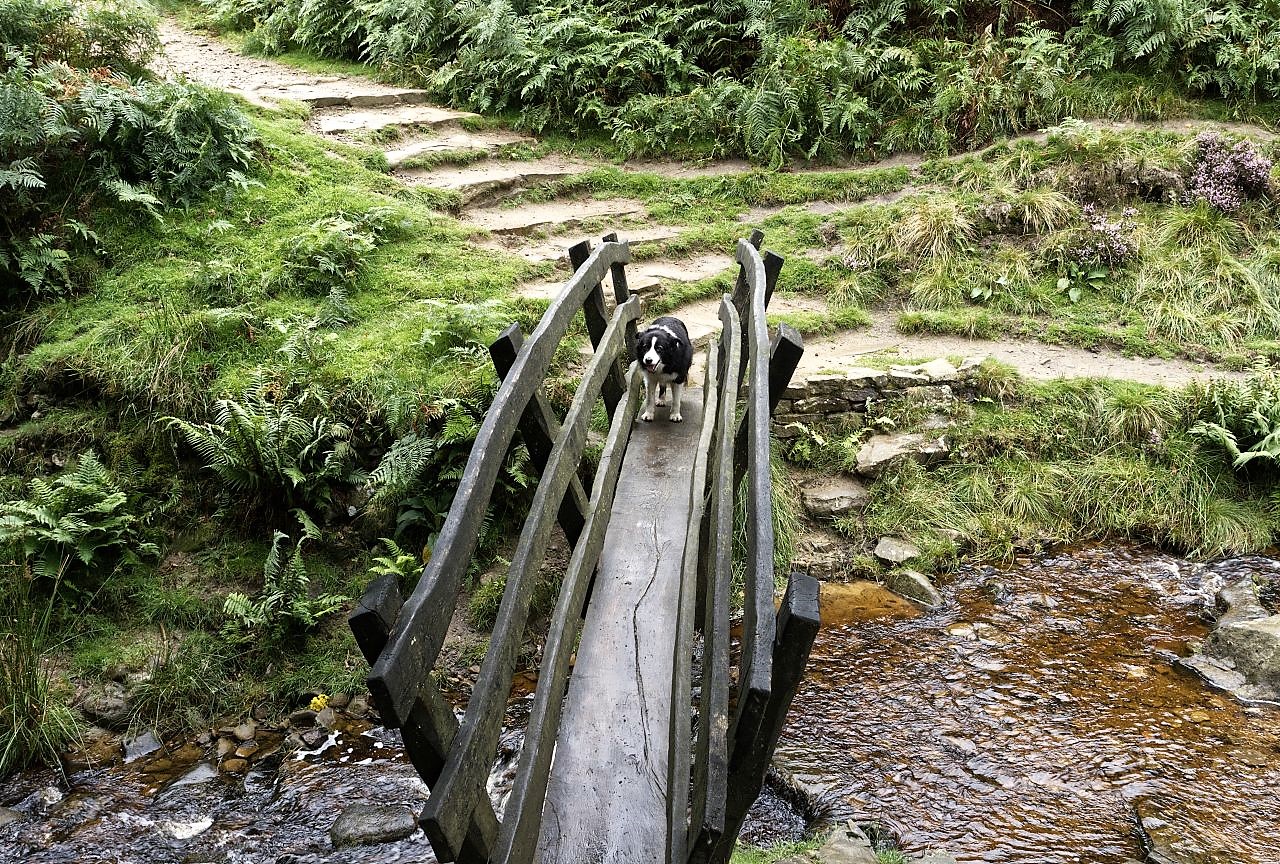
…. and an interesting footbridge

The Pennine Way, opened in April 1965, was the first National Trail in the UK – 268 miles in length, it takes most hikers 2½ to 3 weeks to complete.    The Trail starts in Edale, at the Old Nags Head pub, and finishes in the Scottish border town of Kirk Yetholm.    The route originally headed out of the village by Grindsbrook Clough but had to be changed due to excessive erosion –  now, with less hiking traffic, the worst of the erosion is healed, so we stepped back in time to walk the old start of the Pennine Way.

Heading into Grindsbrook Clough ….

…. with quite a lot of water in the brook below

Looking back down towards Edale ….

…. before the clough starts to narrow

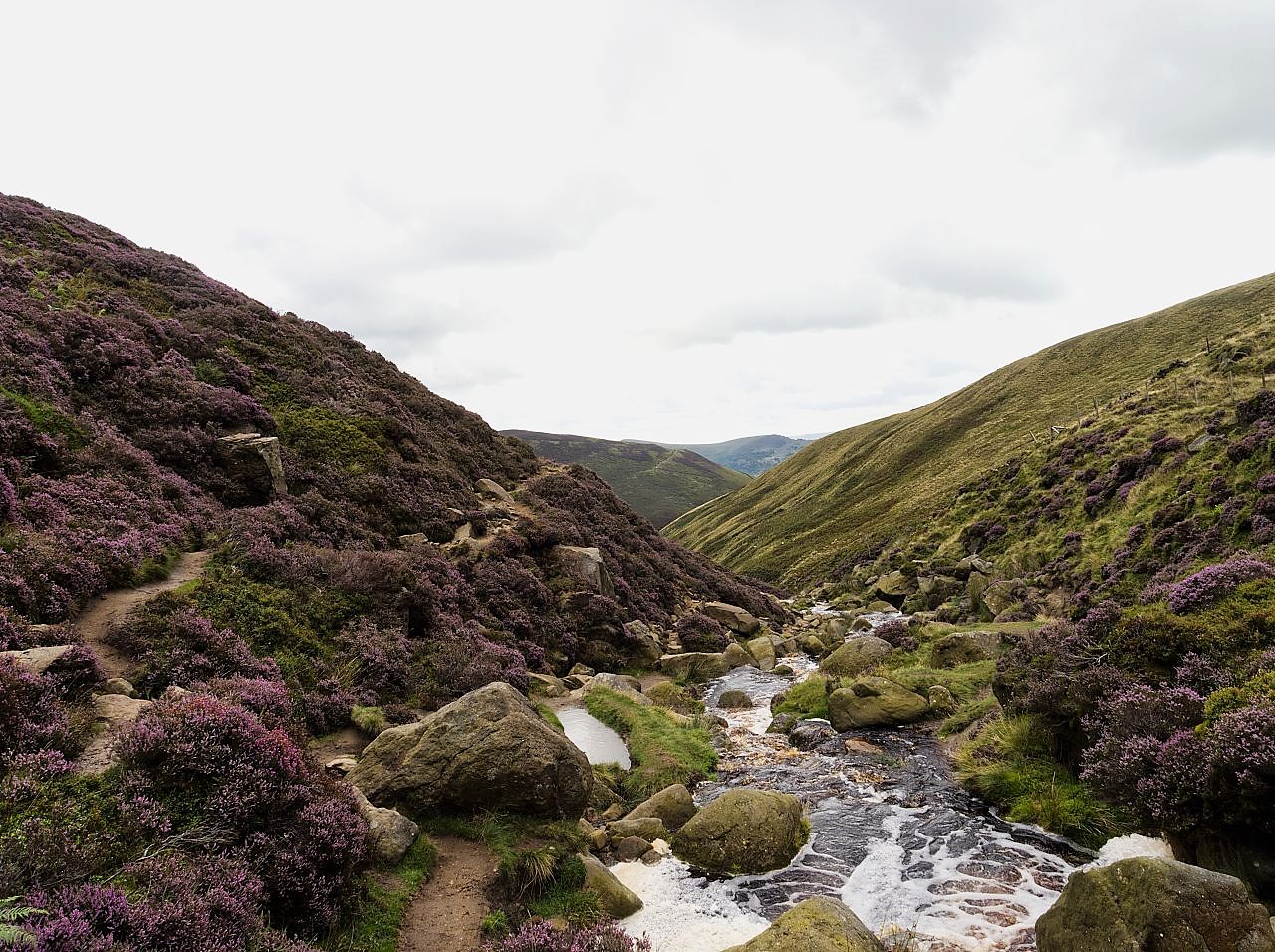
It soon became obvious that there had been some recent rain hereabouts!  The view from the path down to Grinds Brook showed the stream to be full and muddy brown in colour, but initially the valley is wide with the water far below the path.    However, as the valley starts to narrow, the path and stream get closer to each other, finally becoming good buddies.

Still lots of water

The view down the clough, shortly before the stream crossing

The crossing point ….

…. and a place to wring out socks after crossing!

Looking at the map, it was obvious that a stream crossing would be called for eventually, and so it came to pass.    The crossing point was reasonably narrow, but Chris didn’t fancy boulder hopping, with the chance of a tumble – the easiest option was to do as walkers in Scotland often have to do, and to wade.  The water was warm(ish) and only knee-deep, and once socks had been wrung out we were ready to carry on up Grindsbrook Clough.

Beyond the stream crossing, heading for the upper part of the clough

Looking back down Grindsbrook Clough, just after the Y-fork

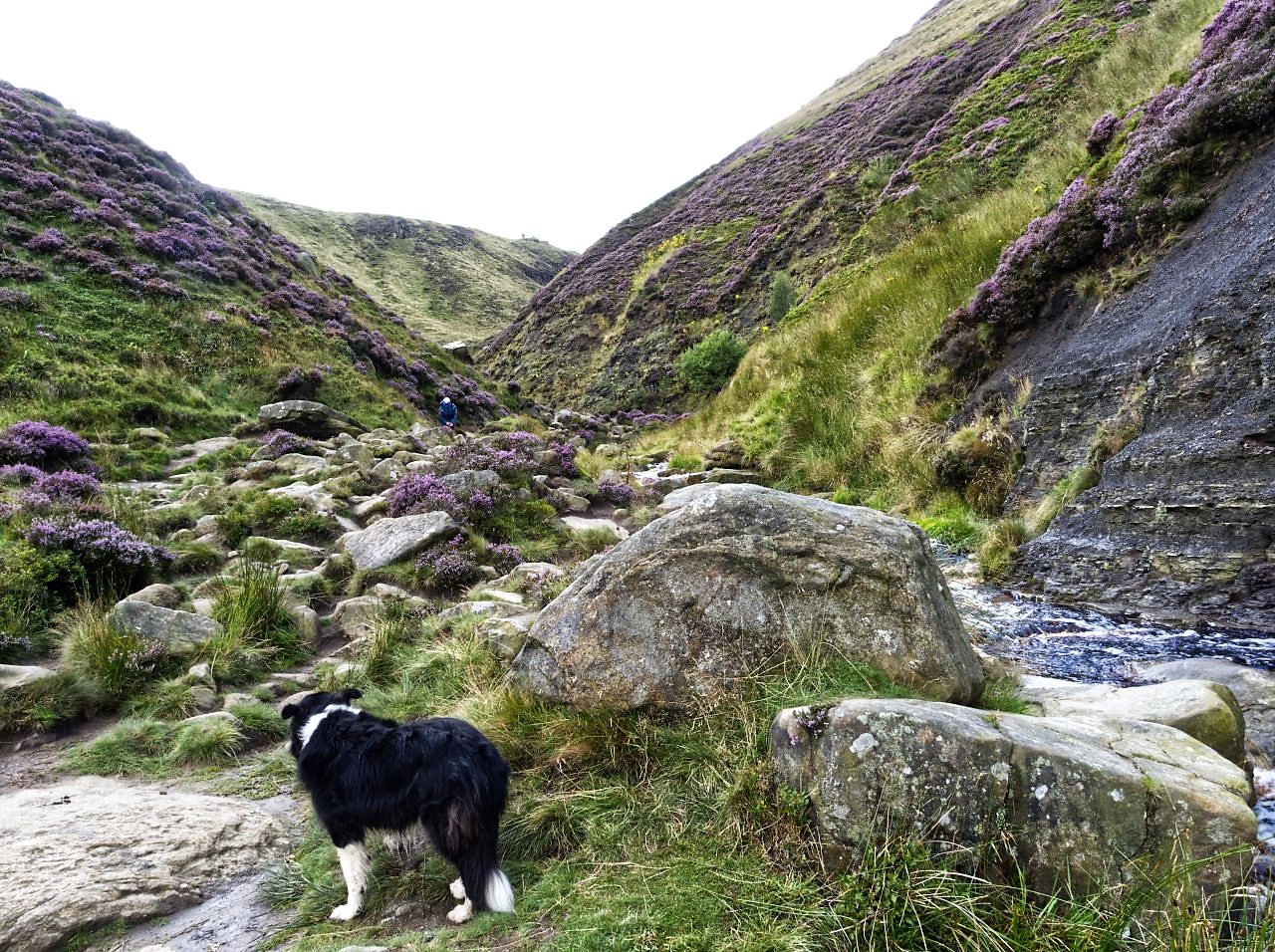
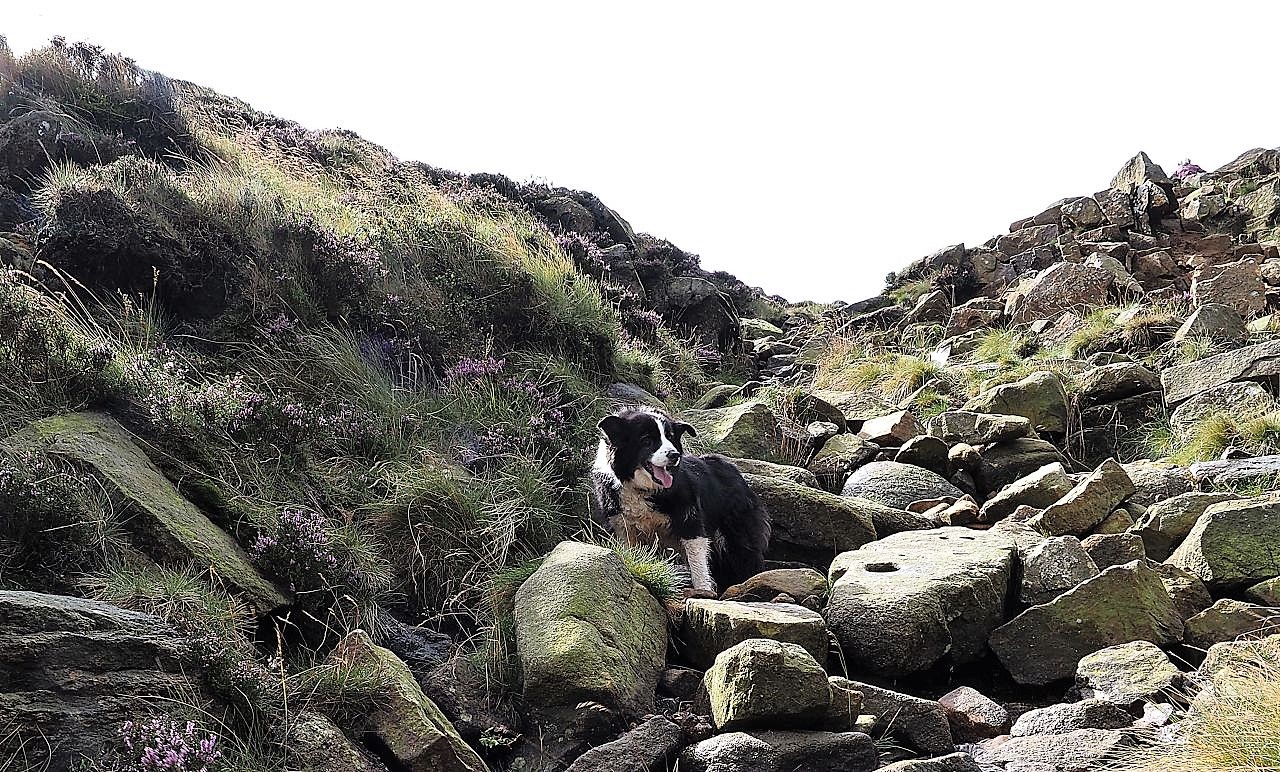
Border Collie ‘Mist’ nearly at the top

Wind eroded stone – looking towards Grindslow Knoll

Beyond the crossing, the clough narrows even more – just before the top, where the route joins the plateau of Edale Moor and Kinder Scout, the valley splits at a Y-fork.   We took the left fork, which I found out later is probably less interesting as an ascent, but this way you suddenly appear at the plateau by a strangely shaped wind-eroded stone.    It was also a good place to stop for lunch and a brew.

The view east to Edale Edge

More eroded stones ….

…. with Grindslow Knoll in the distance

There were several options on where to go next, but on this occasion we opted for a wander by more eroded stones, before heading over towards Grindslow Knoll.   From there, we set our course to the Edale valley, with a final descent down to the current Pennine Way route – as a treat for my birthday we were off for a Covid compliant fish and chips at the Nags Head, but ‘Mist’ was just as happy with the usual meat and kibble.

The path to Grindslow Knoll

The Edale valley ahead ….

…. with the final descent – time to head for home

Text and images © Paul Shorrock

Posted in 4. Northern England | Tagged , , , , , , | 6 Comments

#281 – Bryn Cader Faner

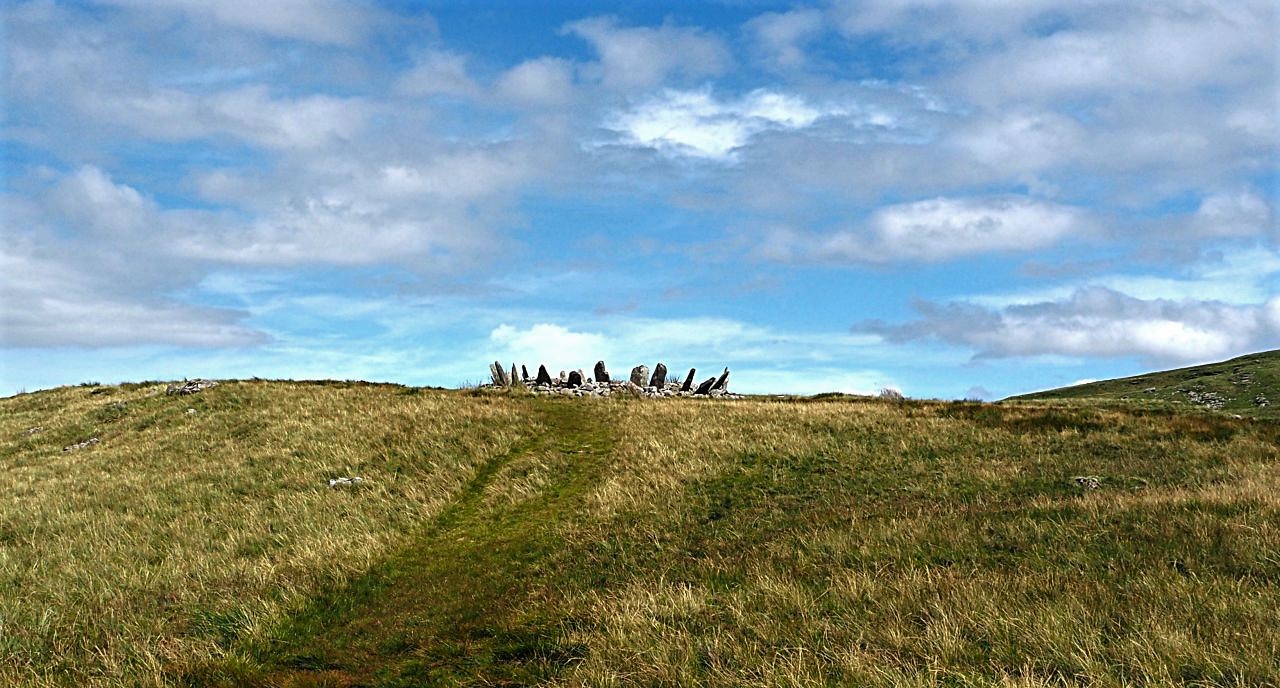
Bryn Cader Faner, otherwise ‘The Hill with the Chair with the Flag’

(For the best viewing experience, left-click the images and maps to zoom in, then use your browser return arrow to go back – go on, it really does work!)

The Northern Rhinog mountains

The route to Bryn Cader Faner

Setting out – Moel Ysgyfarnogod on the skyline

A week after our trip to Rhinog Fach and Llyn Hywel (see post #280) Chris and I (plus Border Collie ‘Mist’ of course) were back in the Rhinogs again, this time at the northern end of the range.   Our last visit had been in April 2017 for a walk up Moel Ysgyfarnogod (see post #221).   On that trip, we had thought of visiting the ancient stone circle of Bryn Cader Faner on the way back, but postponed that due to lack of time and a boggy marsh barring the way – time to put that right.

Small tumulus (burial cairn) on the route in

Border Collie ‘Mist’ with yet another tumulus ….

…. with a small stone circle nearby

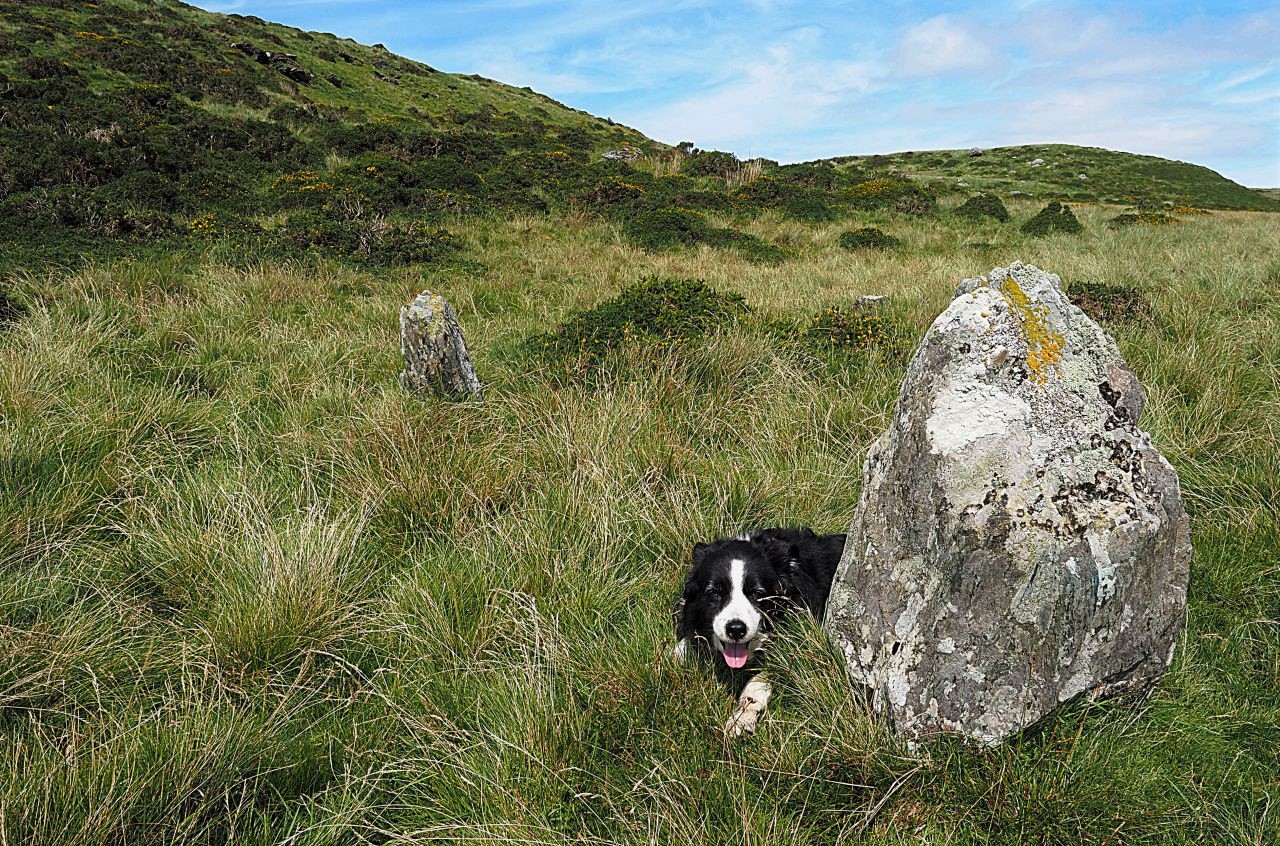
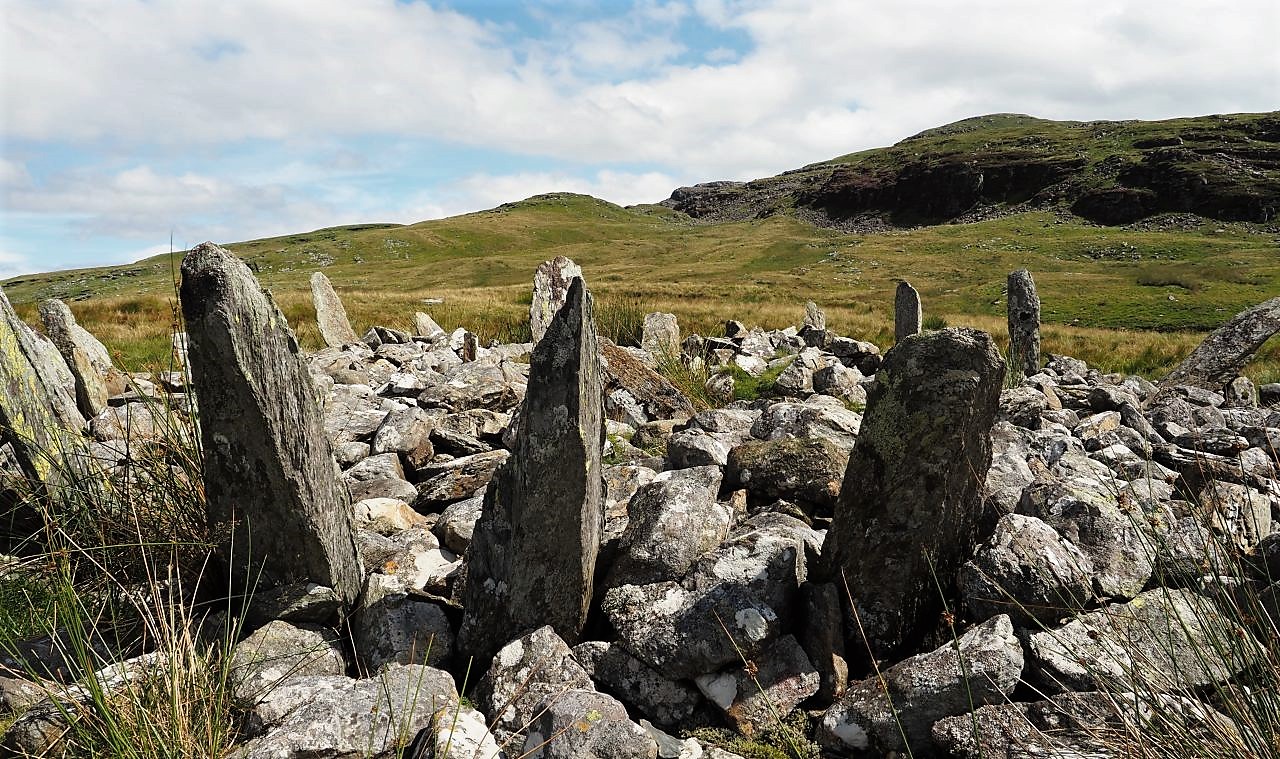
‘Mist’ next to the stone circle, showing the size of the stones

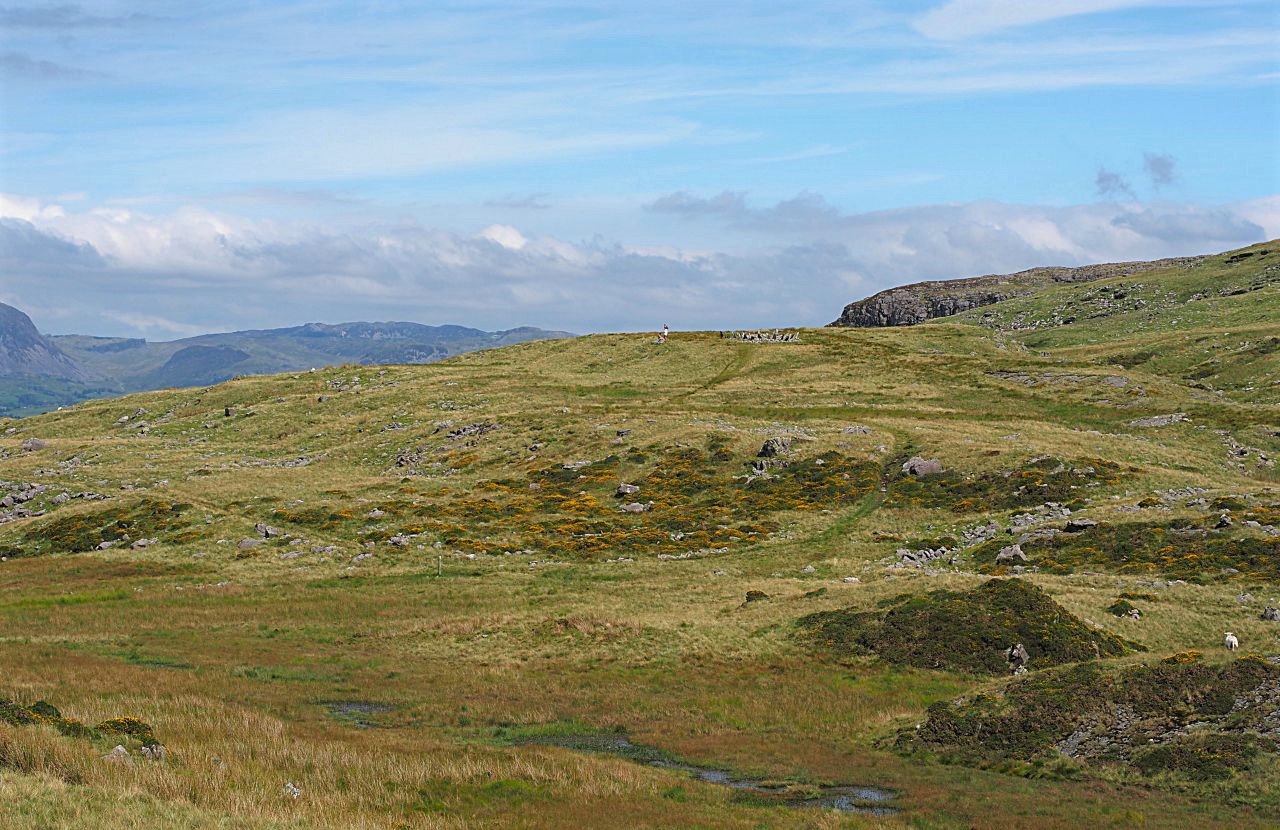
The route out to the stone circle is over moorland rather than mountain, but it’s mostly around the 400-metre contour and a bad weather day wouldn’t be a whole lot of fun – thankfully, we had sun with just a gentle breeze.   Bryn Cader Faner (‘The Hill with the Chair with the Flag’) is over 4000 years old and we passed several ancient cairns along our route that possibly dated back to the same era – this area must have been very special to the people of the Bronze Age.

‘Mist’ checking out the locals, with a disused sheepfold just beyond

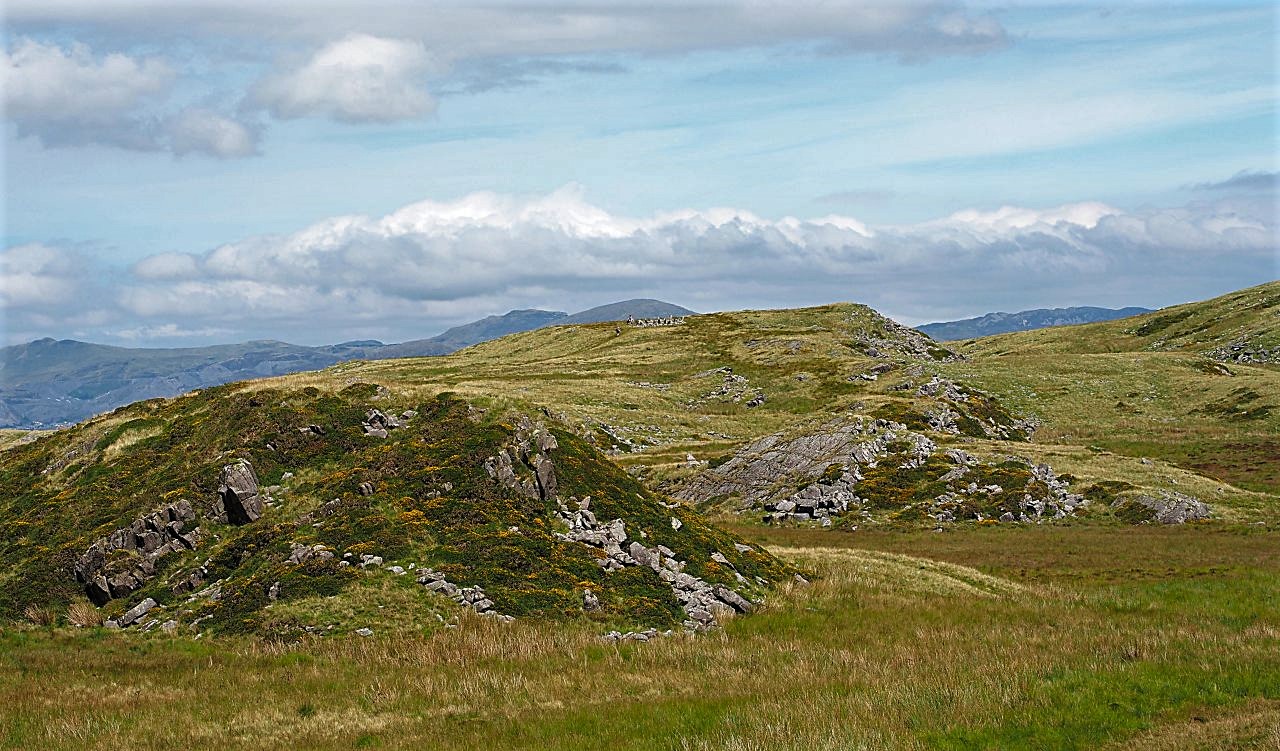
Getting nearer – Bryn Cader Faner is the small ridge in the centre of the image

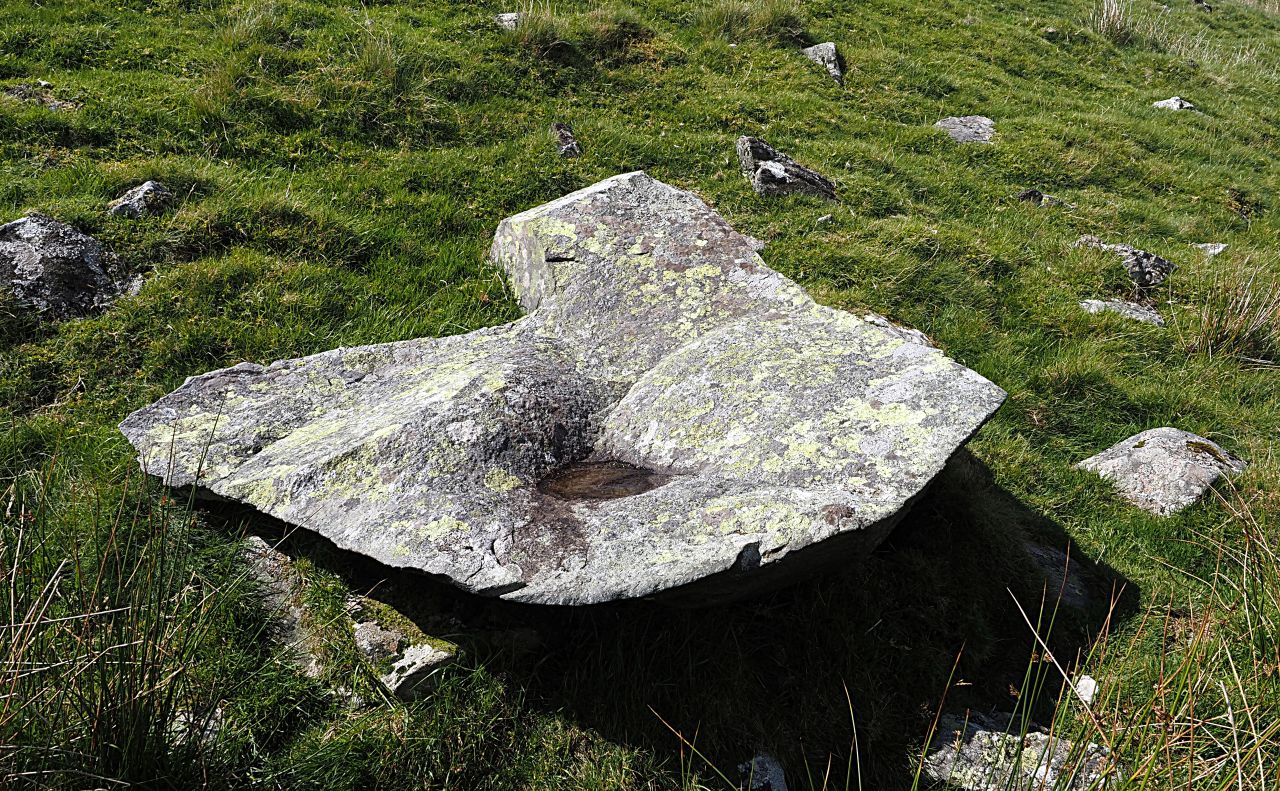
Interesting looking dish-shaped stone on the route in ….

…. and yet another sheepfold

The climate in the Bronze Age was milder than nowadays, and it’s likely that it would have been habitable to humans.   Today the weather is much cooler with the main residents being sheep, and any stone structures still standing are likely to be old sheepfolds – we passed several on the route in, along with an interesting looking dish-shaped stone, but the main interest was the stone circle ahead.

Closer to the circle ….

…. with the stones just becoming visible

The track approaching the circle from the south ….

…. and finally a good view of the stone circle itself

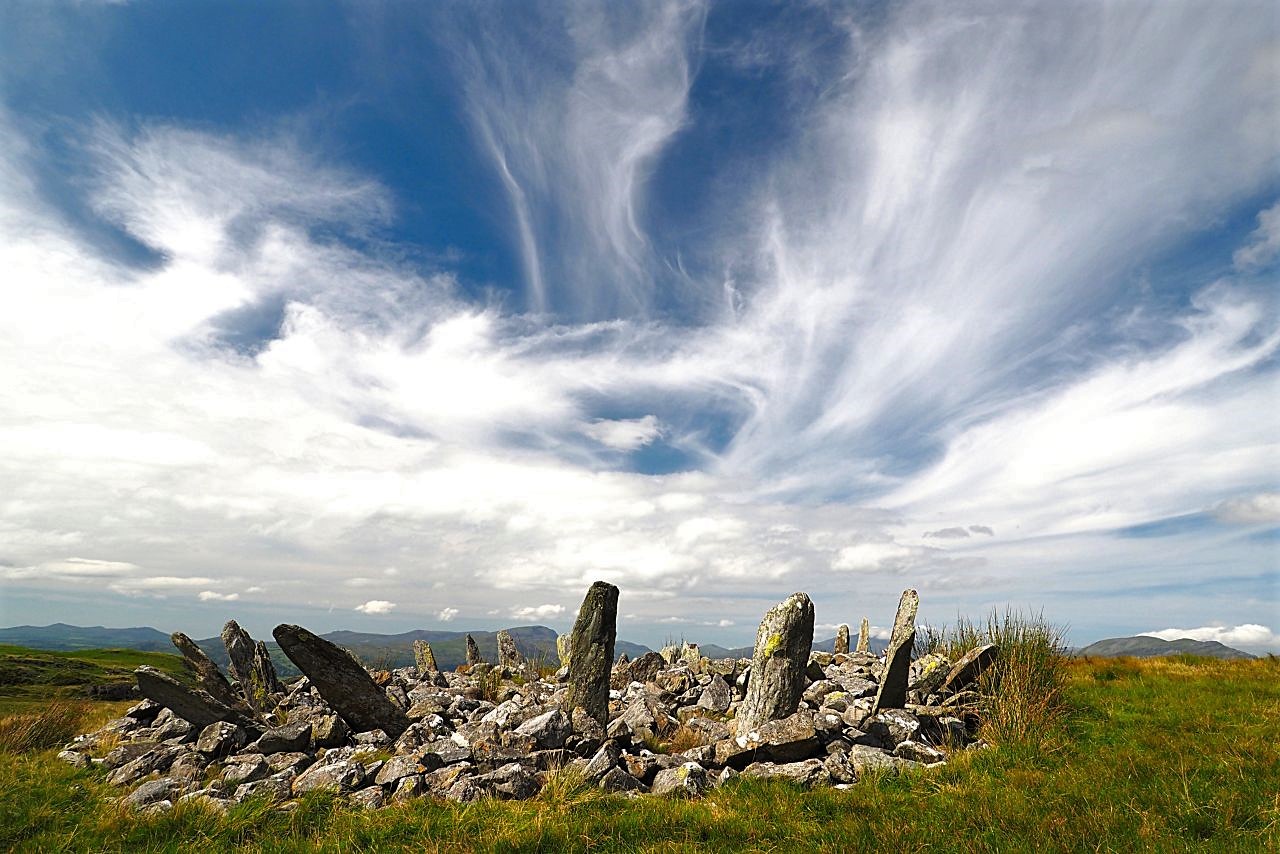
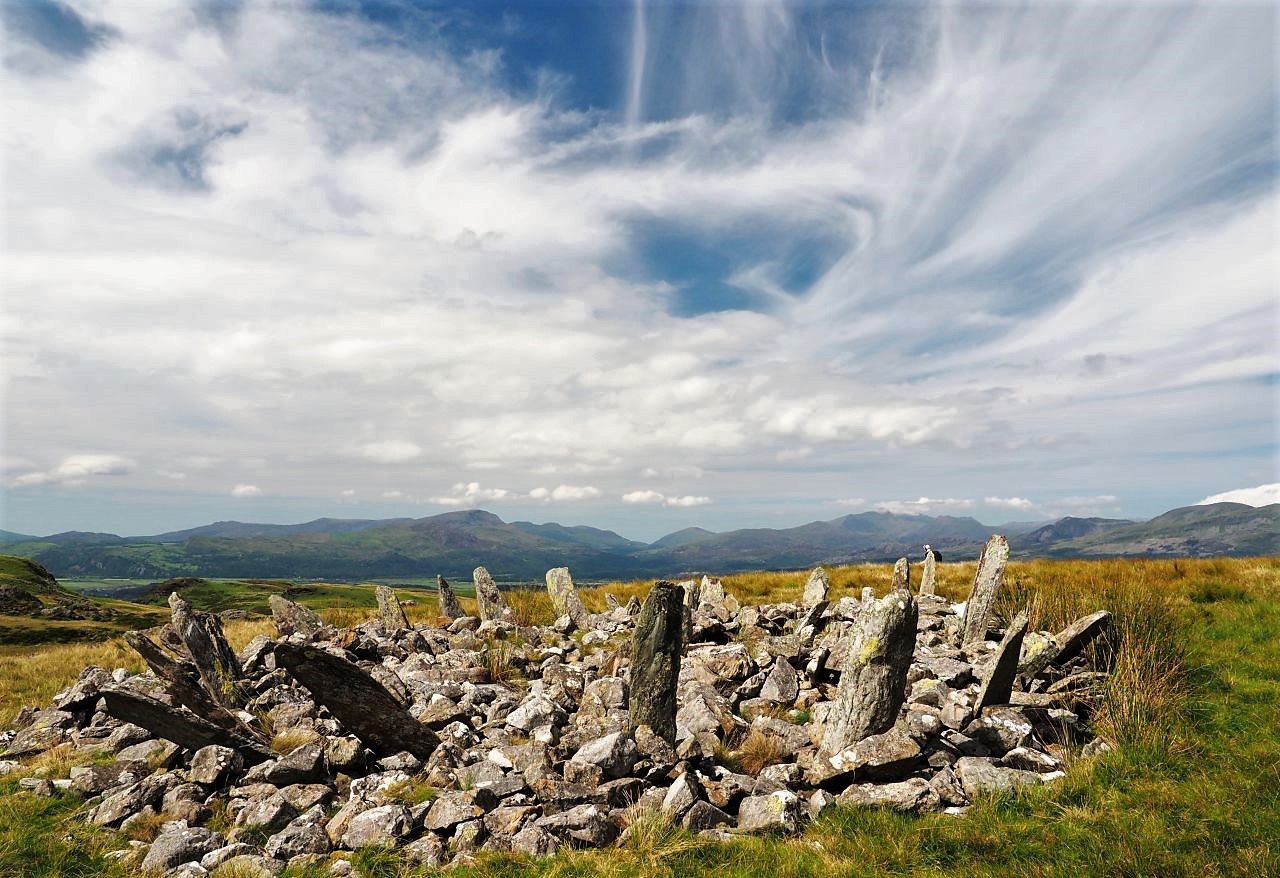
Bryn Cader Faner

It is believed that the centre of the circle was a burial cairn, which measures  8 metres (27 feet) across and is 1 metre (3 feet) high.   Around the outside of the cairn there were previously up to 30 slender stone slabs, about 2 metres (6 feet) high, leaning outwards like spears, though there are now only 15 remaining.

Archaeologist Aubrey Burl, who until his death in April 2020 was regarded as the foremost authority on British stone circles, described Bryn Cader Faner as ‘one of the wonders of prehistoric Wales’.    Unfortunately, not everyone has shown the same reverence and respect over the centuries, with probably the worst act of vandalism being committed during WW2, when the army used the stones for target practice!

Yr Wyddfa (Snowdon) in the distance, about 20 kms to the north

We spent some time at the circle, including time for a lunch break and a brew of coffee.  The stones were the star of the show, but 20 kms to the north of us we also had a great view of Yr Wyddfa (Snowdon) standing 1085 metres high (3560 feet) with a cap of cloud around the summit.

The route back, with the soggy bit coming up!

The north side of Llyn Eiddew Bach

The south side of the lake

Then it was time to head back, crossing the marshy ground that leads to the small lake of Llyn Eiddew Bach (‘Small Ivy Lake’).  As we arrived back at the car, there was a great view across the estuary of the Afon Dwyryd (‘Two Fords River’) to the village of Portmeirion – it’s famous as a tourist attraction in its own right, but some may remember it as the setting for the cult 1967 television series, The Prisoner.  All of which was of no interest to ‘Mist’ as dinner time had already come and gone.

Portmeirion , about 5 kms away on the estuary of the Afon Dwyryd .…

….with a closer view of the famous village

Text and images © Paul Shorrock
Posted in 5. North Wales, Stone Circles | Tagged , , , , , | 3 Comments

#280 – Rhinog Fach and Llyn Hywel

Llyn Hywel with Rhinog Fach standing above

(For the best viewing experience, left-click the images and maps to zoom in, then use your browser return arrow to go back – go on, it really does work!)

The Rhinogydd and surrounding mountains

Our first period of Covid-19 lockdown had finished at the beginning of July, and Chris and I (plus Border Collie ‘Mist’) hadn’t wasted any time getting back to the Welsh mountains (see post #277).   We even grabbed a trip to the Lake District (see post #279) but it was now time to do some more exploring back home in Wales – where better for a day out than the Rhinogydd (the Rhinog mountains).

Closer view of the route, clockwise from Nantcol

The Rhinogydd is an area avoided by the masses – you won’t find a queue to get to any summits here, as happened recently on Yr Wyddfa (Snowdon), nor will you find piles of litter, abandoned tents and discarded portable BBQs.   The reason is simple – these are rough, gnarly hills that won’t tolerate being mucked about with!   It is possible though, to have a great day out without any undue distress, you just have to pick your ground.

The view of Rhinog Fach starting out from Nantcol

The last time I was here was unbelievably as long ago as 2012 (see post #96) when I’d had a great day out with ‘Mist’ on the best that the Rhinogydd has to offer, which included just about all the high ground starting at Rhinog Fawr then heading south.    I didn’t think Chris would appreciate a long, rough day after our Covid-enforced break from the higher hills, but I had a route up my sleeve that would take us into the heart of the action – the lonely lake of Llyn Hywel.

Heading up towards Bwlch Drws Ardudwy ….

…. with Border Collie ‘Mist’ out in front as usual

The great thing about walking out to a lake is that you get the feel of the area without necessarily having to commit to a big mountain day, though ‘Mist’ looked ready for anything as usual.    We started out from the farm at Nantcol, where the farmer charges a reasonable (in my view anyway) £2 to park up for the day – good value compared with the £10 for the car park at Pen y Pass at the start of the most popular routes up Snowdon.  And that’s if you can find a space!

Looking back at the progress made

Approaching the bwlch

From Nantcol,  a steady path leads up to Bwlch Drws Ardudwy  (in Wales, a bwlch is a mountain pass)  between Rhinog Fach (the Small Rhinog) and its slightly higher neighbour, Rhinog Fawr.   The path isn’t used a great deal and is totally unlike the manicured trails found in the tourist areas.   It’s a route that gives plenty of time for looking around, without the danger of falling off anything or being hit by a carelessly lobbed bottle.    It’s wild, but in a sort of easy-going way.

Passing the small lake of Llyn Cwmhosan ….

…. then the ascent starts for real!

Well, that’s ‘easy-going’ until it’s time to start heading upwards – this might not have been a route up a mountain, but it was certainly a route in the mountains.   The path obviously doesn’t get a load of use, and it soon disappeared in steep heather and boulders.   It would have been easier to find the path in descent, looking down on it, but going up it was easy to lose the route by straying no more than a couple of metres.   It was hard work all round, especially for ‘Mist’ who couldn’t get a run-up at the boulders and rock steps, and it was with some relief that we emerged a couple of hundred metres short of the lake. 

Out of the rough stuff at last!

It was there we saw the only other humans we saw all day – we had a pleasant chat with the guy and his female companion, talking about photography amongst other things.   He mentioned that he had videos on YouTube, and I thought his name sounded familiar, and so it should have done!   Nick Livesey is a well-respected professional photographer (and thoroughly nice guy) – his book ‘Photographing the Snowdonia Mountains’ is a great inspiration to those of us who try to capture images of the mountains, but is also a great read for lovers of mountain photos.   Get it on your Christmas present list!

Llyn Hywel and Rhinog Fach

Passing Llyn Perfeddau on the way back

The view out to the coast

Llyn Hywel is a beautiful, quiet spot, and we lingered for a brew and a bite to eat.   From there, an easy and gradual descent across open hillside and tracks took us back to the valley at Pont Cerrig.   A short walk up the quiet road led us back up to Nantcol and the car, with a great view on the way of Rhinog Fach and Rhinog Fawr, with Bwlch Drws Ardudwy in between.   The only view ‘Mist’ was interested in was the contents of her dinner dish back home!

Rhinog Fach (left) and Rhinog Fawr, with Bwlch Drws Ardudwy in between

Time to head for home

Text and images © Paul Shorrock

p.s.   The last post previous to this one was at the end of August, but with good reason – we took advantage of a temporary improvement in the Covid situation to get away in the camper, with a six-week trip to Scotland.   We probably would have returned a bit earlier until we got the news that if we headed home to Wales, we would be locked down locally in Denbighshire, so we stayed on the road instead!    Now, as I write this, all of Wales is locked down again for two weeks, but that should give me a chance to sort out about 1000+ photos!
Posted in 5. North Wales | Tagged , , , , | 4 Comments