Ben Rinnes (840m, 2775ft) near Dufftown, Banffshire (North East Scotland)
For the best viewing experience, left-click the images and maps to zoom in to a new window, then exit that window to go back – go on, it really does work!
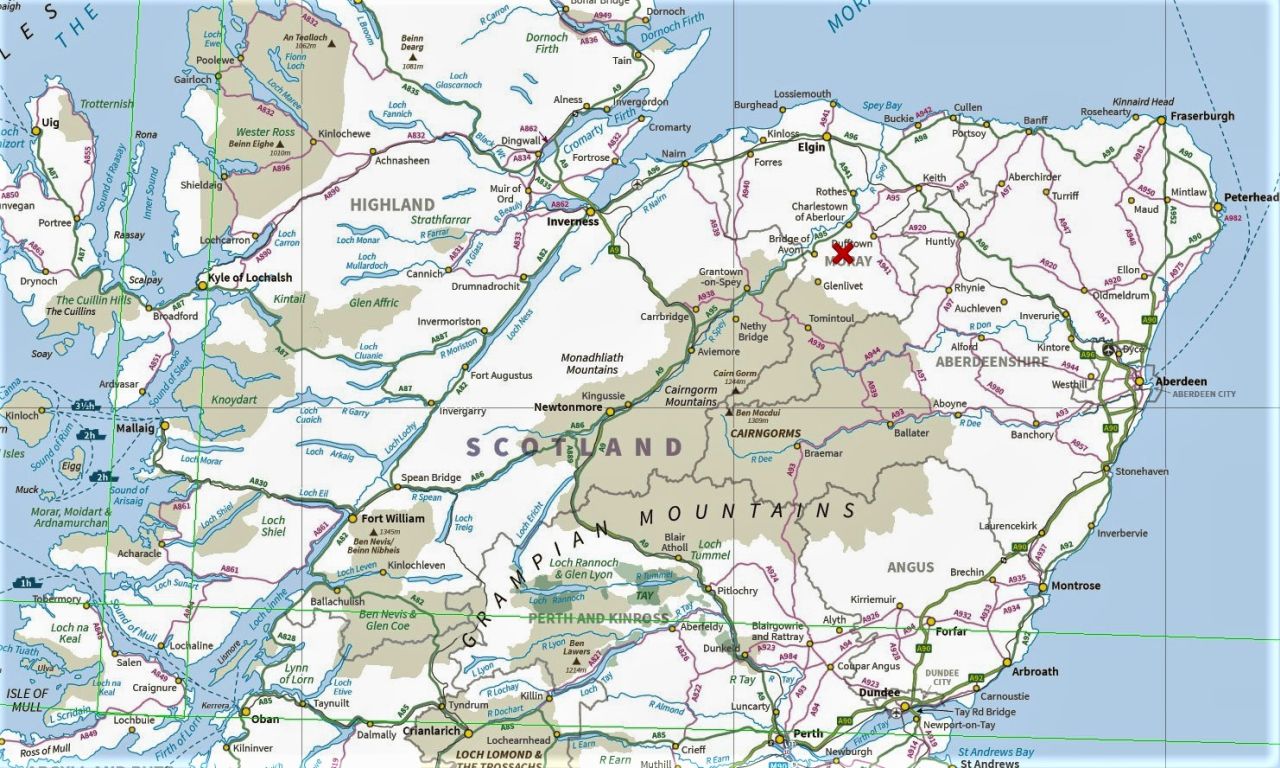
The Cairngorms and Speyside with Ben Rinnes at the red cross
If the mountains are one of the main attractions bringing visitors to the Cairngorms, there is keen competition in the Spey Valley, especially for those who like a drop of the ‘uisge beatha’ or ‘water of life’, otherwise known to most of us as whisky. It seems that every village in Speyside includes the name of a famous single malt whisky – it’s a whisky-lovers paradise, though when it comes to single malt whisky, I’ve got to say that I’m more of a fan of the peaty West Coast version.
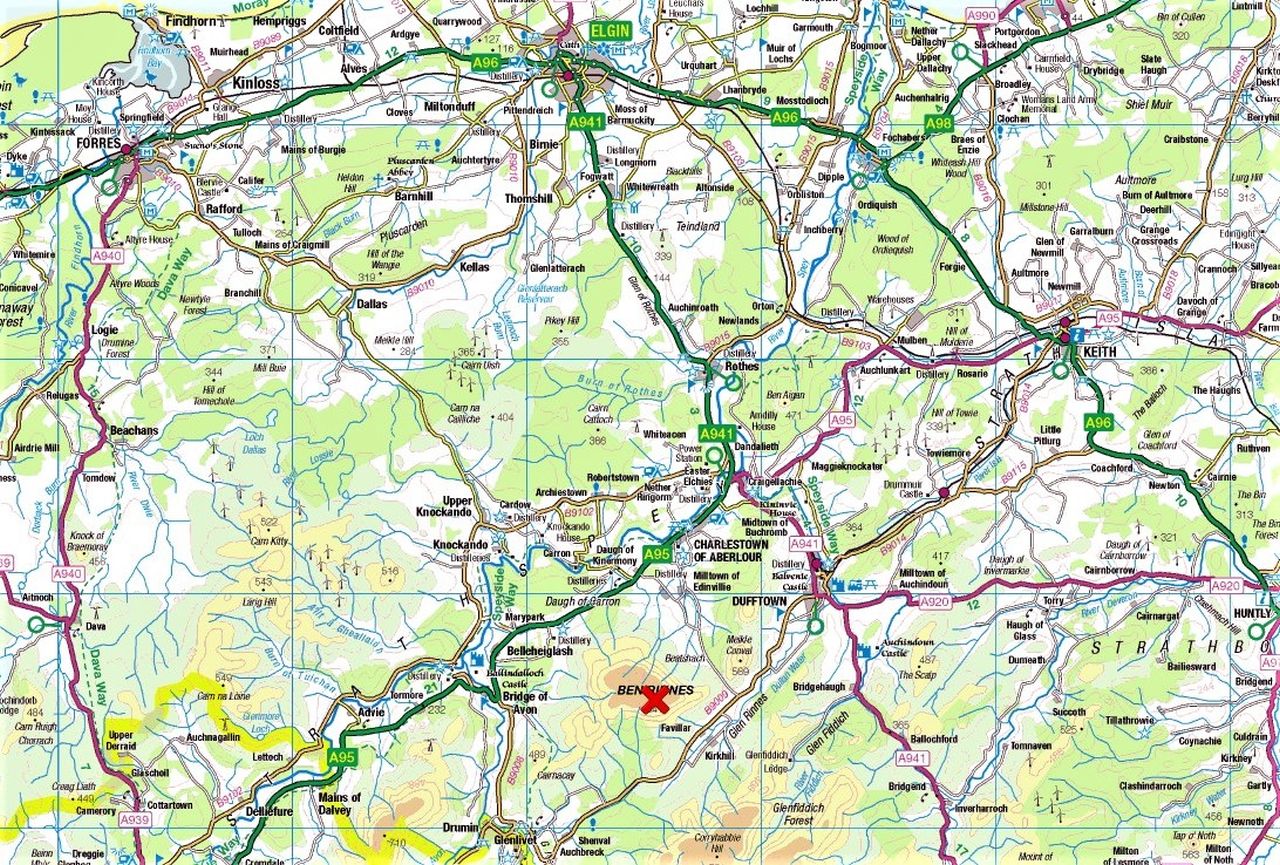
Ben Rinnes with the Spey Valley to the north (A95 and A941 roads)
I prefer my single malts without added water, and that’s pretty much my preference for my mountain walking days as well. On our Scottish trip of September 2022, there had been more than enough water, and we had bailed out from the delights of the soggy West Coast and headed east to the Spey Valley. Speyside may be the home of some of the most popular single malt whiskies in the world, but it is less well known for its mountains – except for Ben Rinnes, that is.
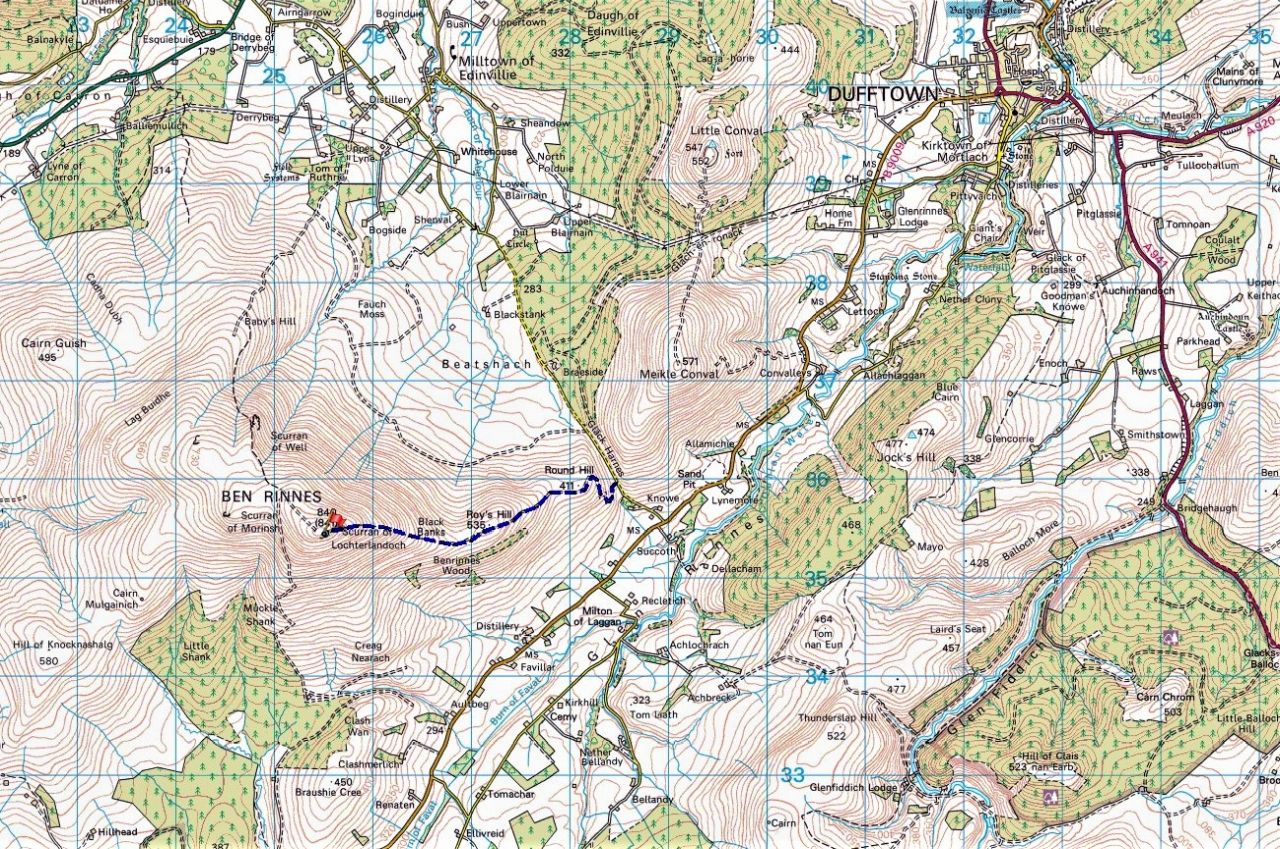
The Ben Rinnes route (linear, there-and-back)
With a height of 840 metres (2755 ft), Ben Rinnes isn’t exactly a lofty peak, but it’s a popular one. We had arrived at the start point for the hike back in mid-September 2022, but even as we started tying boot laces, the rain that had chased us east caught up with us – we gave it up as a bad job and headed for the coast and ‘Bow Fiddle Rock’ instead (see post #331). Then, in April 2023 we were back at the same car park, but this time with clear blue skies – it looked like it was ‘game on’!
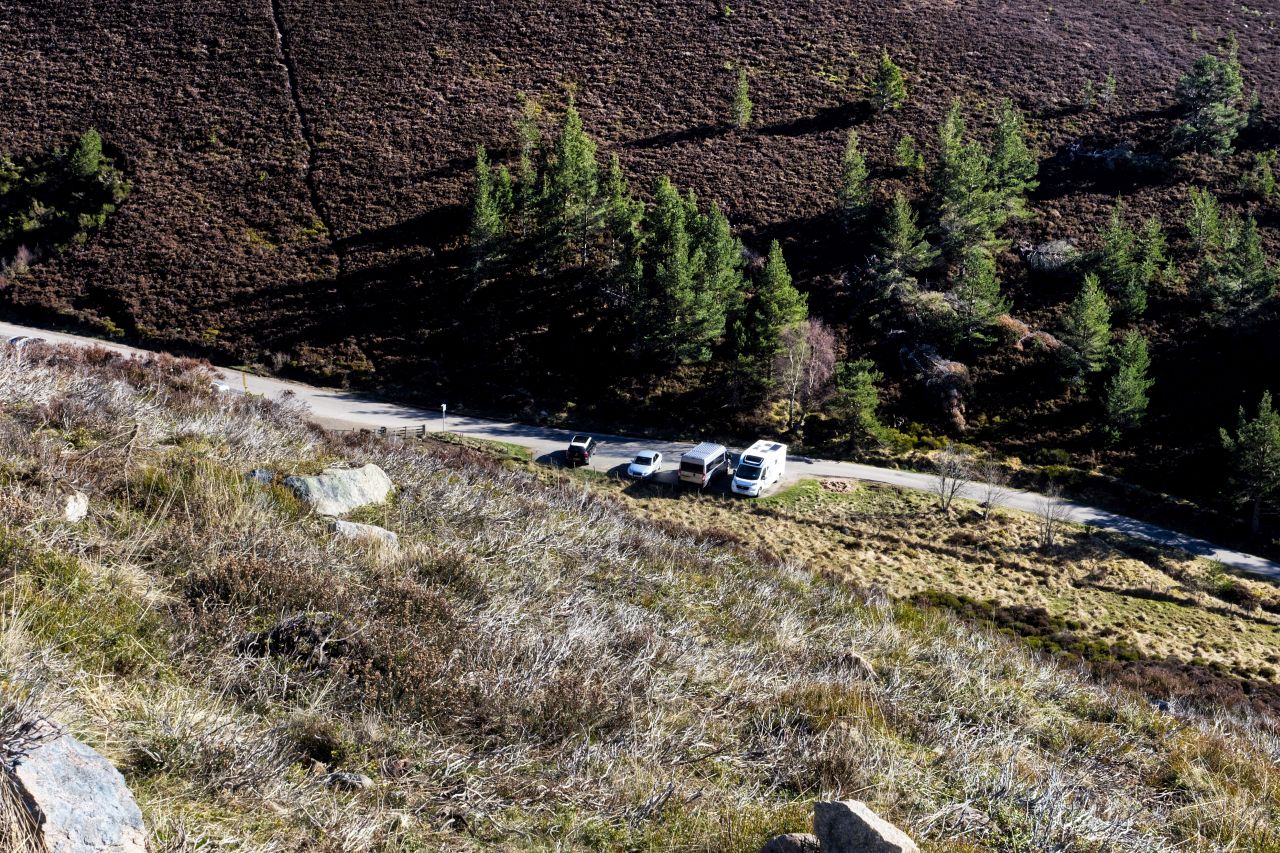
Setting off from the car parkLooking down to the original car park, now extended (just out of view)
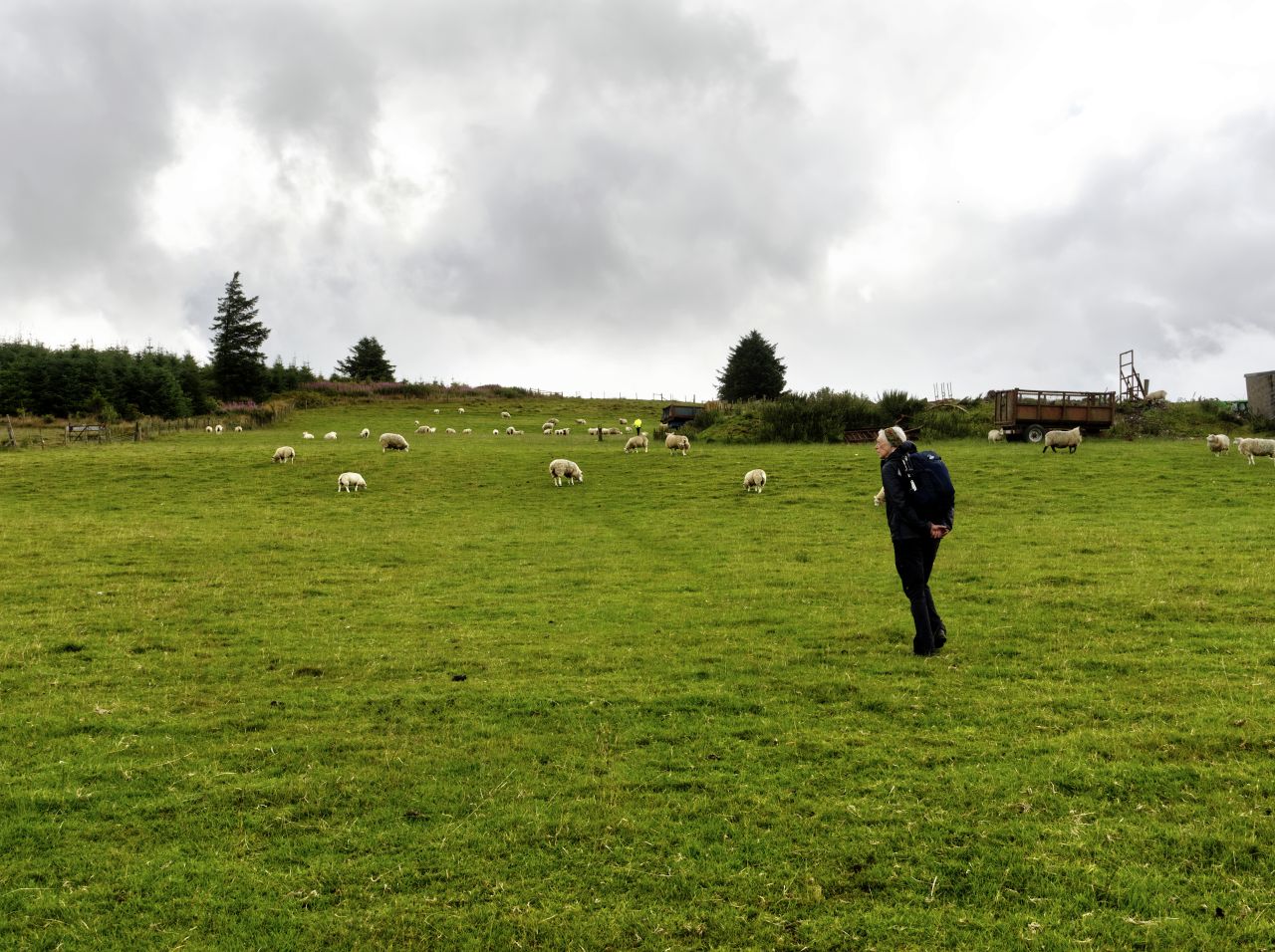
On our 2022 visit, we found the car park at the start point to be very small, not that it mattered because there were no other vehicles there – news of the approaching bad weather must have put folk off. On our revisit, we discovered that the parking area had been extended, making life easier all round – it also meant that there was enough room to overnight with the camper, without hogging scarce parking space, placing us ready to start up the hill early next morning.
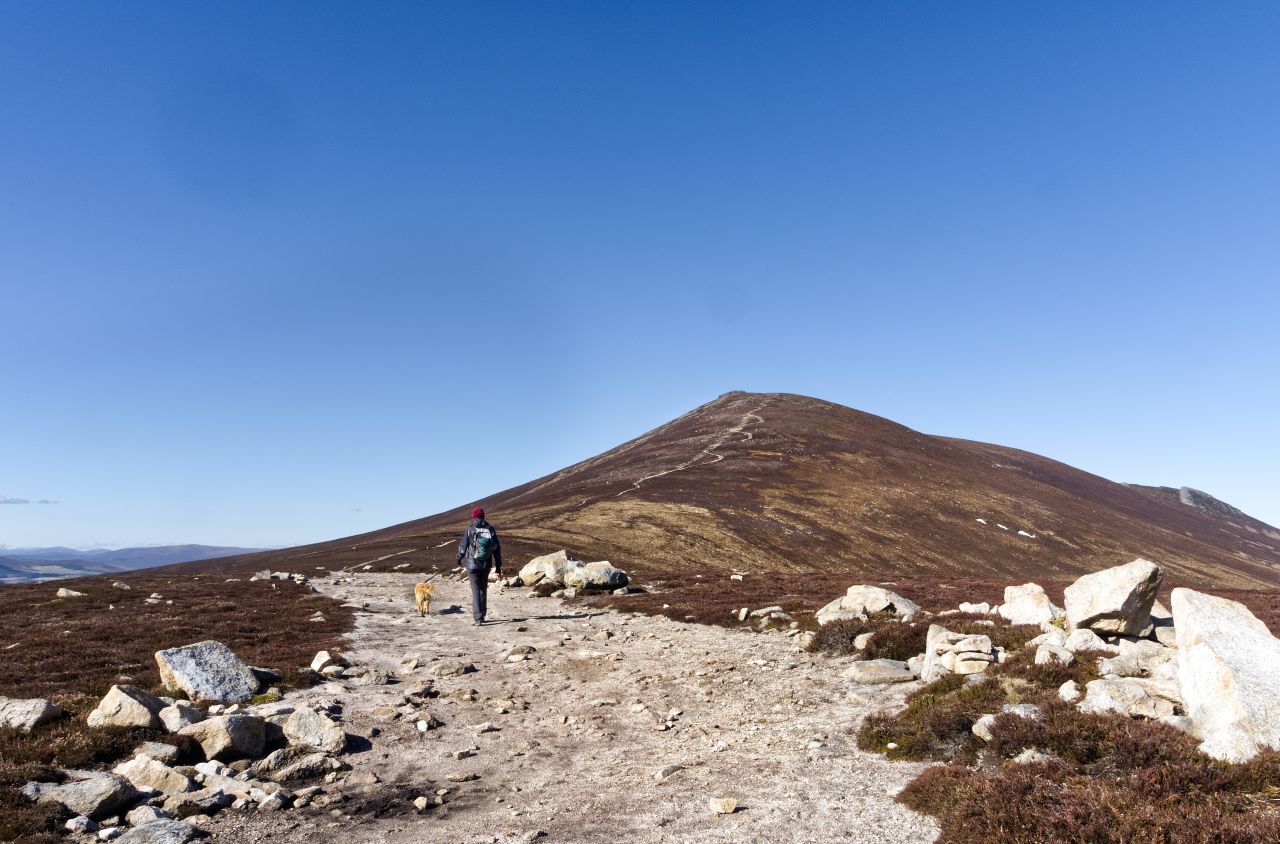
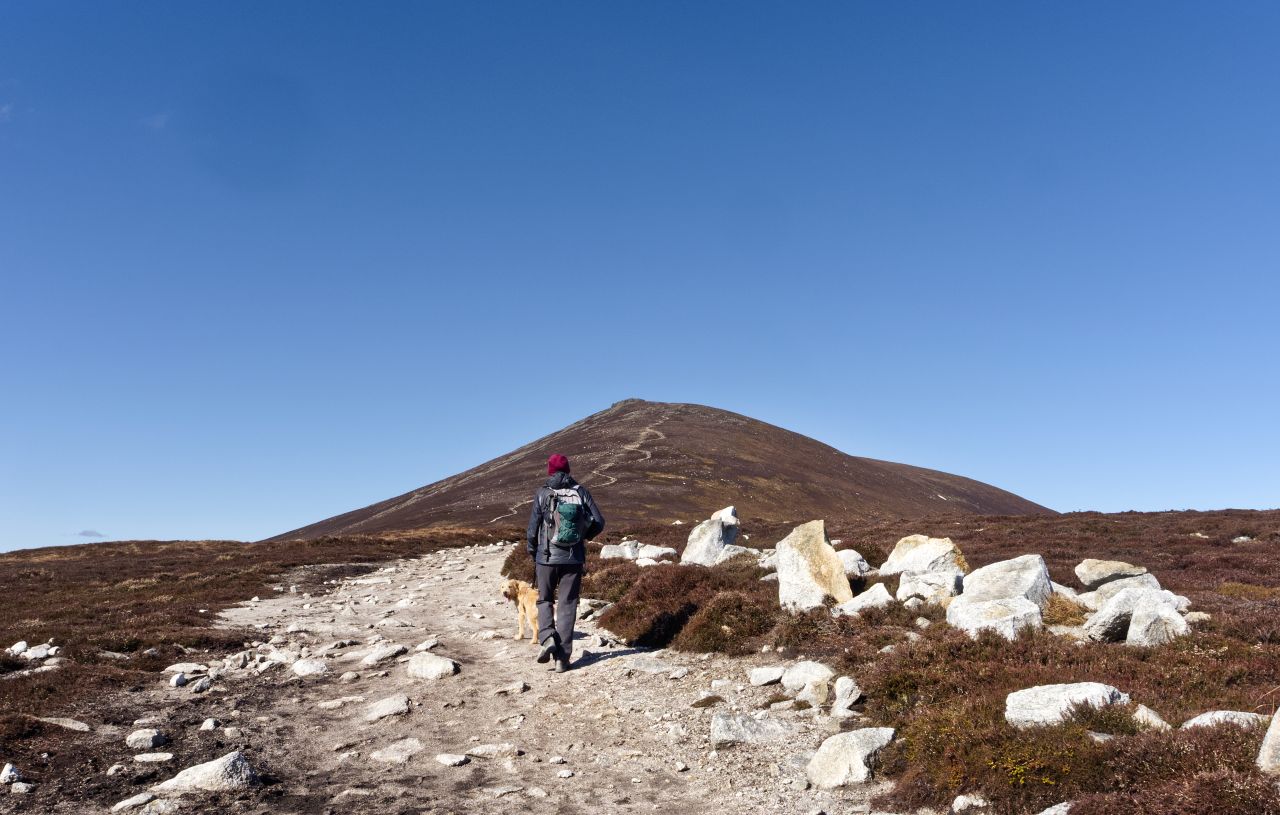
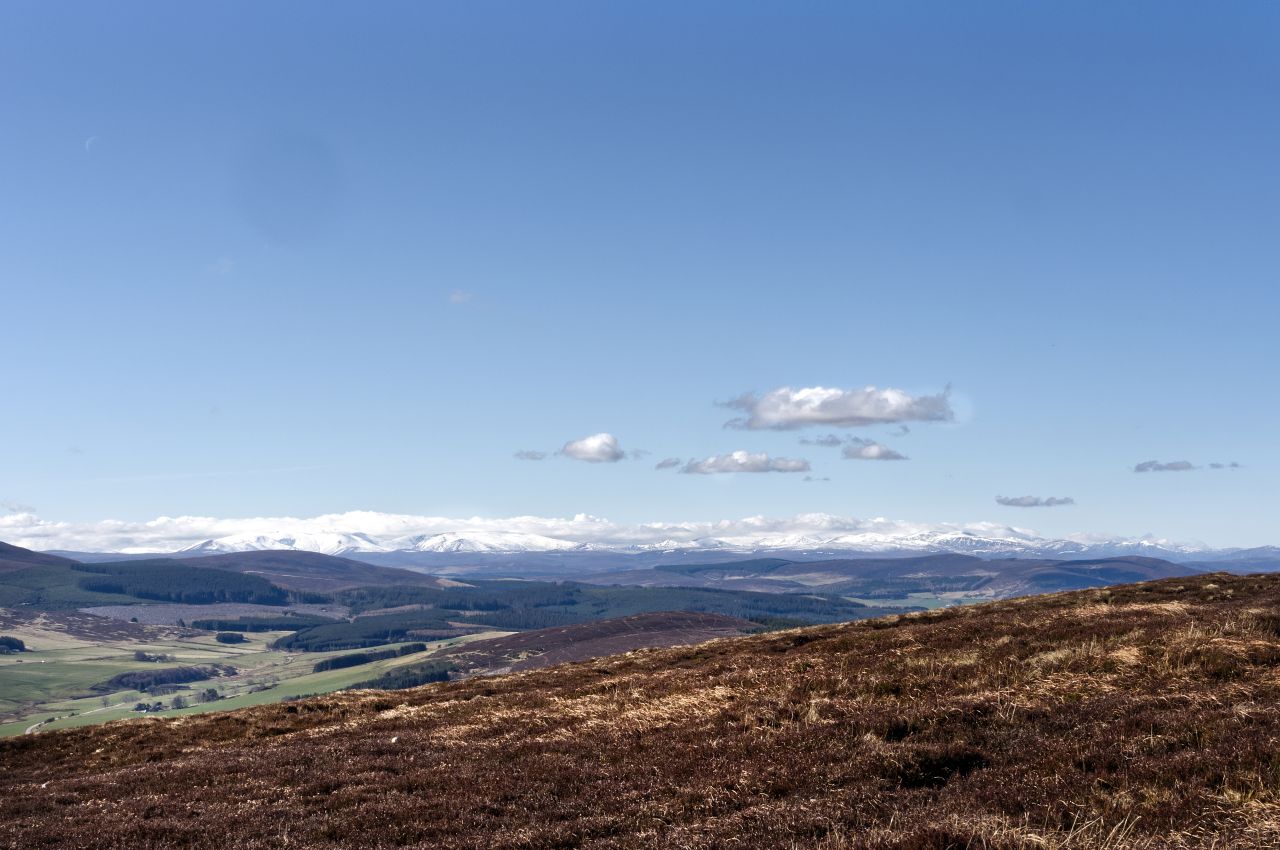
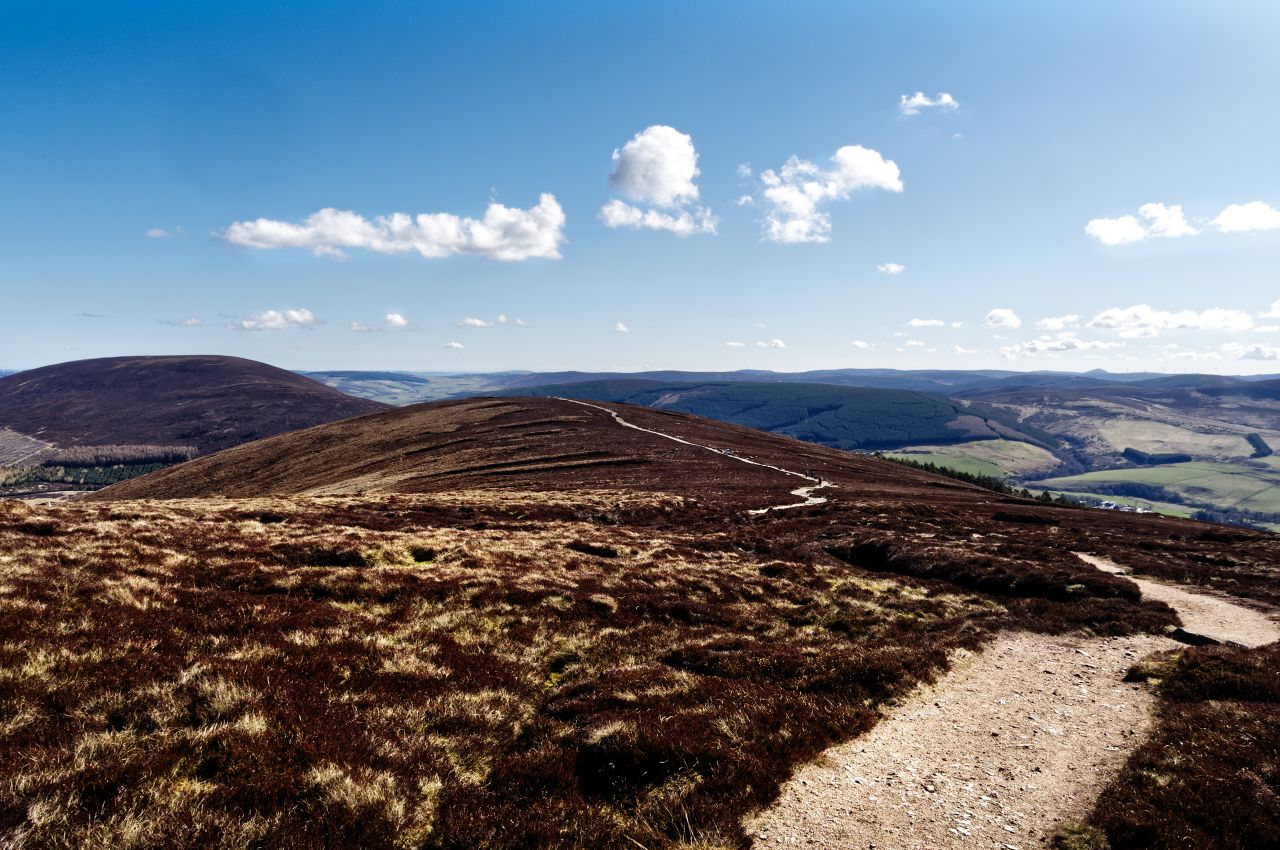
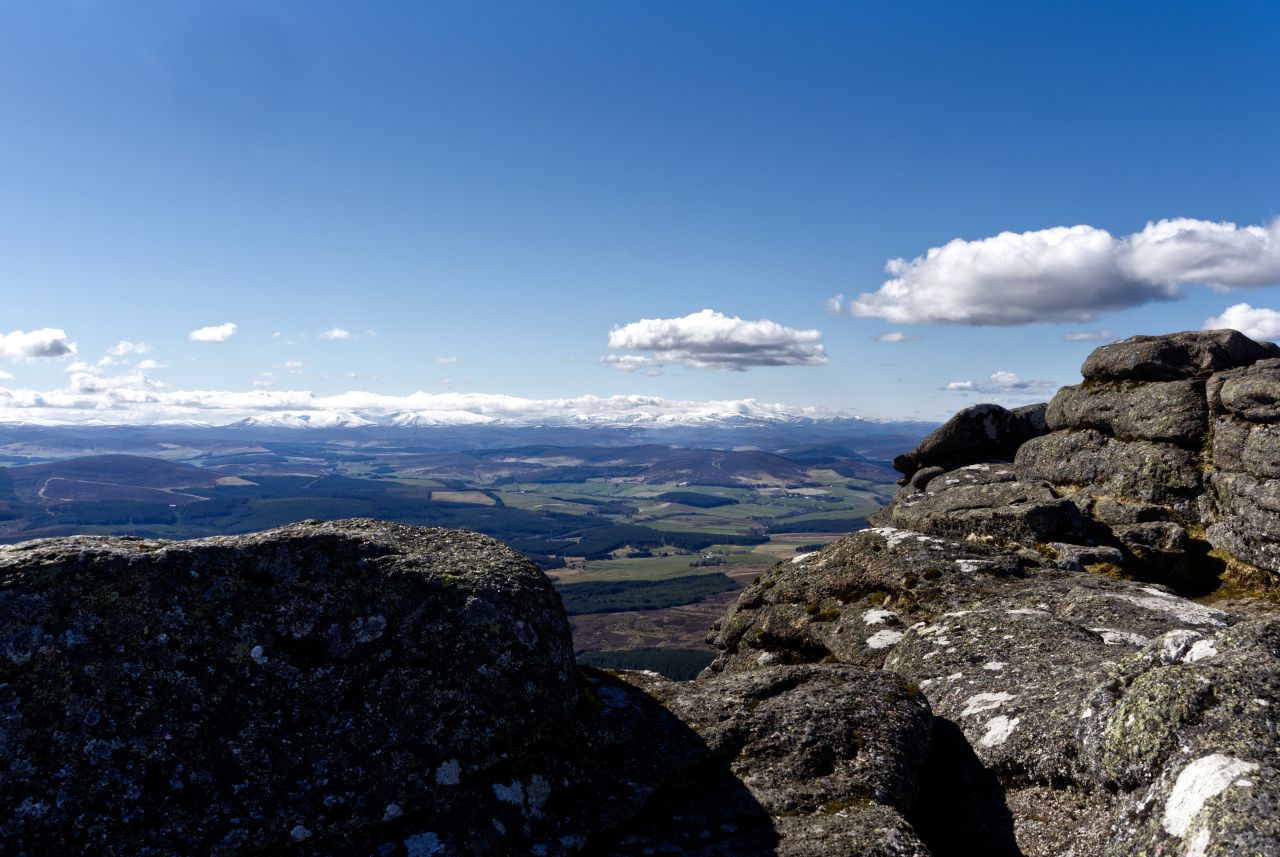
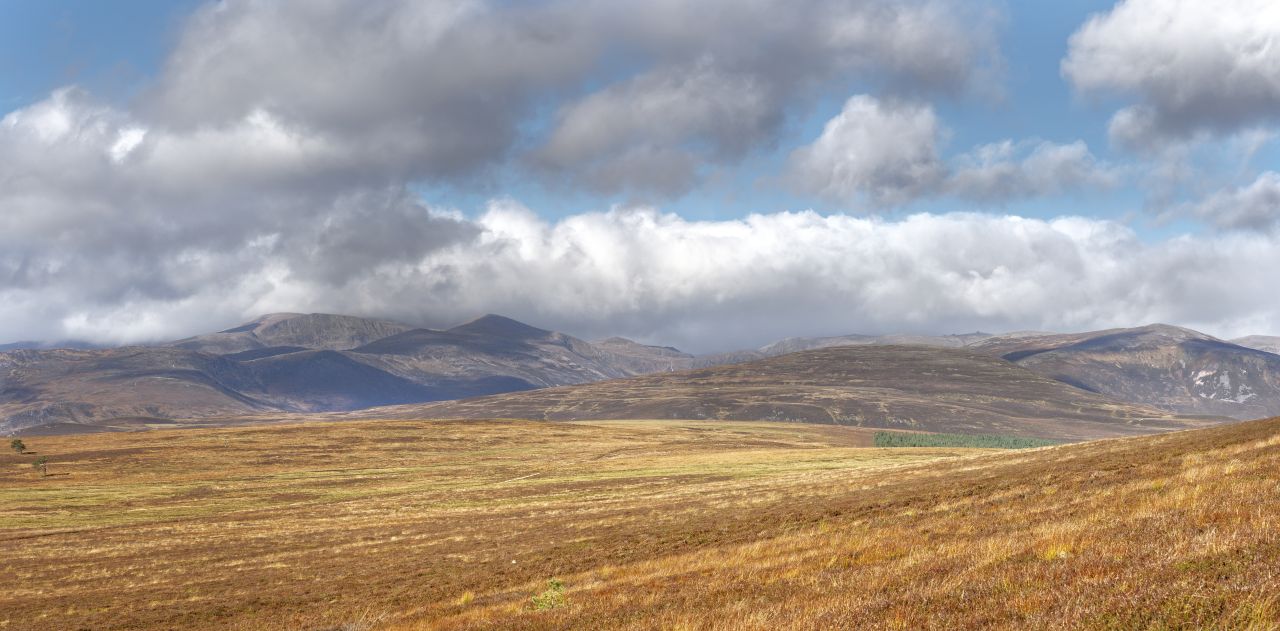
Heading up the track ….…. with the first view of Ben RinnesOn Roy’s Hill, with Ben Rinnes aheadThe Snow-topped Cairngorms, 40kms (25 miles) to the southwest
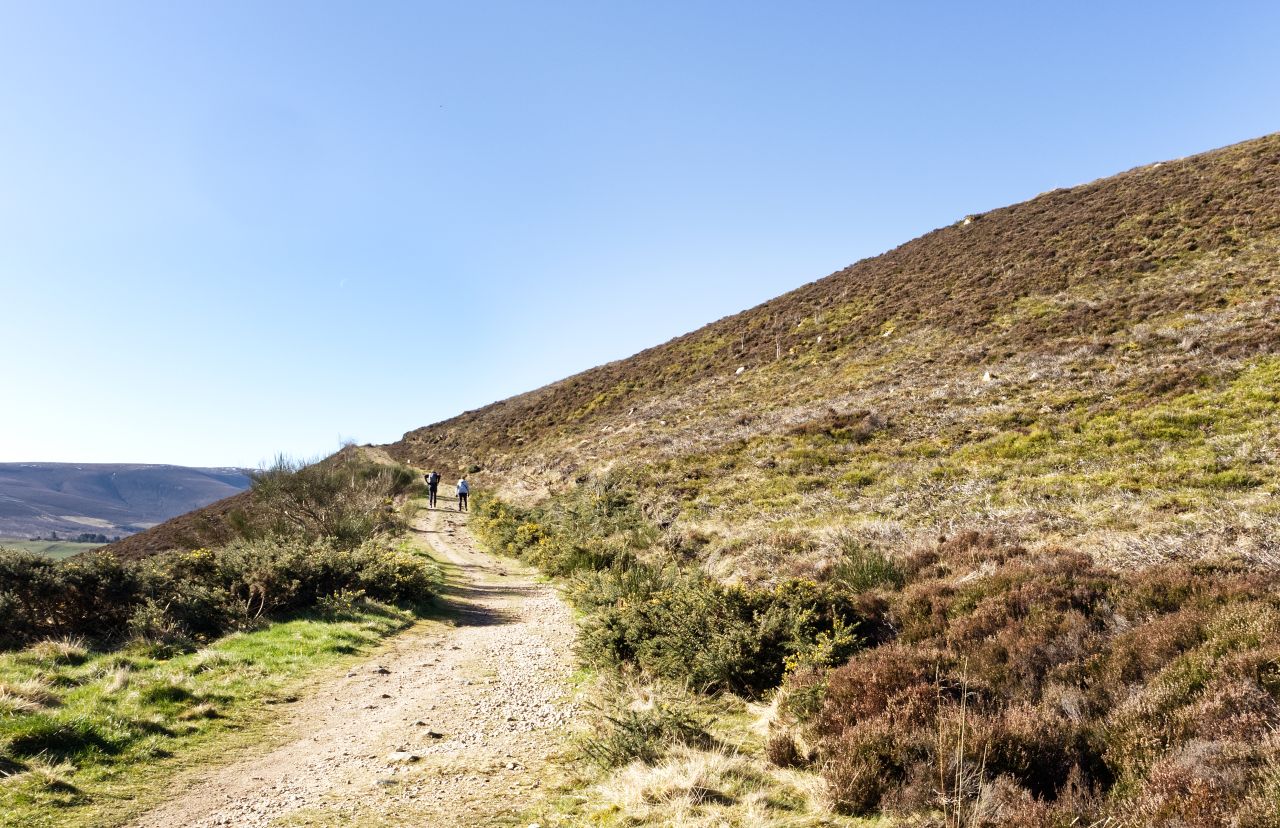
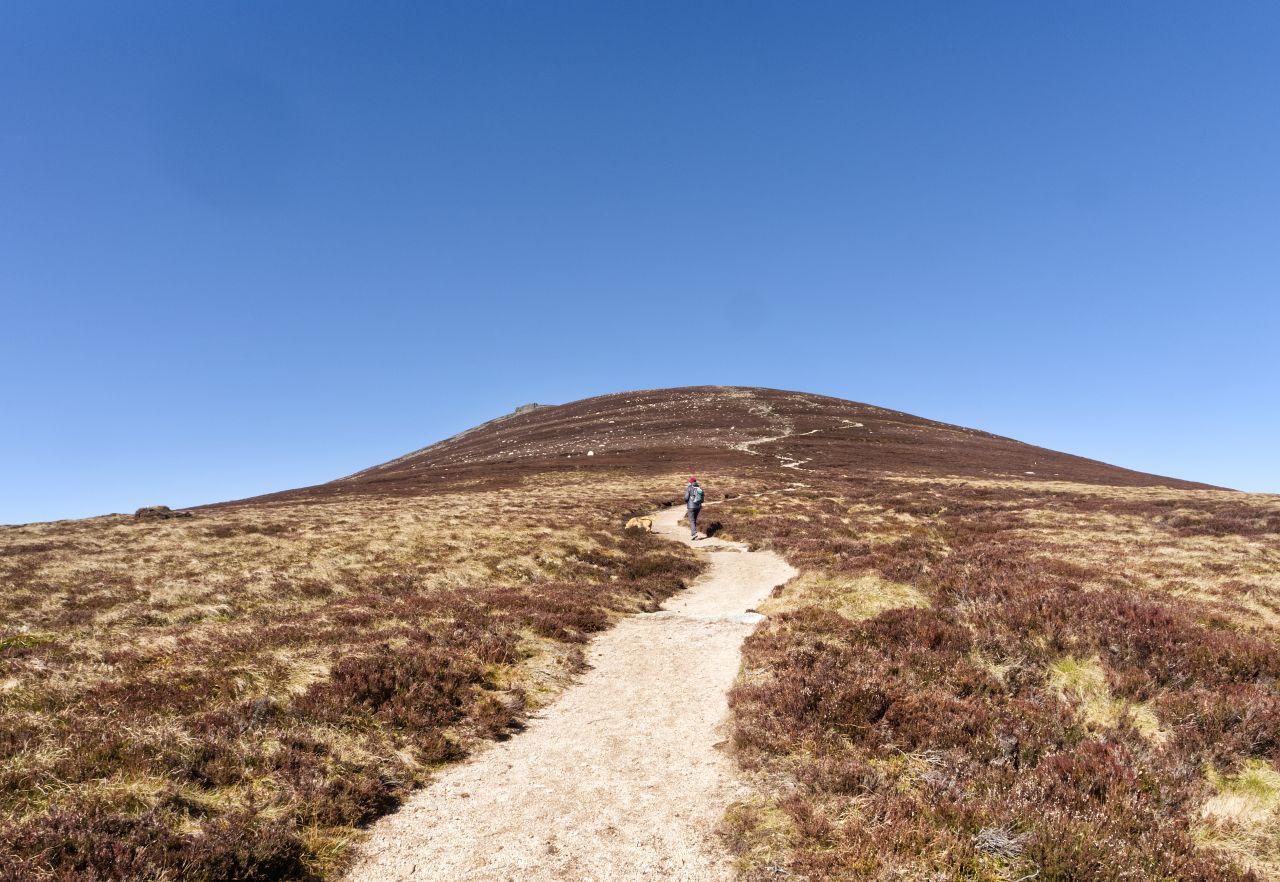
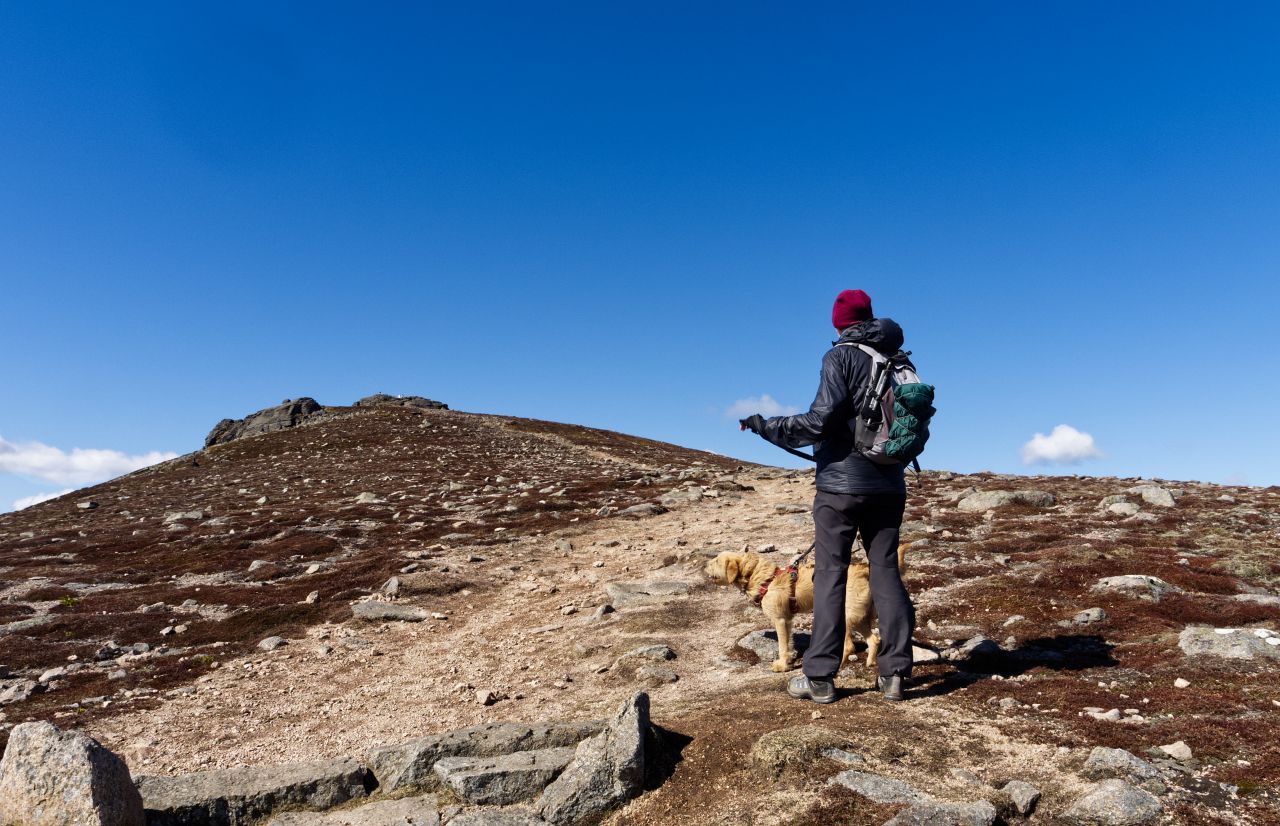
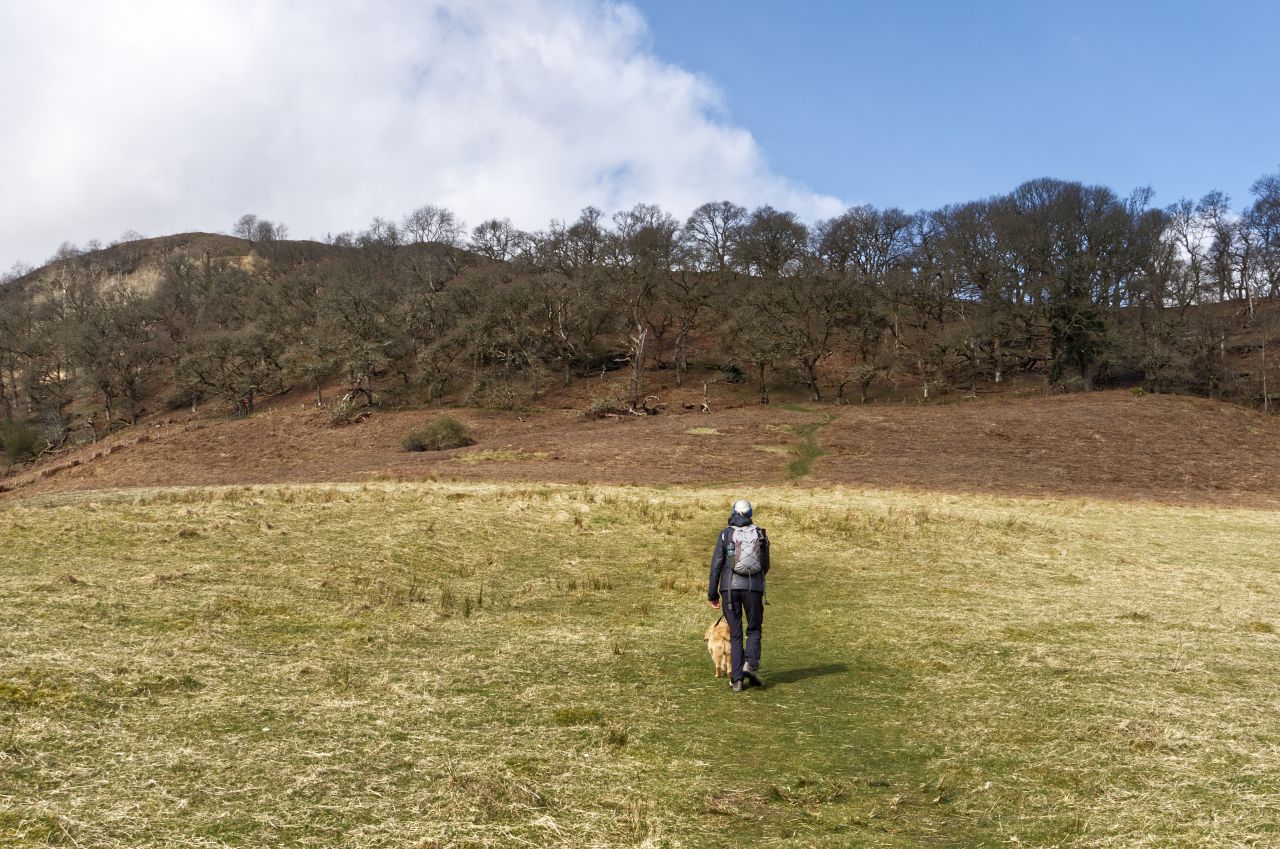
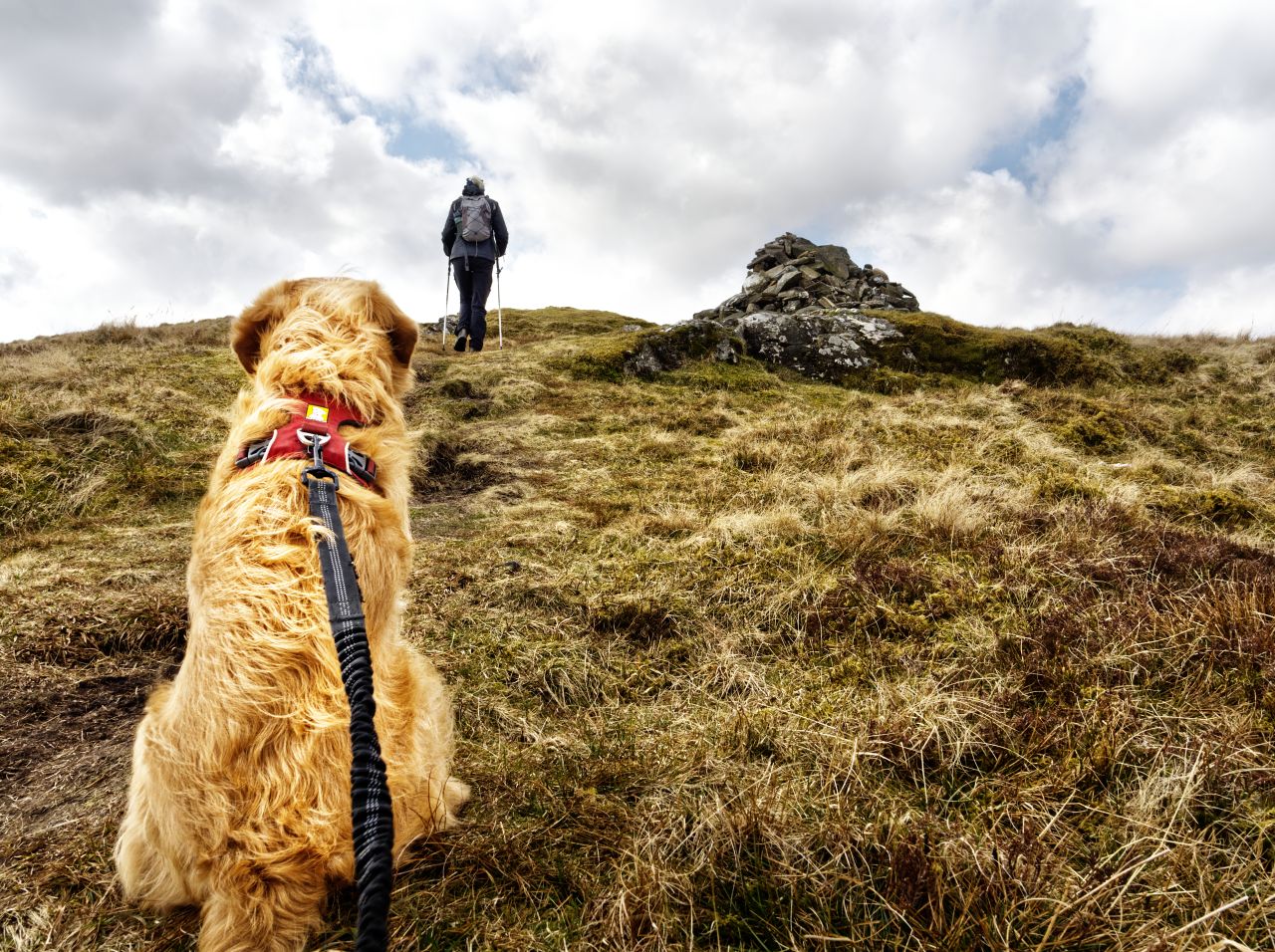
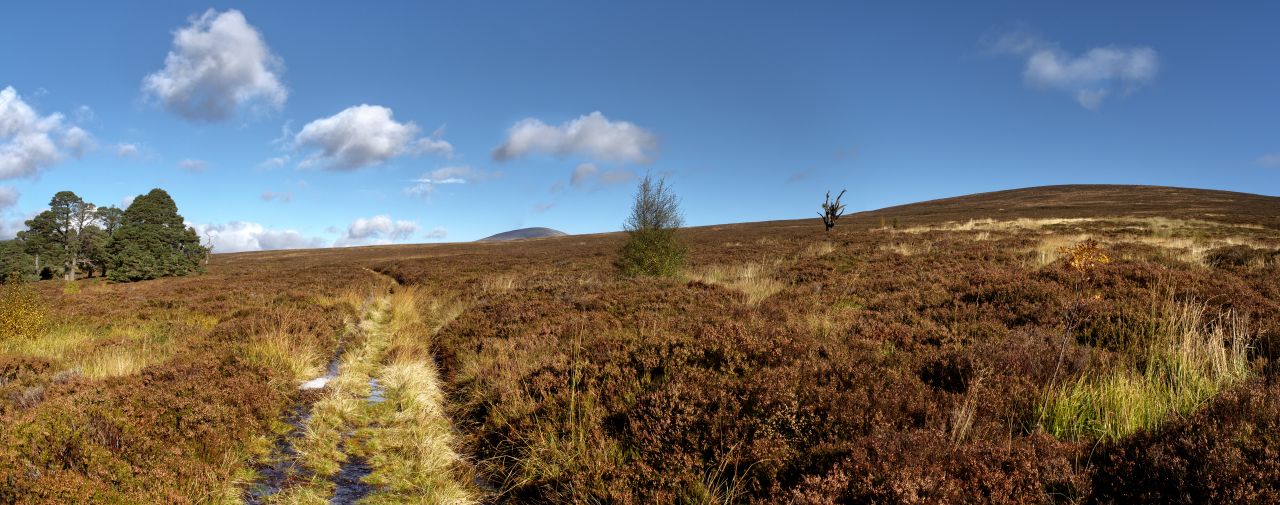
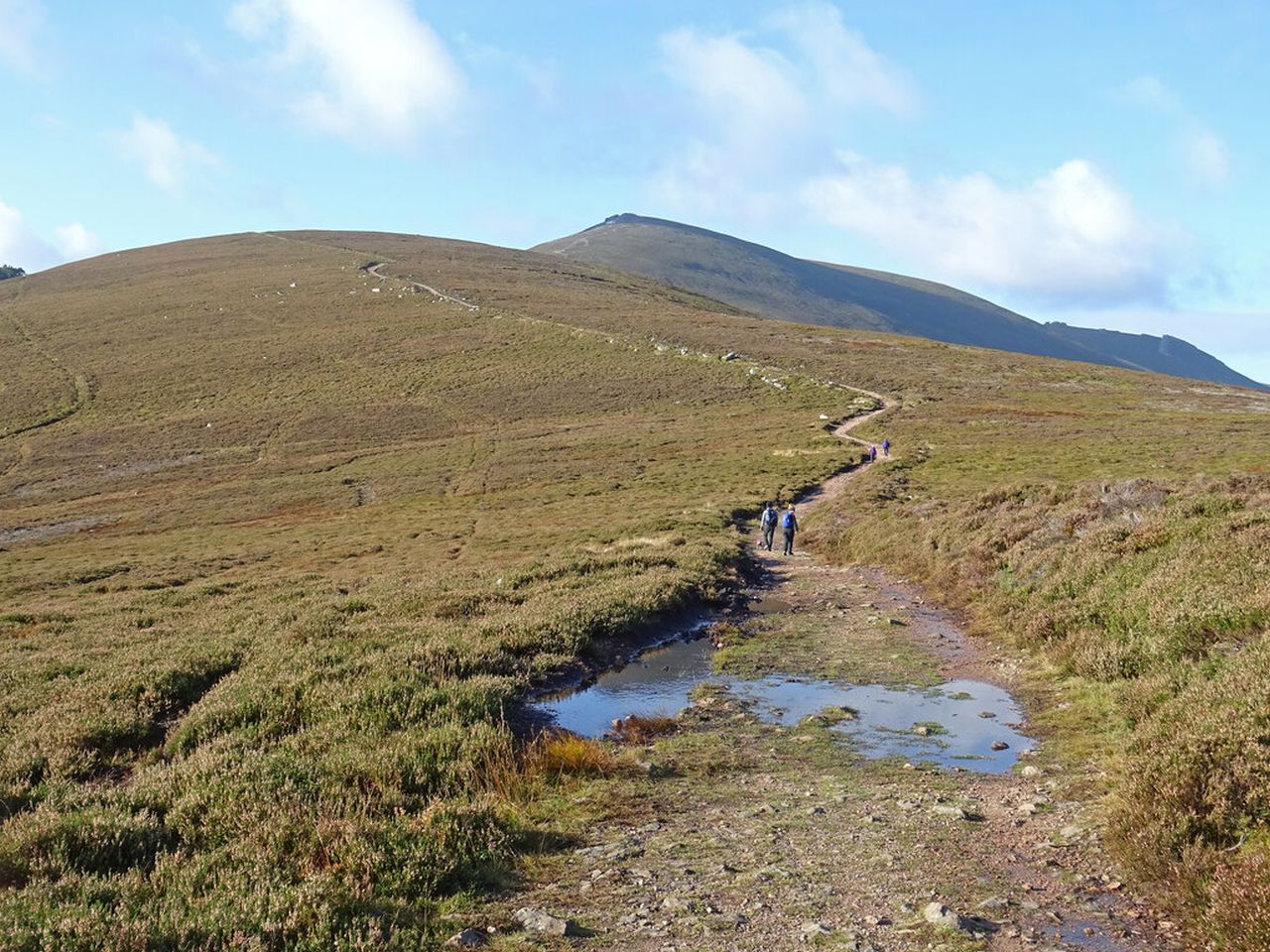
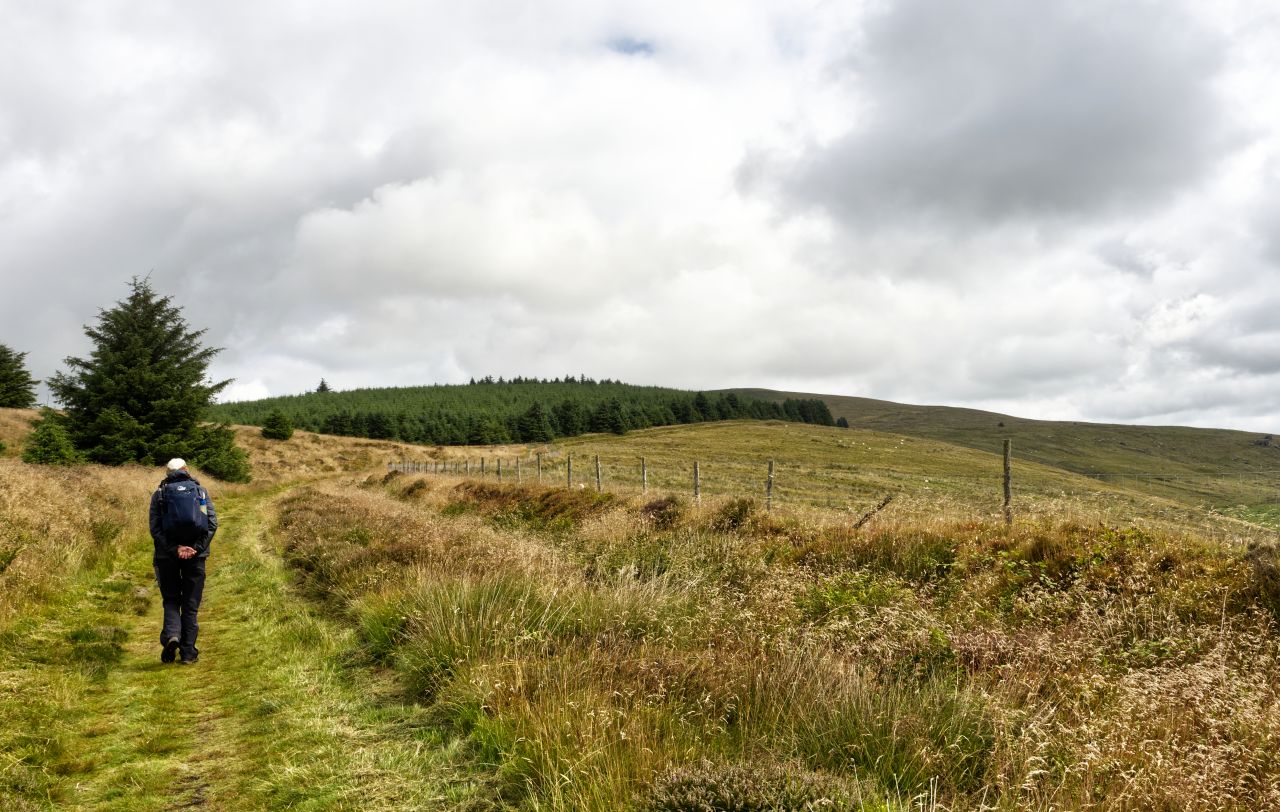
The track from the car park was wide and made for easy progress. A couple of zigs and zags took us up the side of Round Hill followed by steady progress along the broad ridge of Roy’s Hill. ‘Cai’, our Labrador-Poodle cross, was a bit steadier on the lead than on the Creag Bhuidhe walk a couple of weeks earlier (see post #334) but like all youngsters, he wanted to be ‘there’ immediately, wherever ‘there’ was! For the humans, there were superb views of the snow-capped Cairngorms, just 40kms (25 miles) to the southwest.
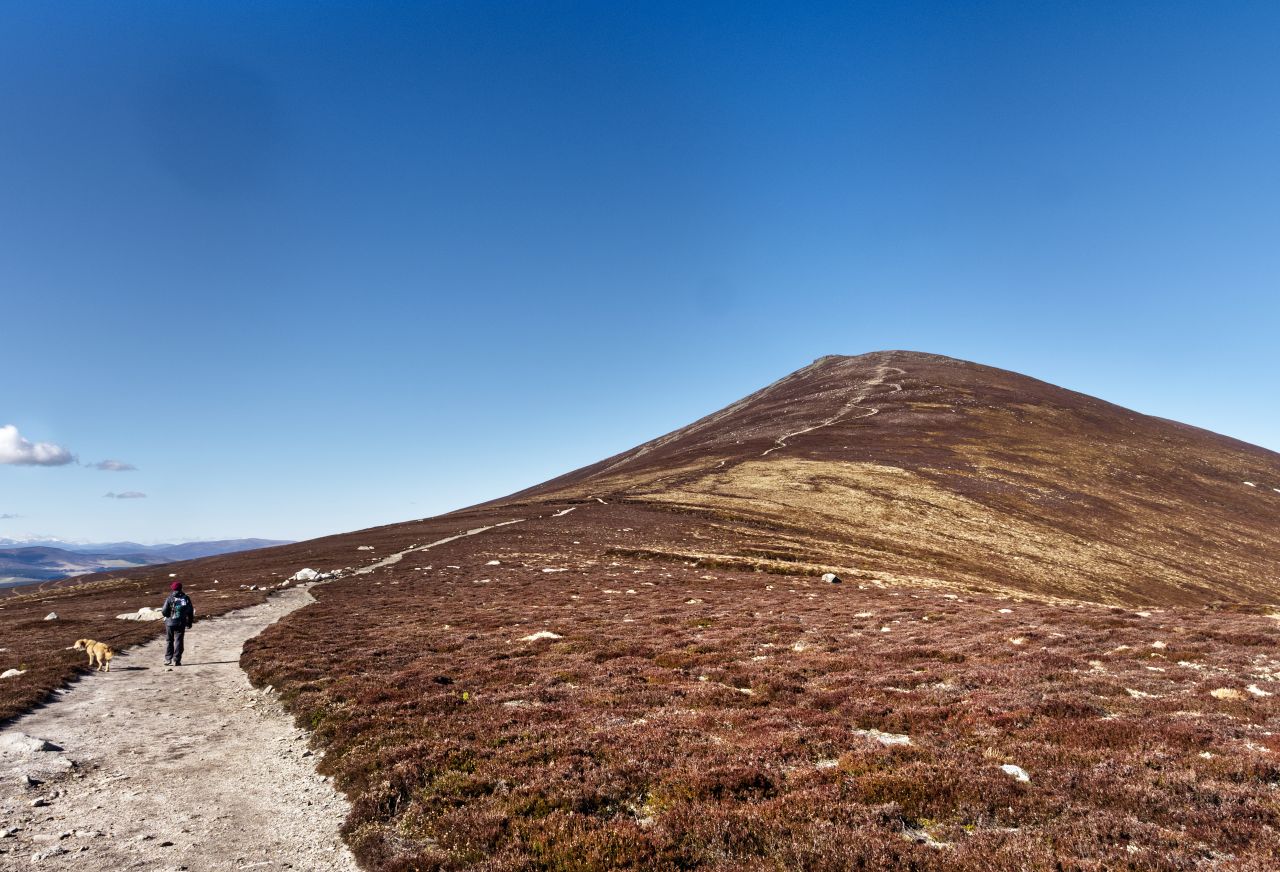
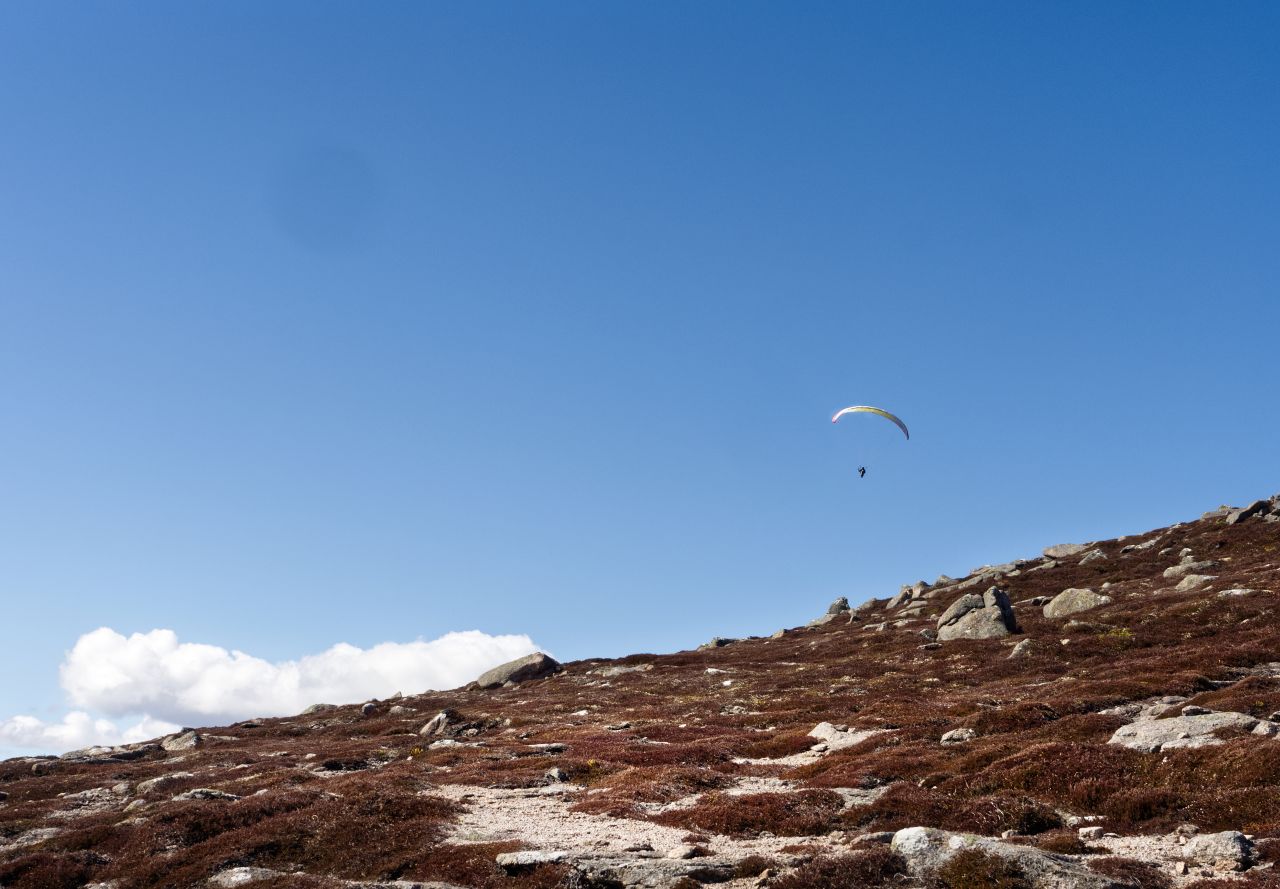
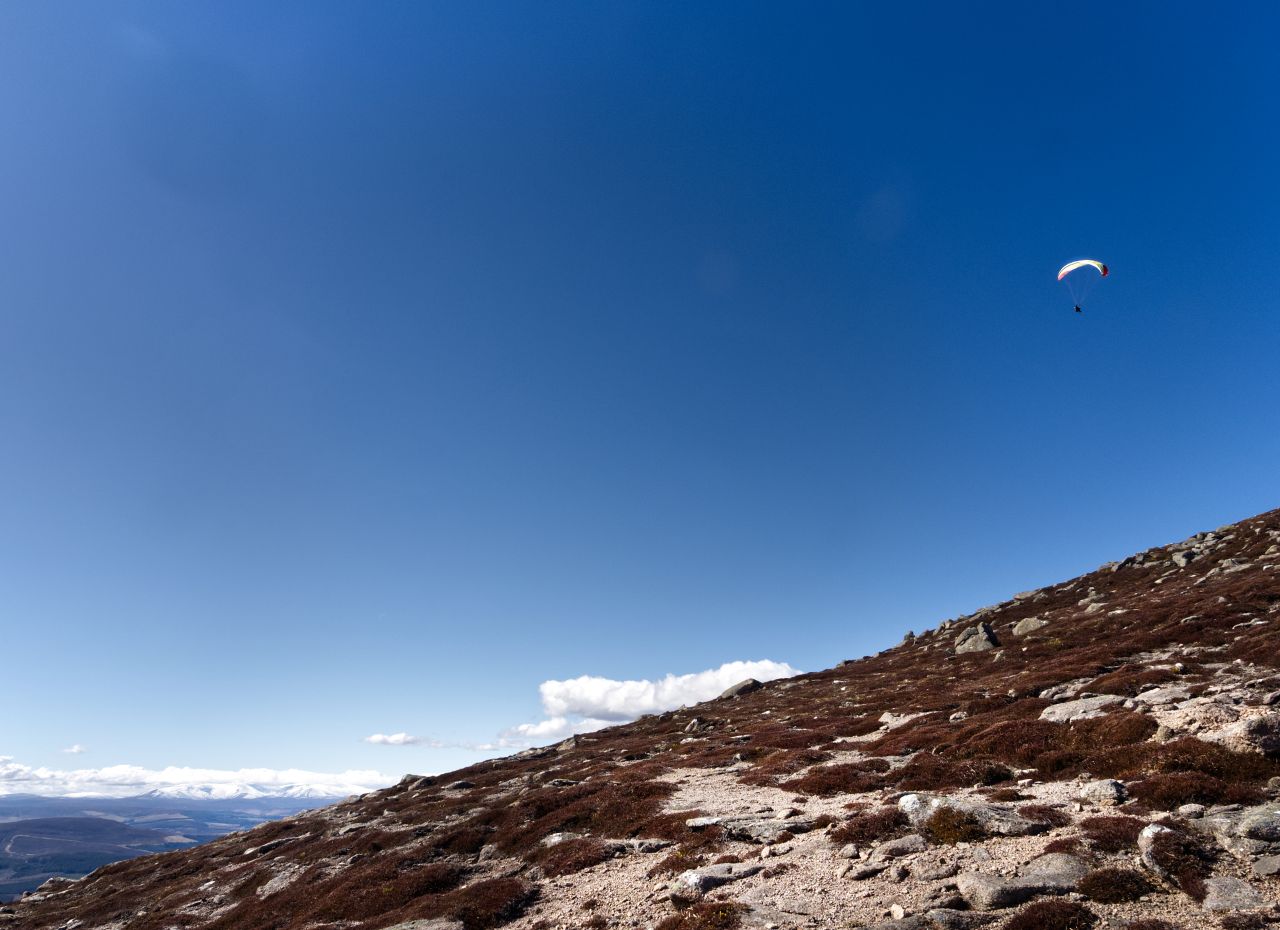
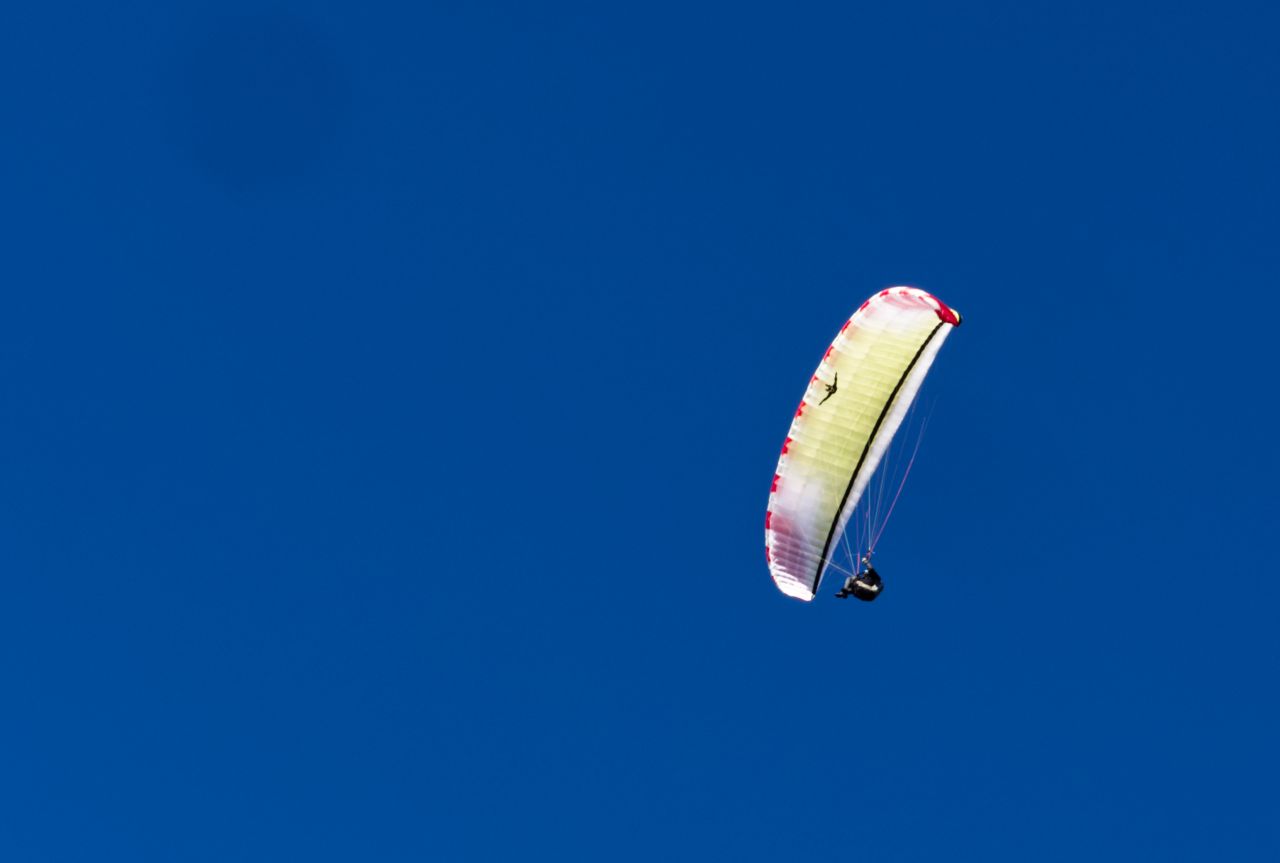
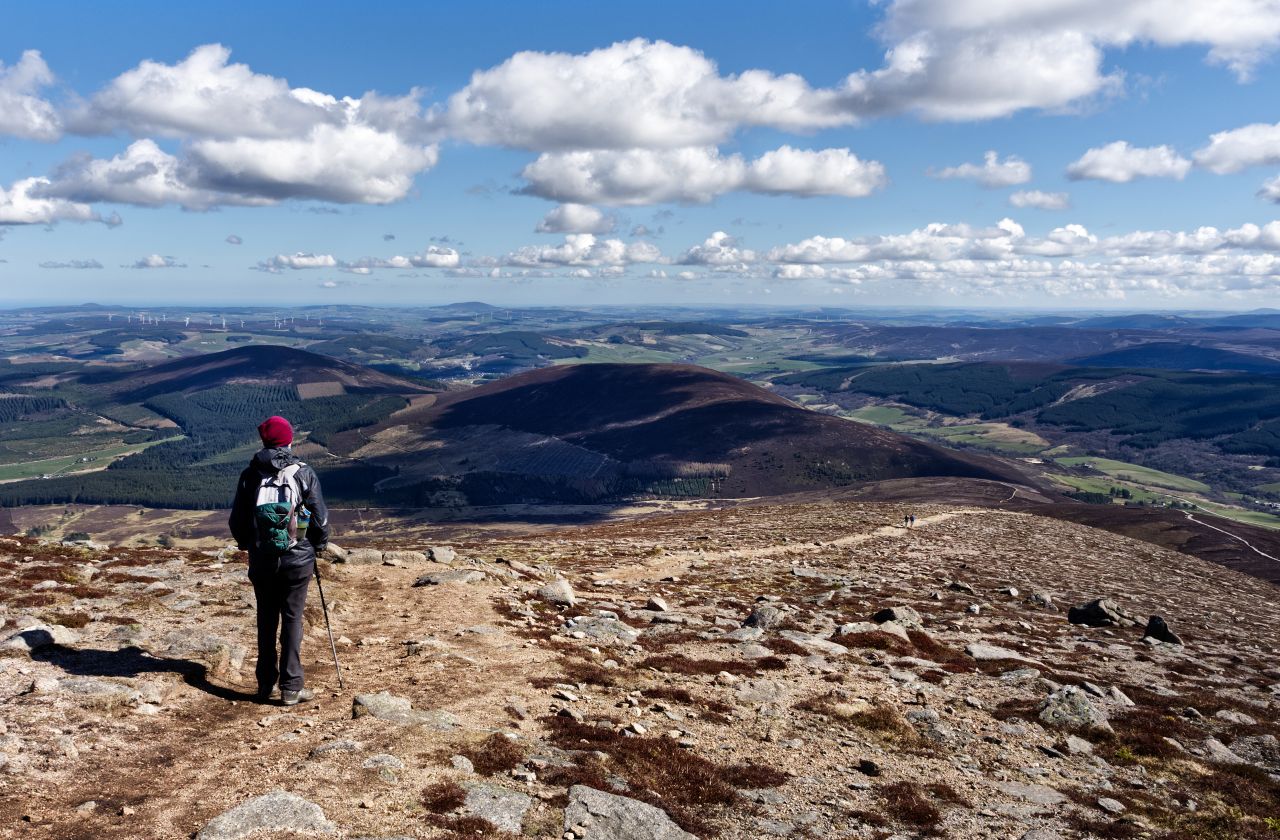
The final slopes to the summit ….….and the view back towards the startHeading for the zig-zags ….….with company aboveGood soaring conditionsOverhead
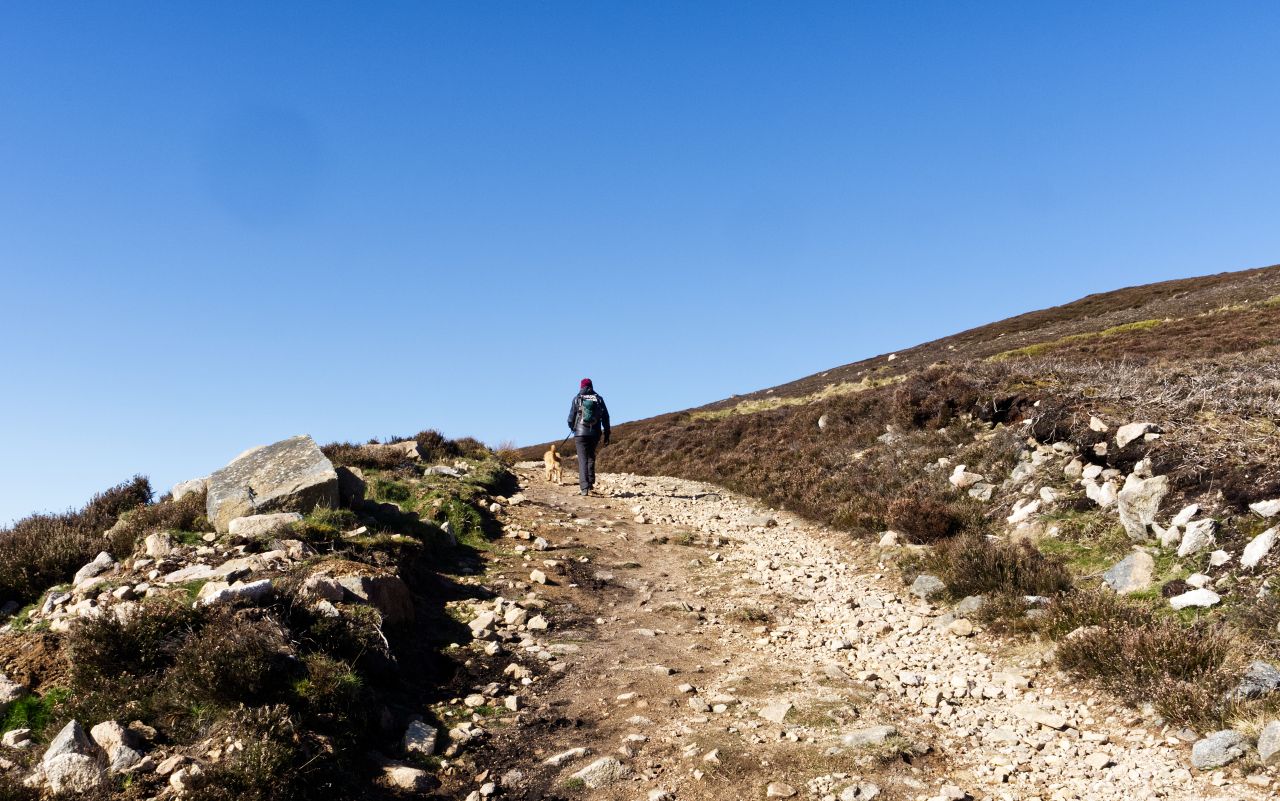
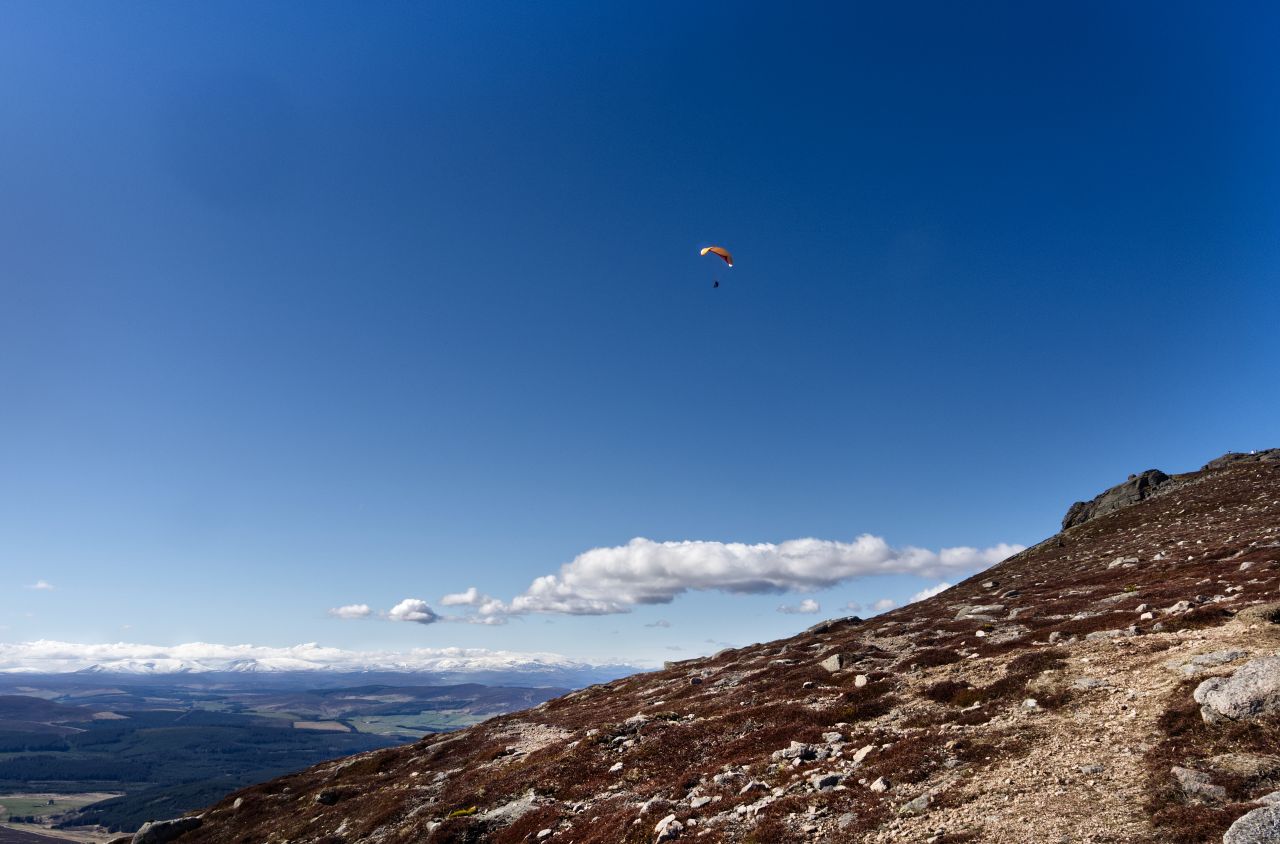
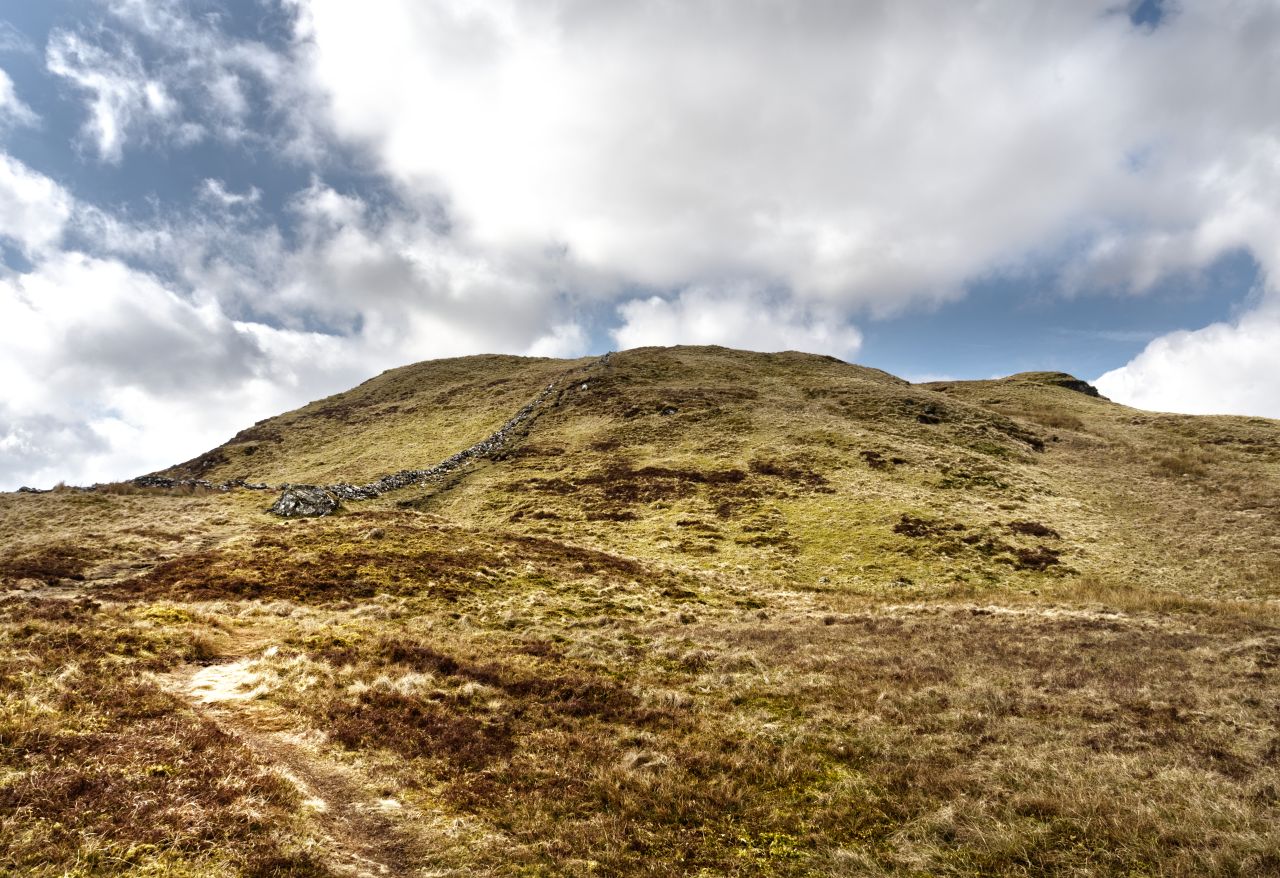
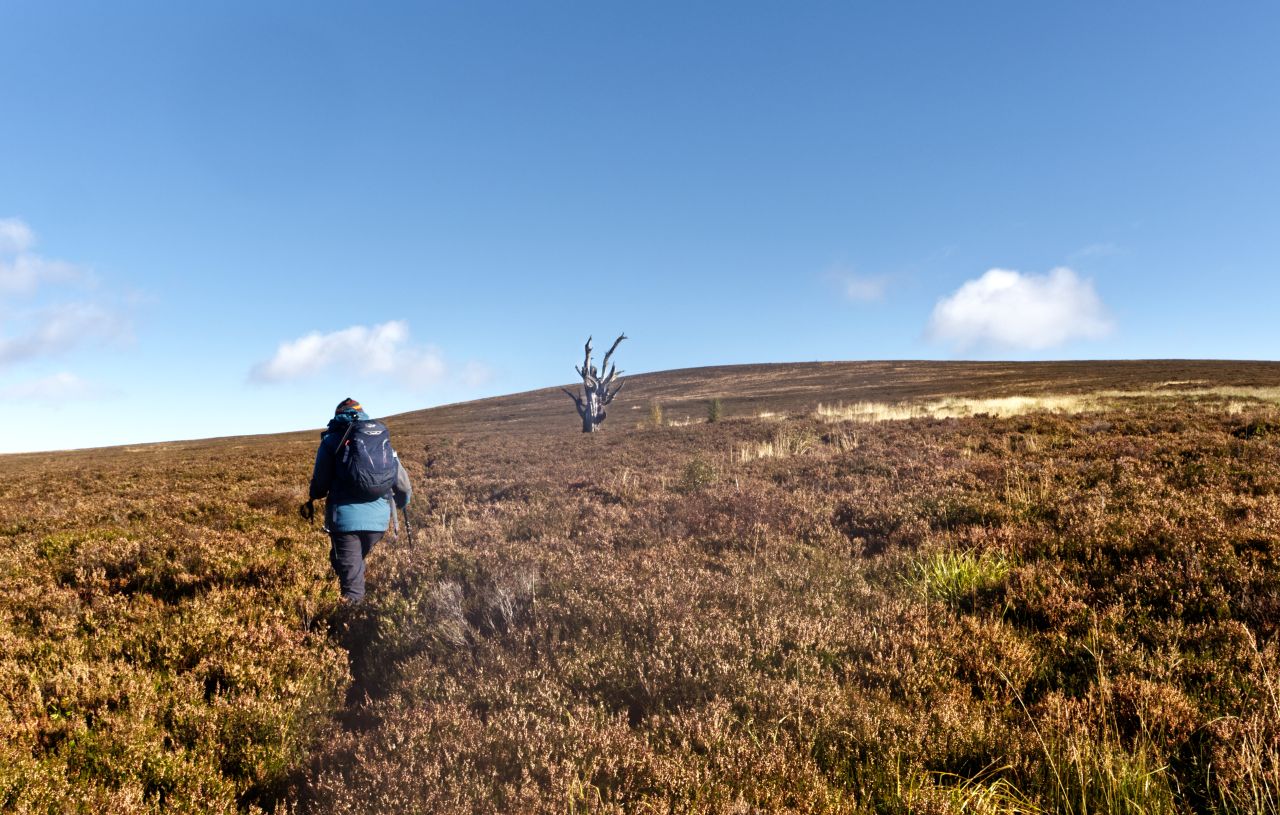
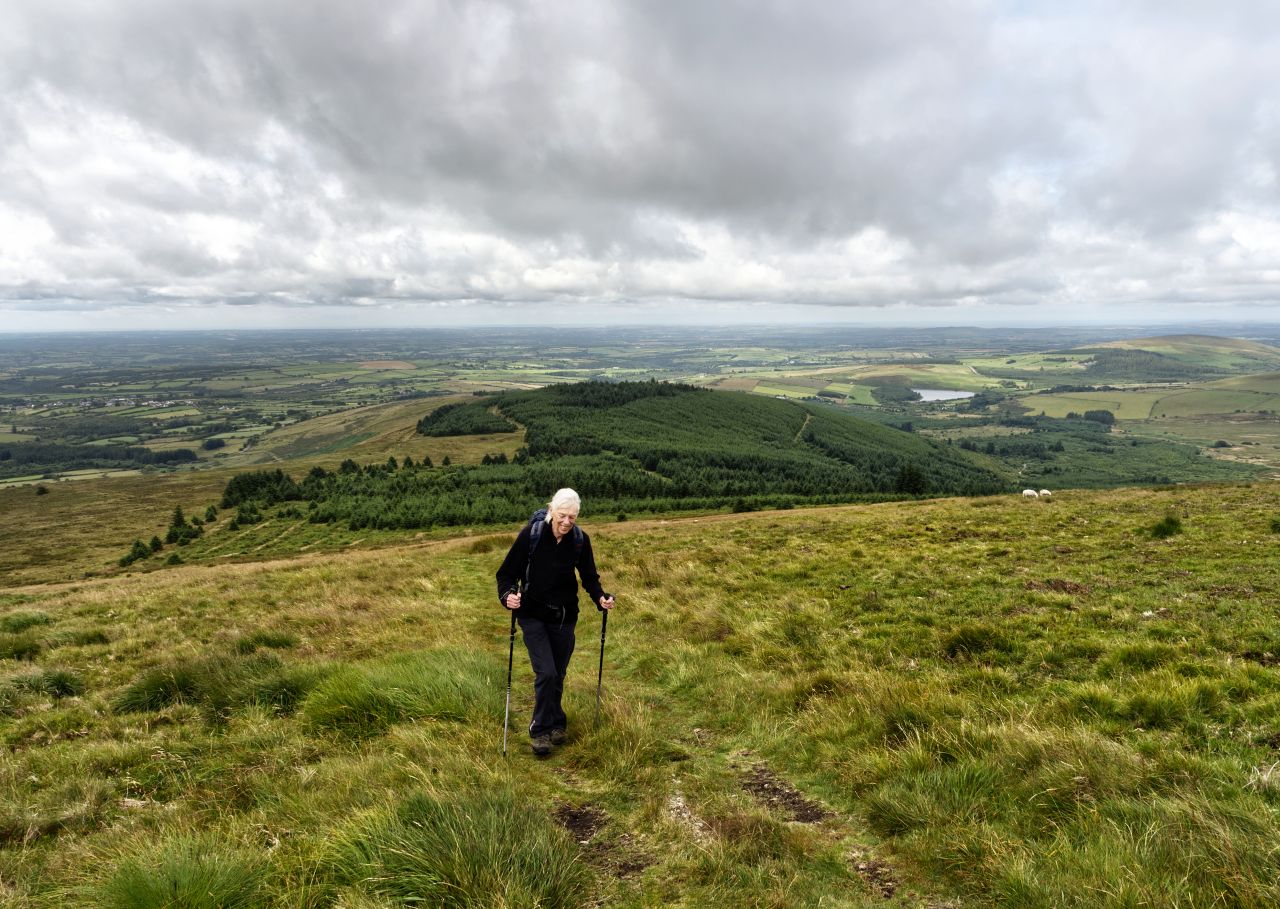
The final slopes to the summit were a little steeper but not unpleasantly so, and the zig-zag path made life easier. We soon realised that we had company – a paraglider pilot was making good use of a steady breeze to gain some soaring height. About 500 metres to the north of here was the site of a WW2 air crash – on 14th November 1943, a Wellington bomber from RAF Lossiemouth crashed into the hillside whilst on a navigation exercise, killing the crew of two. We didn’t have time to visit the site but settled instead for watching the paraglider head east into the valley below.
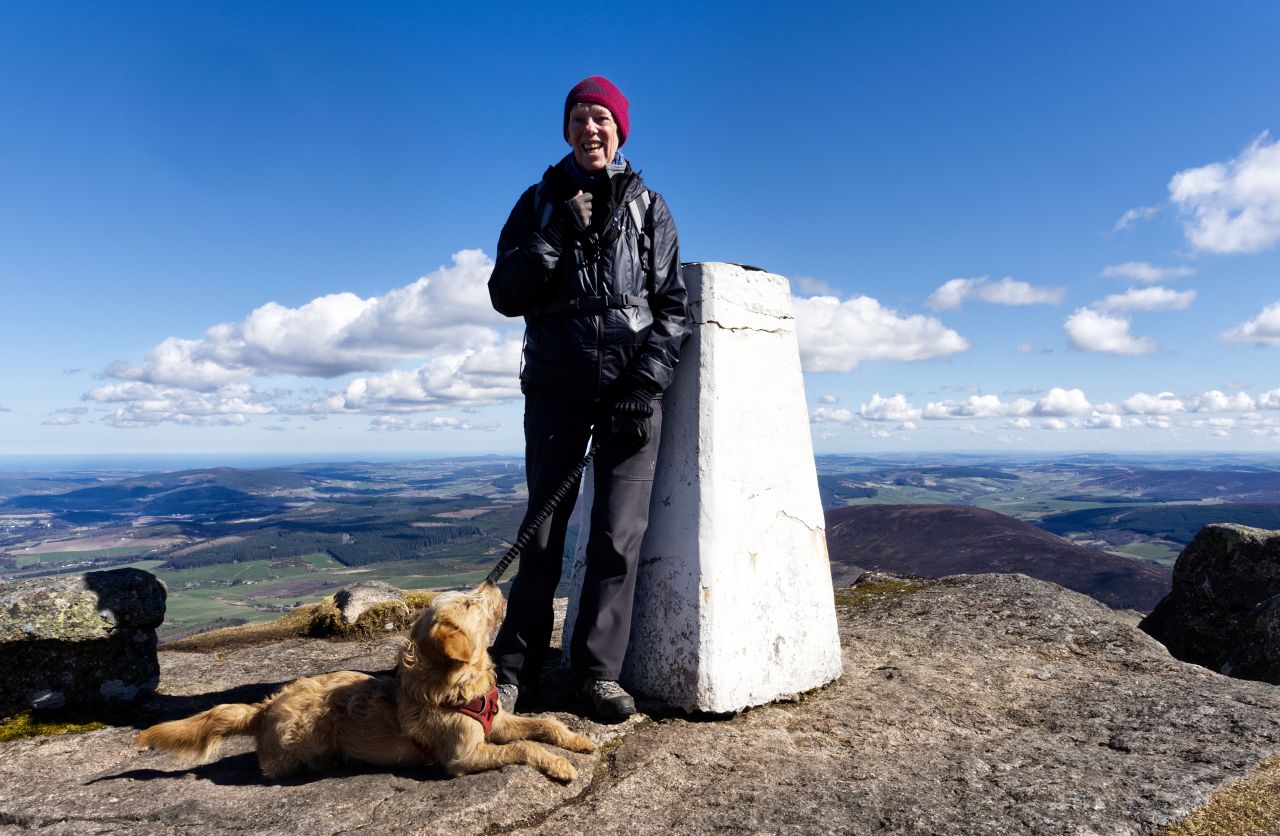
Big skies with the distant Cairngorms behindThe granite tors on the summit, looking like a castle from belowExcited young dog ‘Cai’ wants to be there NOW!Almost at the summit, with the trig point visibleAmongst the granite at the summit, with the Cairngorms in view
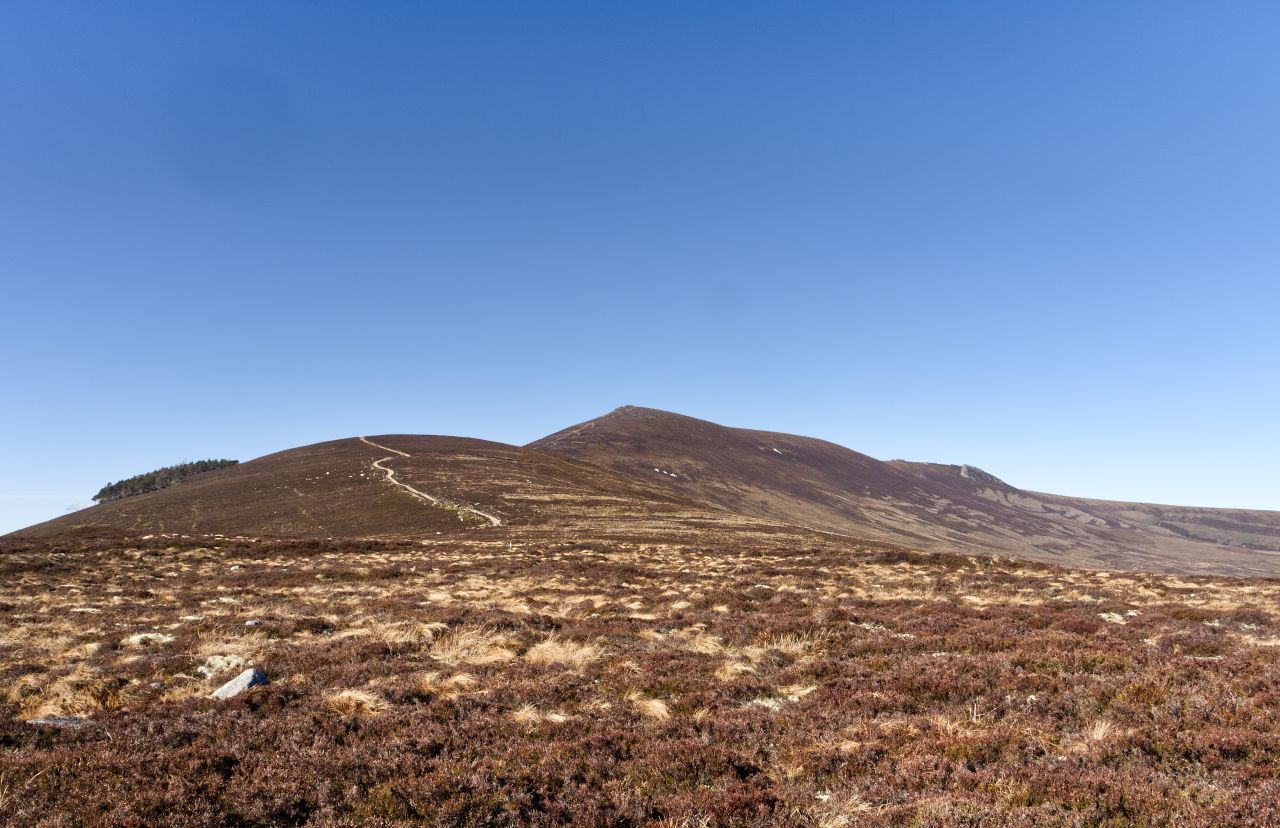
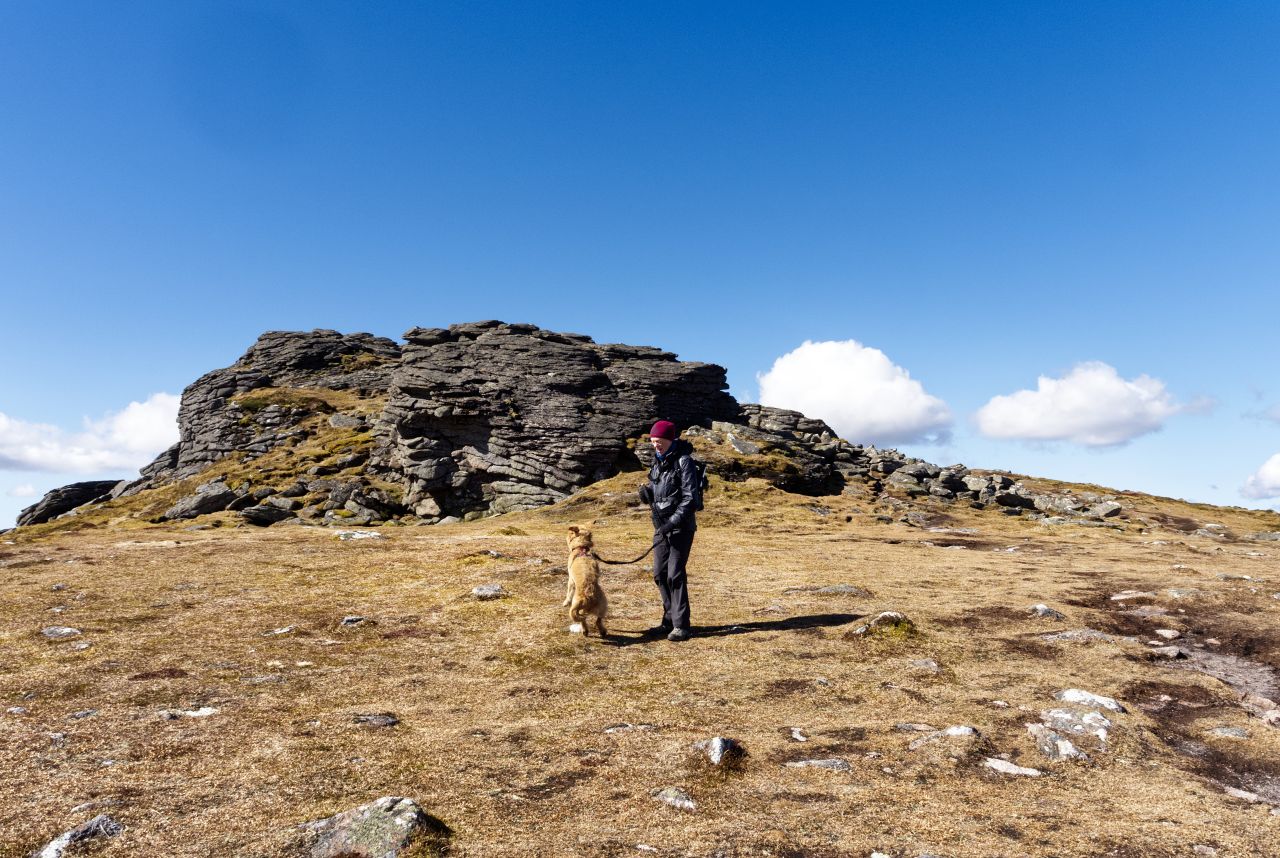
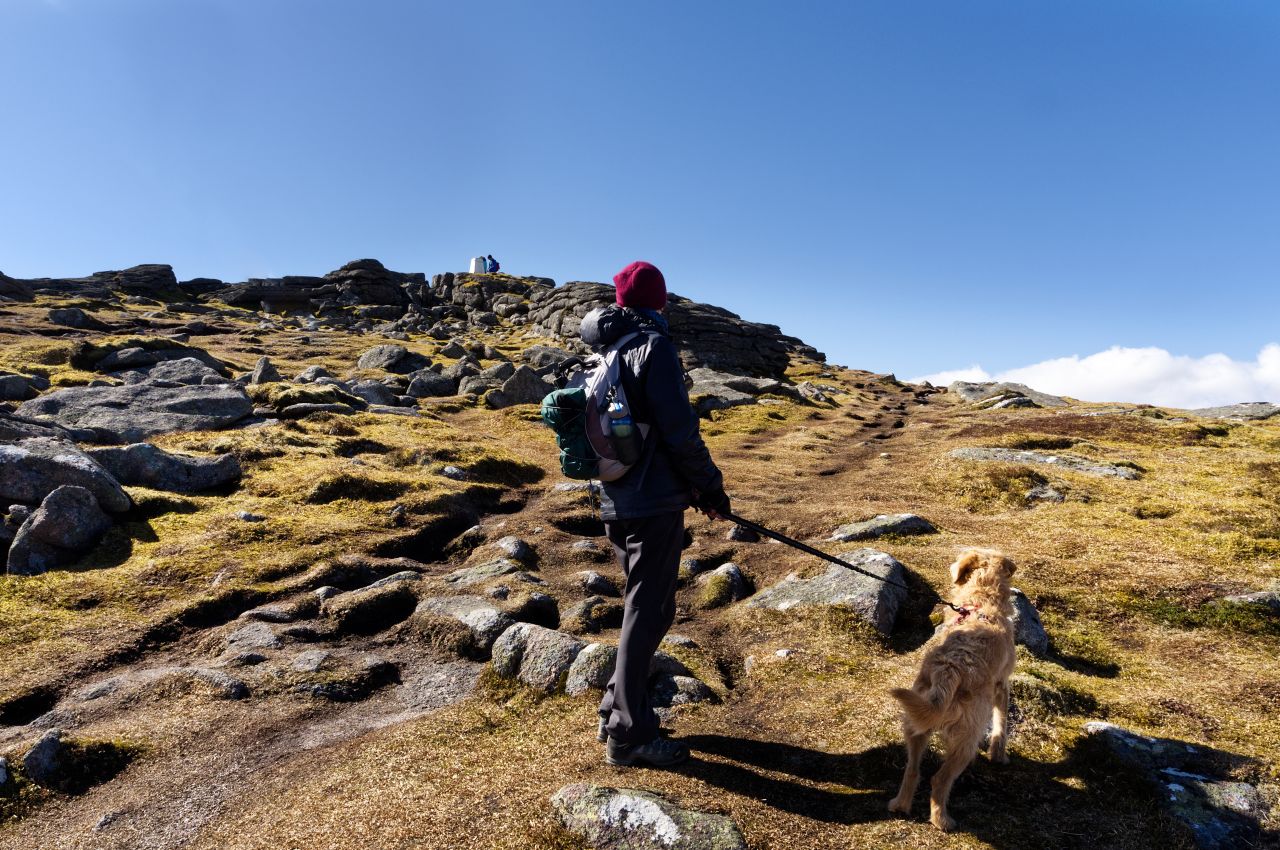
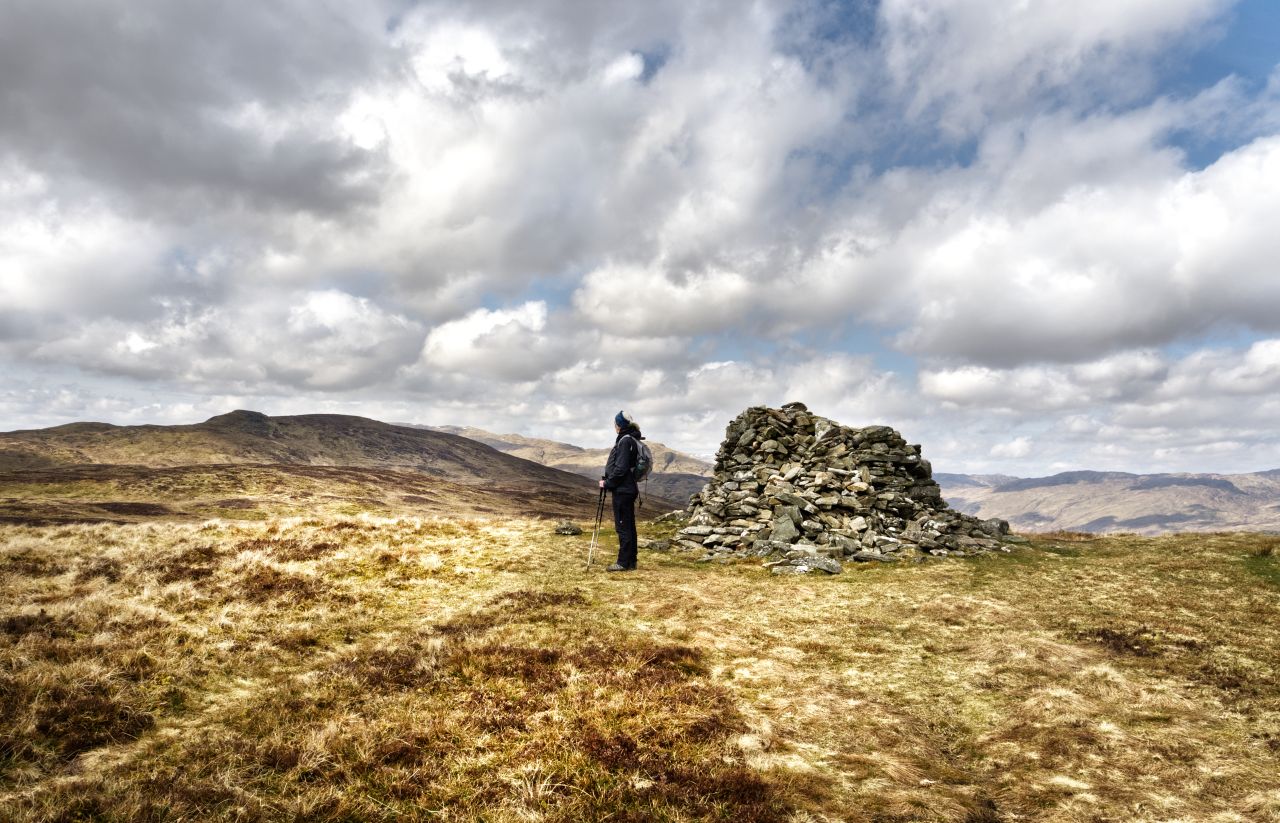
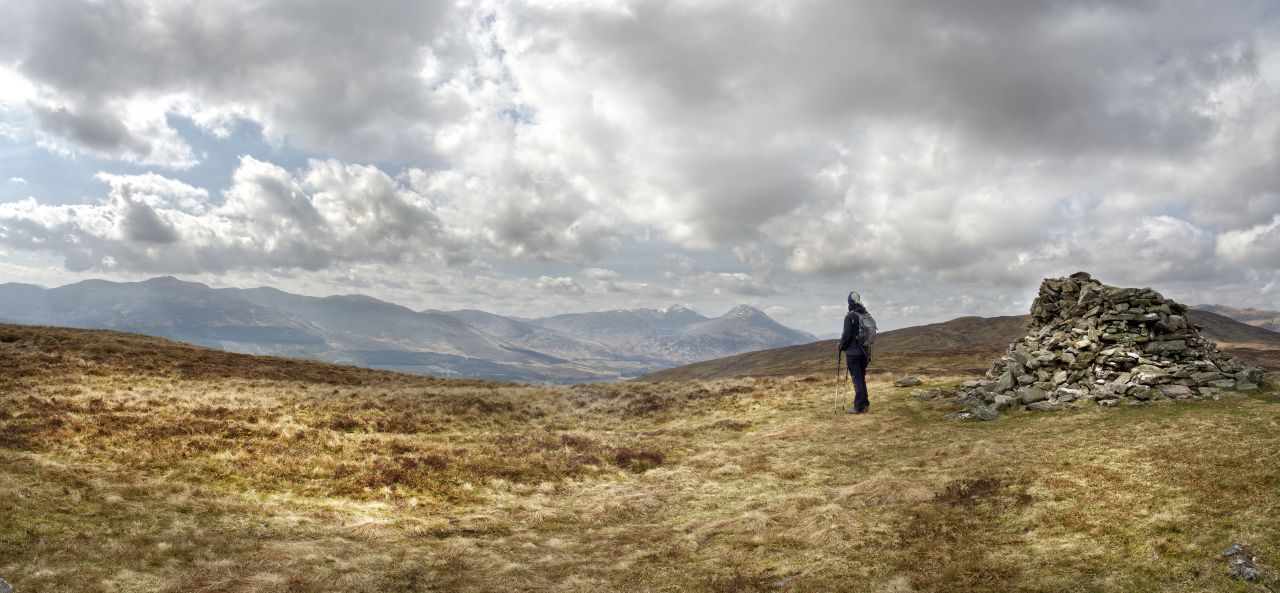
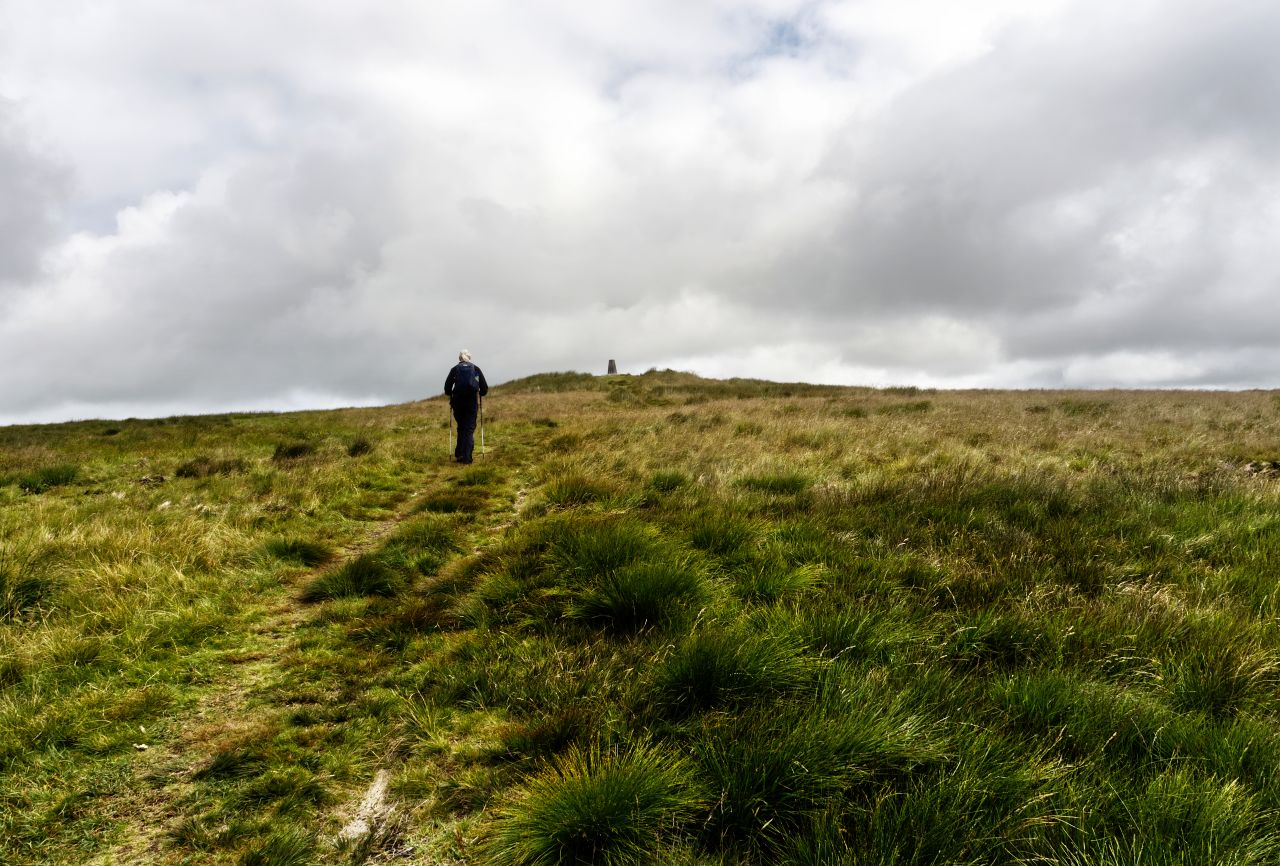
The summit of Ben Rinnes is a small granite tor, giving all-round views, with the distant Cairngorms being the main attraction. Having done the usual ‘summit stuff’ it was time to retrace our steps to the start point. Walking downhill is supposed to be easier than slogging uphill, but energetic young ‘Cai’ was going for an attempt on the fastest trip up and down the mountain – he would probably have achieved it if he hadn’t had the handicap of a slow-moving human holding him back!
The trig point marking the summitThe way back – time to head for home
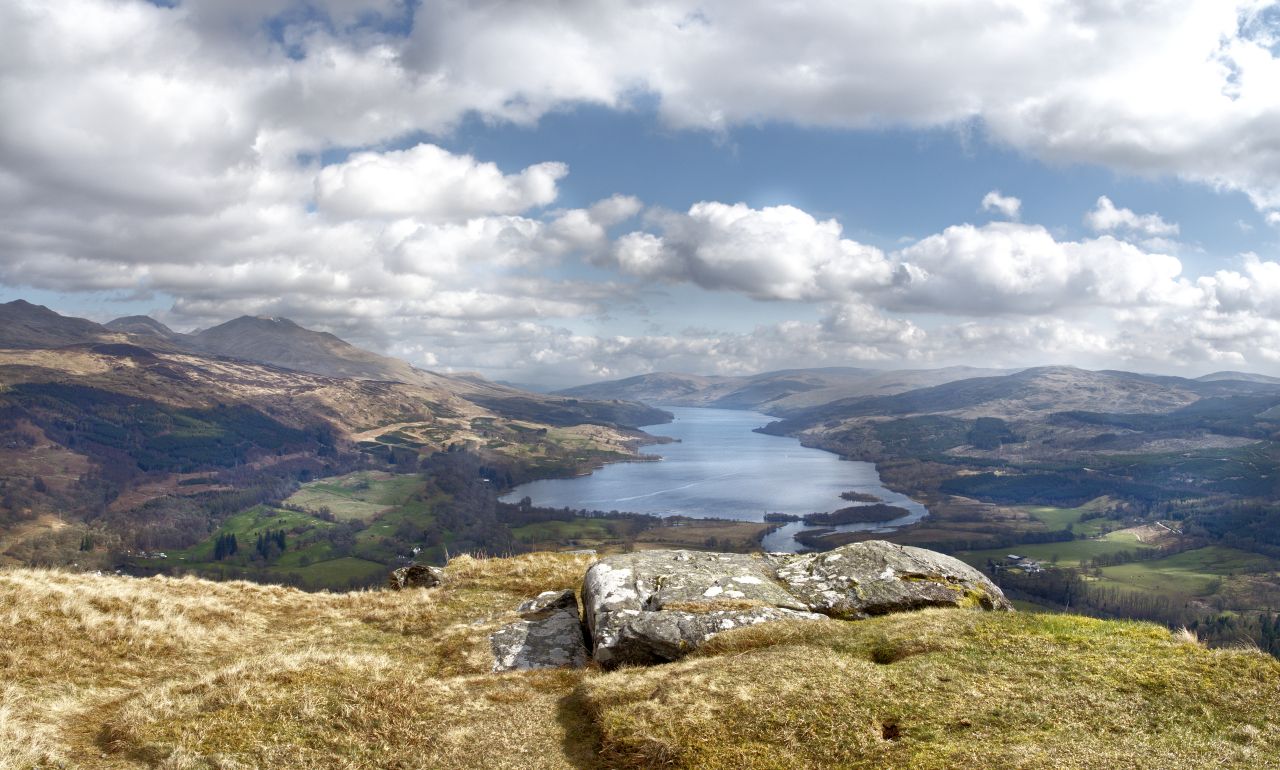
Loch Tay, seen from Creag Bhuidhe, with Ben Lawers and Meall nan Tarmachan in the distance on the left
For the best viewing experience, left-click the images and maps to zoom in to a new window, then exit that window to go back – go on, it really does work!
For years I’ve driven straight through the Southern Highlands of Scotland, too impatient to stop when Glencoe, Skye, Wester Ross and Assynt were beckoning. More recently, I’ve been filling in some of the gaps, and Chris and I had enjoyed a couple of good days on Meall nan Tarmachan (see post #292) and Ben Lawers (see post #310) in the Killin/Loch Tay area.
Ben Lawers, August 2021
When our Border Collie ‘Mist’ started to slow down through old age, I drew up a list of easier mountain days that the old girl could enjoy. In fact, the list was so long that we still had loads of less demanding hill days left on the list when ‘Mist’ passed away in June 2022 (See post #320 for a final tribute). As most of the hikes on the list were fairly short, I looked for a good reason to get round to doing them – the good reason turned out to be a new dog!
‘Cai’ – Labrador-Poodle cross, AKA Labradoodle
‘Cai’ came to us via friends who had fostered him, following a bereavement. He arrived with the name ‘Dave’, which sounds cute until you have to shout the name in public to get the dog’s attention! He didn’t seem to recognise or respond to ‘Dave’, so we renamed him ‘Cai’ which is Welsh for ‘Joy’ or ‘Happiness’. He came to us at six months old, a bit too young for long mountain days, so it looked as though the list of shorter hill days was going to be useful after all.
Seven months old
Quite small!
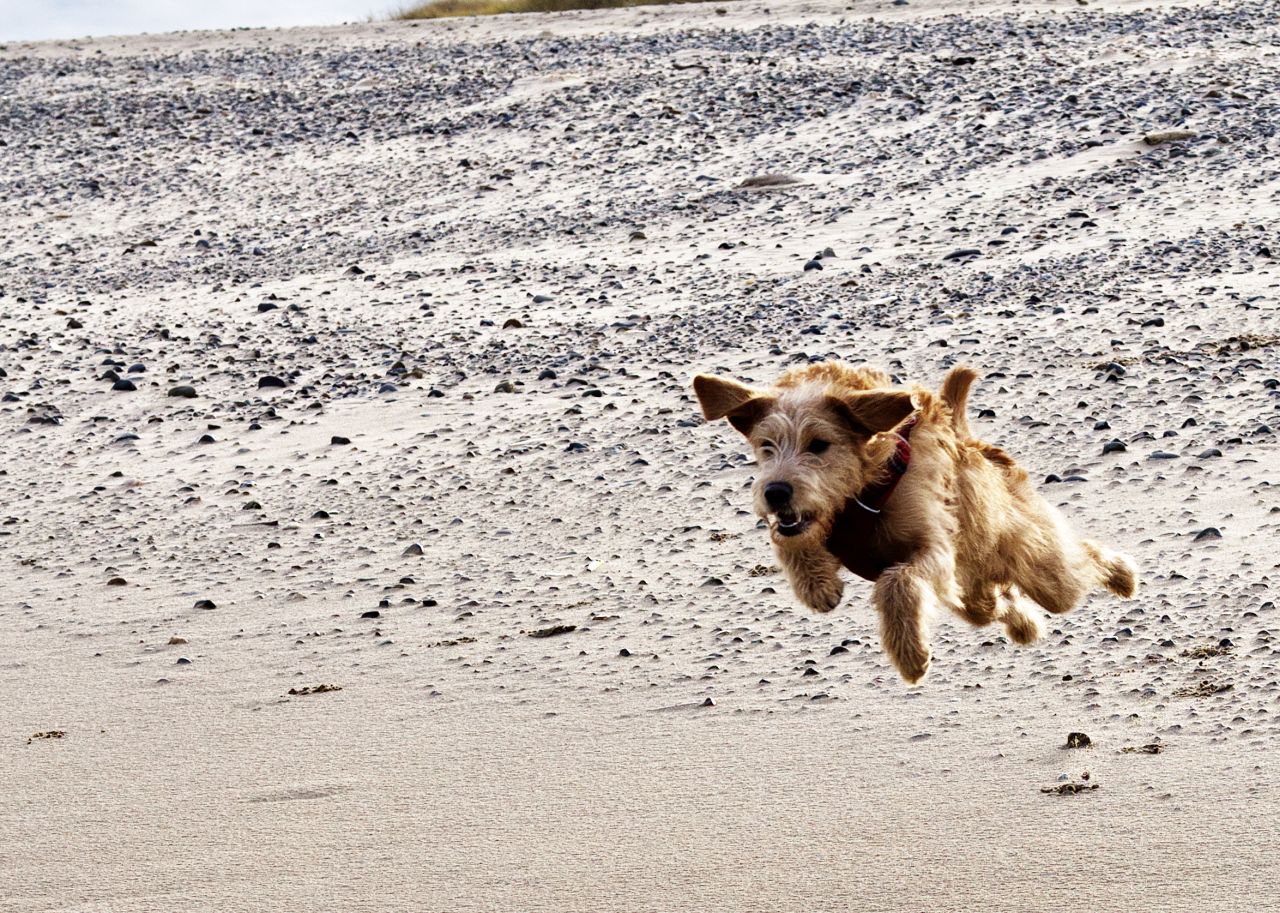
Airborne
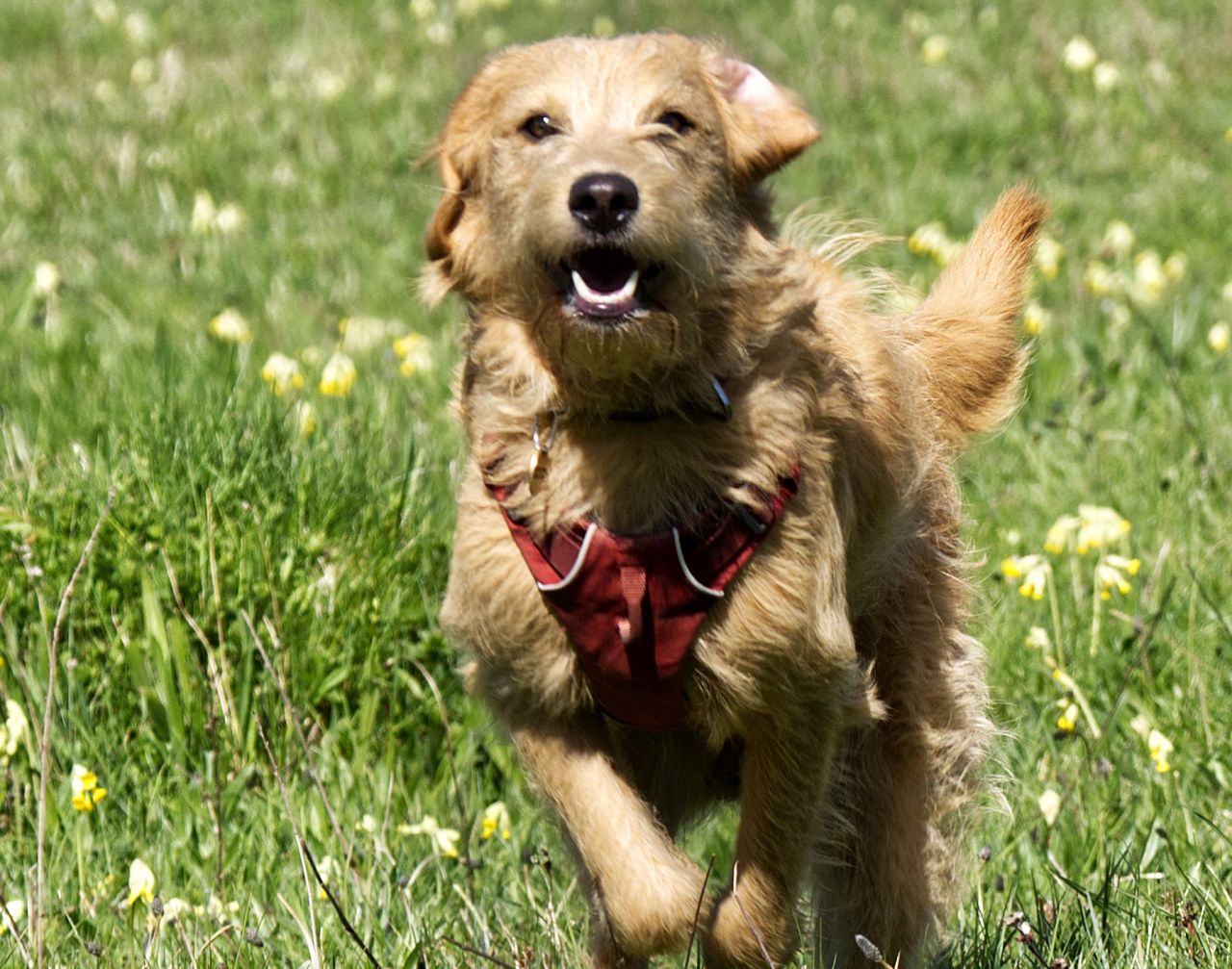
‘Cai’ is a Labradoodle – there, I said it! At the risk of offending Labradoodle owners, the Labradoodle isn’t a breed as such, it’s a Labrador-Poodle cross. It’s an unstable cross at that, and a litter of Lab-Poodle pups can vary greatly in size, colour and coat. So, I’ll probably not use the term Labradoodle again – he’s a Lab-poodle cross. Cai is more Lab at the front end, with Lab ears and a Golden Lab colour, but with a curlier coat than a Lab – the back end has a Poodle’s tail carriage and stance. However, when it comes to food, he’s pure Lab!
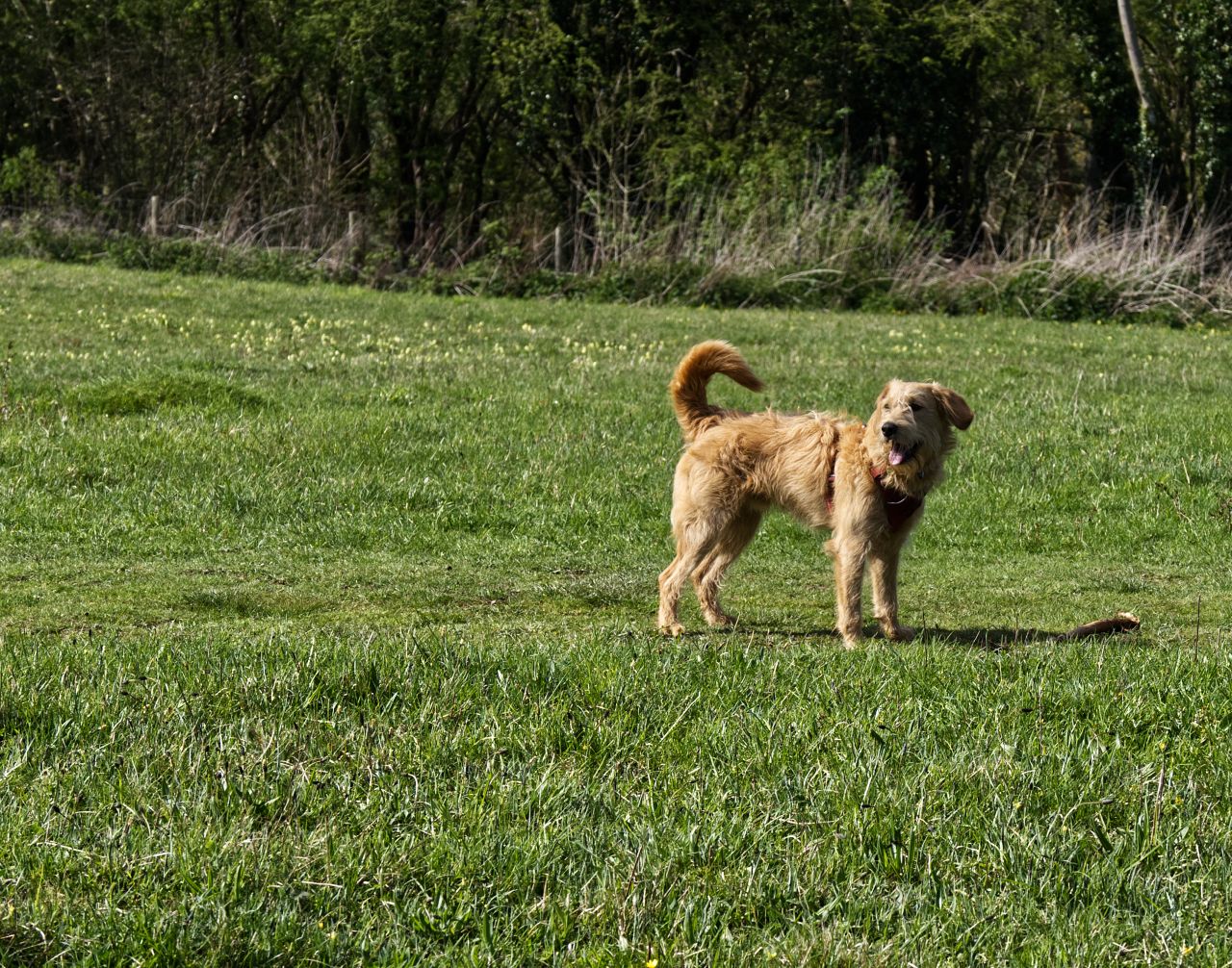
Twelve months old
Bigger!
Just about fully grown at twelve months
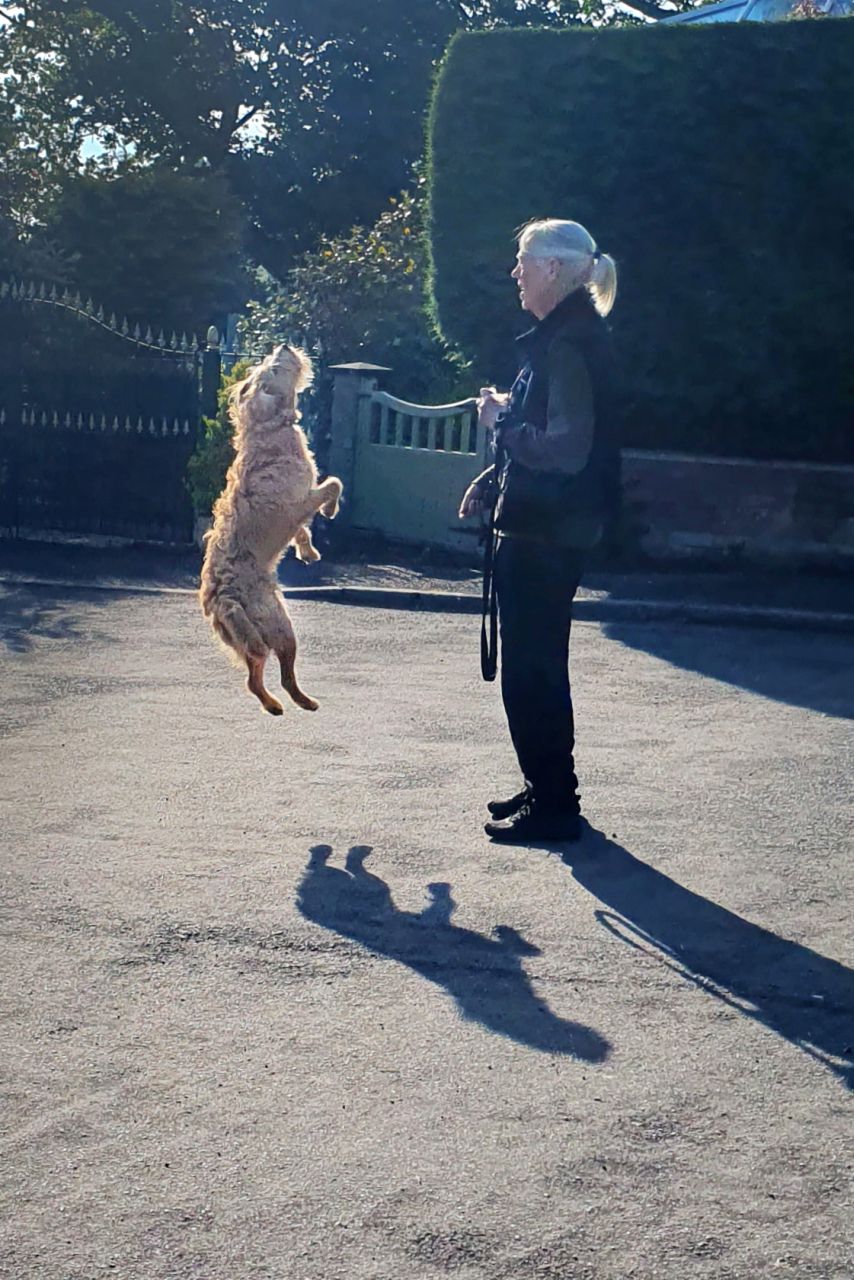
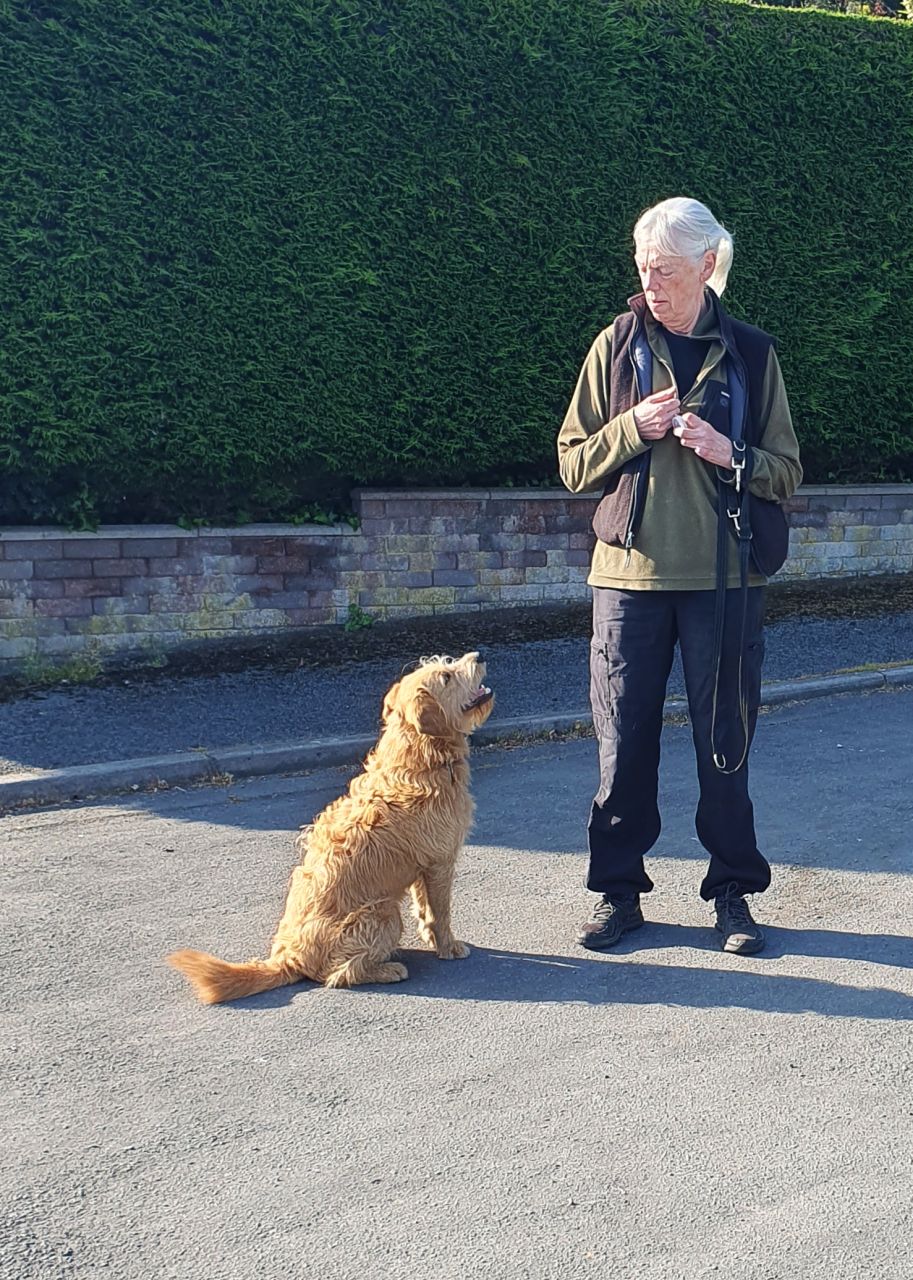
Both Labs and Poodles are bright dogs from working heritage, and Cai is quick to learn – when we adopted him, he was in the naughty pup stage, and we are currently in the wilful teenager phase! He learned recall in no time at all, but also learned that once he was off lead, he could decide whether or not he came back. However, his Achilles heel is food, and that will usually get him to return. He’s also possibly the friendliest dog I know, determined to say hello to one and all.
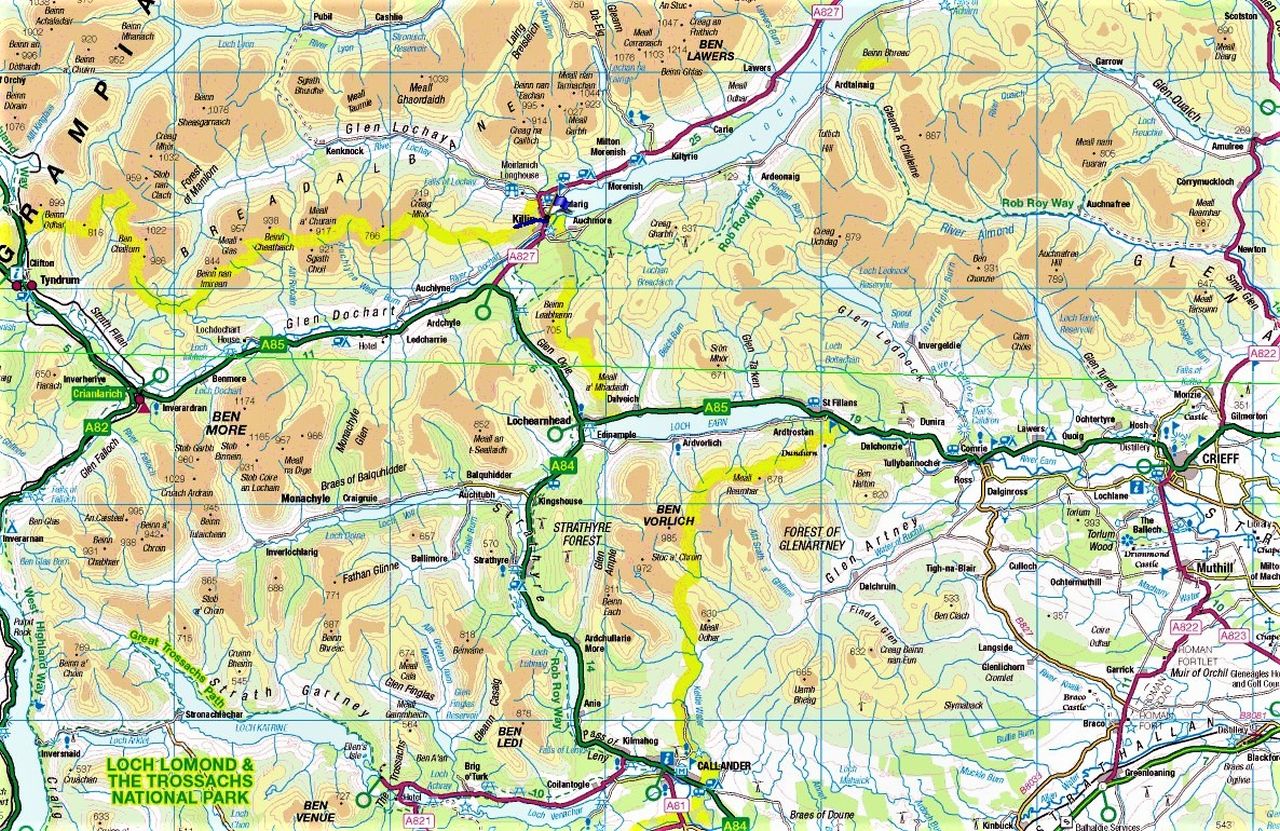
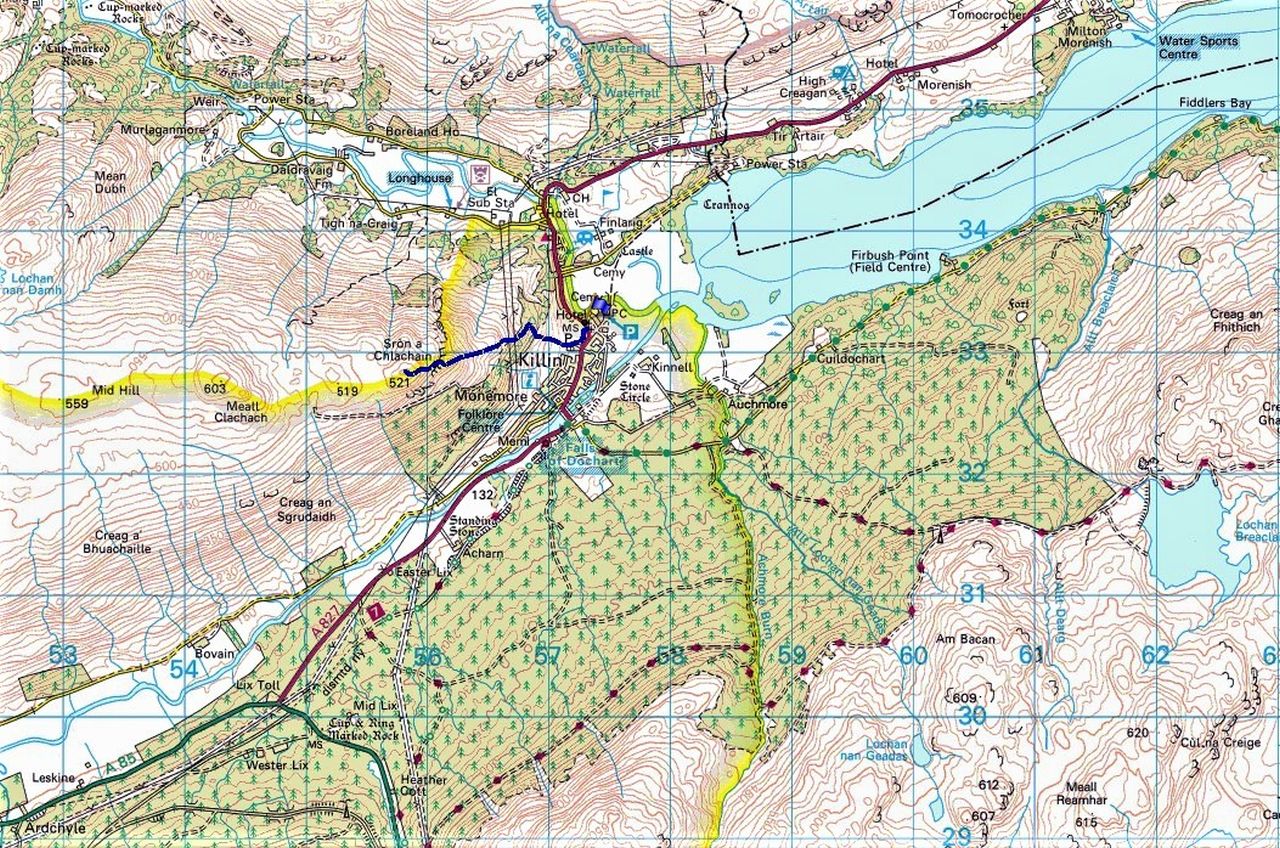
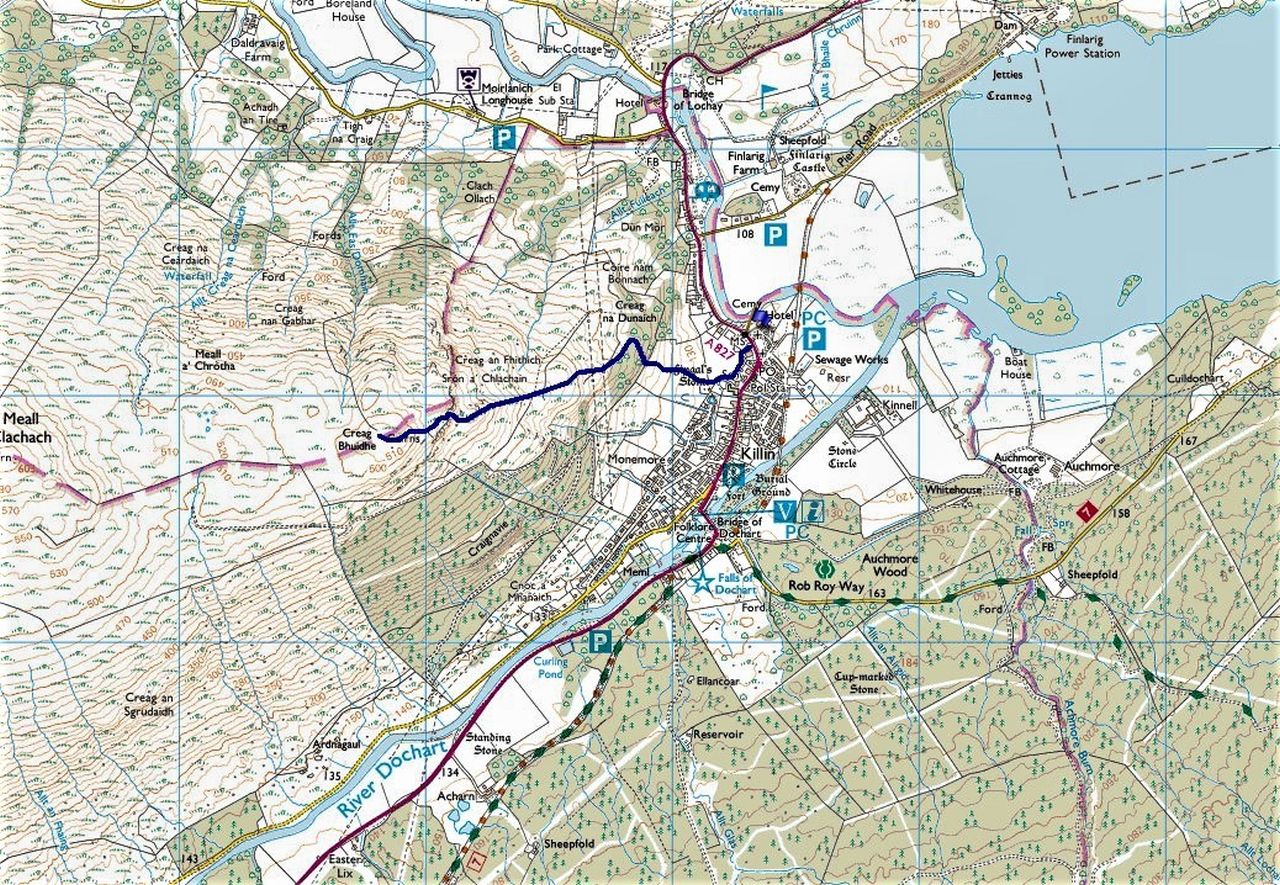
The Southern Highlands, with Loch Tay and Killin near the topKillin and the west end of Loch TayThe route (out and back) from Killin to Creag Bhuidhe
Our biggest issue with Cai was lead pulling – he was pulling like a train, which was hard enough with a 10-kilo pup but much more difficult with a 16-kilo adolescent. Now at twelve months old, we are finally getting him to walk on lead with good manners – well, most of the time. I picked the Creag Bhuidhe route near Killin for an outing as it was short and non-technical – I didn’t fancy being pulled over a crag edge by an over-enthusiastic canine. An out-and-back route of 4 kms and just 400 metres height gain seemed ideal for the boy’s first hill day.
Setting out from Killin, with a short detour to Fingal’s Stone
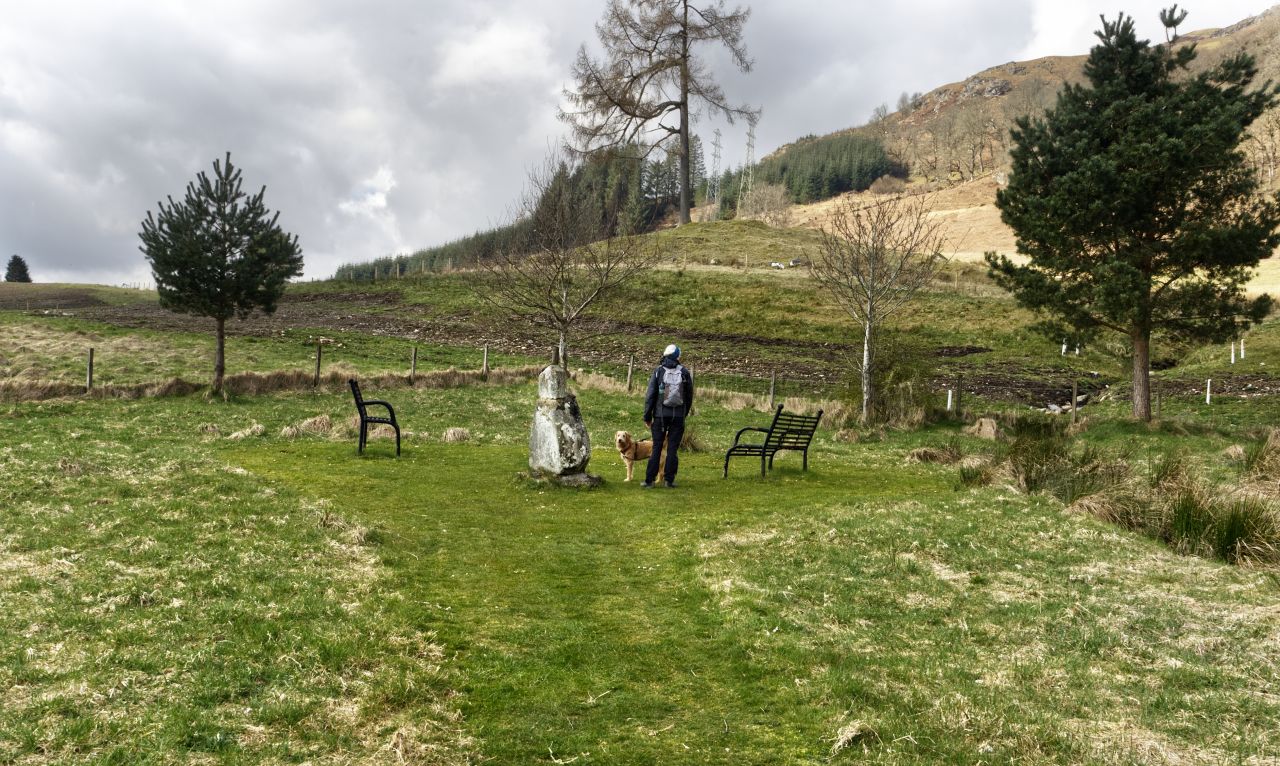
The route sets out from Killin village, starting with a quick look at Fingal’s Stone – legend has it that it was the gravestone of mythical Celtic hero Fingal, otherwise Fionn mac Cumhaill (pronounced Finn McCool). In reality, it is a prehistoric standing stone, possibly a survivor from a stone circle – in 1830 it was moved to its present site from a higher location above Killin, due to visitors disturbing the crops nearby, so it appears that problems with tourists are not new.
The route starts as it means to go on – steep!Still steep! Loch Tay behind ….…. with views down to Killin
Having visited the stone, it was time to head uphill, and that uphill turned out to be quite steep in places. Having a pulling dog on the other end of the lead was something like being on an uphill ski tow, which did aid my progress somewhat, though it did strike me that it was also good resistance training for Cai. It also struck me that resistance training would produce an even stronger dog, able to pull even harder – ho hum …..
Loch Tay, with Ben Lawers on the leftThe final slopes to the summitNearly thereThe summit cairn, with Meall Clachach rising beyondThe summit, looking southwest – Ben More the obvious mountain on the right skyline
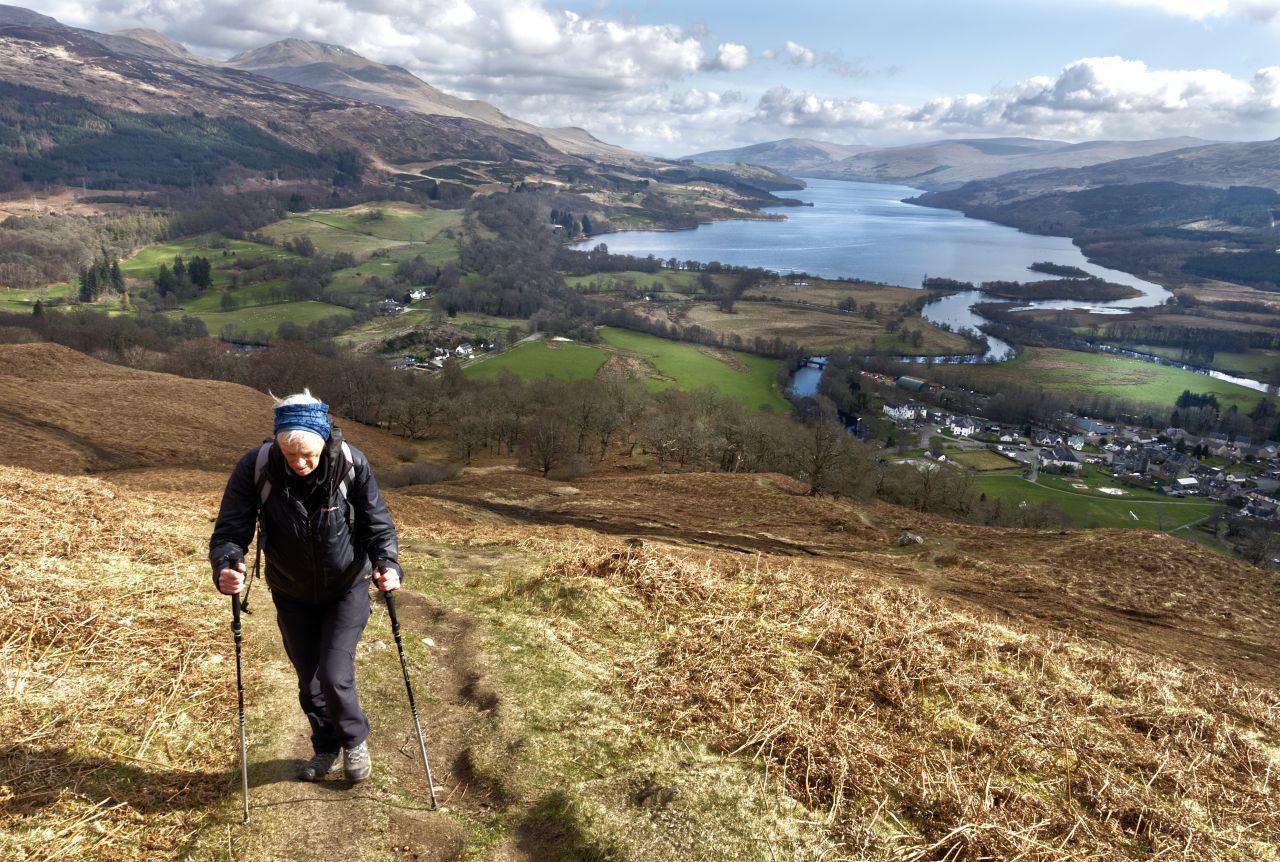
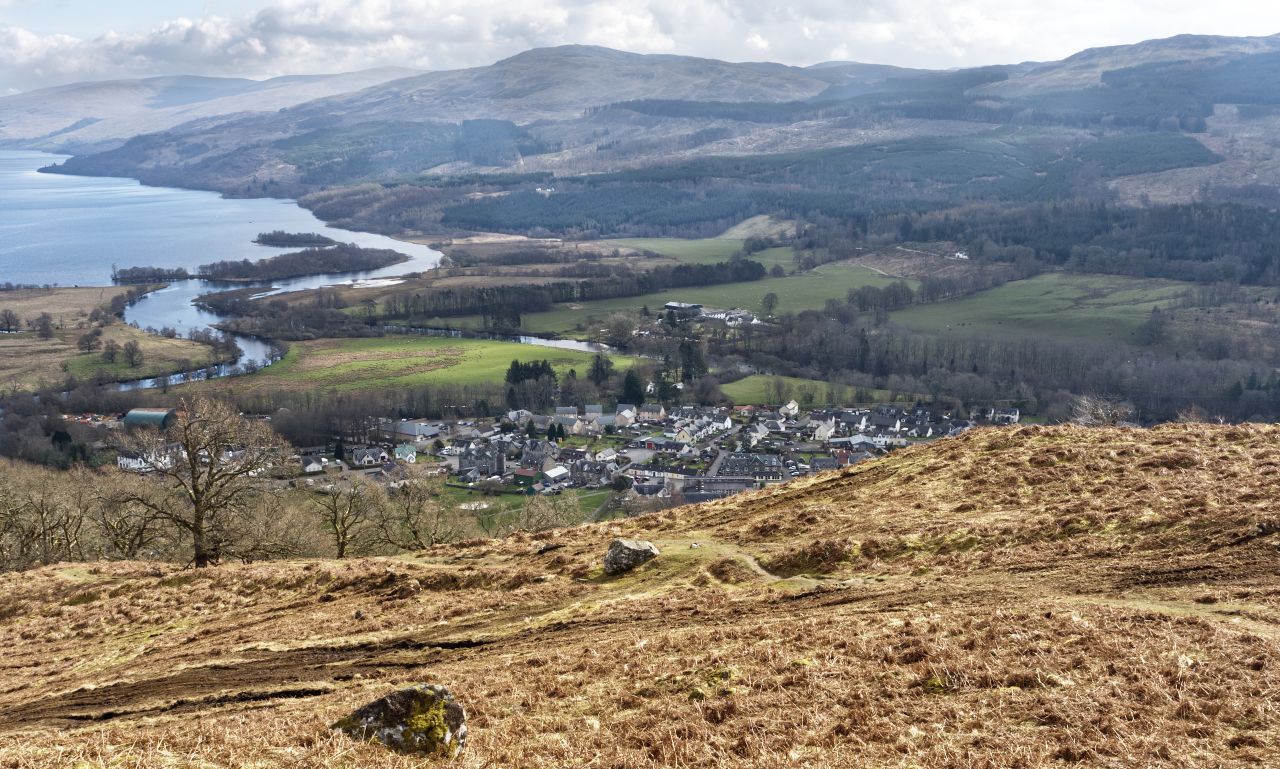
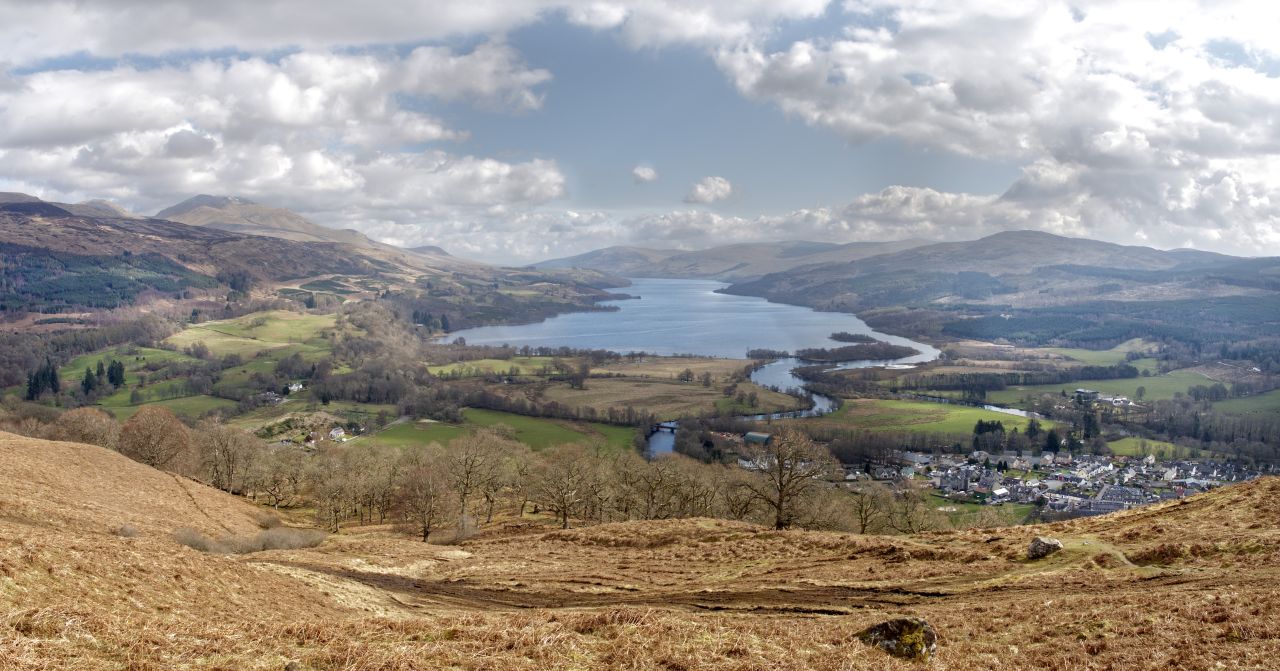
Creag Bhuidhe is just a wee hill, with an altitude of about 510 metres, and the ‘there and back’ trip was a mere 4 km. Views from the summit repaid the effort though, with great views down to Loch Tay to the east and the Crianlarich Ben More to the southwest. When it was time to head for home, it was my turn for a bit of resistance training – I can’t say that I felt any benefit!
Time to head for home“Well, that was fun, wasn’t it! Can we do it again?!!”
For the best viewing experience, left-click the images and maps to zoom in to a new window, then exit that window to go back – go on, it really does work!
Looking back over recent posts, you could be forgiven in thinking that I had moved to Scotland – two trips to the Highlands in 2022 had given some good days in the hills, but the hills of North Wales (where I now call home) were being somewhat neglected. Then in October 2022, a spell of fine autumn weather meant that I couldn’t keep putting off a trip that had been waiting in the wings for a couple of years – we were off to the limestone hills of the Eglwyseg valley, near Llangollen.
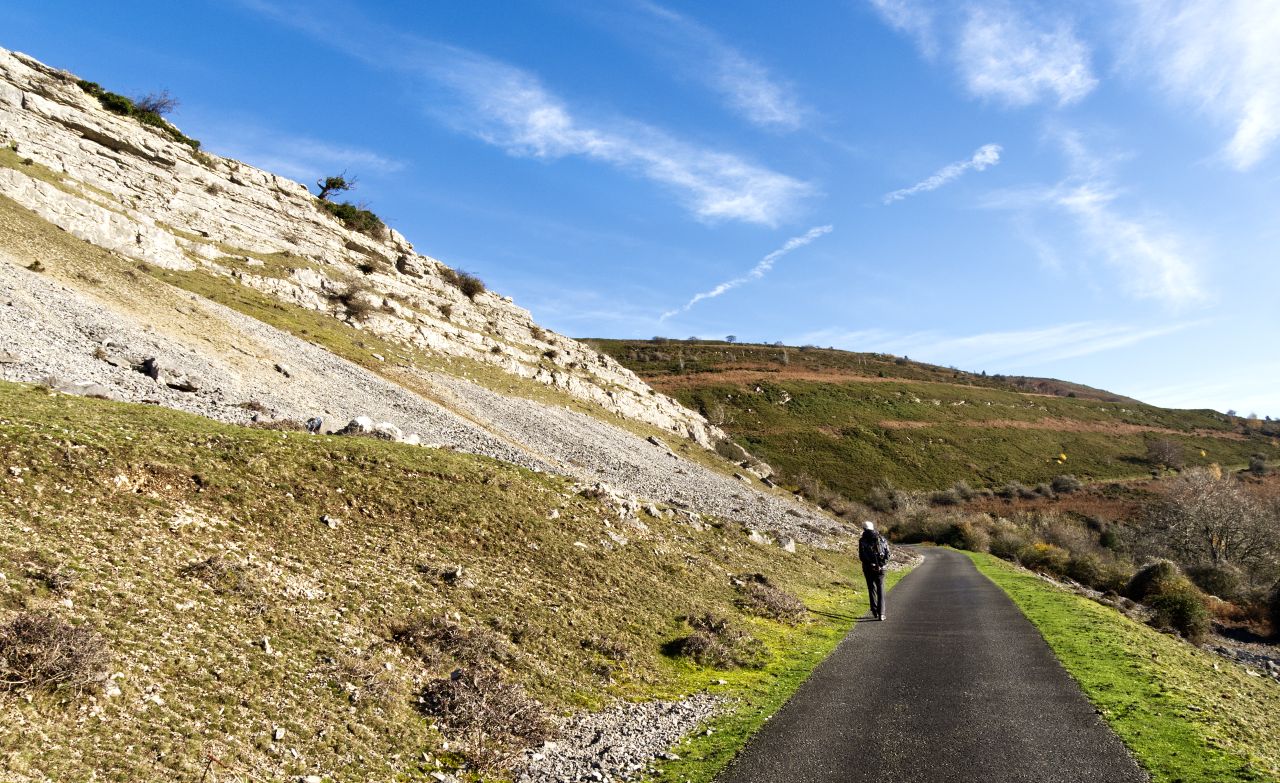
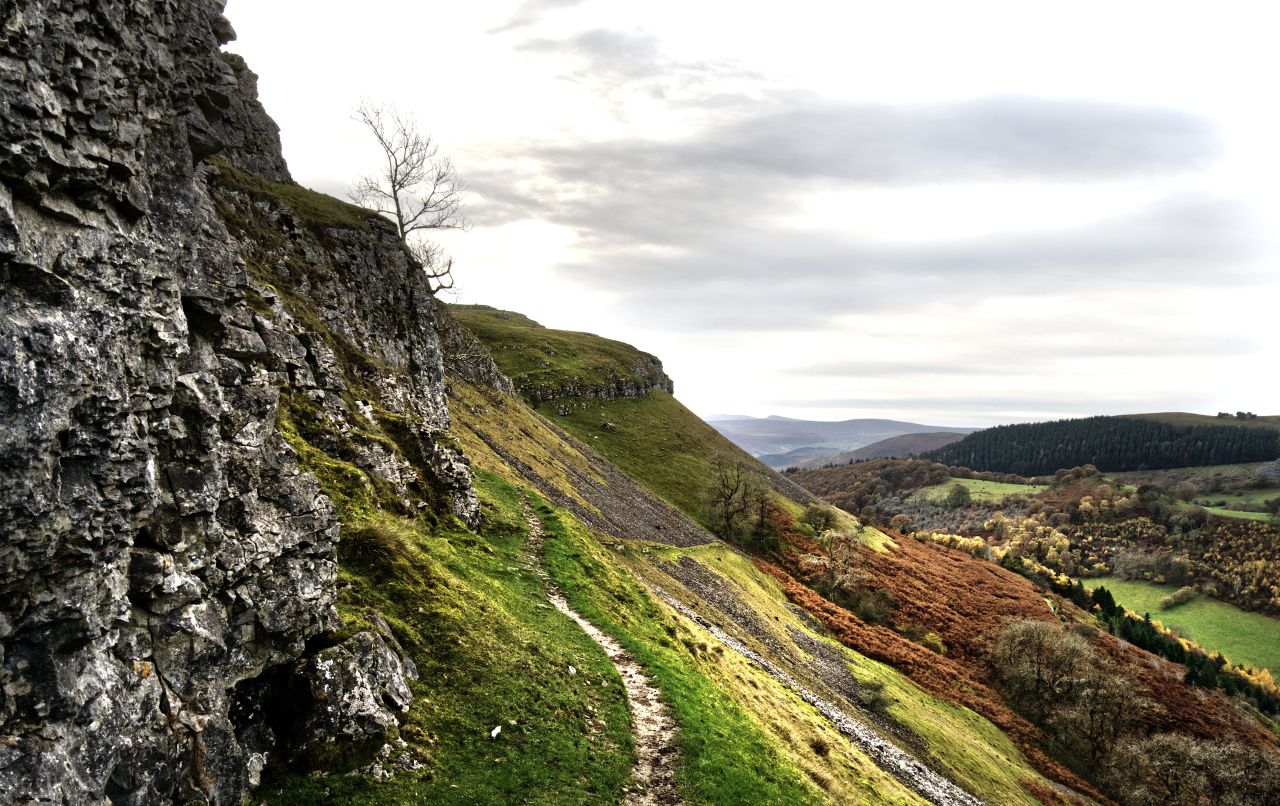
The escarpment above Trevor Rocks with Llantysilio Mountain in the distance
Chris and I first visited these hills in 2013 (see post #144) but I hadn’t returned here other than for mountain rescue callouts with the team I’m a member of (North East Wales Search And Rescue, or NEWSAR for short). The area isn’t as popular or busy as Eryri (Snowdonia), but over the past few years, the team has been called here to a range of incidents including rock-climbing accidents, medical emergencies, cragfast sheep and mountain bike injuries. It was time to get back there for some recreational walking.
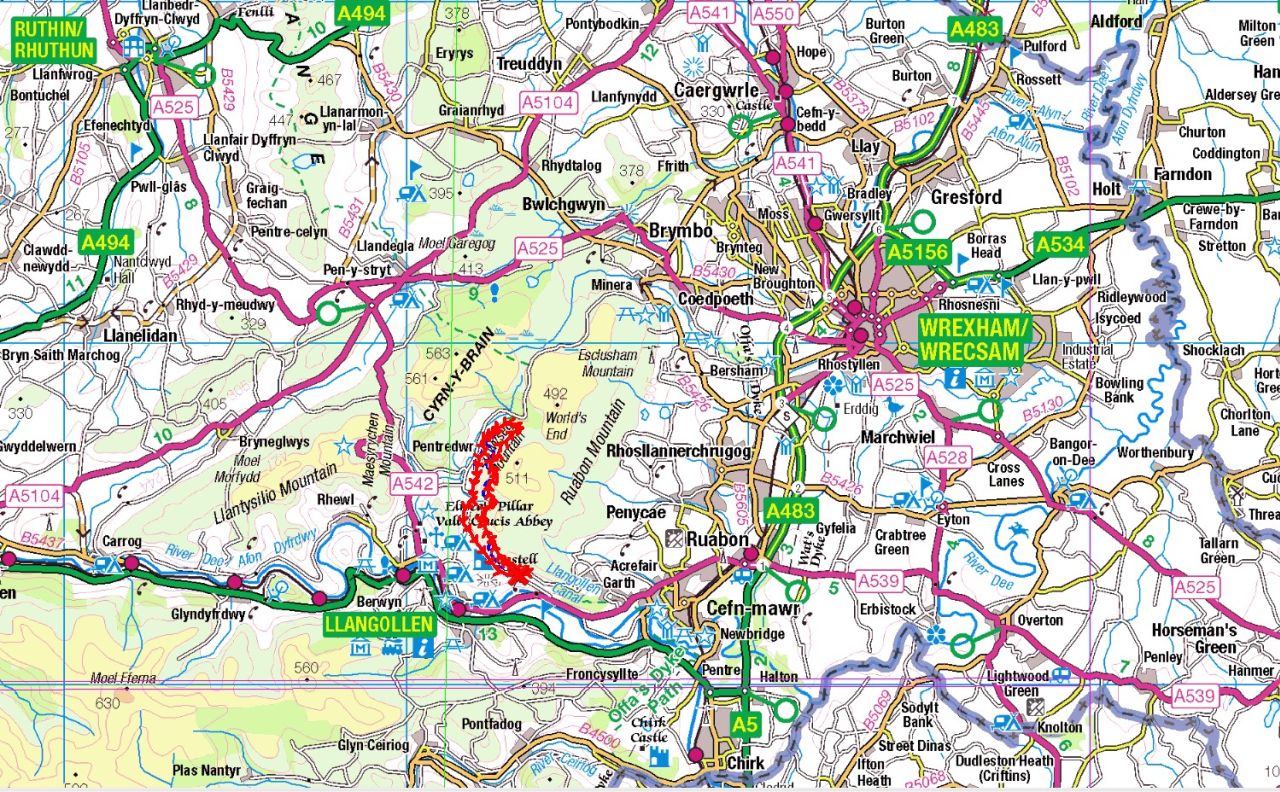
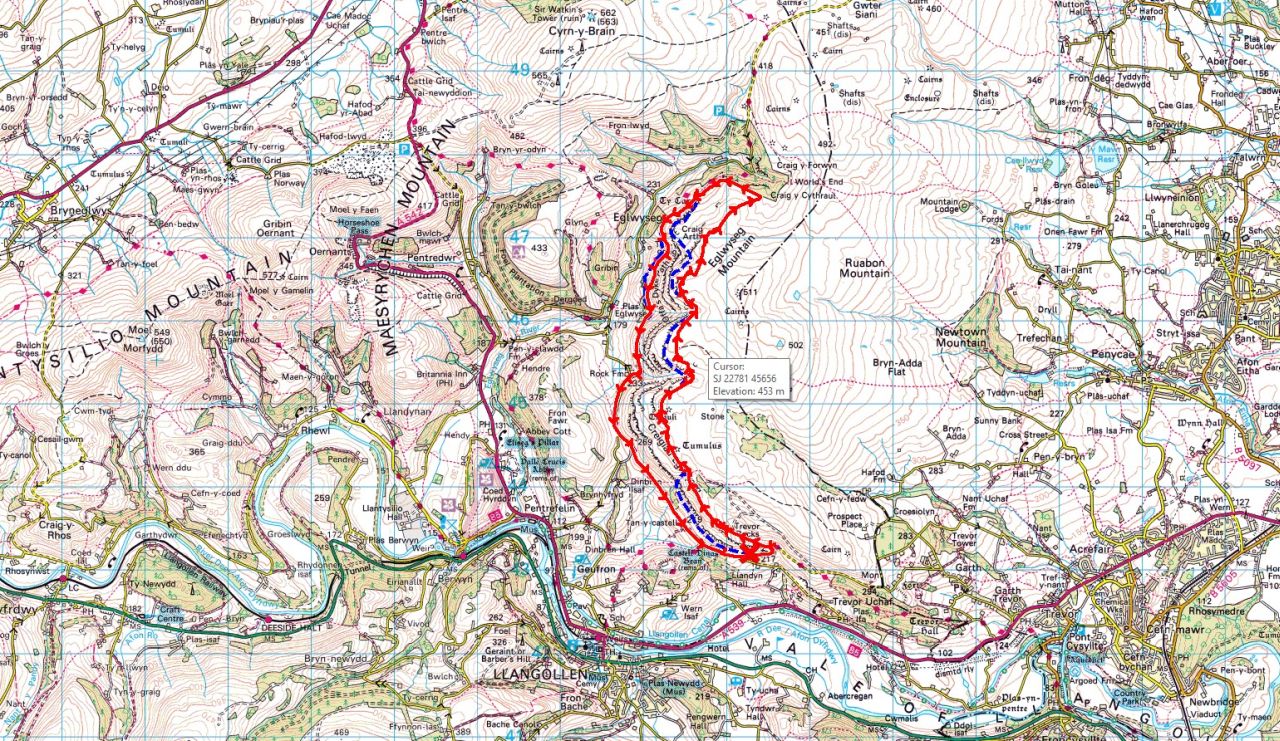
The Llangollen Hills with the route in red, just left of centreCloser view of the route – anti-clockwise from the red cross
The hills lie between the southern end of Bryniau Clwyd (the Clwydian Range) and Dyffryn Dyfrdwy (the Dee Valley) – if I had to give the area a name, it would be the Llangollen Hills. The route I had in mind, and which I had been putting off for some time, was along the top of the Eglwyseg Escarpment to ‘Worlds End’ with a return along the Offa’s Dyke Path, the national trail following the rough line of the Welsh-English border from Chepstow to Prestatyn.
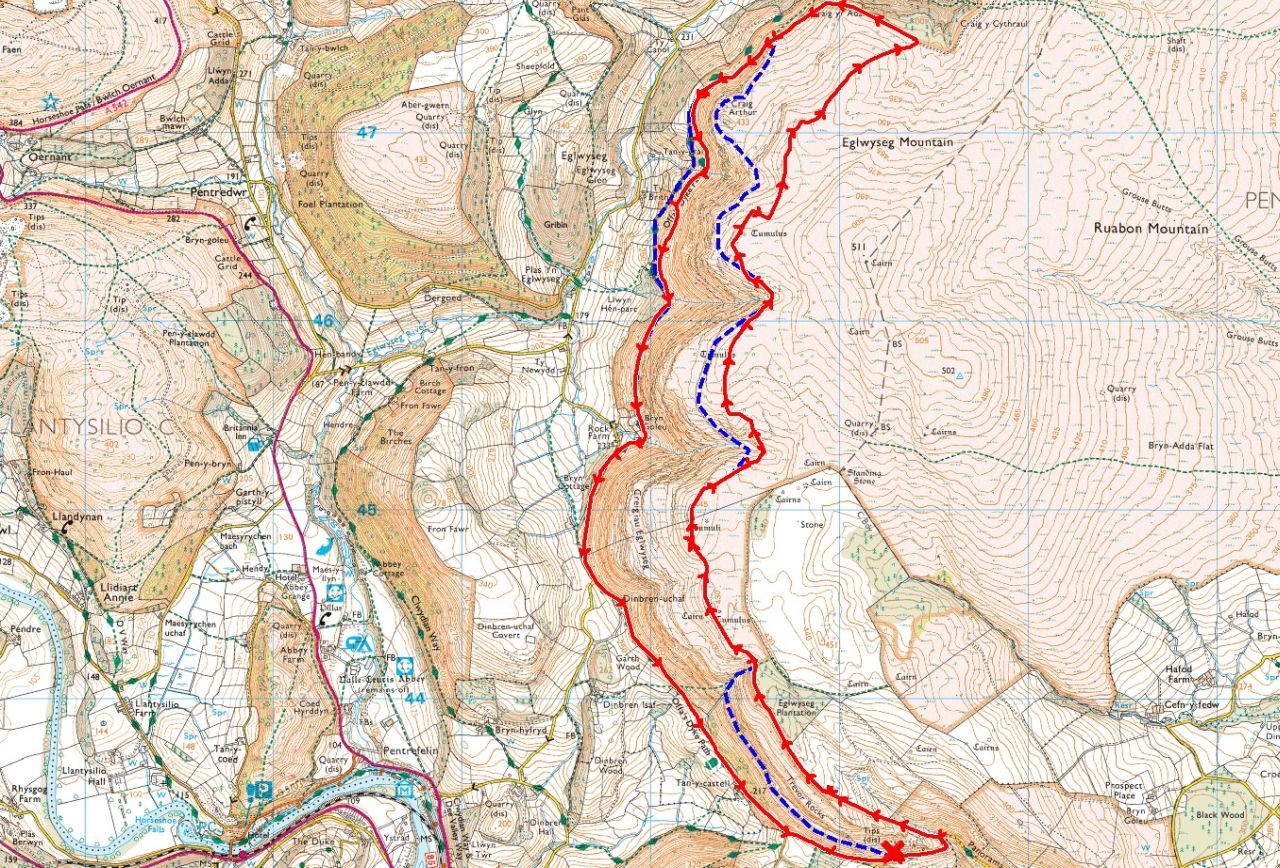
Even closer view of the route – actual route in red, blue dashes showing the original planned route
The idea for the trip had come from a long-lost magazine article – I had made a note of the route at the time, but when we arrived on the ground, there were a series of reasons for convenience and navigation which meant the route was altered as we went along, so in the map above our actual route is in red, travelling anti-clockwise from the red cross, with the blue dashes showing what had been the original plan, but abandoned on this trip.
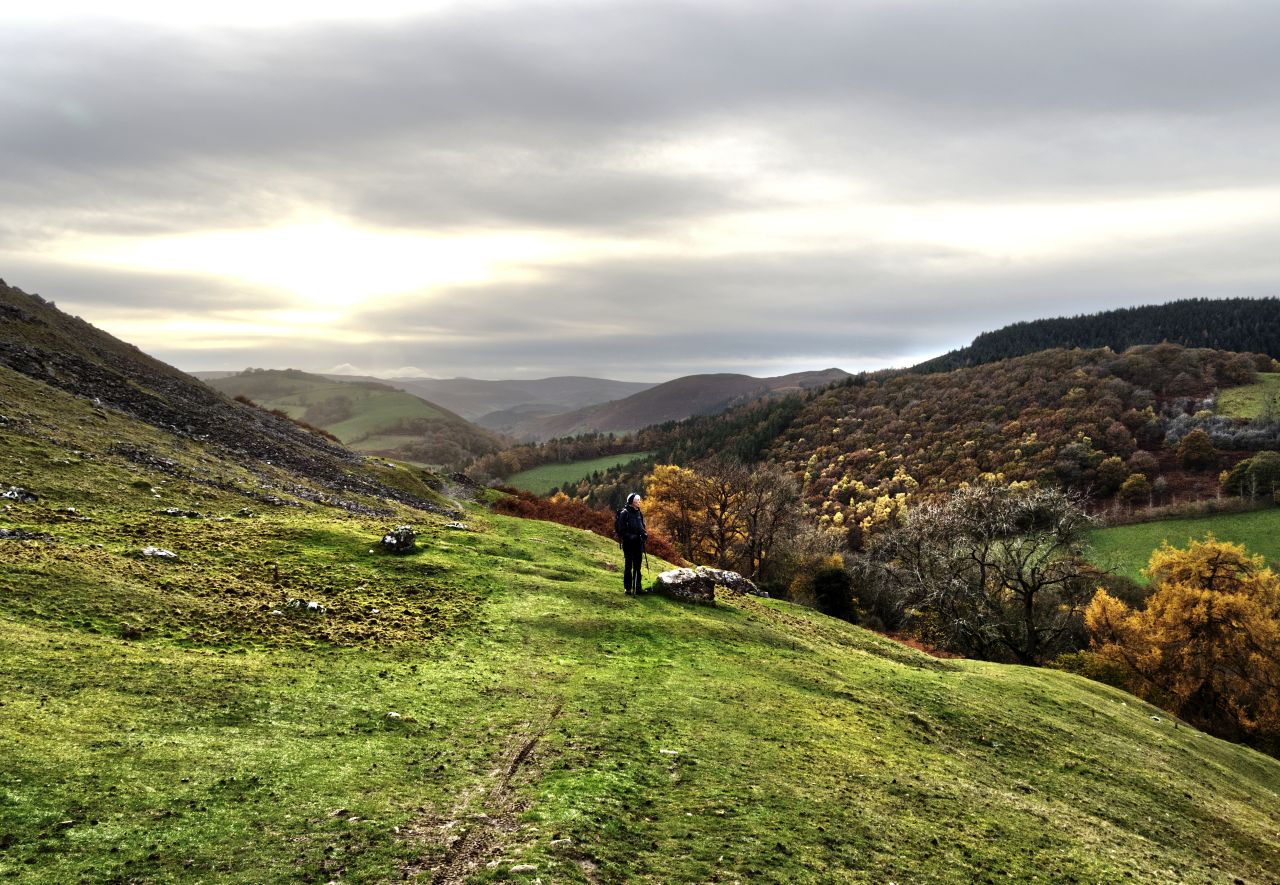
Setting off by Trevor Rocks on the Panorama WalkStart of the uphillCastell Dinas Bran above the Vale of LlangollenThe view across to Llantysilio Mountain
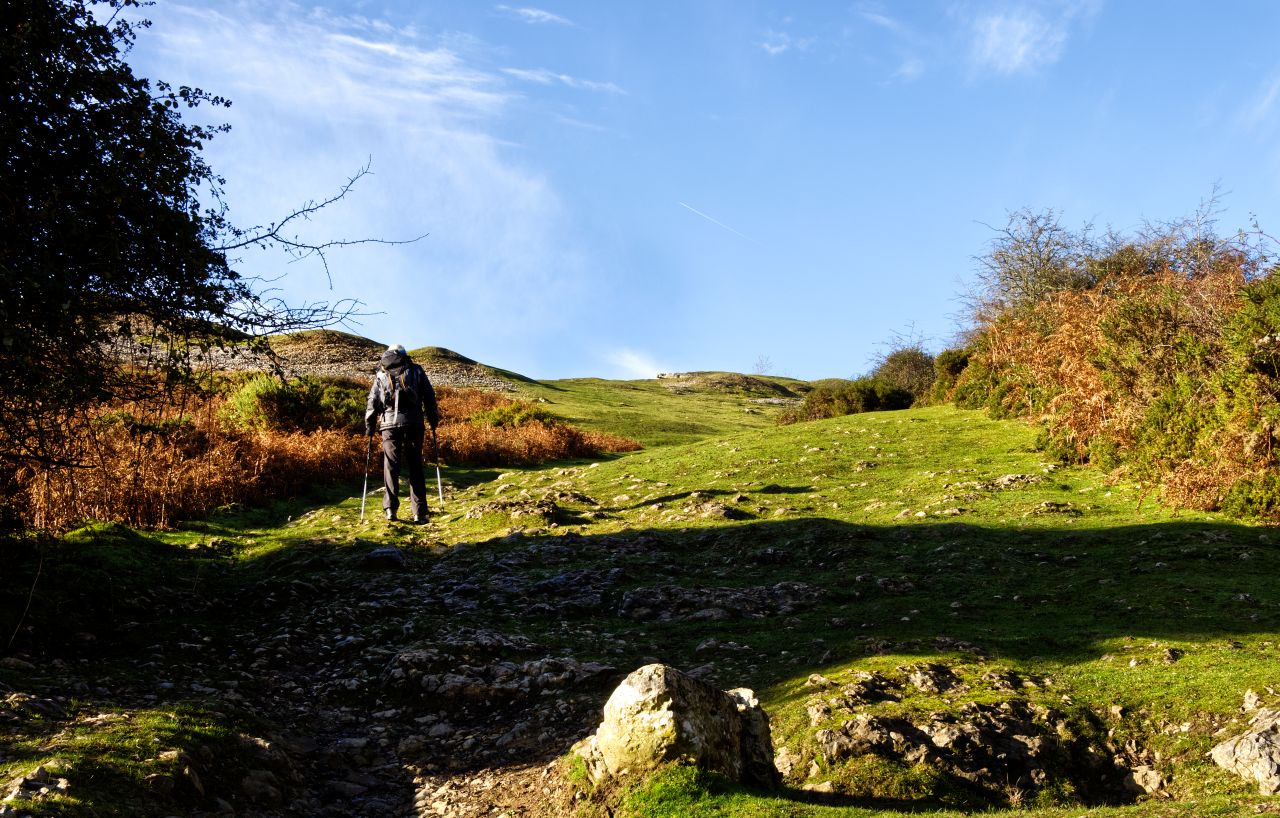
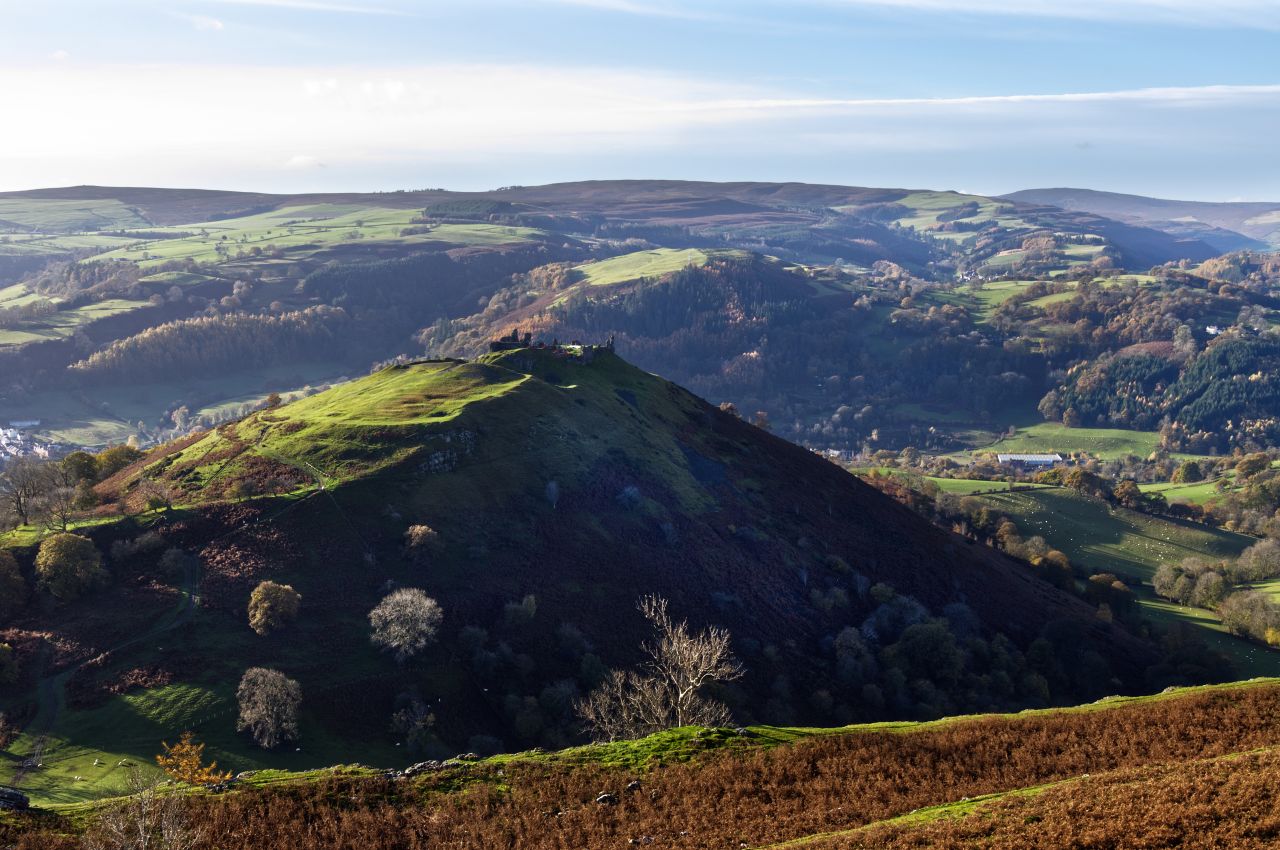
We started on the road, on the well-known Panorama Walk. The road walking was short, no more than a couple of hundred metres, but then it was time to start uphill – it was never steep, just steady away gaining height gradually, until we finally reached the top edge of the escarpment. The autumn colours were in evidence, and we had a view on to familiar ground that we had walked before, first of all Castell Dinas Bran (see post #243) seen below us, then Llantysilio Mountain (see post #122) in the middle distance.
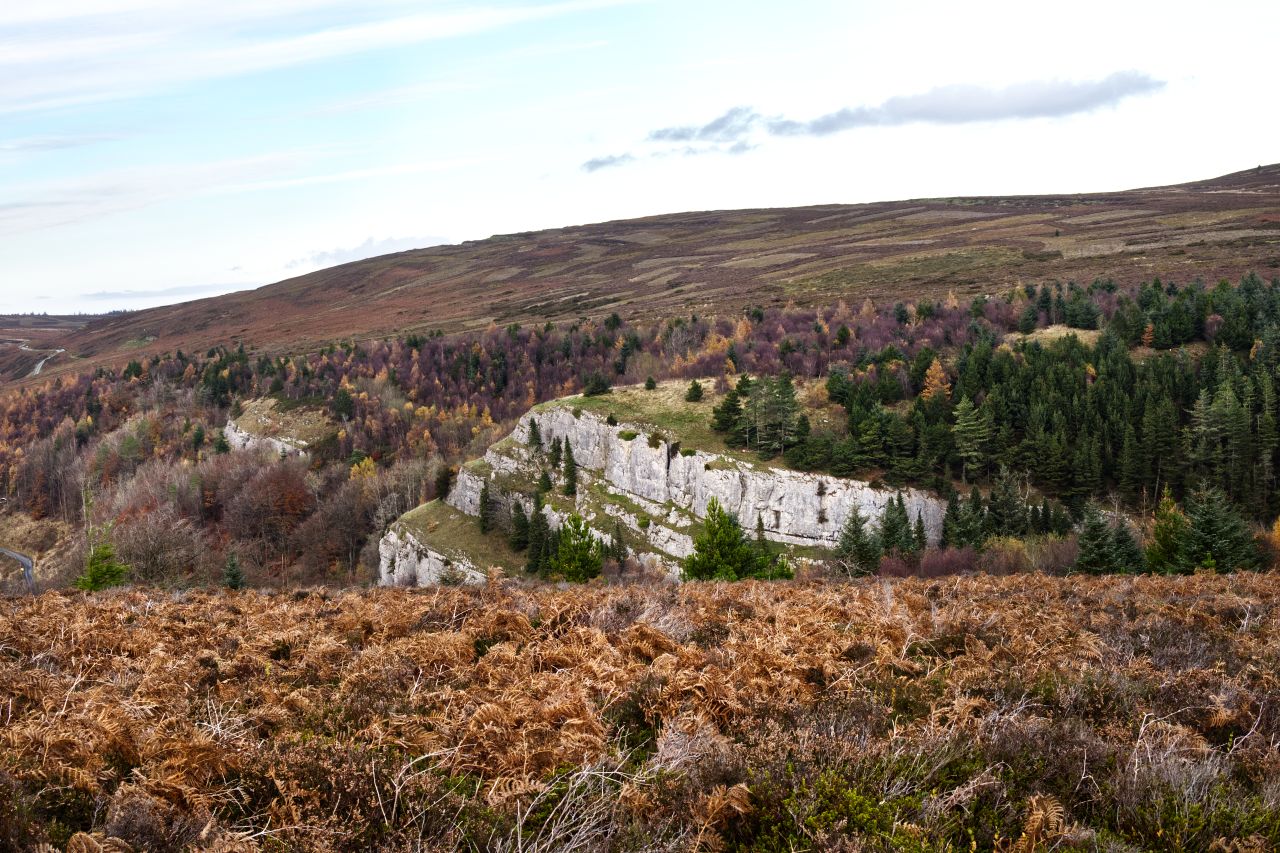
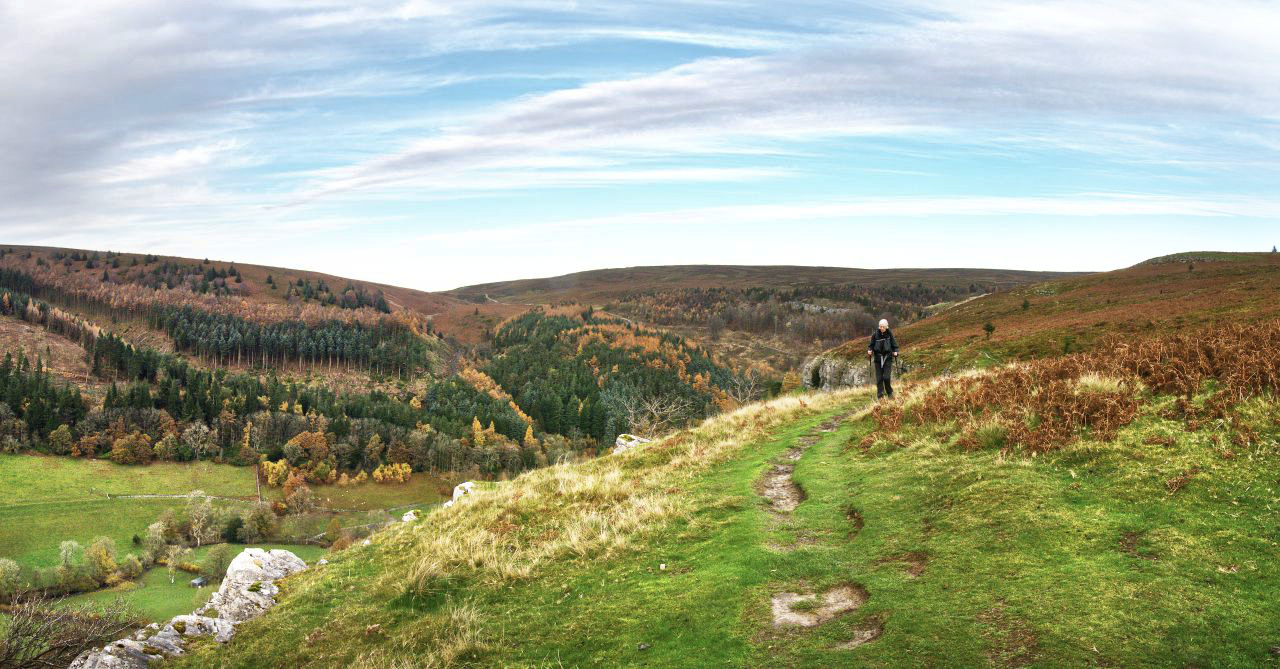
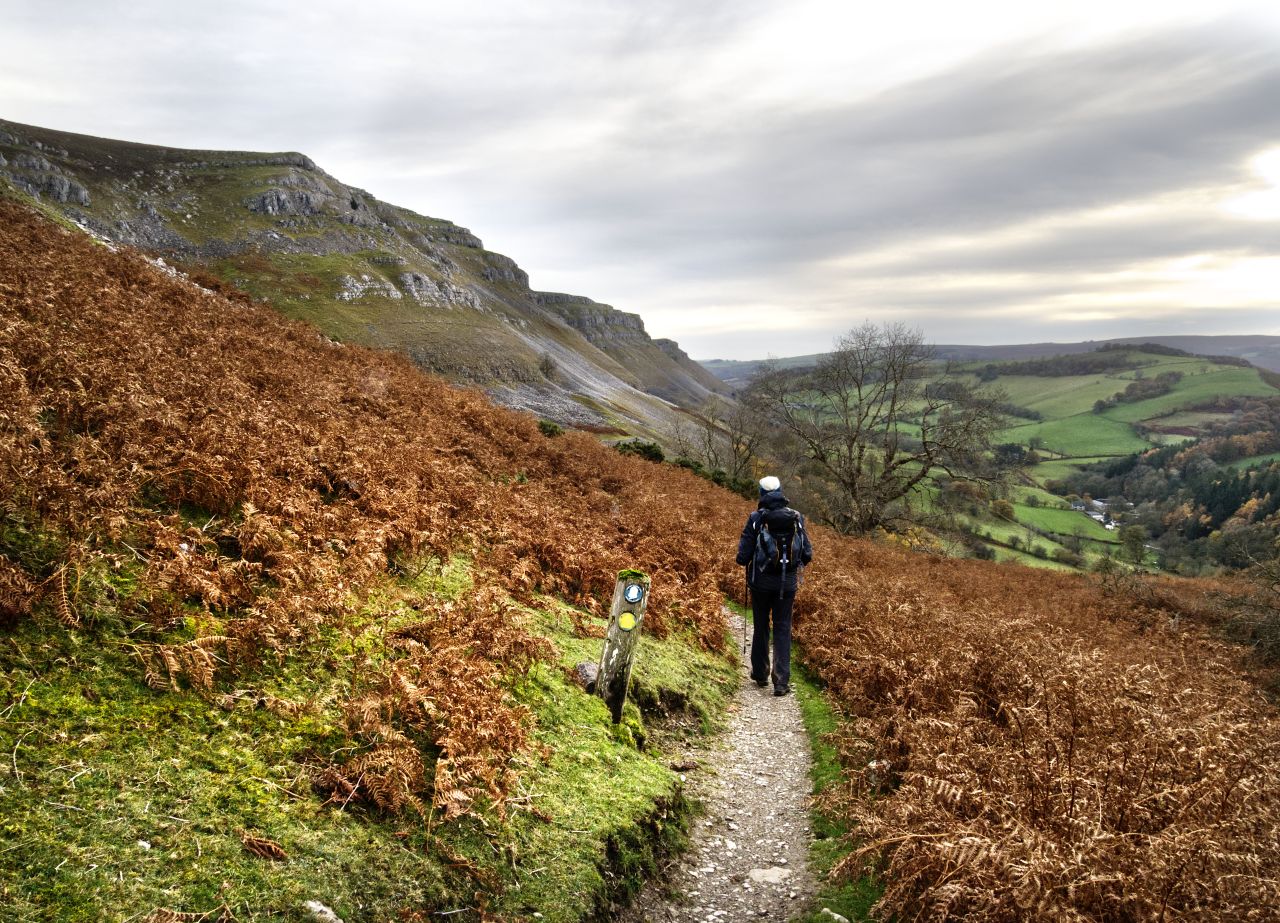
On top of the escarpment, with most of the uphill walking behind usEscarpment views – descending streams ….…. limestone crags ….…. and heather moorland
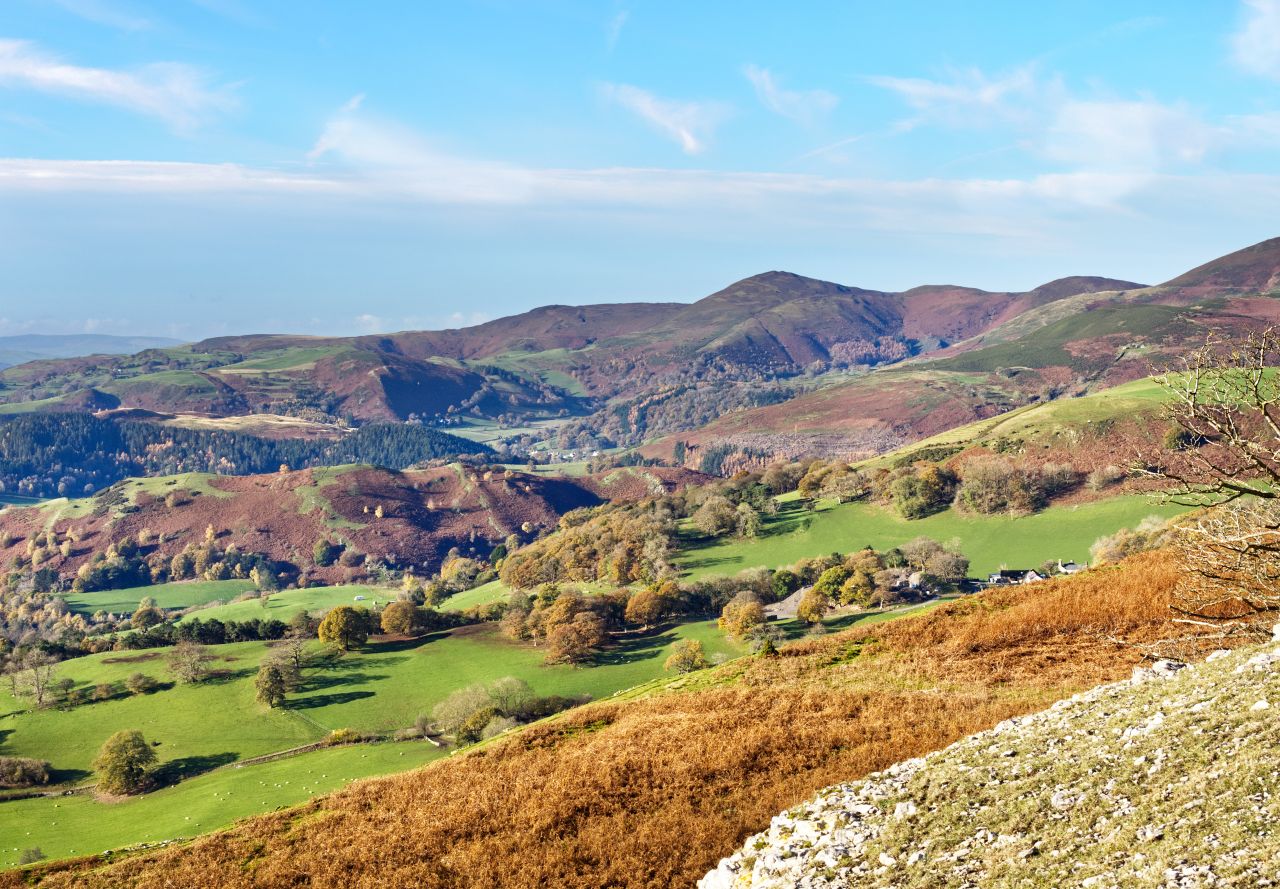
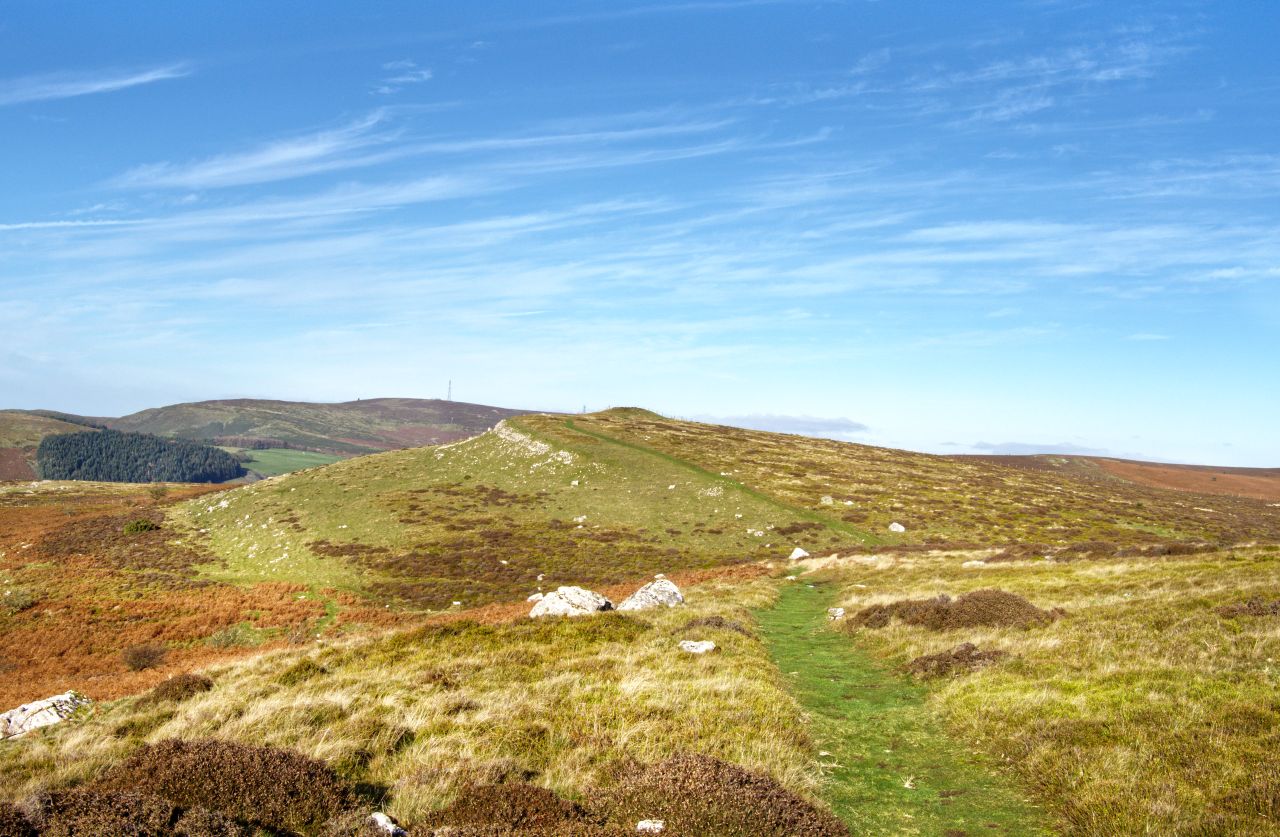
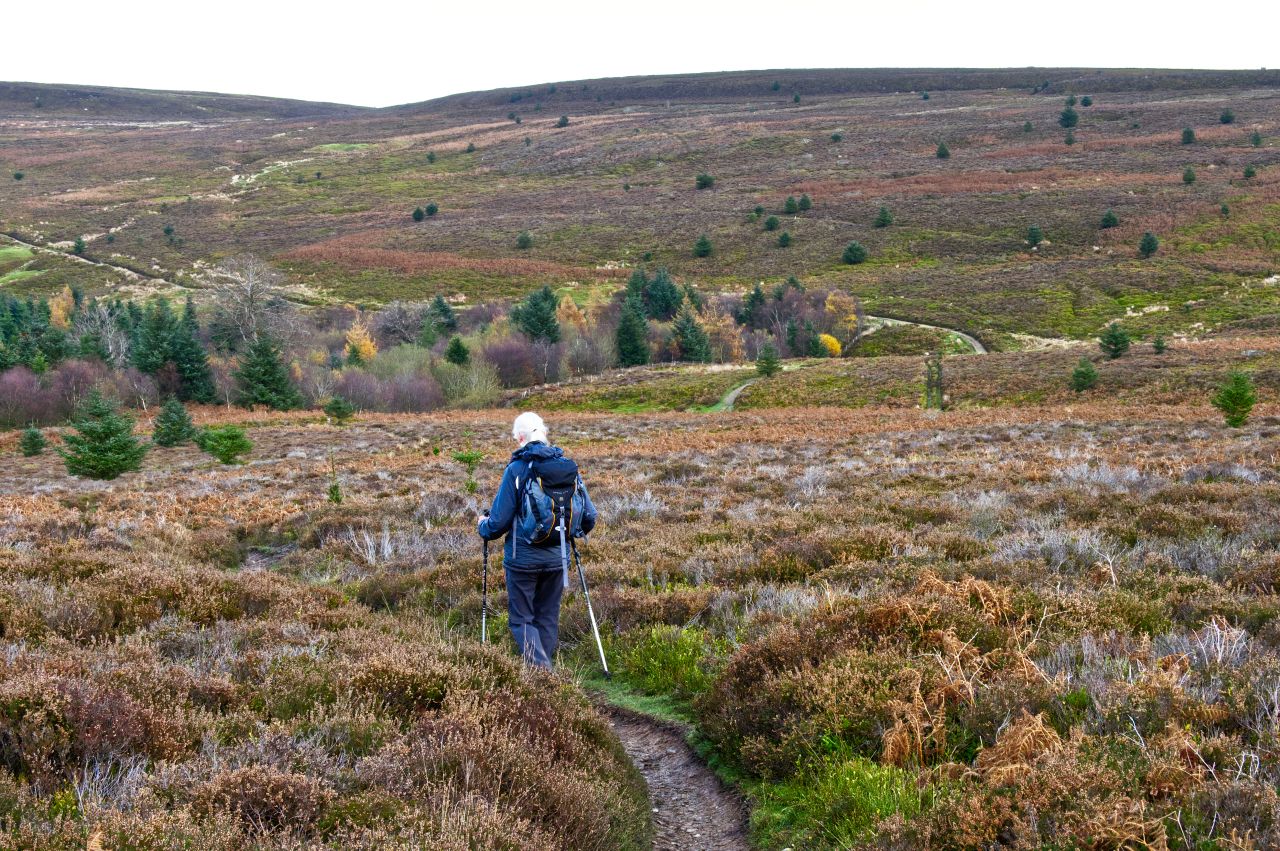
Once we were on the escarpment, most of the uphill walking was behind us, with a gently undulating path taking us along escarpment views of descending streams, limestone crags and heather moorland. Hiking really doesn’t get much easier than this, so apart from the distance (14kms / 8.7 miles) it was looking like being a relaxed day.
Looking down to the summit of Craig ArthurThe start of the descent towards Worlds EndThe crags of Craig y Forwyn at Worlds End, a popular rock-climbing venueHeading back to the start point, Worlds End now behind us
The summit of Craig Arthur had been on the original route, but rather than descend to this mini-plateau, we opted to stay high, heading towards Worlds End and the crags of Craig y Forwyn, one of the popular limestone rock-climbing crags in this part of Wales. This was to be our turning point to take us back to Trevor Rocks, following the Offa’s Dyke Path.
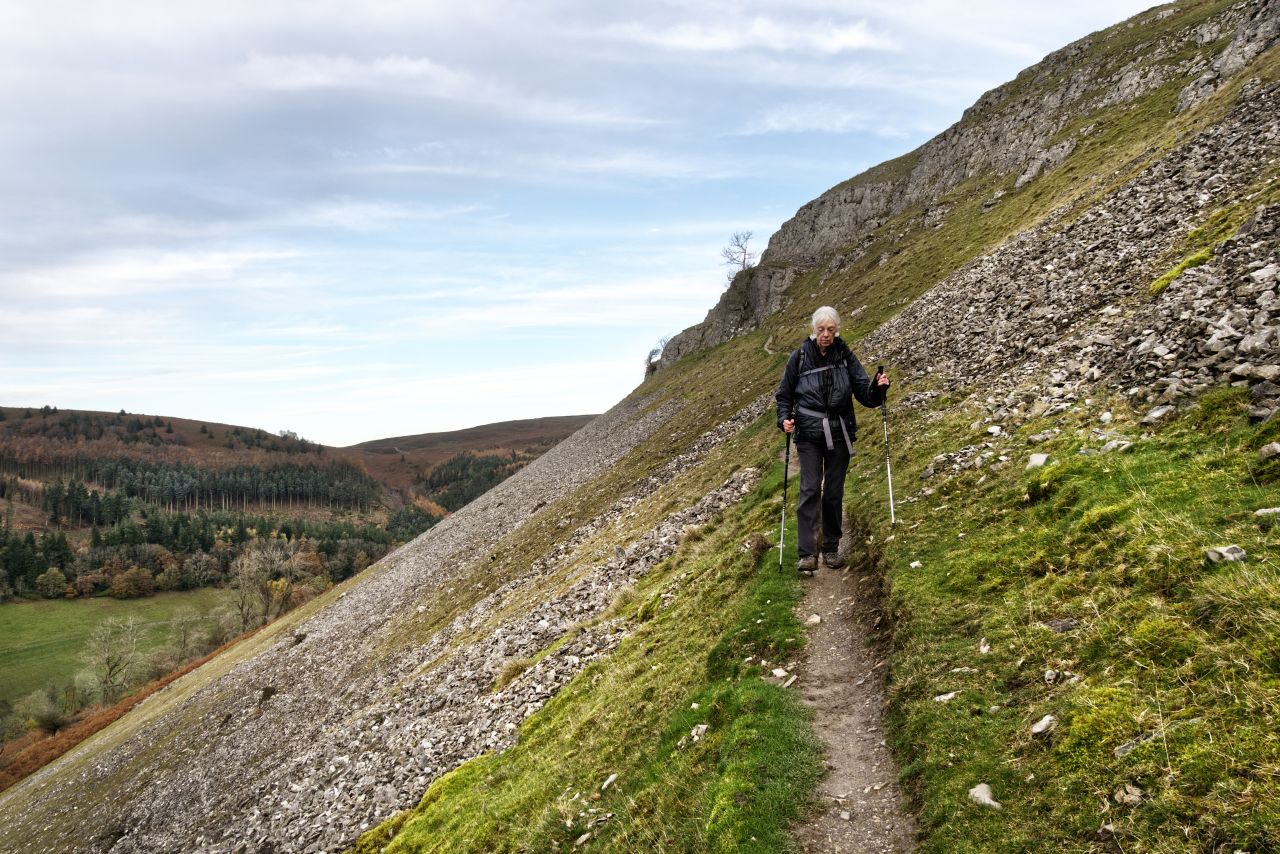
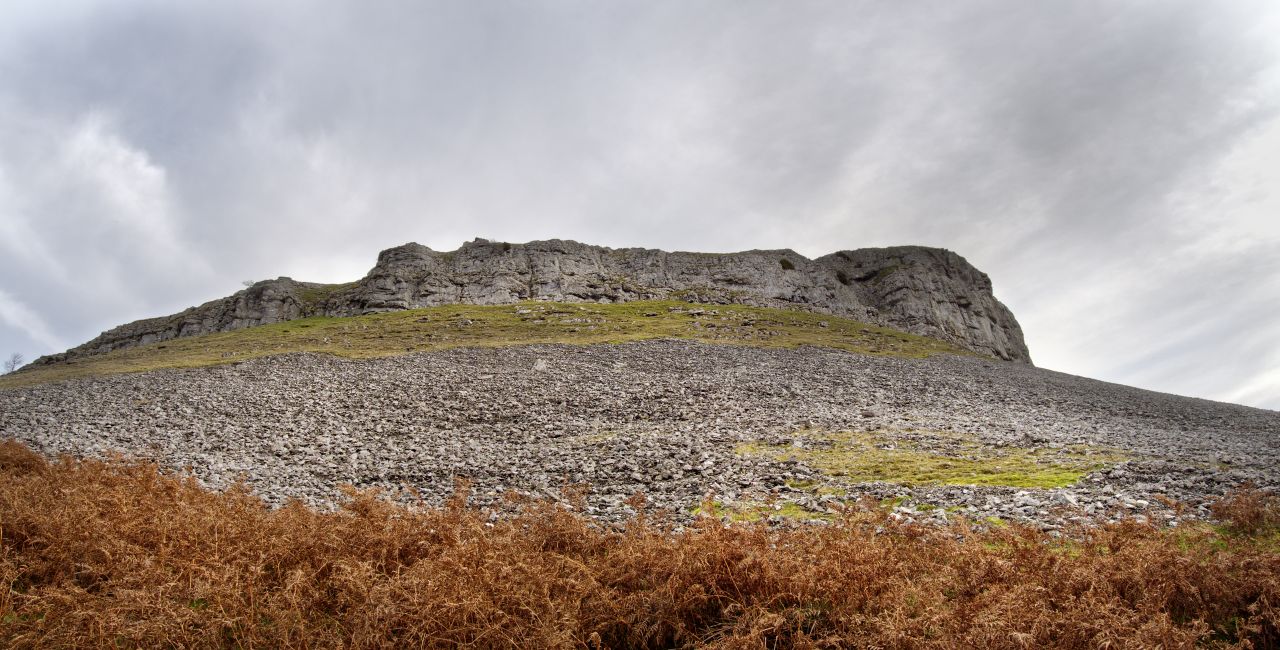
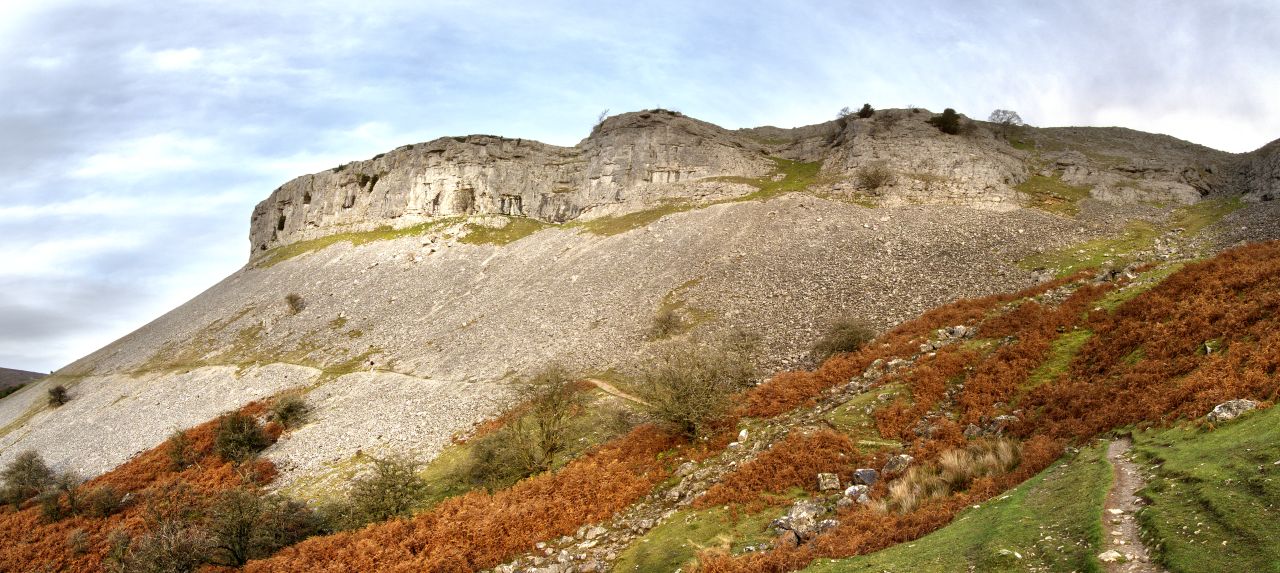
Start of the descent to meet the Offa’s Dyke Path (National Trail)The path clings to the hillside at first ….…. before things open up a bit Below Craig Arthur, another popular and nationally important rock climbing cragLooking back at Craig Arthur, with the Offa’s Dyke Path crossing the scree slope
We hit a cheeky little descent route, heading down towards the Eglwyseg Valley and the Offa’s Dyke Path. The ODP cuts across the scree below Craig Arthur, whose summit we had declined on the way out. The view from below was impressive, looking up to the climbing crag of Craig Arthur, another nationally important rock-climbing crag. Then it was a steady descent to the quiet road used by the ODP – I don’t normally go for road walking, but this must be one of the quietest roads in Wales, and the easy walking gave ample opportunity to take in the autumn colours as we headed for home.
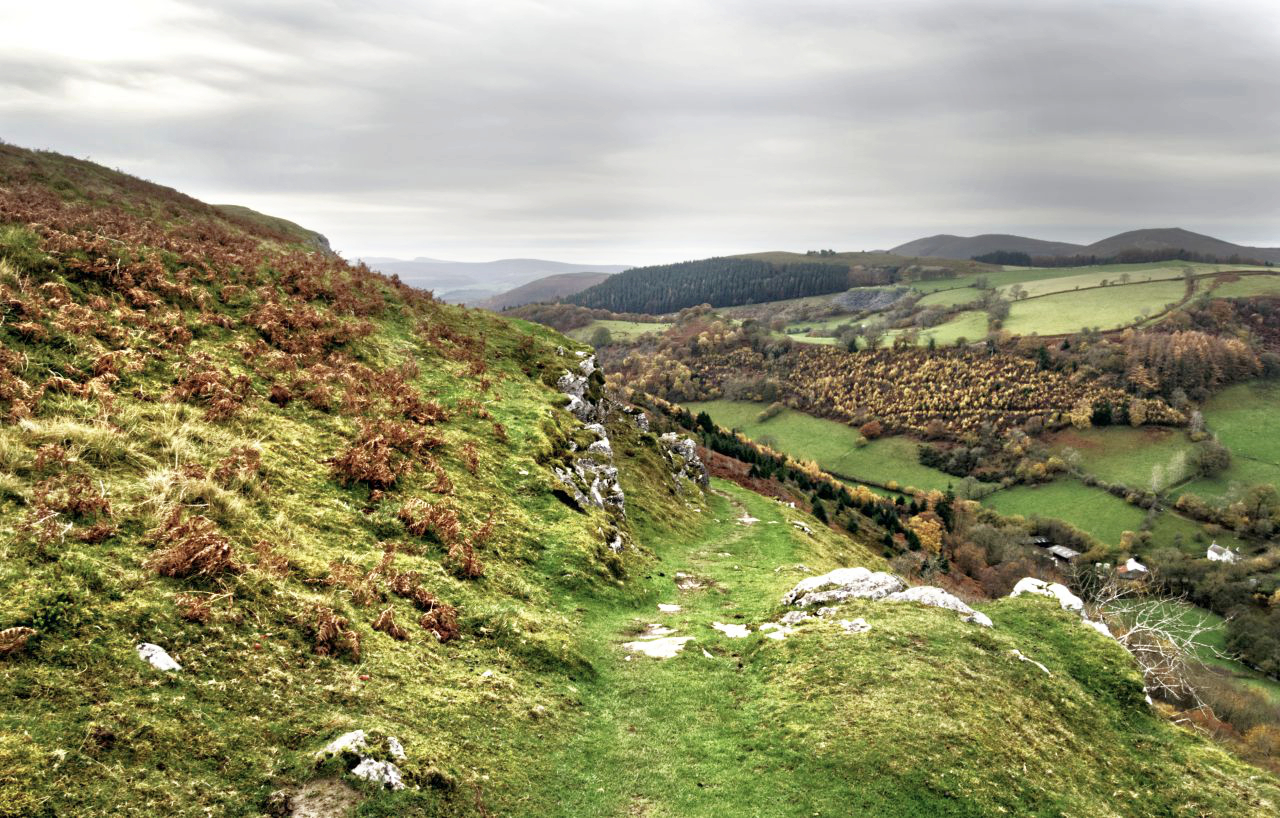
Above the Eglwyseg Valley ….…. it’s time to head for home
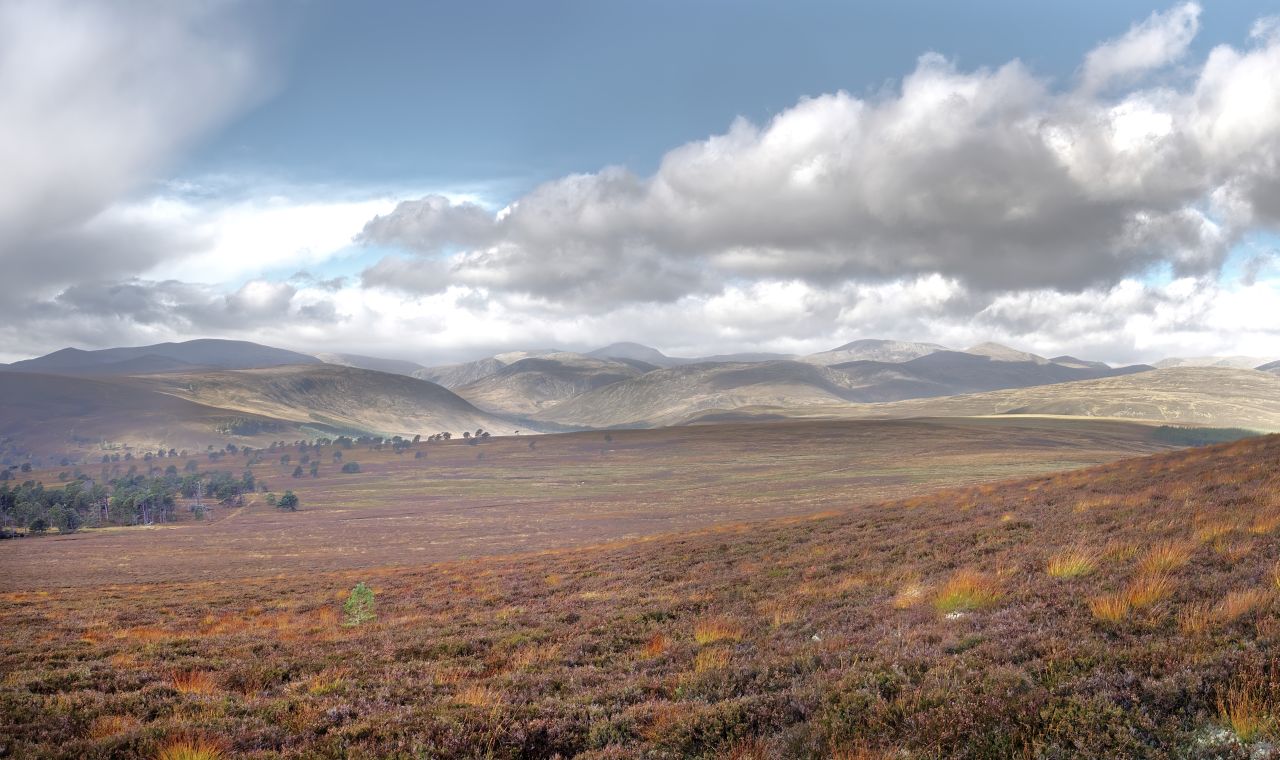
The Cairngorms from Creag Bhalg – ‘On the trail of the lonesome pine’
For the best viewing experience, left-click the images and maps to zoom in to a new window, then exit that window to go back – go on, it really does work!
Our September 2022 trip to the Scottish Highlands was a trip of two halves, with the good weather of our ‘Behind Liathach’ day (see post #330) replaced by bad weather that drove us to the East Coast for some respite (see post #331). Then, just as the expedition was about to draw to a close, the weather took a turn for the better in the Cairngorms – it was time to head back to the hills.
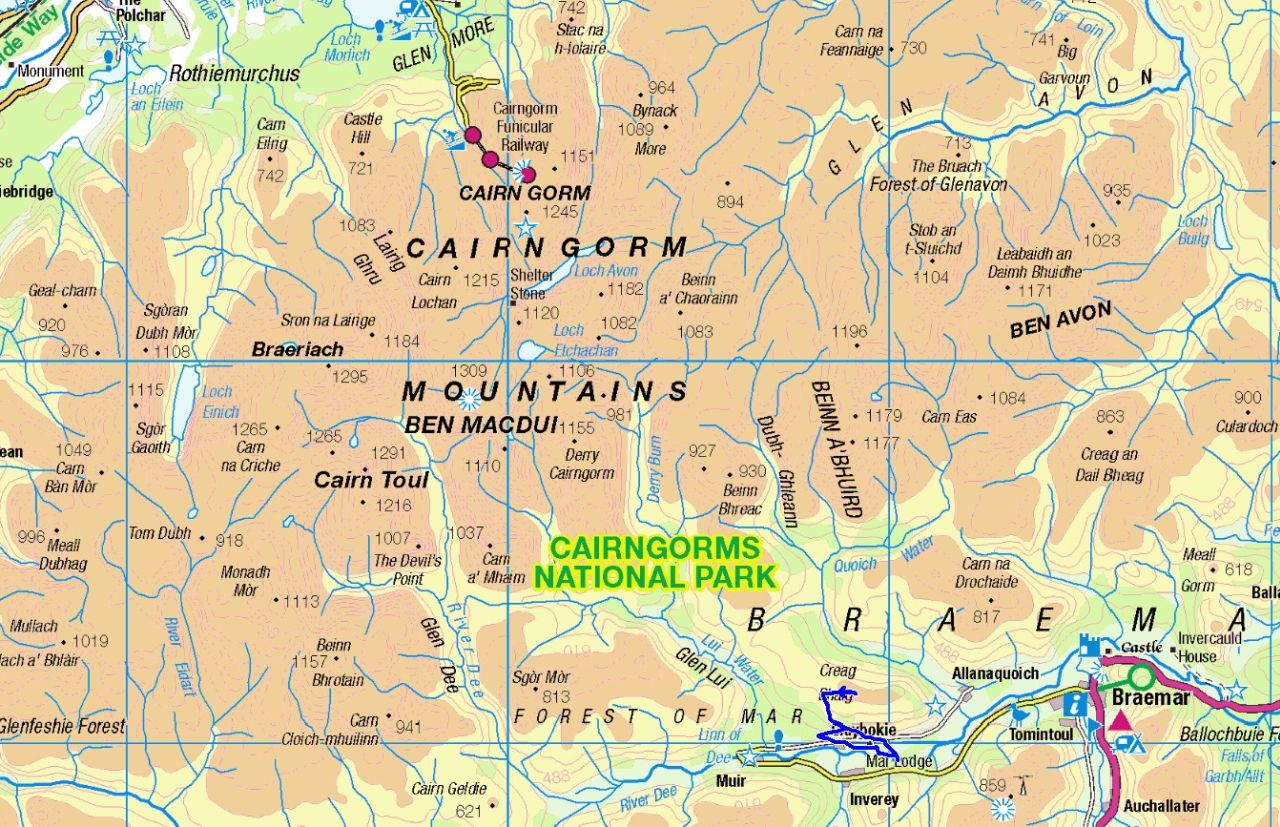
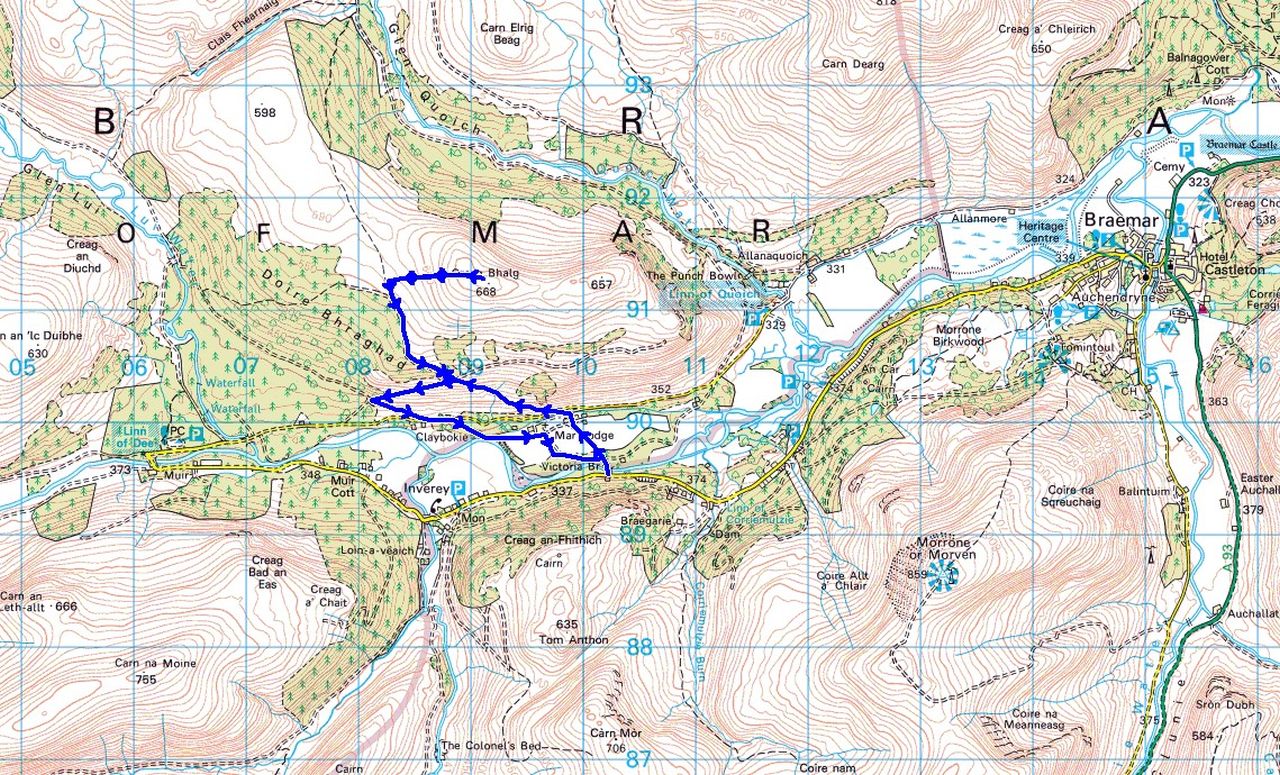
The Cairngorms – our Creag Bhalg walk in blue, bottom rightThe route and Upper Deeside
The mass of the Cairngorms is a major barrier to travel in Eastern Highlands of Scotland. The range is about 60 kms x 40 kms of high country, crossed only by ancient valley tracks or wild mountain paths. This effectively means that there are two main bases to explore the mountains – either the Aviemore side to the north or the Braemar side to the southeast. We were already on the East Coast, so it made sense to head for Braemar, and a little-known hill called Creag Bhalg.
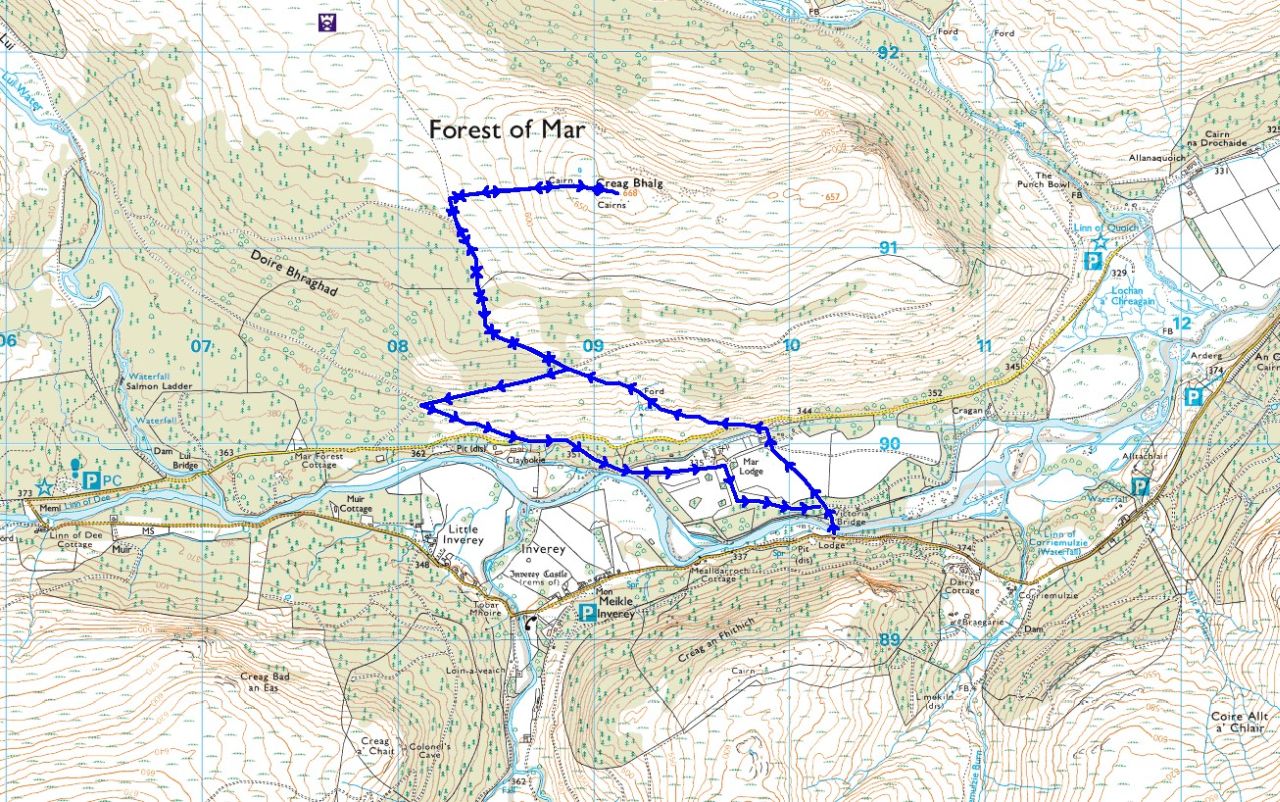
Closer view of the route, starting at Mar Lodge
I had been saving Creag Bhalg for an ‘iffy’ weather day, and it soon became obvious that ‘iffy’ was going to be about right. The high Cairngorm plateau, about 1100-1200 metres in altitude, attracts weather described as Arctic in winter. Even September can bring life-threatening weather conditions, but Creag Bhalg, at 668 metres, was likely to be a little more benign – it was also reputed to be a good viewpoint for the main Cairngorm mountains. So, Creag Bhalg it was to be.
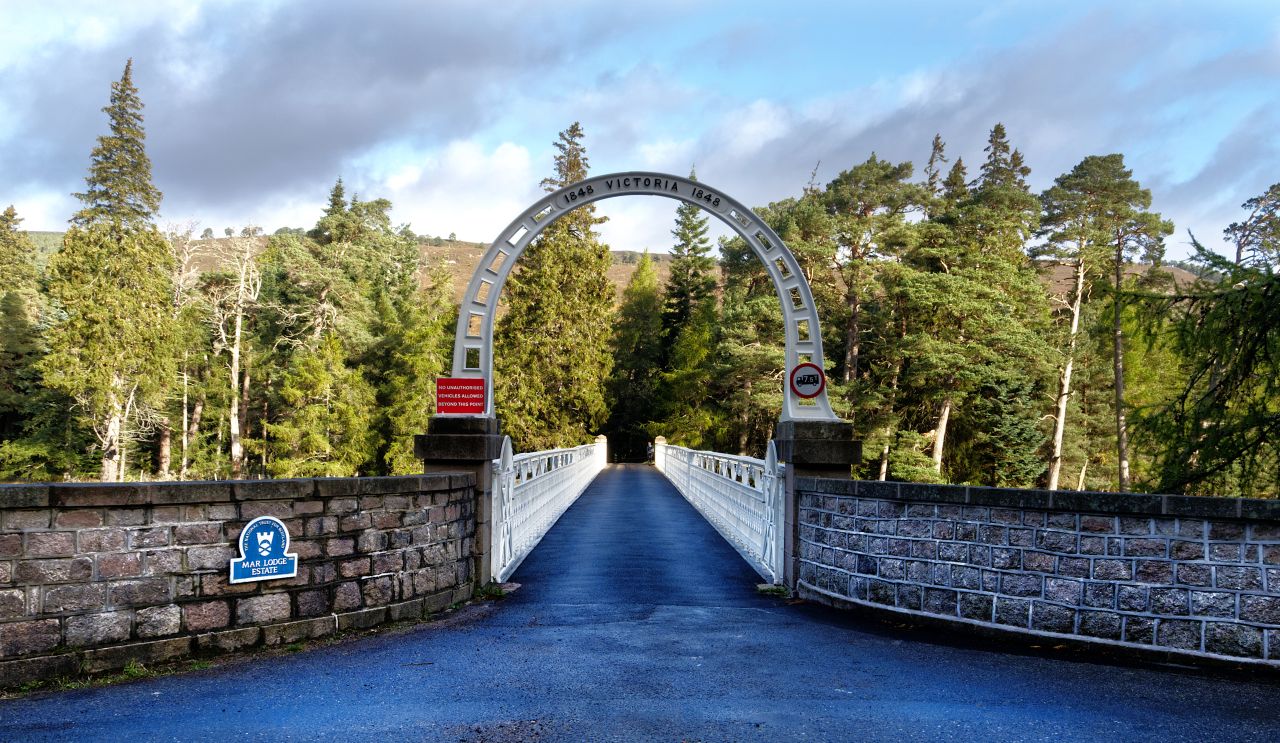
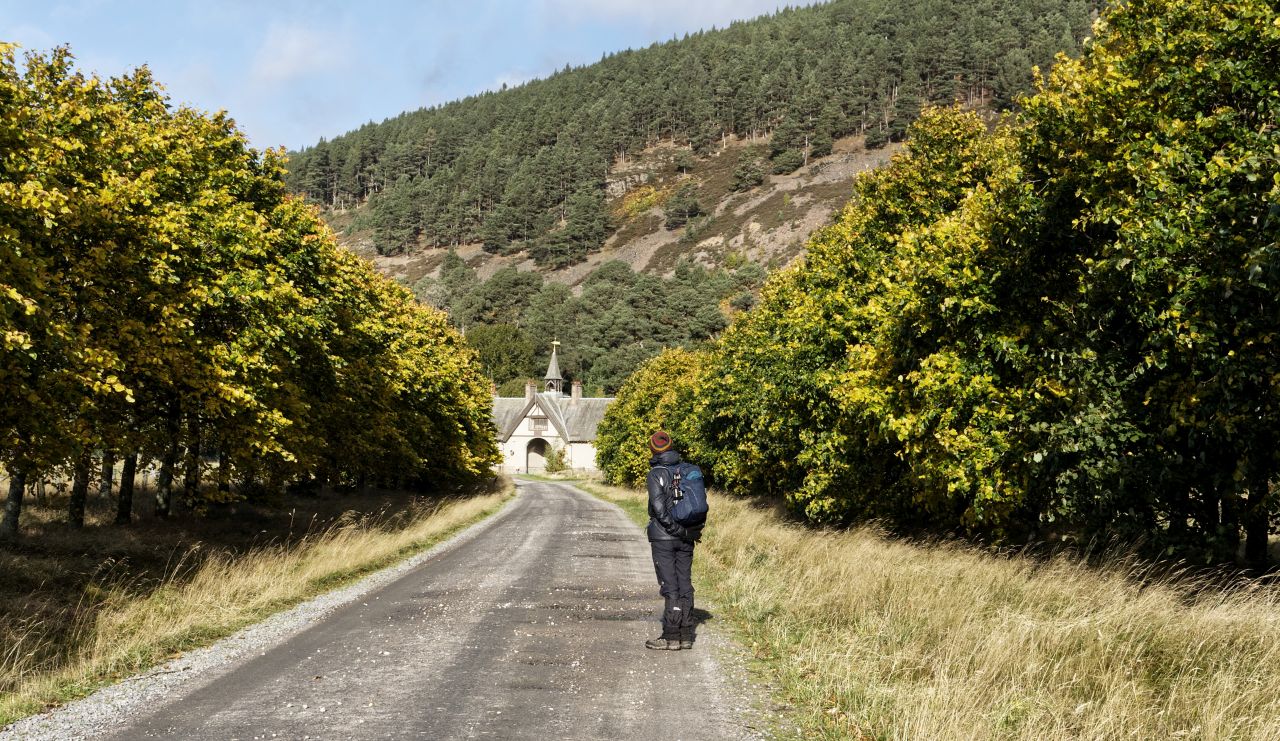
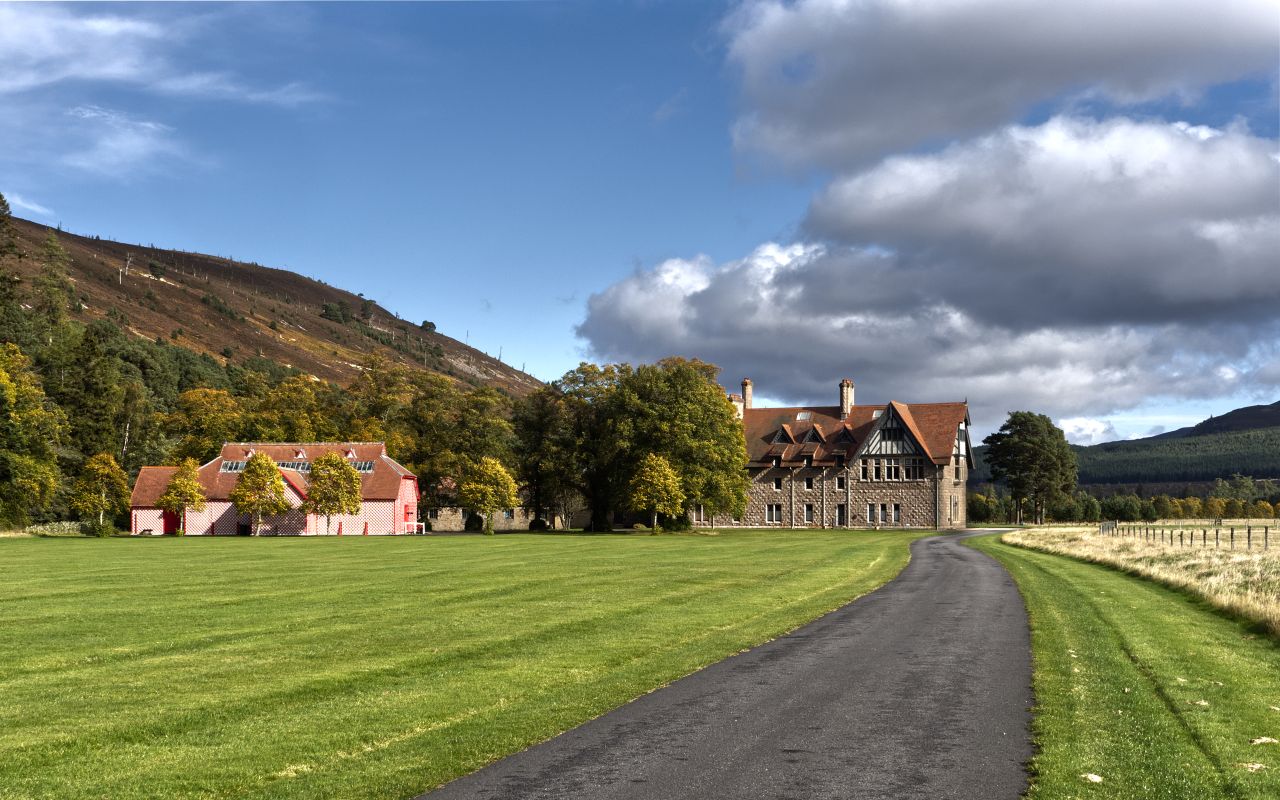
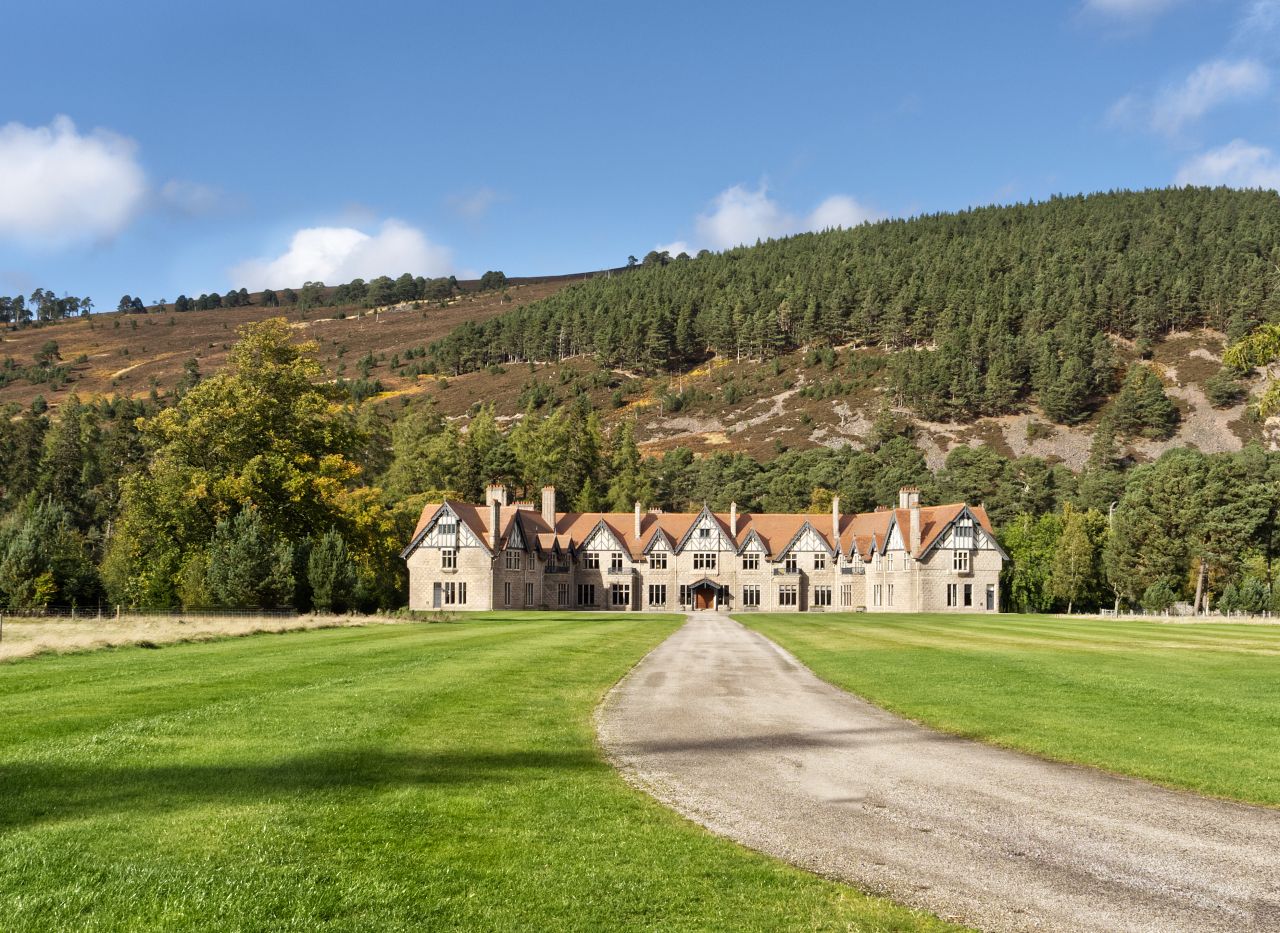
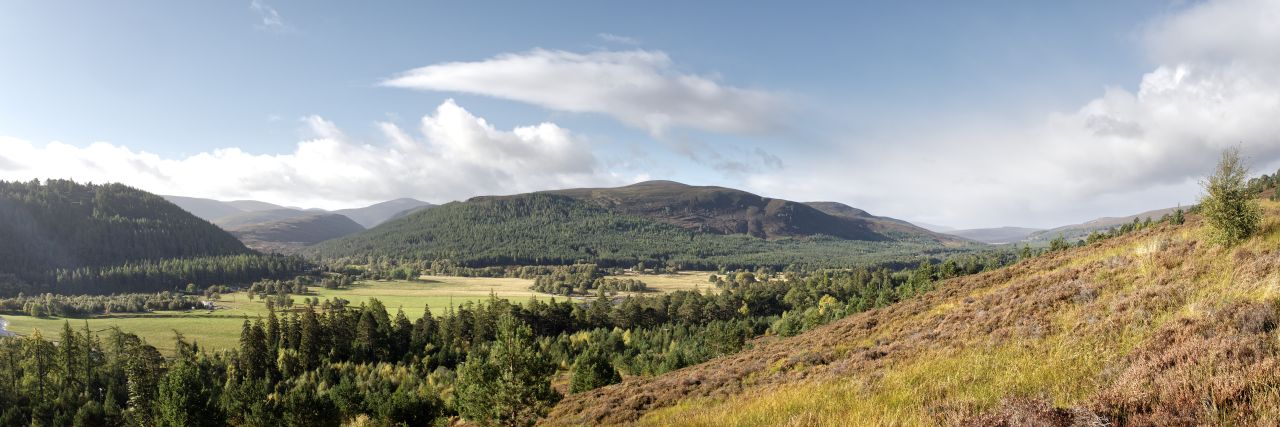
The Victoria Bridge, giving access to Mar Lodge and Creag BhalgPassing by the estate buildingsMar Lodge, seen from the west on our return routeMar Lodge – the ‘Big Hoose’
There are two logical ways to approach Creag Bhalg, either by the Linn of Dee (see post #258) or by Mar Lodge. I fancied the Mar Lodge option, mainly for its place in the history of mountaineering and climbing – in the 1960s-70s there was a public bar at the Lodge, frequented by the climbing fraternity as well as estate workers, stalkers, ghillies and campers. Some of the tales have become the stuff of legend, but alas no longer. The Lodge and estate are now both owned by the National Trust of Scotland, the house converted to holiday lets and the wild, impromptu ceilidhs of yesteryear are just a memory.
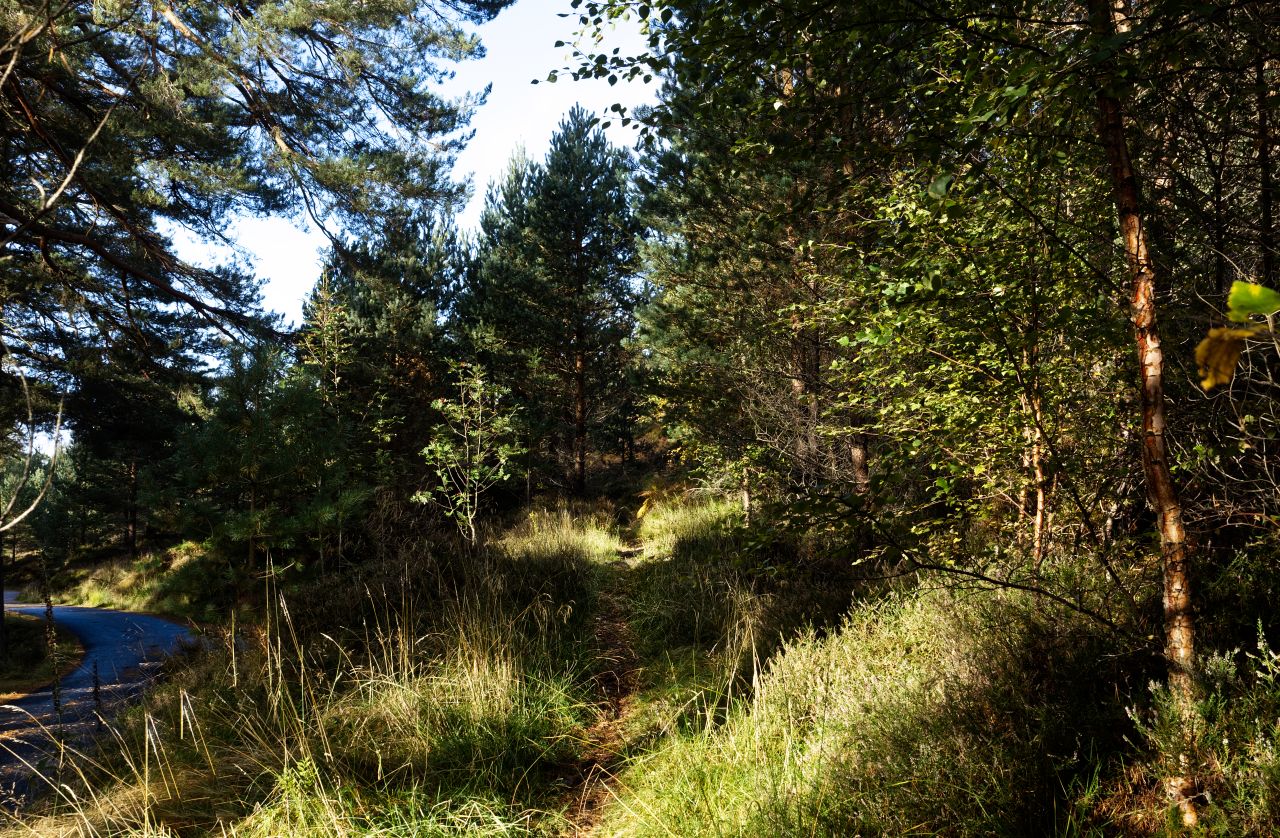
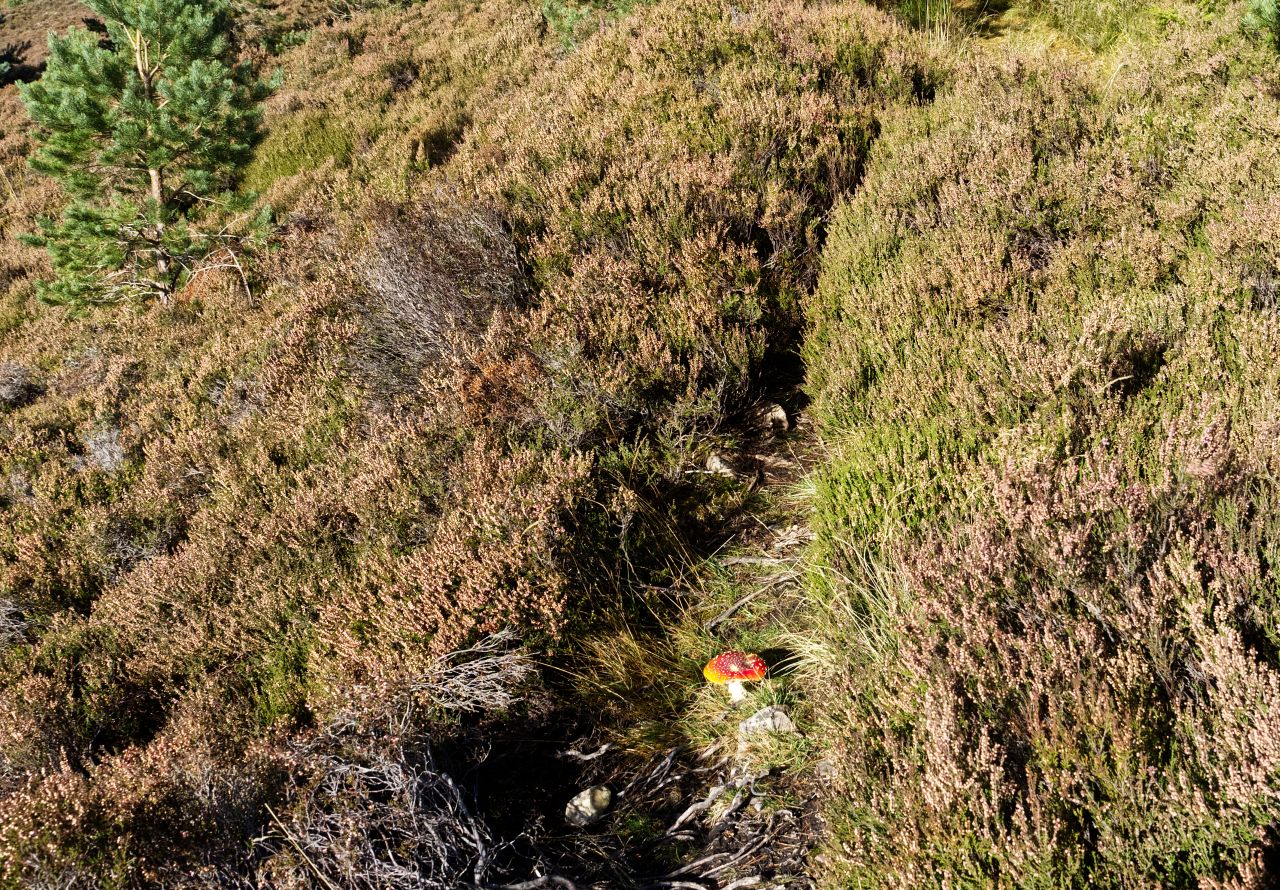
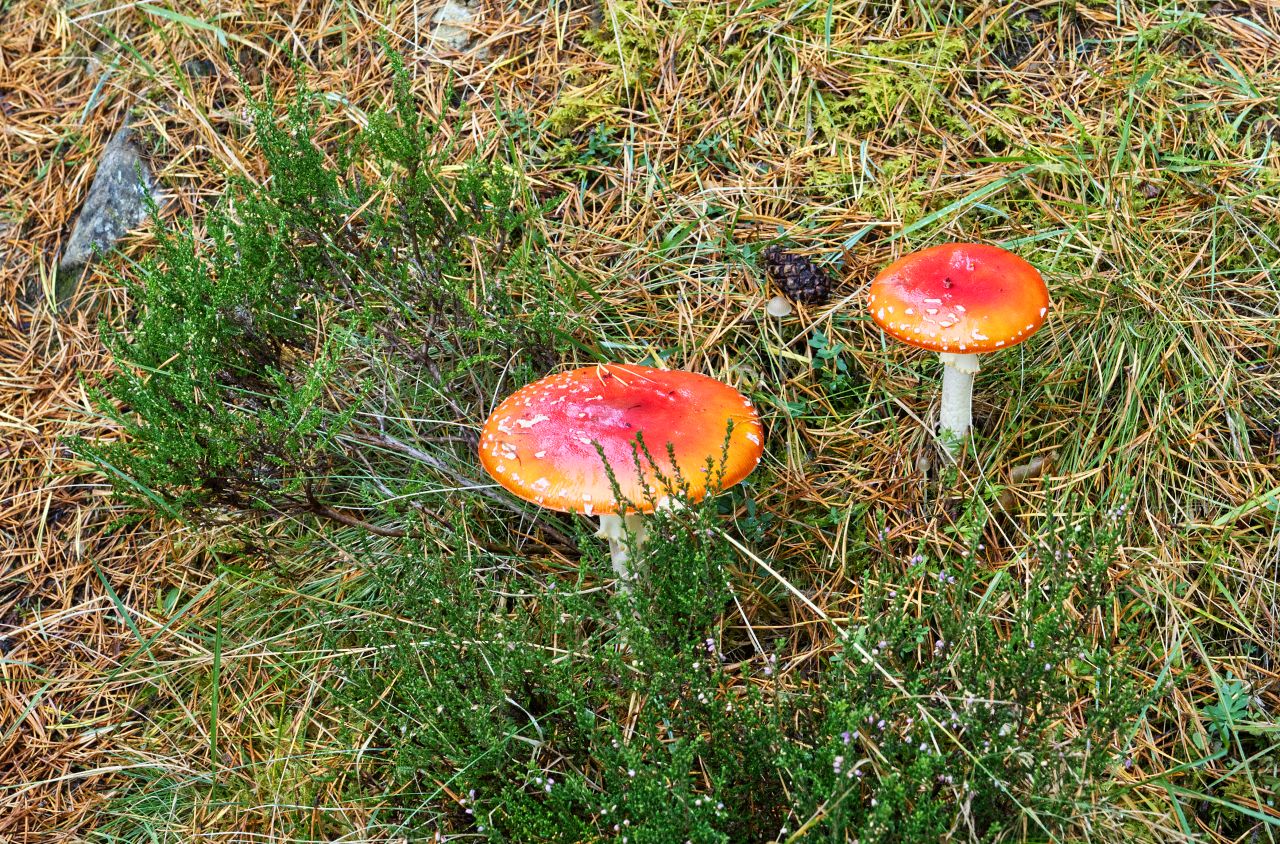
Setting out through woodland ….…. with the path finally opening upFly agaric growing on the path ….…. adding a splash of colour
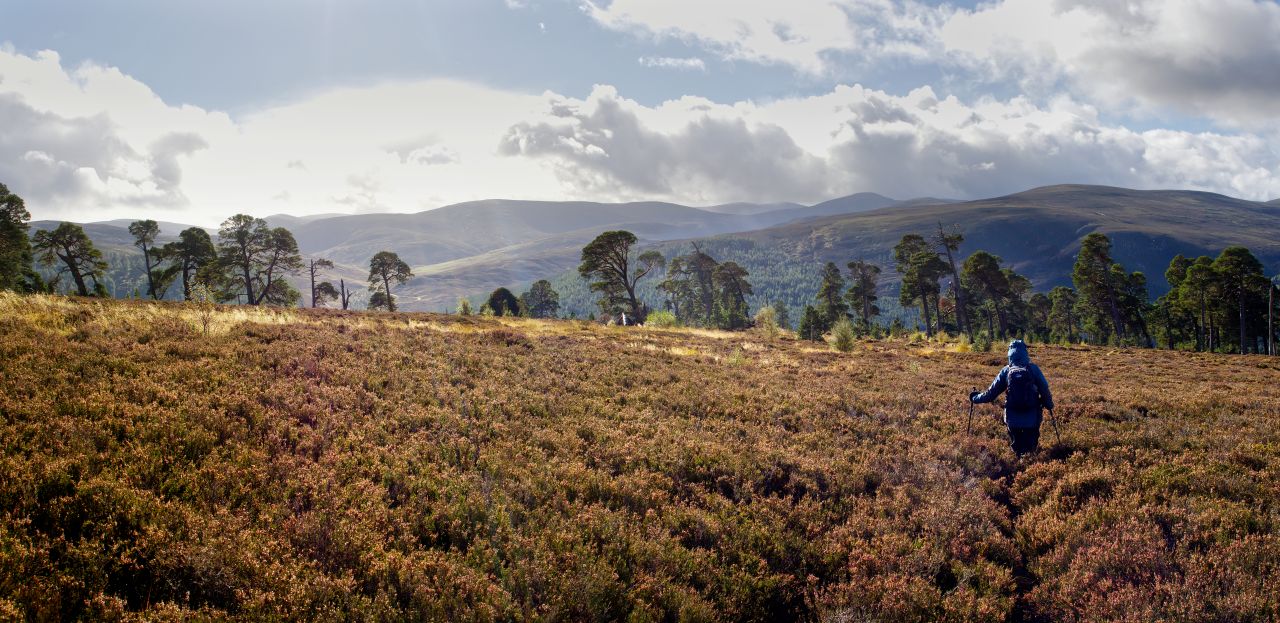
We didn’t have time to ceilidh on this trip, as our wee hill was still waiting for us! After passing Mar Lodge, we set off through woodland before the path finally opened up to give wider views towards the mountains. Fungus fans would have been impressed by the fine array of fly agaric toadstools growing by the path, adding a splash of colour to the heather.
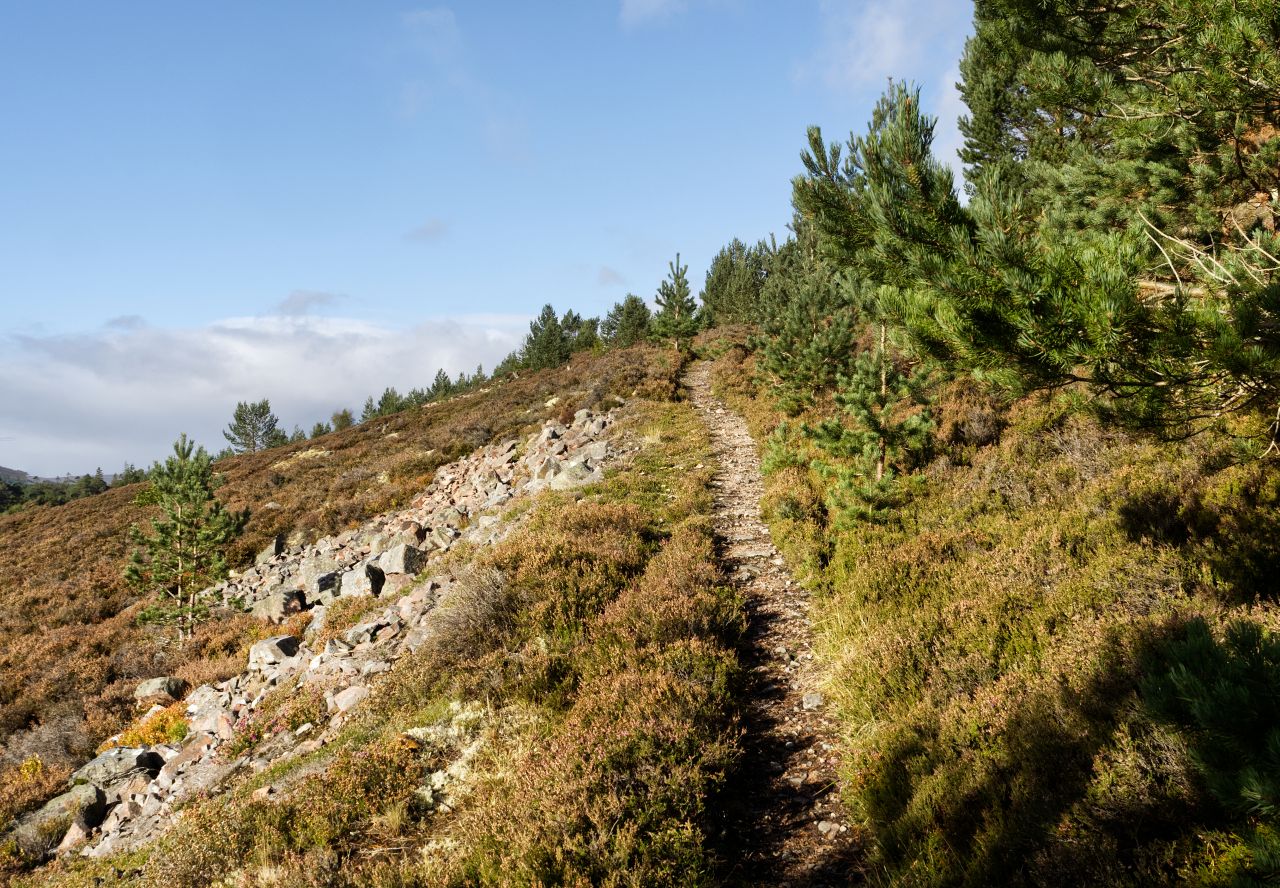
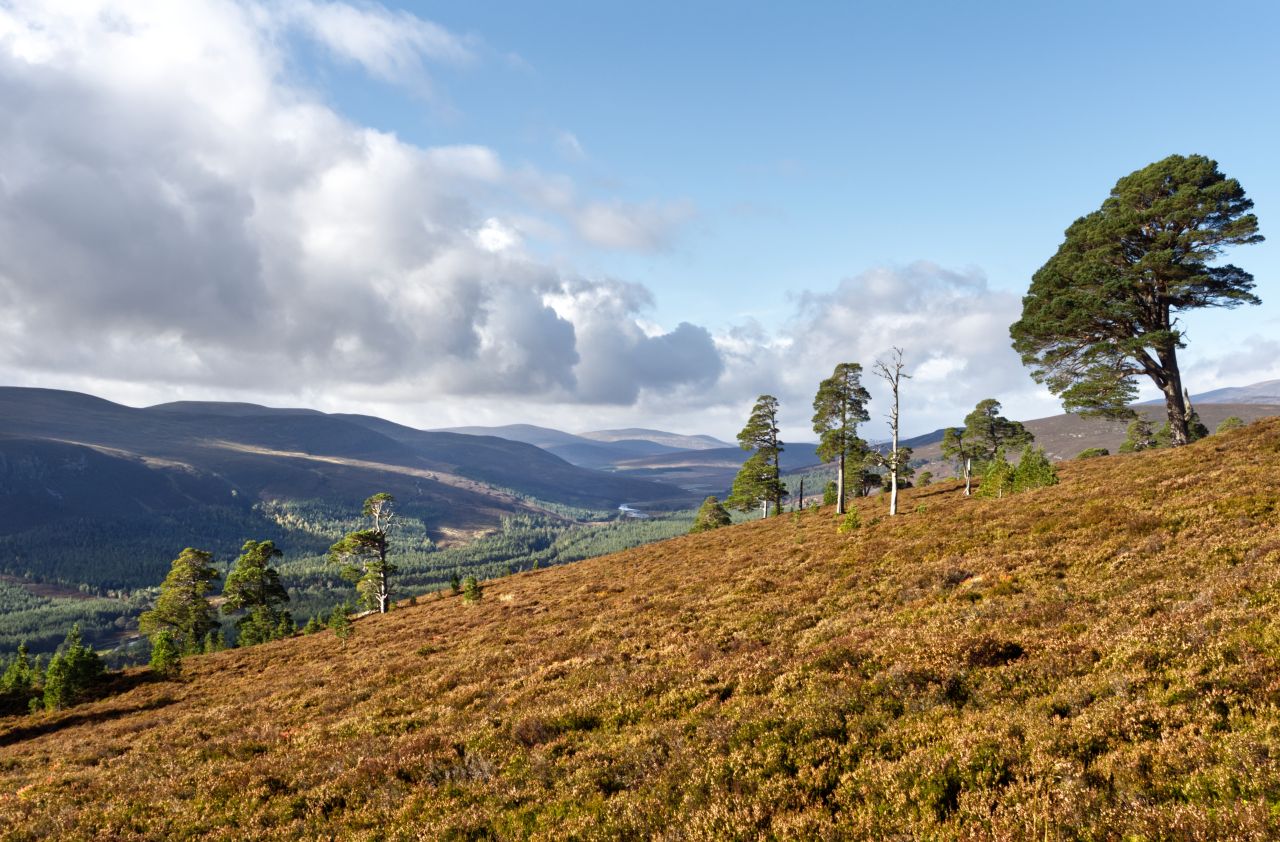
Looking across the valley towards the Upper Dee valleyThe view to the west with Glen Lui and Derry LodgeHeading towards the summit of Creag Bhalg ….…. passing by ‘the lonesome pine’
The weather looked as if set to be fair, but there were glowering clouds out to the west, heading towards Glen Lui and Derry Lodge. I had done a bit of research on Creag Bhalg, and one feature I was looking out for as a navigational marker was a lone Scots pine. Sure enough, as we turned towards the upper slopes of the hill, it was there – we were on ‘the trail of the lonesome pine’!
Looking south to Inverey and Glen EyThe view northwest towards Derry Cairngorm and Ben MacduiWay marker cairn on the way to the summit, with Beinn a Bhuird (centre) to the northAt last! The summit cairn of Creag Bhalg comes into view
As we got closer to the summit, the clouds got closer to us, and we did have the odd shower of rain, mixed in with clear spells and long views towards the main Cairngorm mountains. The potential of Creag Bhalg as a viewpoint towards the cairngorms was apparent, and if the hill was modest in size, it was worth the trip just for the panoramas.
Nearly there ….…. all 668 metres of itCloud rolling in over the Cairngorm plateau
We didn’t linger at the summit, as it was on the cool side for September, and after a few quick photos, it was time to head down. We took a slightly different descent route, taking us round the other side of Mar Lodge – it all looks very tidy and civilised now, but I bet the fabled ‘stag ballroom’ could tell a few tales of the golden age of Cairngorm climbing.
Bow Fiddle Rock, off the Moray Coast of North East Scotland
For the best viewing experience, left-click the images and maps to zoom in to a new window, then exit that window to go back – go on, it really does work!
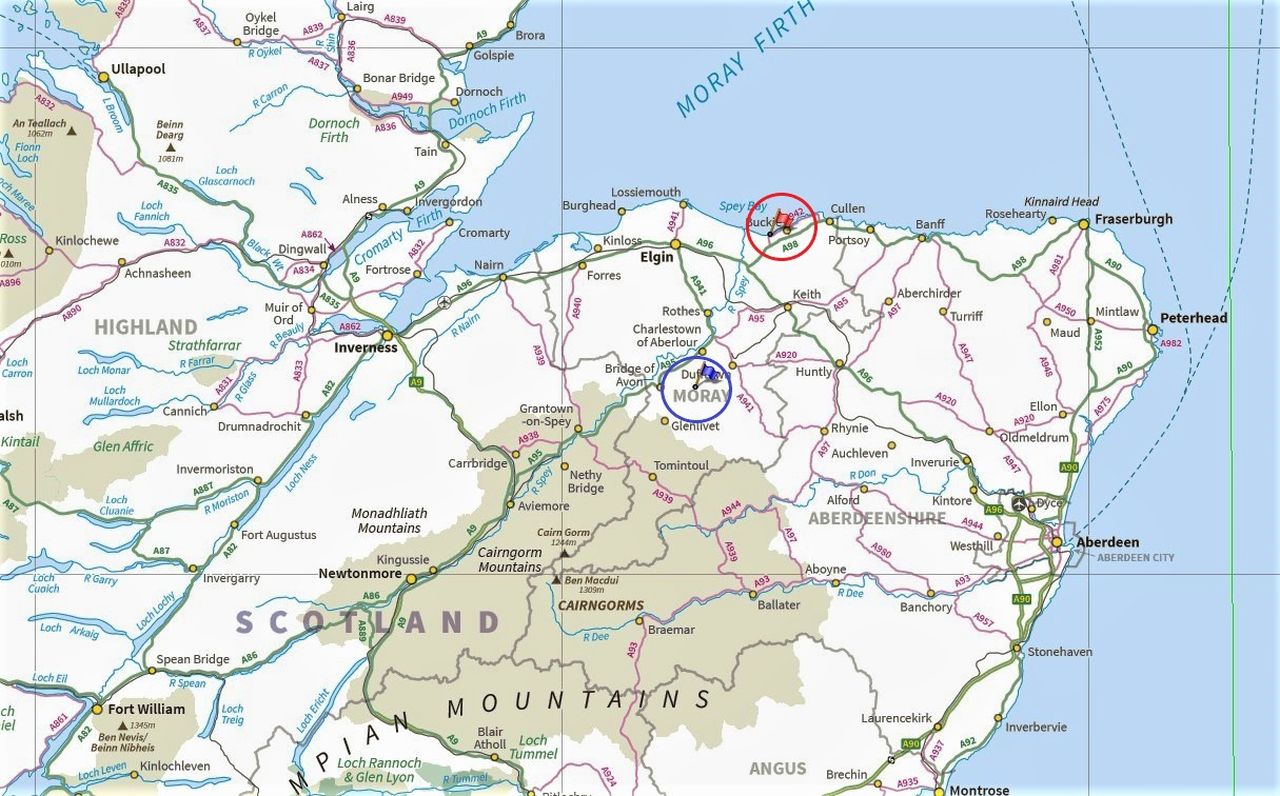
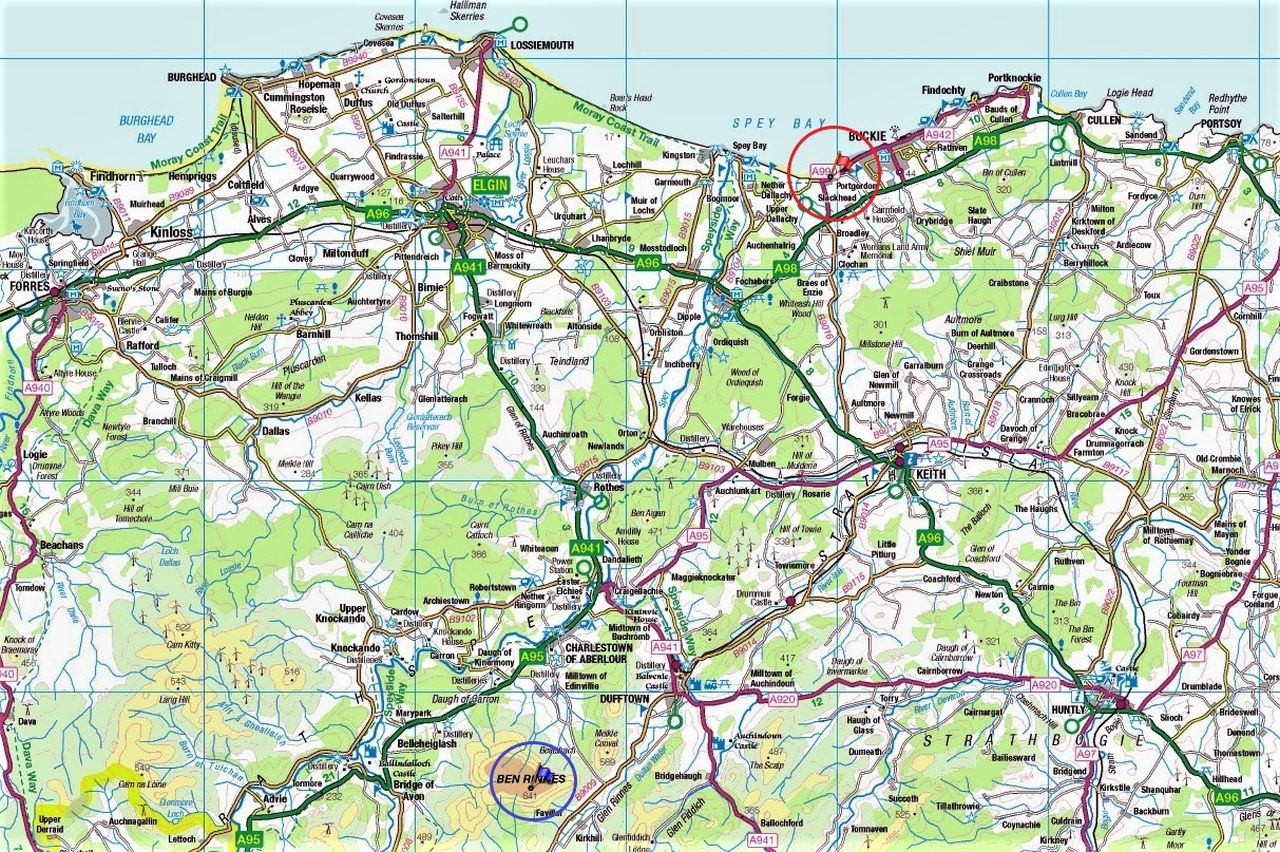
North East Scotland, with Ben Rinnes (blue circle) and Portgordon (red circle)Closer view of Speyside in North East Scotland
Although September is usually a month of fine, settled weather in the Scottish Highlands, we didn’t have much luck there on our September 2022 trip. Unbeknown to us at the time, our trip out round the hidden northern side of Liathach (see post #330) was to be one of our few ‘good weather’ days. When the wind and rain arrived, we headed east, eventually aiming for Speyside, an area famous for its single malt whisky, but otherwise unfamiliar to us.
If Speyside is well known for its whisky, it’s less well known for its lofty mountain peaks, but a little research came up with an interesting looking mountain day, in the shape of Ben Rinnes. At a height of 840 metres (2755 ft), Ben Rinnes wasn’t quite one of the lofty peaks we had come to the Highlands for, but it would do fine in the circumstances. That was until the squally showers of the West Highlands caught up with us – we bailed out and headed for Portgordon on the coast.
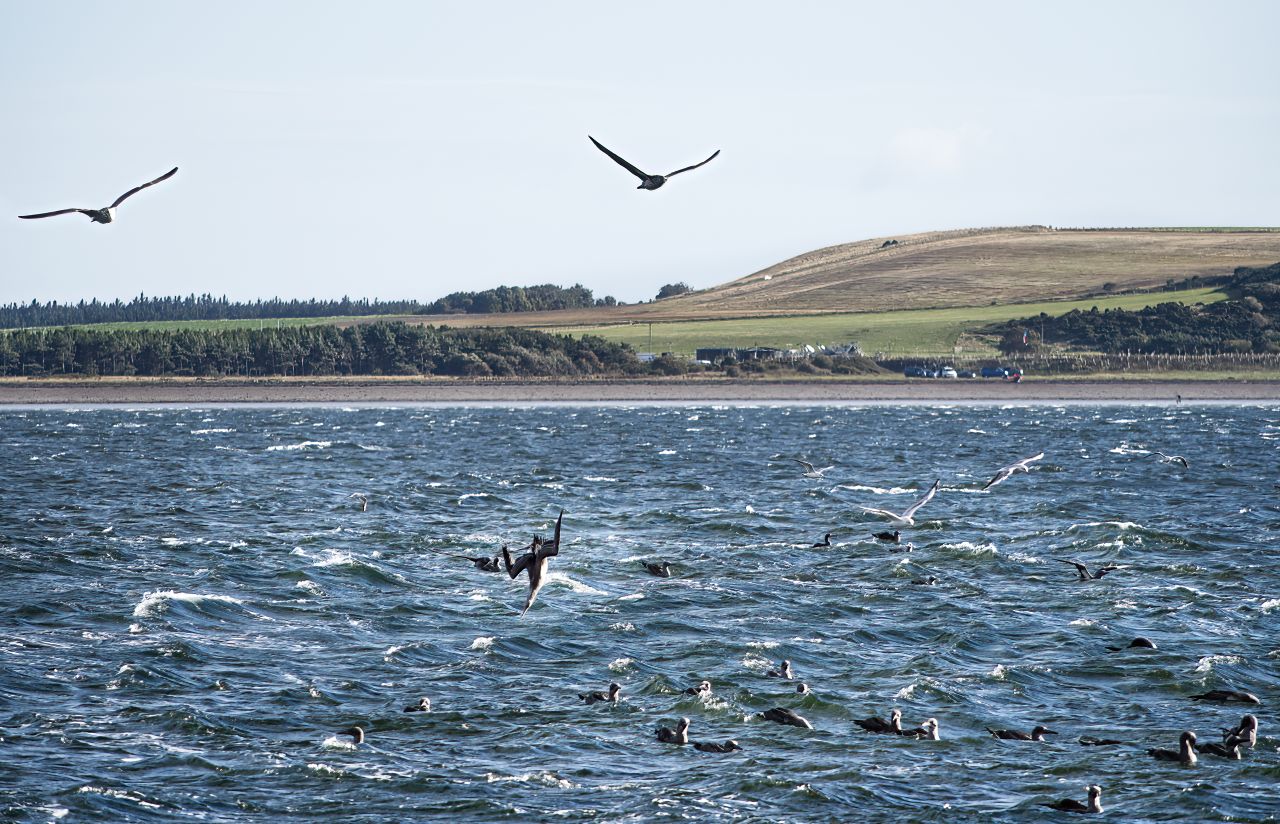
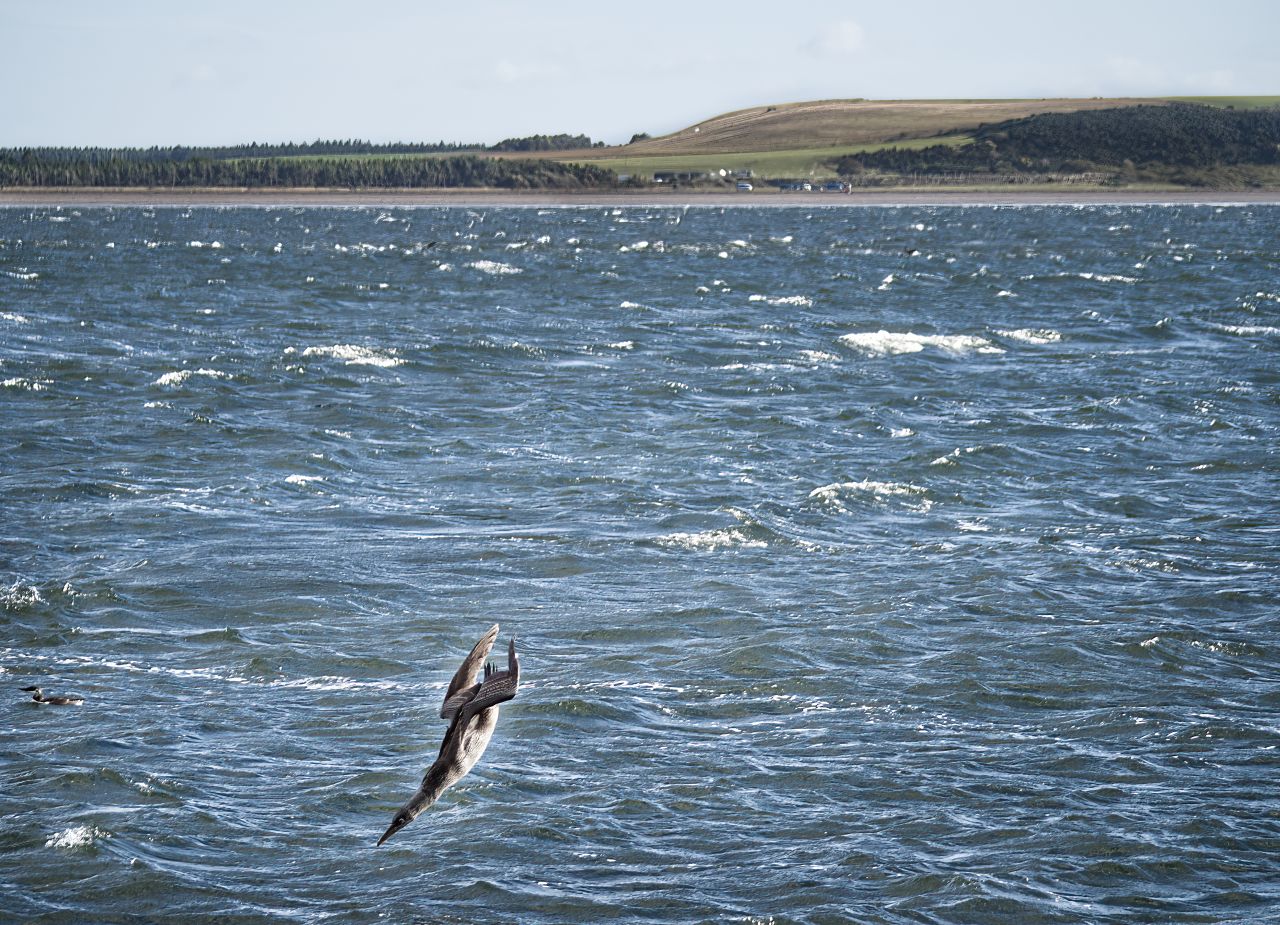
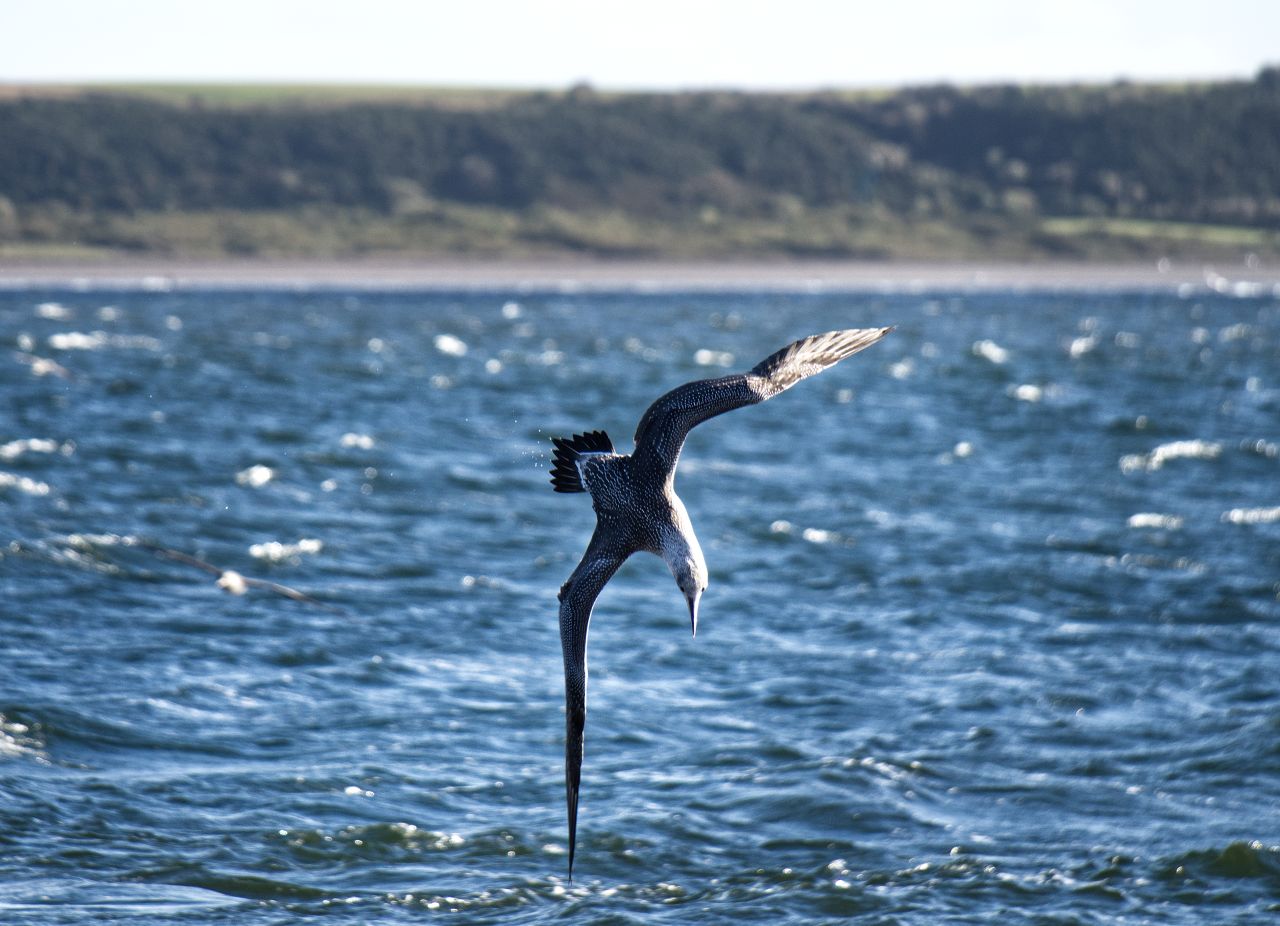
Plenty of bird action at Chanonry Point, RosemarkieGannet diving for fish, RosemarkieAgile gannet, about to dive
Now, this is a blog about mountain days, with photos of mountains and stories about mountains, but occasionally a change of scene looks like a good idea, especially when the weather prevents you from even seeing the mountains! A couple of days earlier we had been at Rosemarkie on the Black Isle, hoping to see dolphins at Chanonry Point – it was a ‘no-show’ by the dolphins, but a fine display of fishing by the local gannets had been a consolation prize.
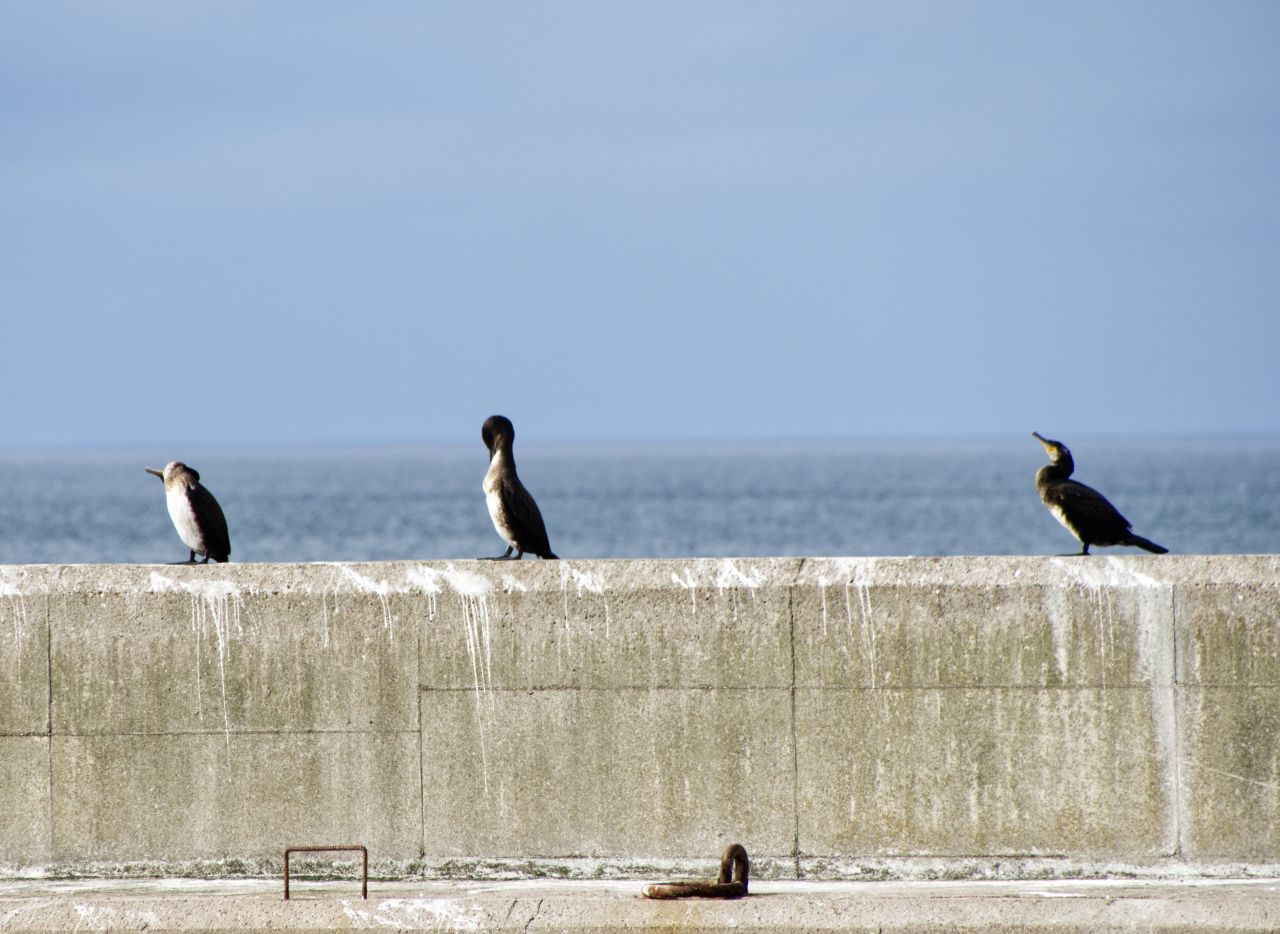
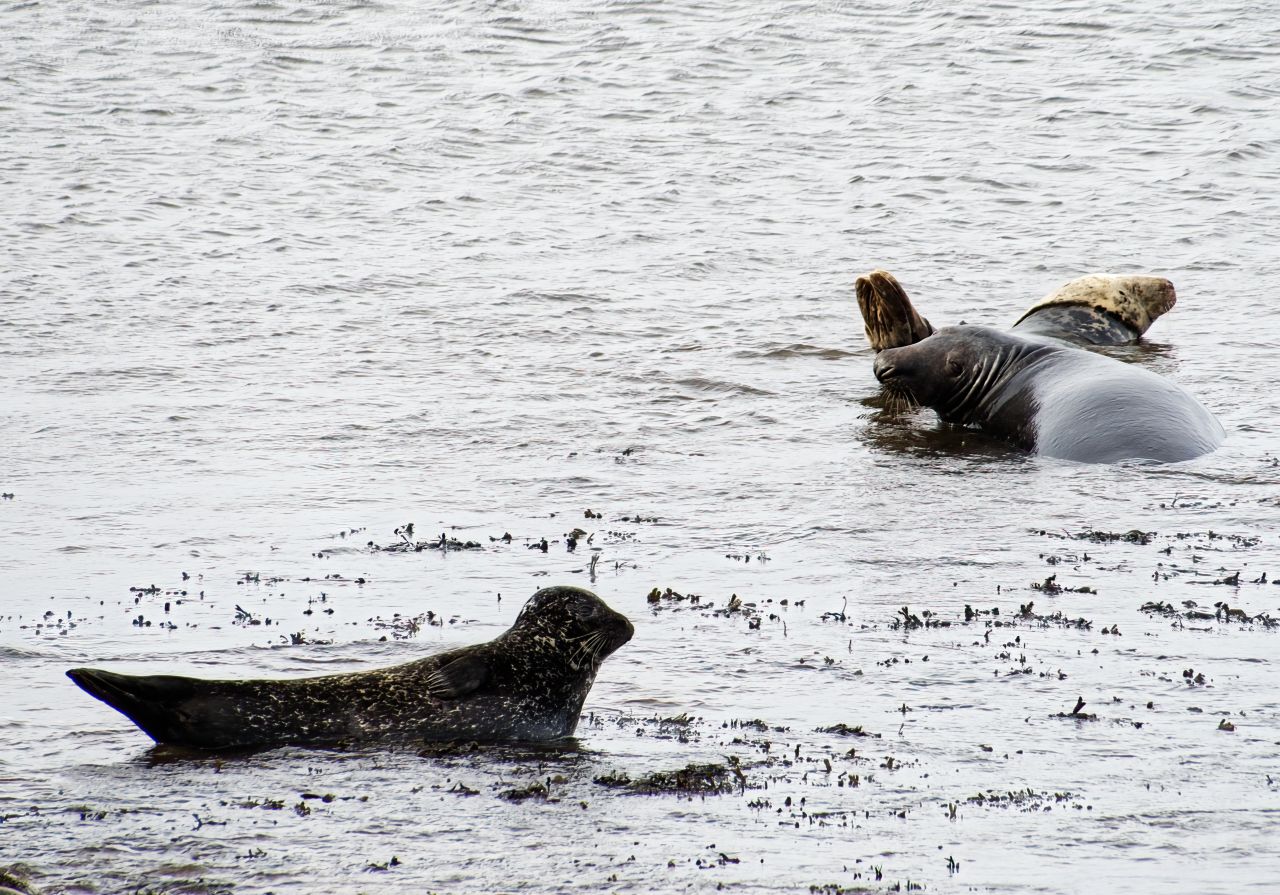
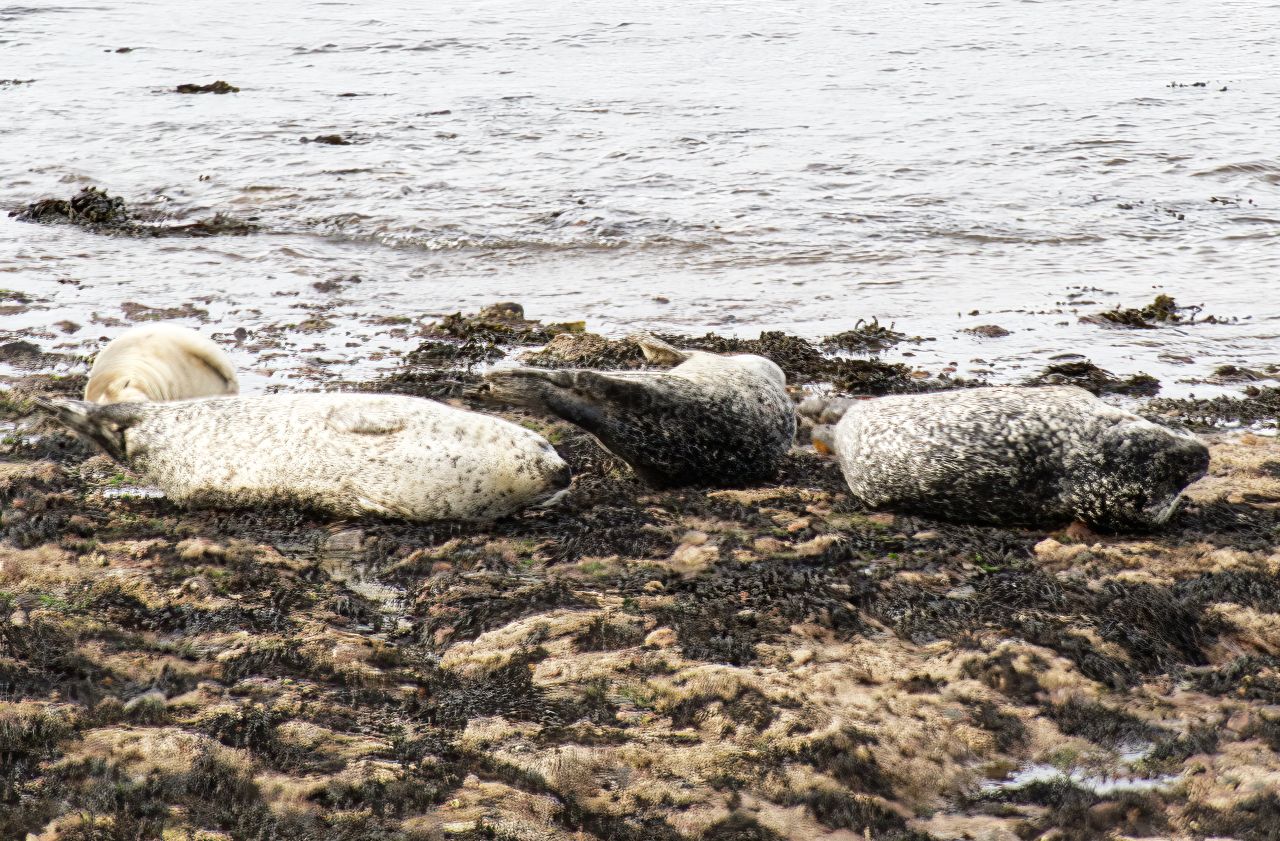
Not so agile cormorants, dozing at Portgordon HarbourNot much action with the Portgordon seals eitherIt’s all just too much trouble!
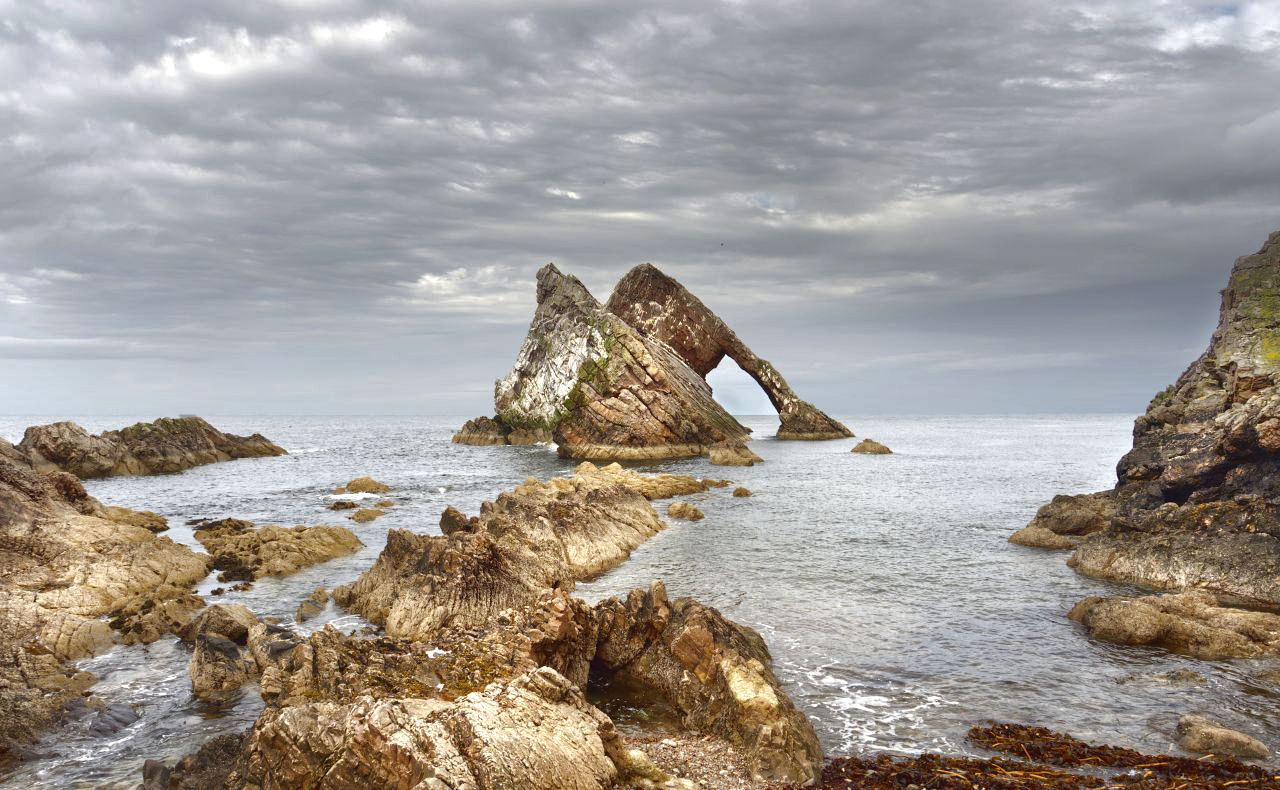
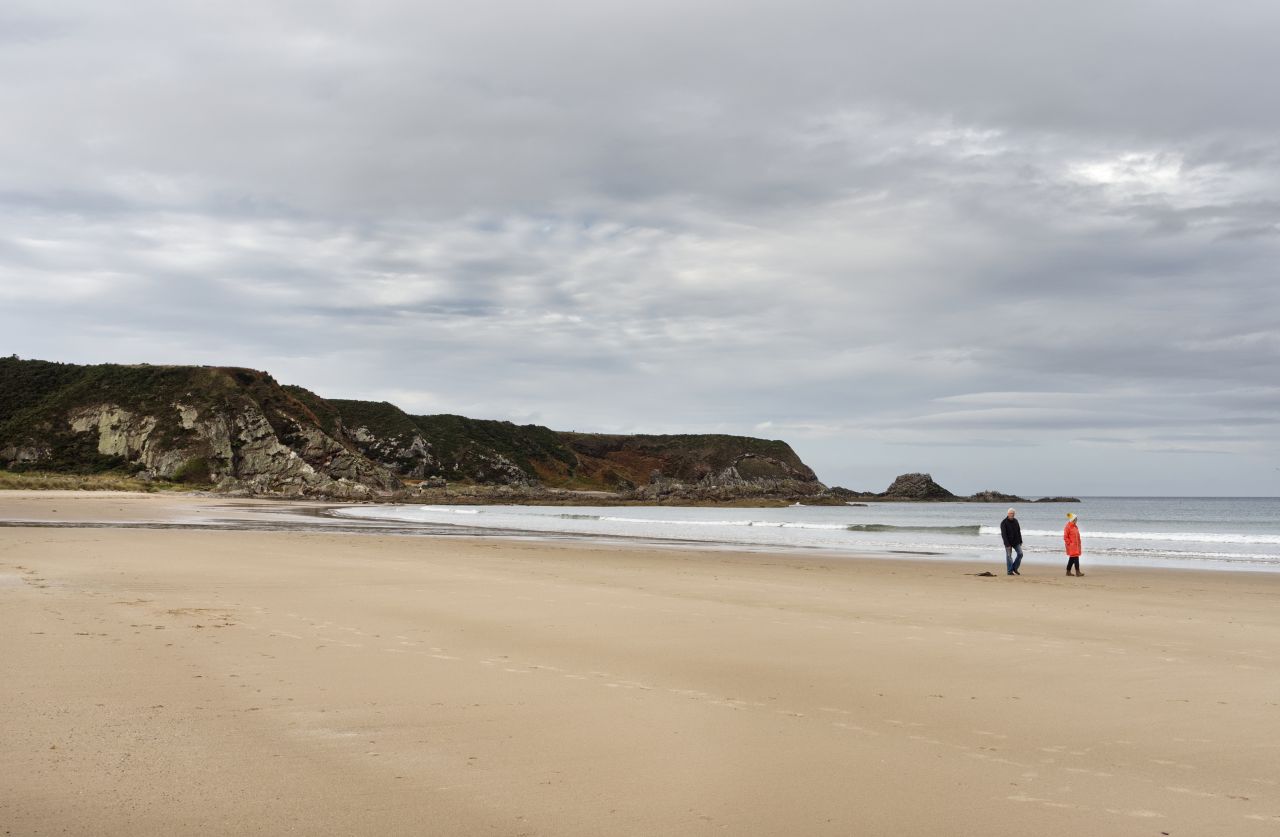
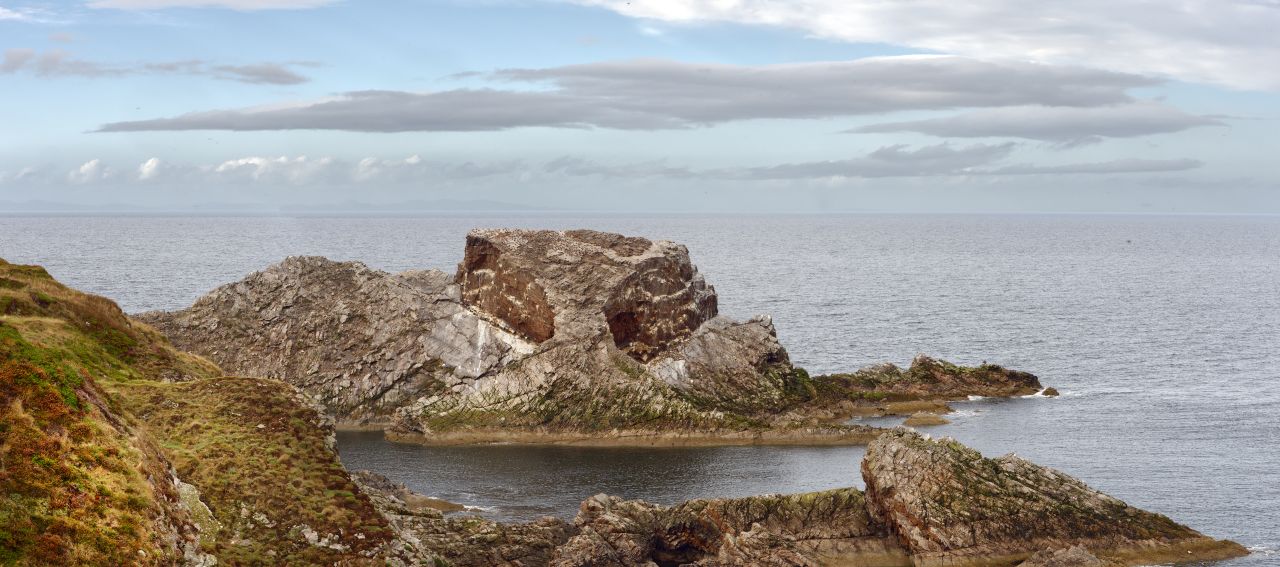
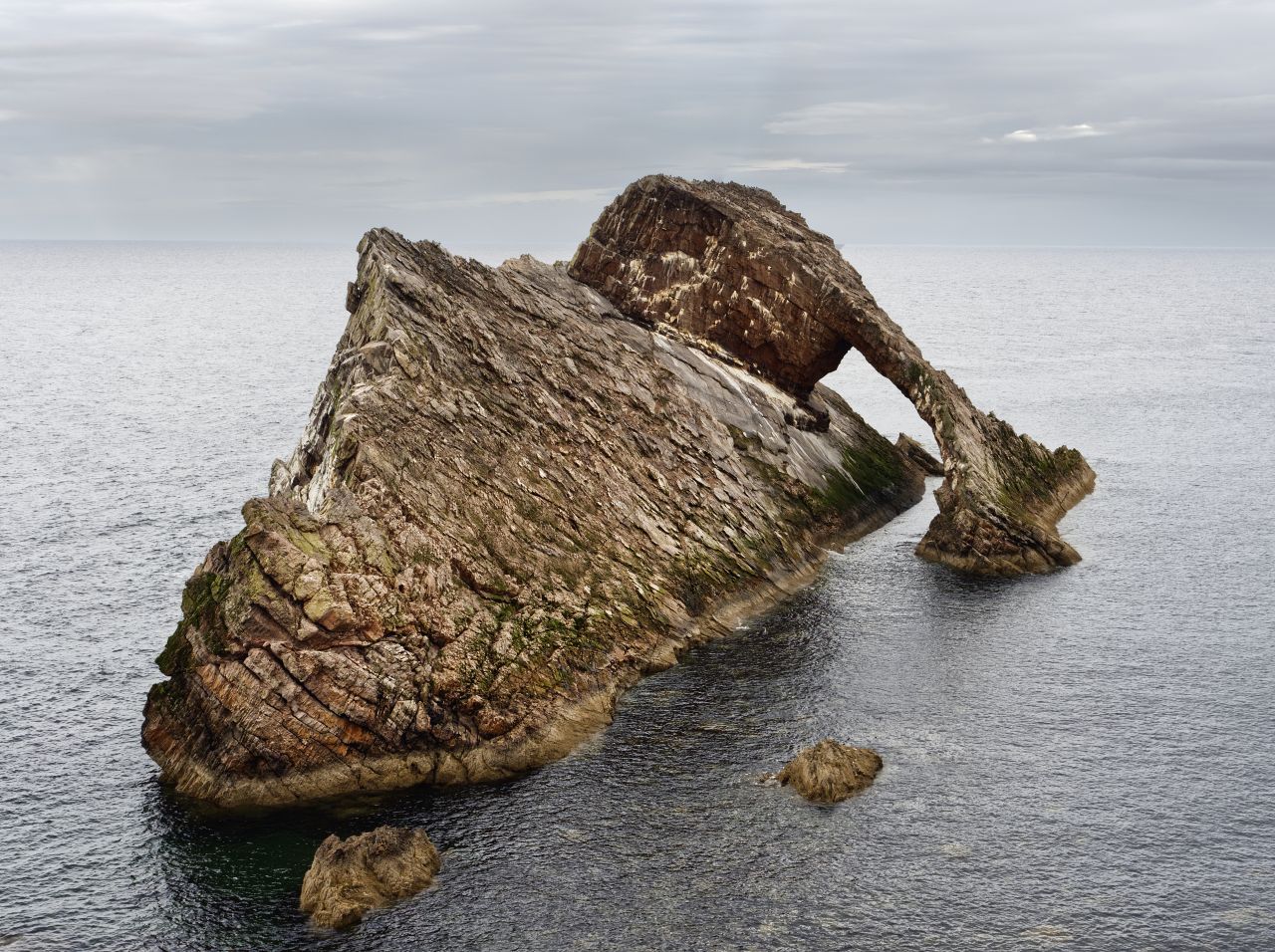
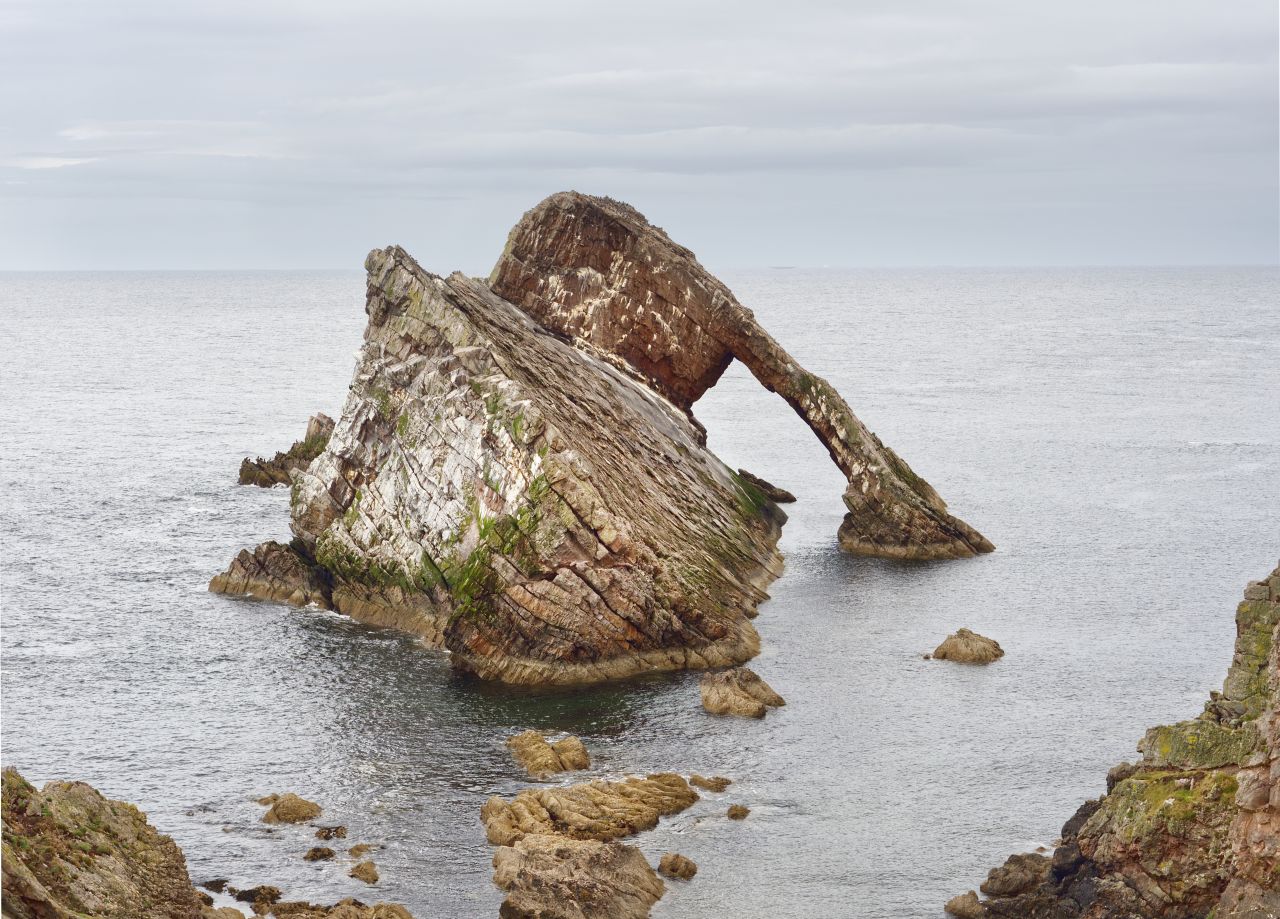
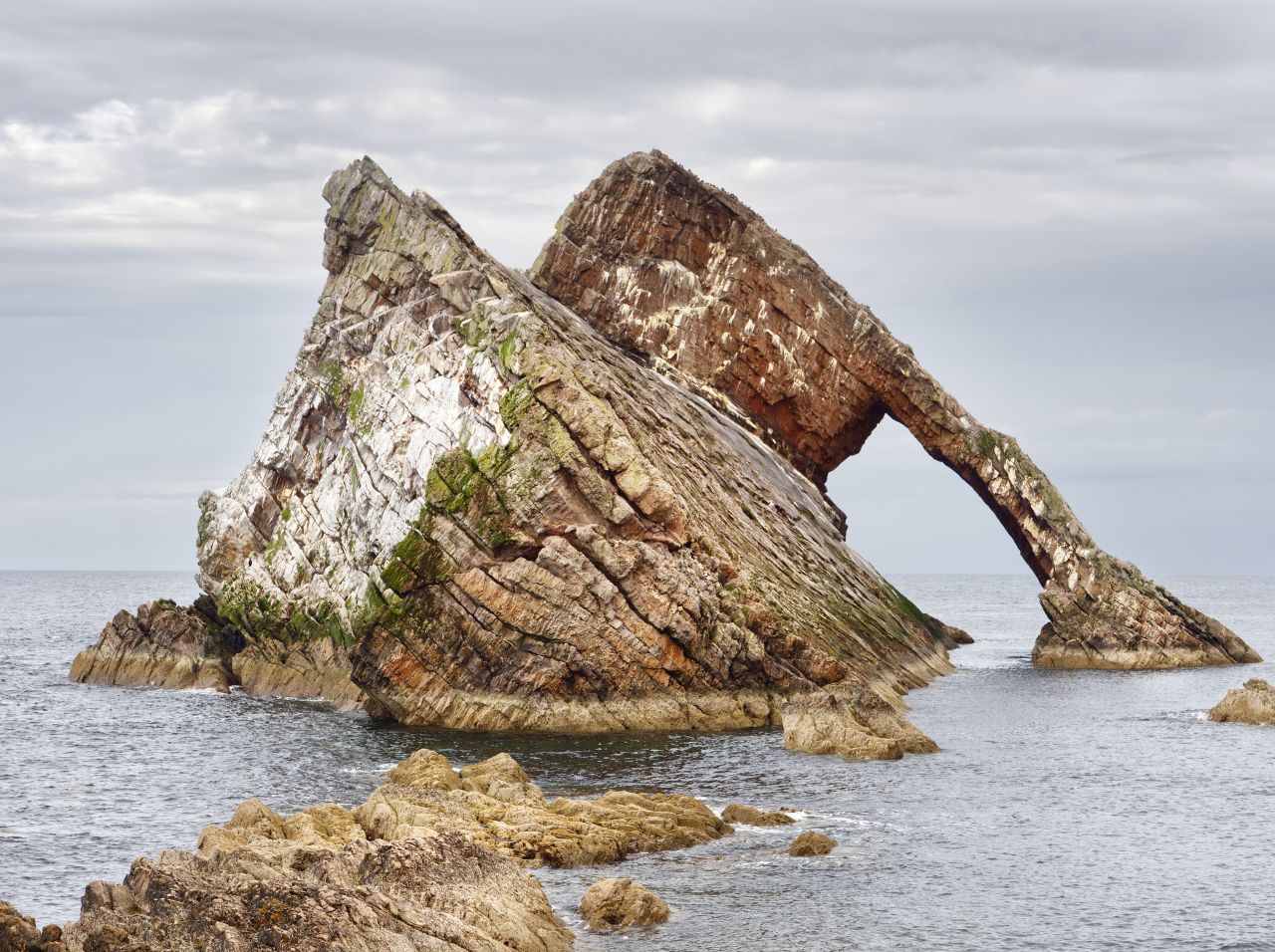
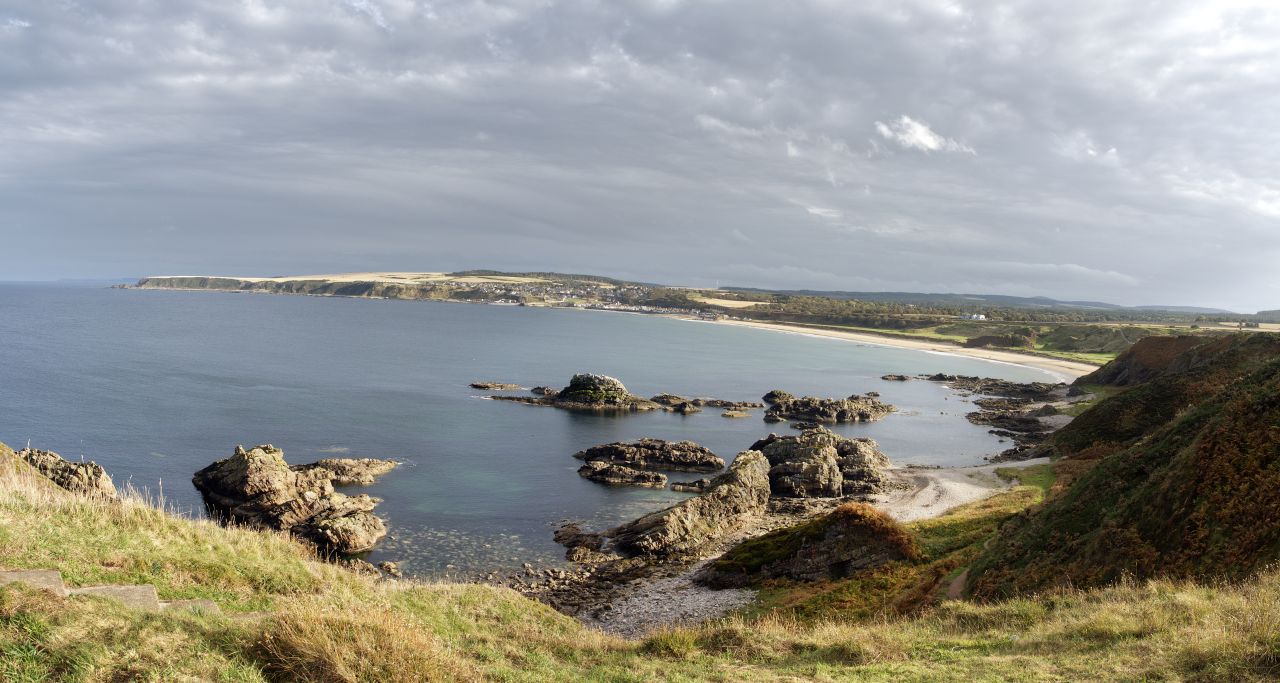
The wildlife at Portgordon was a bit less lively, in fact there wasn’t much going on at all with the harbour cormorants and seals, but Portgordon is that kind of a place, a haven of peace where we could park up and decide what Plan B was going to be. Plan B turned out to be a drive along the coast to the village of Cullen, home of the famous Cullen Skink, a thick soup of smoked haddock, potatoes and onion. It wasn’t the soup that grabbed our interest though, it was the amazing rock arch known as Bow Fiddle Rock.
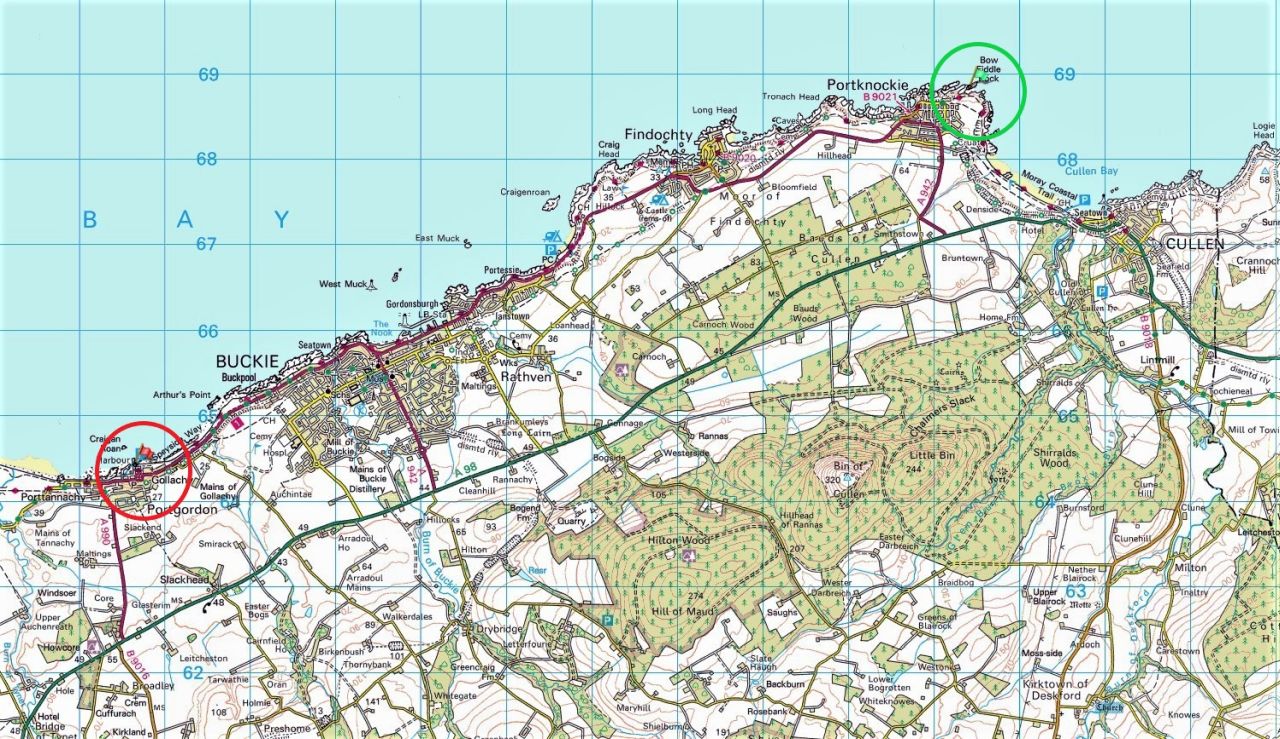
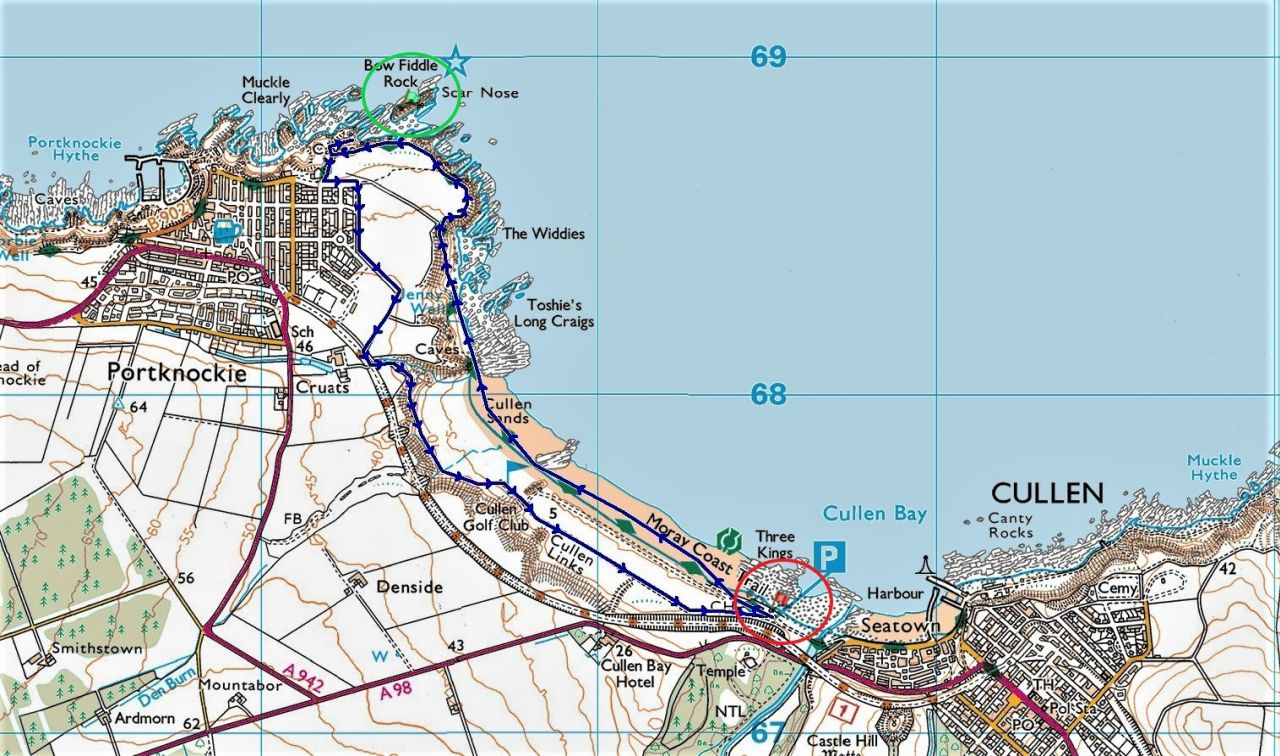
The route from Cullen (red circle) to Bow Fiddle Rock (green circle)One of the ‘Three Kings of Cullen’Two of the ‘Three Kings’Heading out from Cullen BayThe Moray Coast TrailOne of many caves along the Trail, both on land ….…. and in the sea
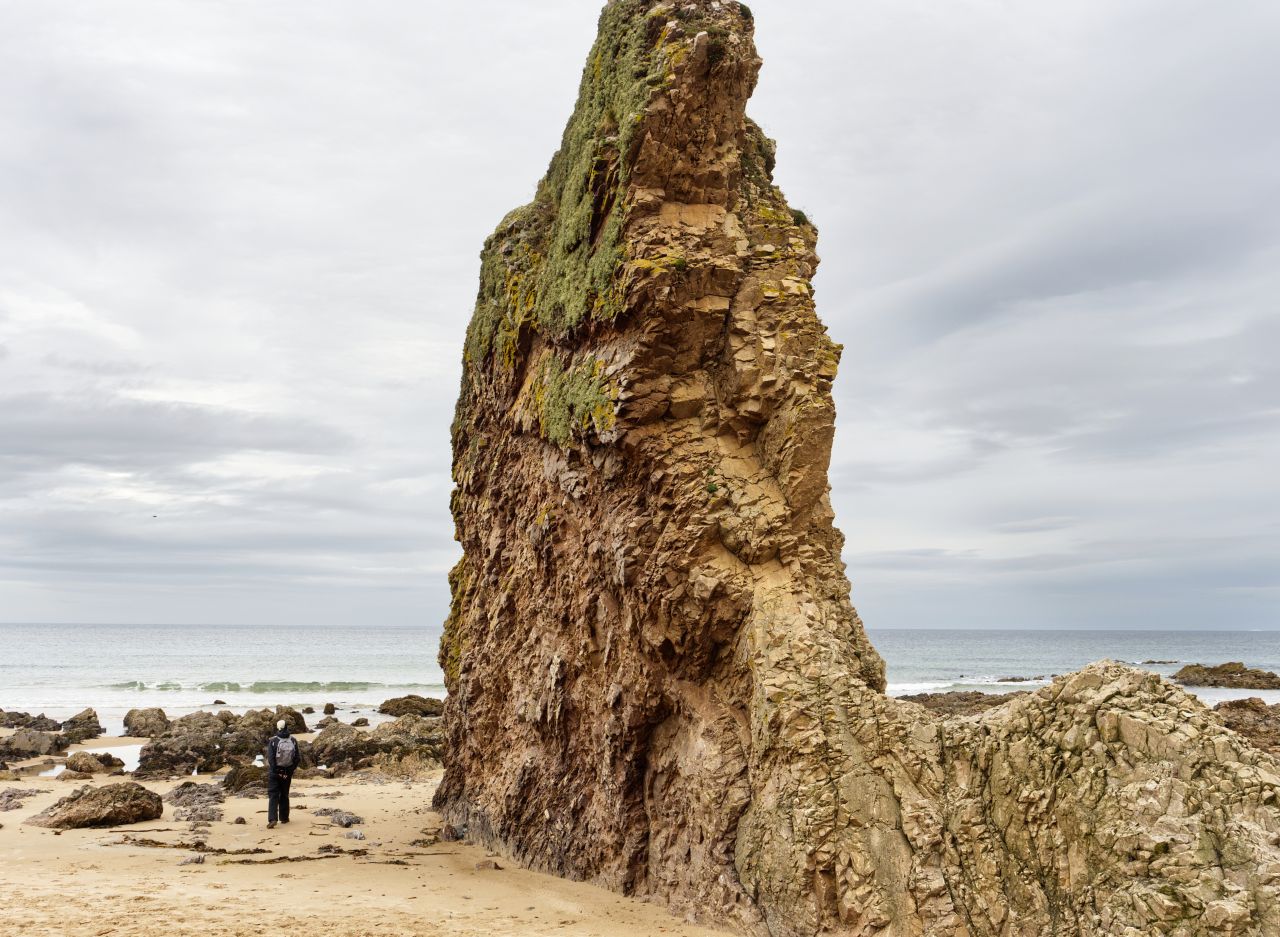
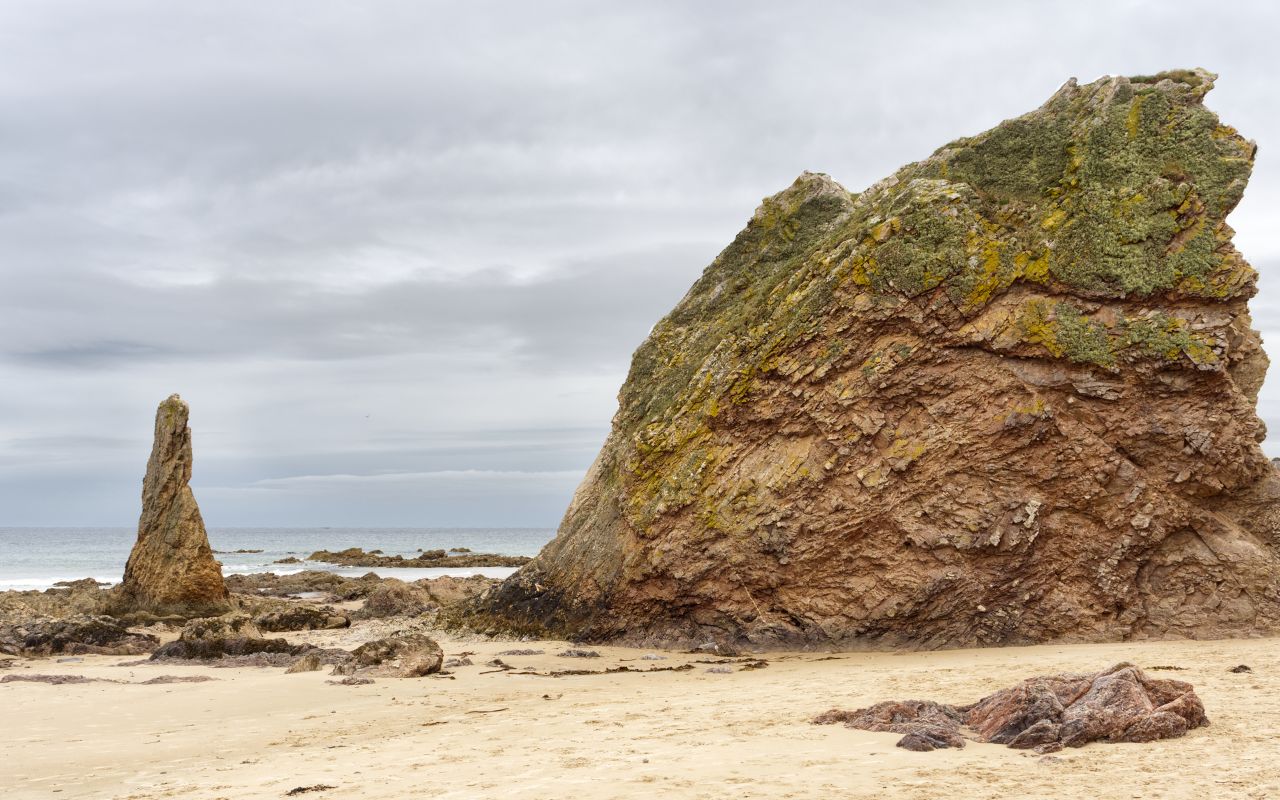
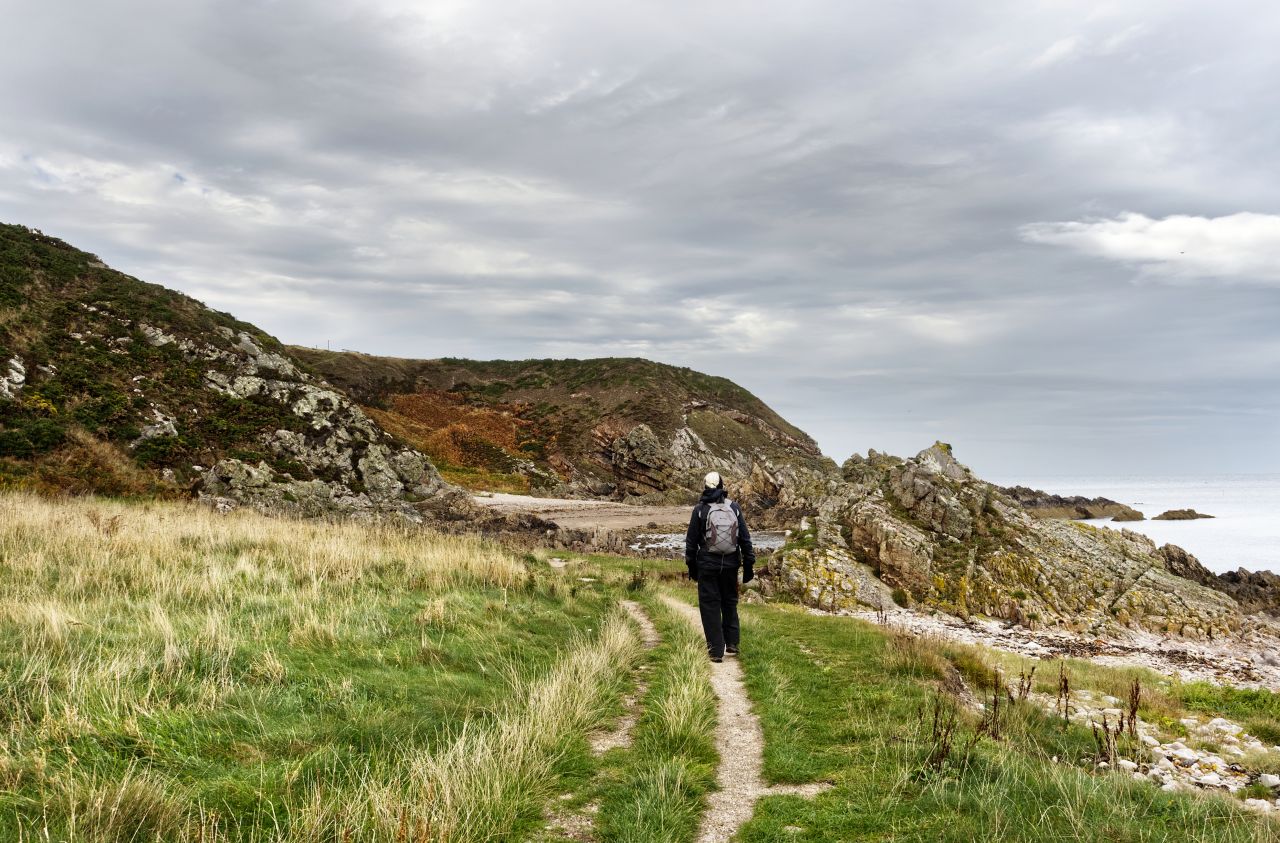
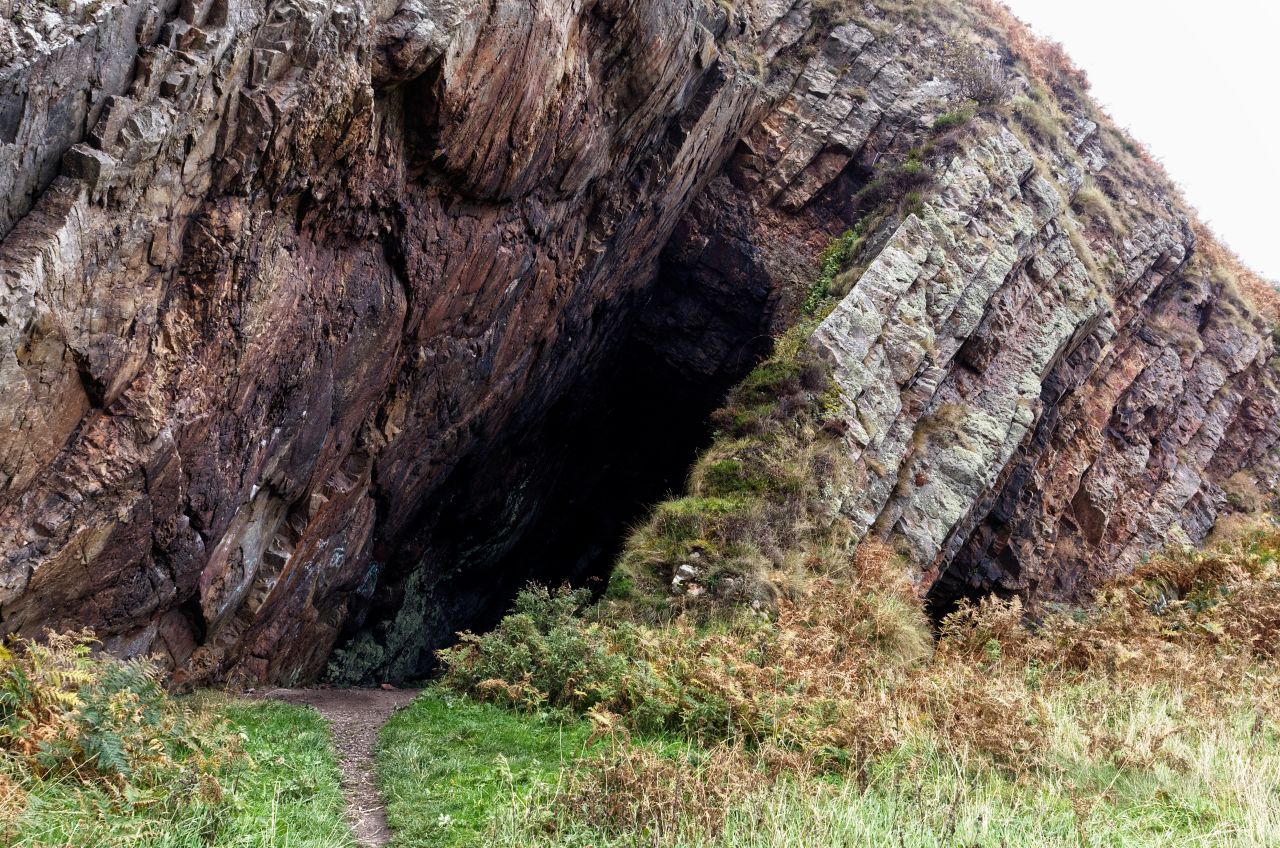
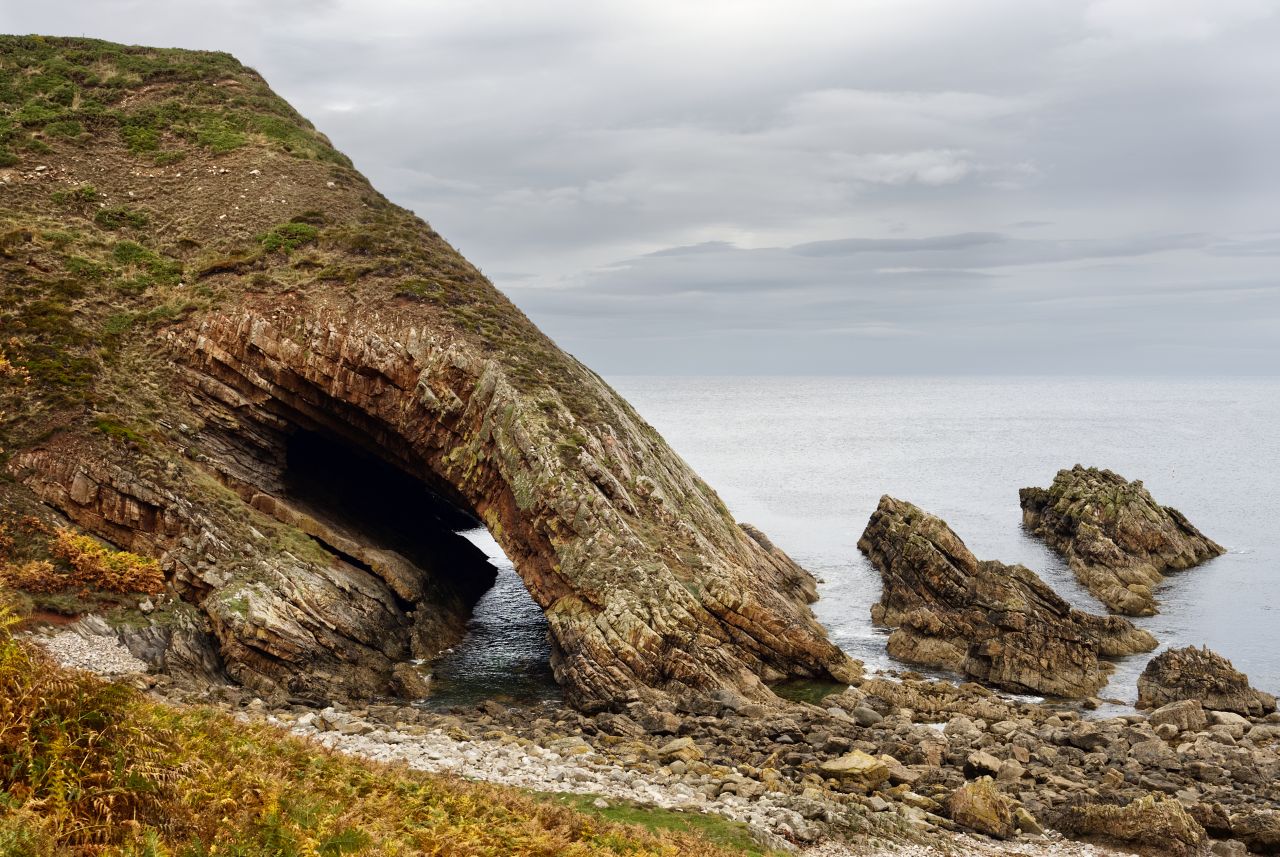
Our route started from the golf course on the edge of Cullen village, near to the rock stacks known as ‘The Three Kings’ – from there, a pleasant beach walk along the Moray Coast Trail led us across Cullen Sands, before the path narrowed as it wandered past caves, both on land and in the sea. The folding and erosion of the cliffs along the path was quite spectacular, but the natural sea arch of Bow Fiddle Rock is the real star.
First view of Bow Fiddle Rock – not immediately obvious ….…. until you turn the cornerLooking down from the cliff path ….…. and a closer view from the stony beach
I’m sure that some readers will want to know that the quartzite rock which forms the arch is between 539 and 1,000 million years old, and that the rocks were folded when the ancient continents of Laurentia and Avalonia collided roughly 400 million years ago. Since then, the rocks have become exposed and eroded by sea and weather to give us Bow Fiddle Rock as it is today. However, most of us will be happy enough just to see the amazing rock formation – it might not be a lofty peak, but it was well worth the short walk to see it.
Time to head back – Cullen village in the afternoon sunshine
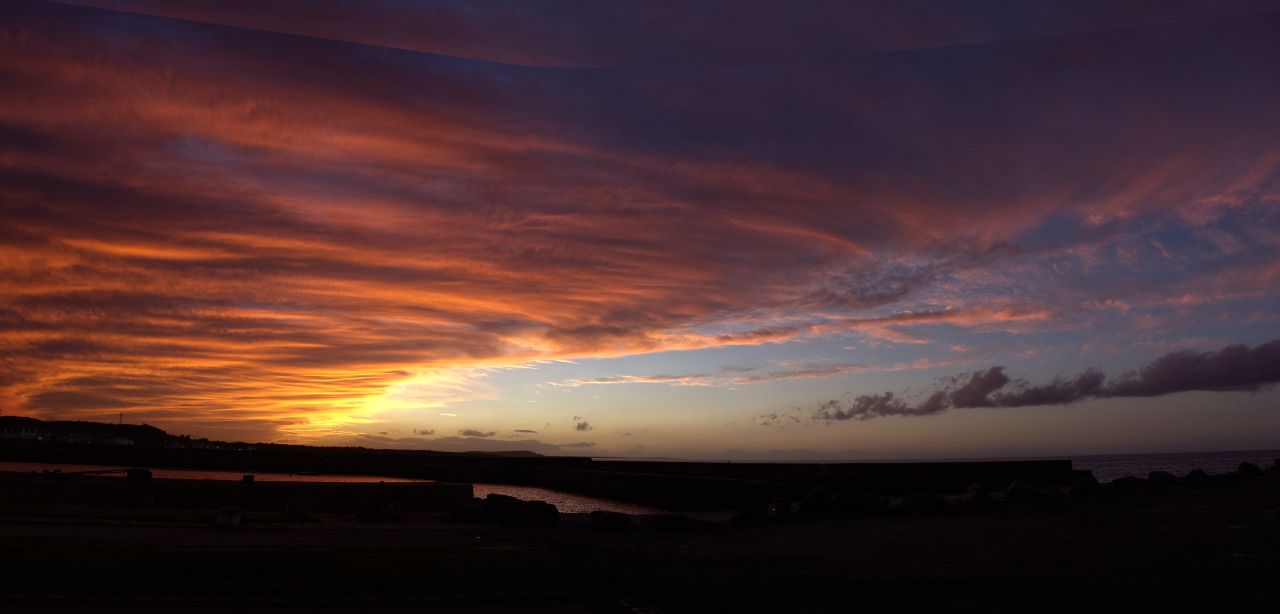
I spent some time with the camera, despite the light being a bit less than amazing – to be honest, I was thankful it wasn’t pouring down, as it had been on Ben Rinnes. We returned to sleepy Portgordon for an overnight stop and were rewarded with a memorable sunset – when it comes to weather, you sometimes have to make your own luck.
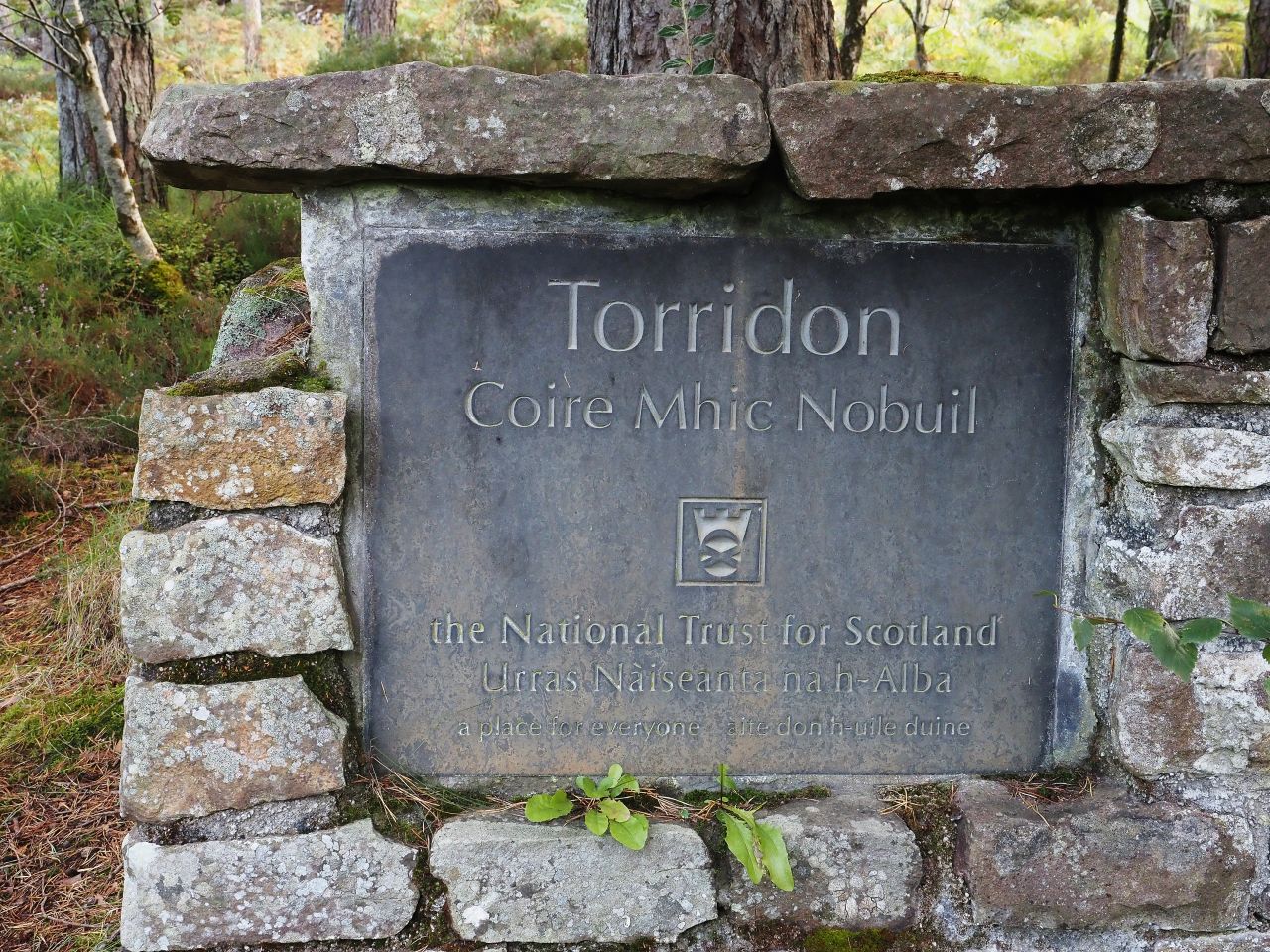
Walking through Coire Mhic Nobuil – ‘Behind Liathach’
For the best viewing experience, left-click the images and maps to zoom in to a new window, then exit that window to go back – go on, it really does work!
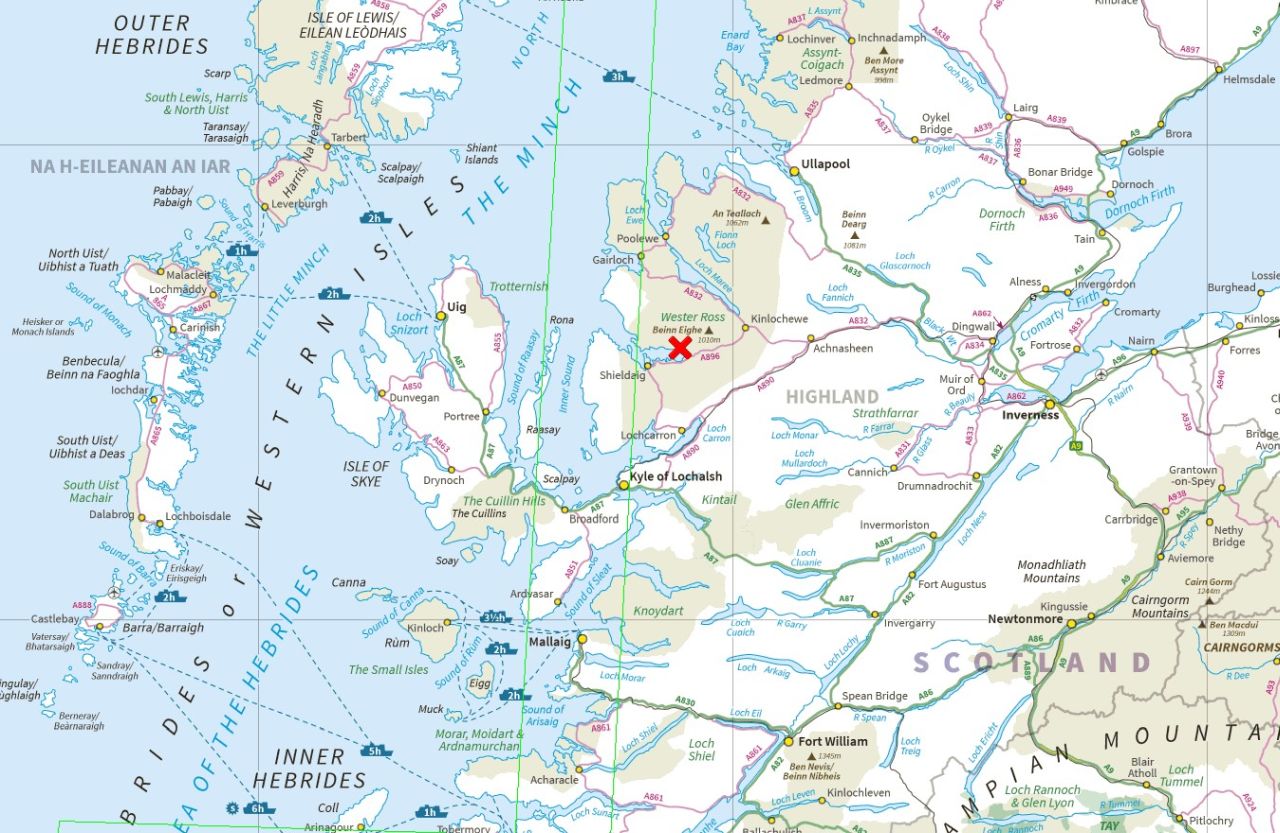
The North West Highlands of Scotland – Torridon at the red cross
Most years we end up in Torridon in Wester Ross on our Scottish trip. It’s a mountain walkers paradise, with ‘proper’ mountains that don’t take prisoners, and my usual companion for the big mountain days had been Border Collie ‘Mist’. In her final year, the high peaks were getting to be too much, even for a willing Border Collie, so I had come up with a route that would be easy enough for the dog and interesting enough for the humans.
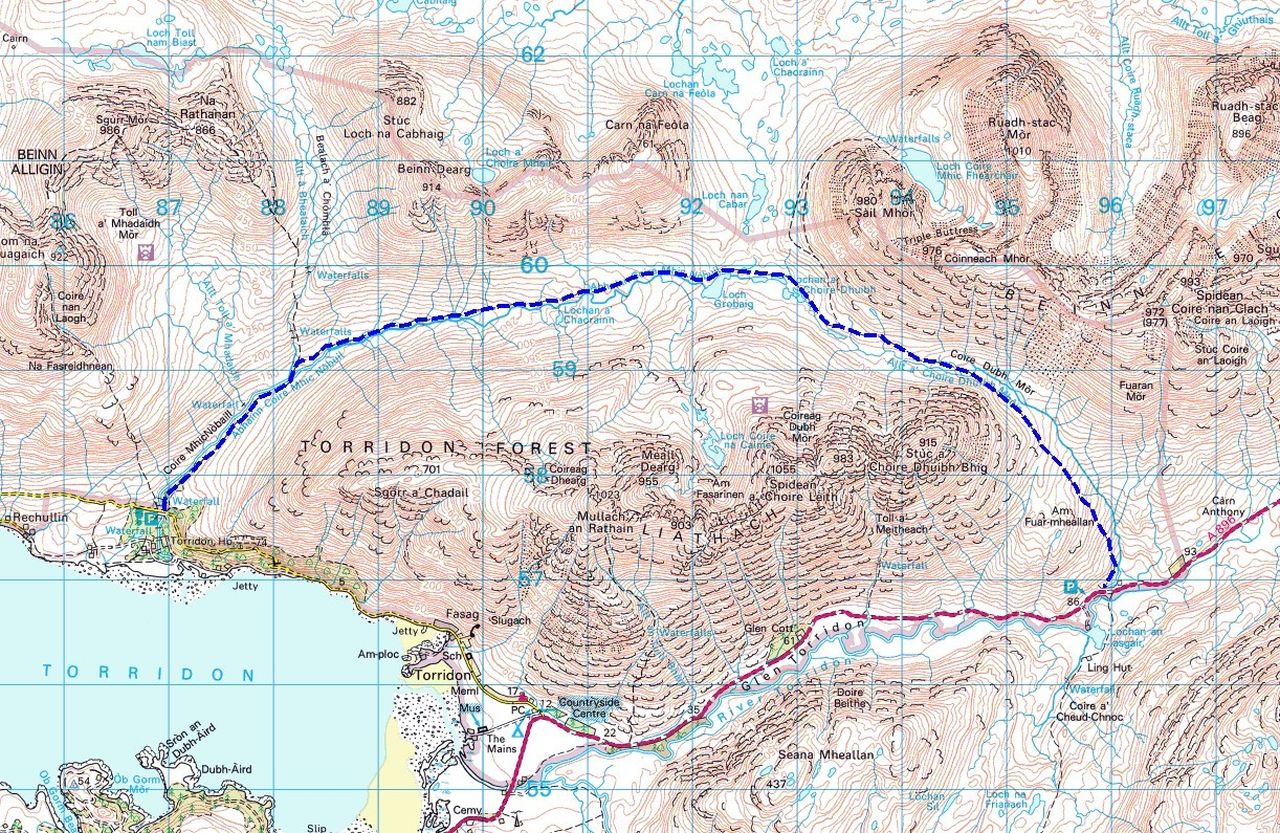
The route ‘Behind Liathach’ – from west (left) to east (right)
Over the past few years, I had come to realise that a hiking day through the mountains could be as worthwhile as one over the tops. One such trip in Torridon had been planned with the senior dog in mind – a linear route passing the northern side of Liathach, the side that the tourists don’t see, linking Coire Mhic Nobuil to Coire Dubh Mor. In other words, it was ‘Behind Liathach’. ‘Mist’ passed away in June 2022, so our trip in the following September was our first one without a dog in years. The ‘Behind Liathach’ route was still waiting to be done though.
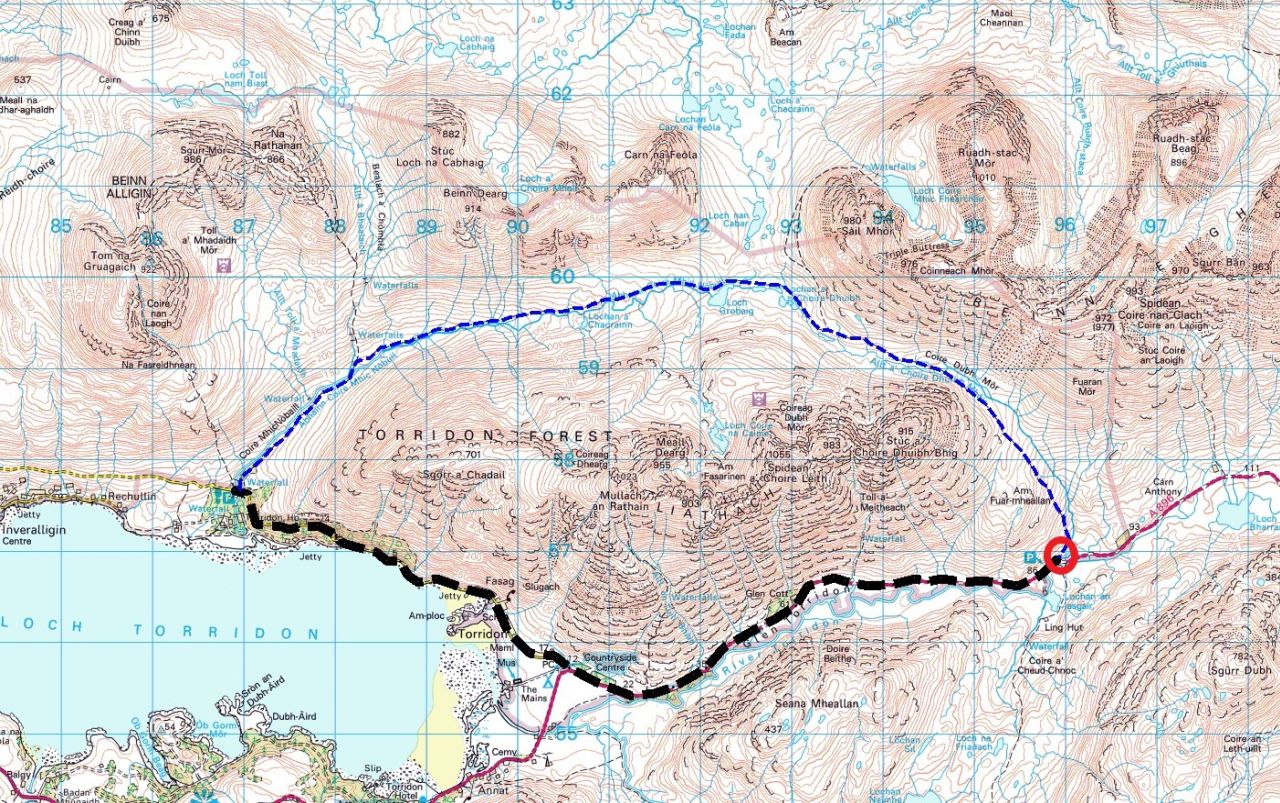
The route – Start/finish at the red circle, taxi route out in black, the walk back in blue
Being a linear route, there was one small problem of logistics to sort out – the interesting bit through the mountains was almost 12kms (7½ miles) but 10.5kms of road lay between the start and finish points. The answer was simple – get a taxi to the start point (we had done this in 2018 on a 18km walk between the Skye Cuillins and Blabheinn – see post #248). A phone call put us in touch with Donald, who as well as sorting out the taxi, gave us the inside story on Callum the stag.
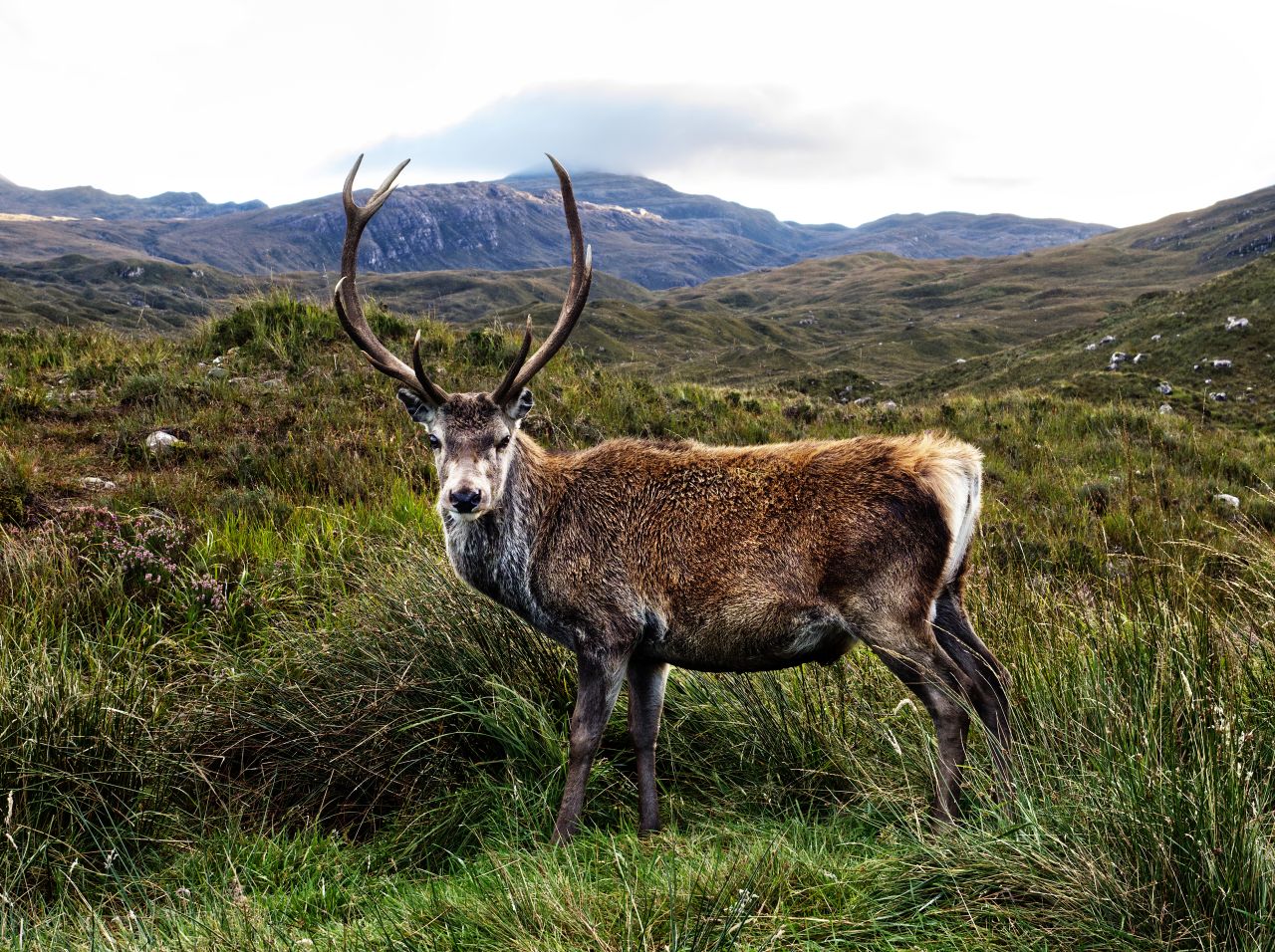
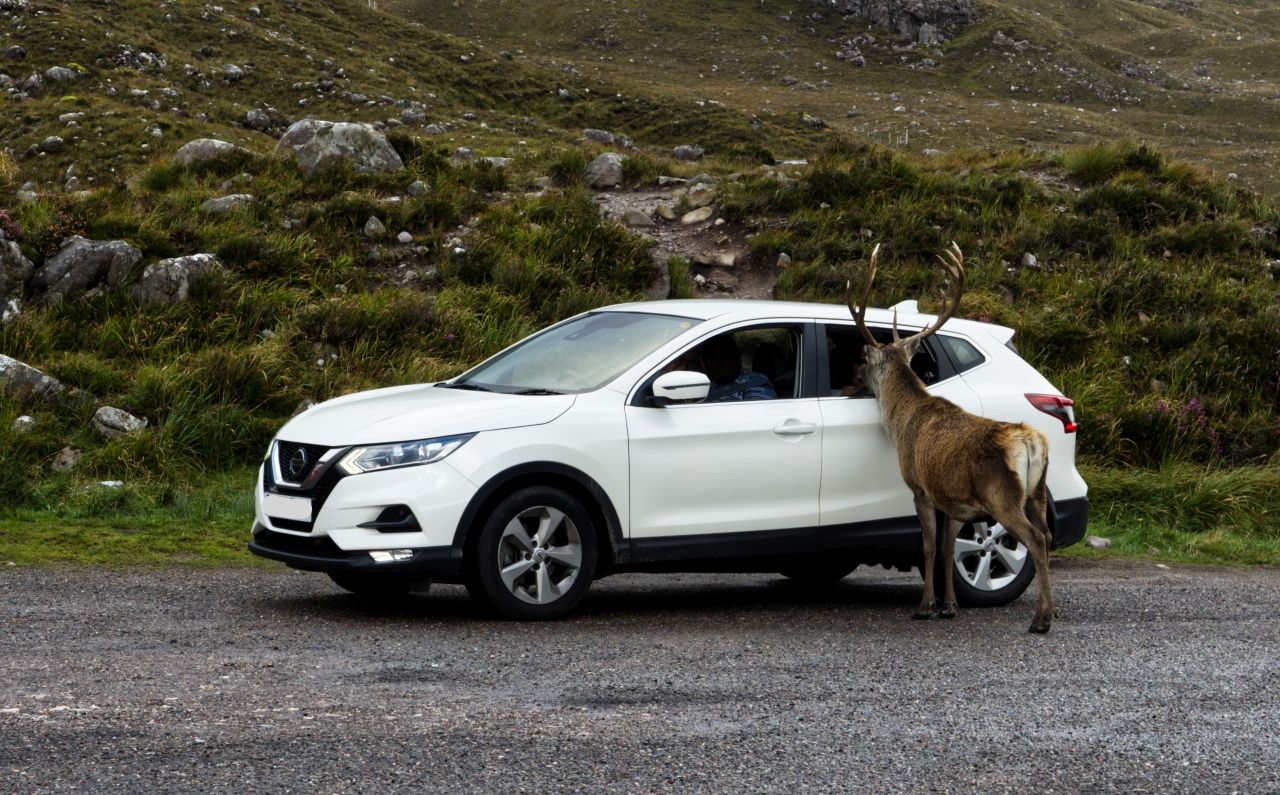
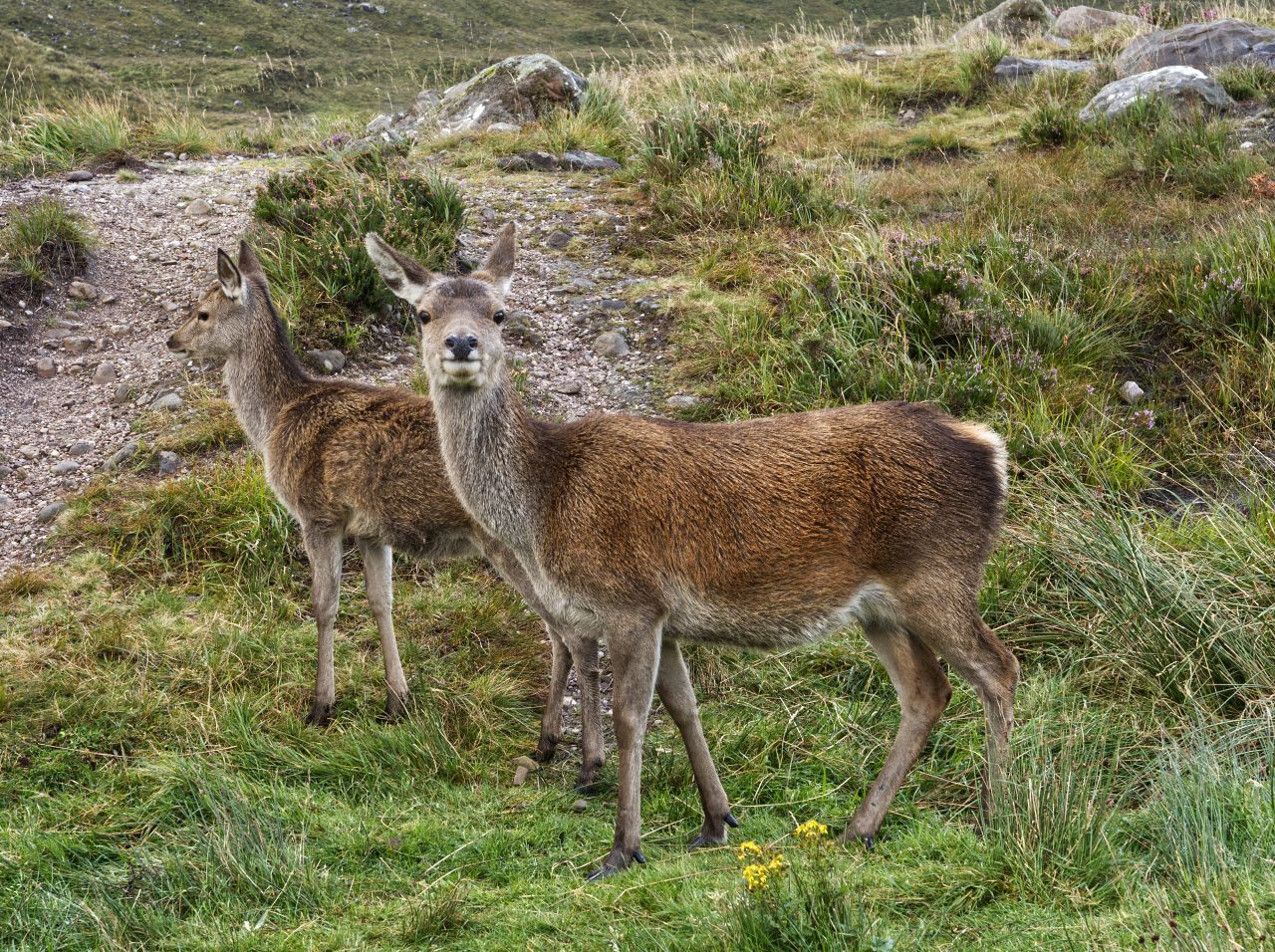
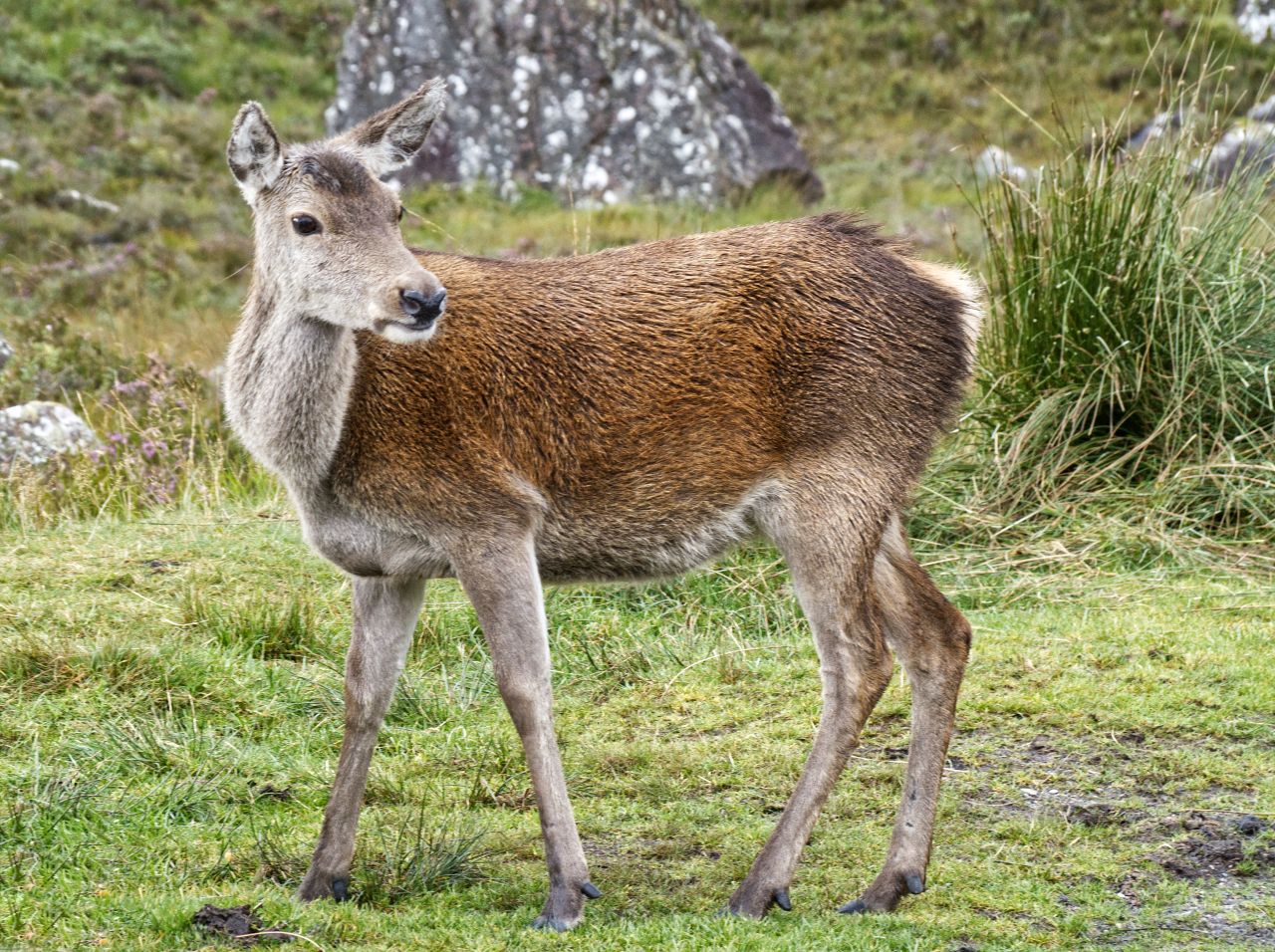
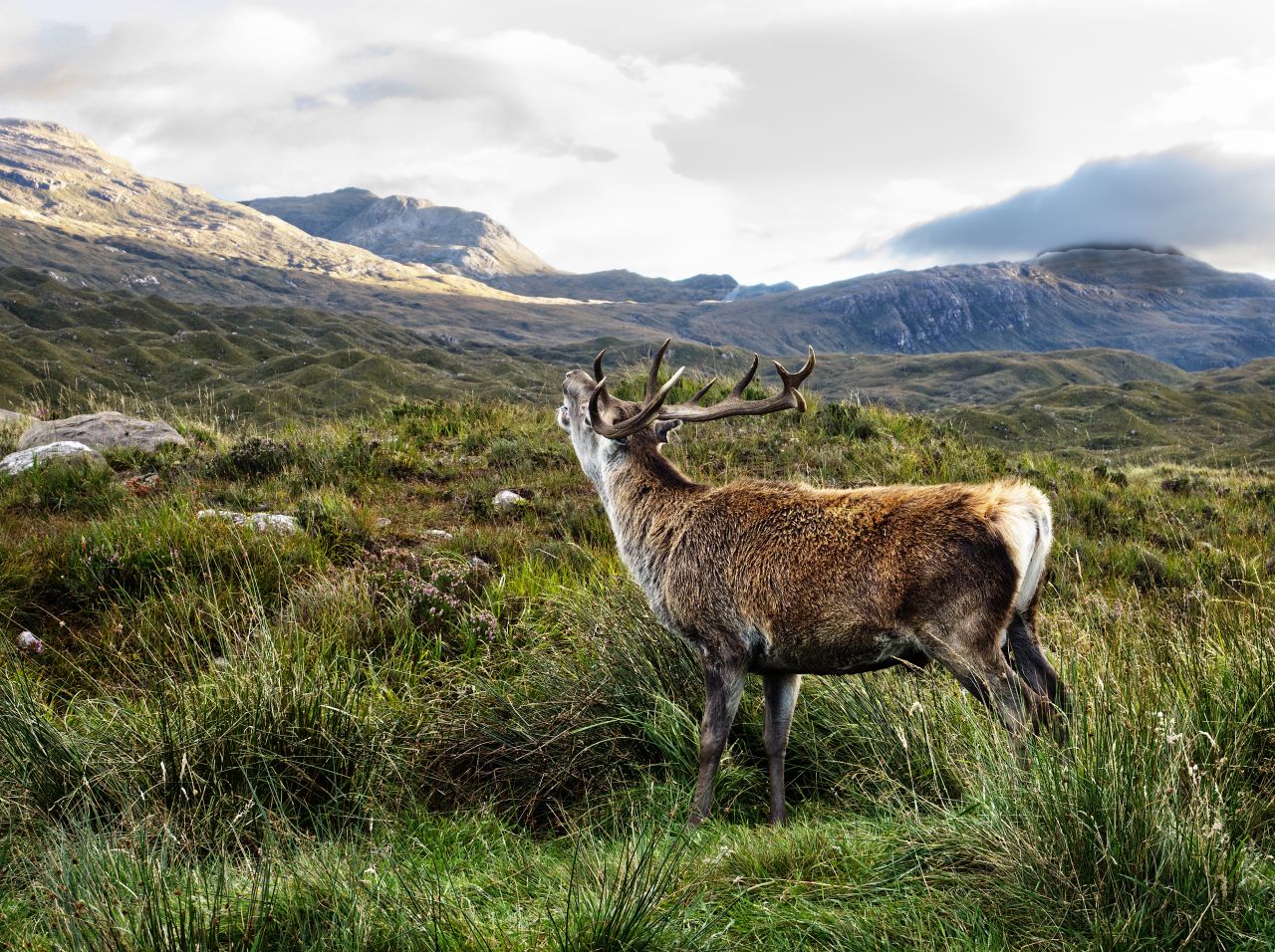
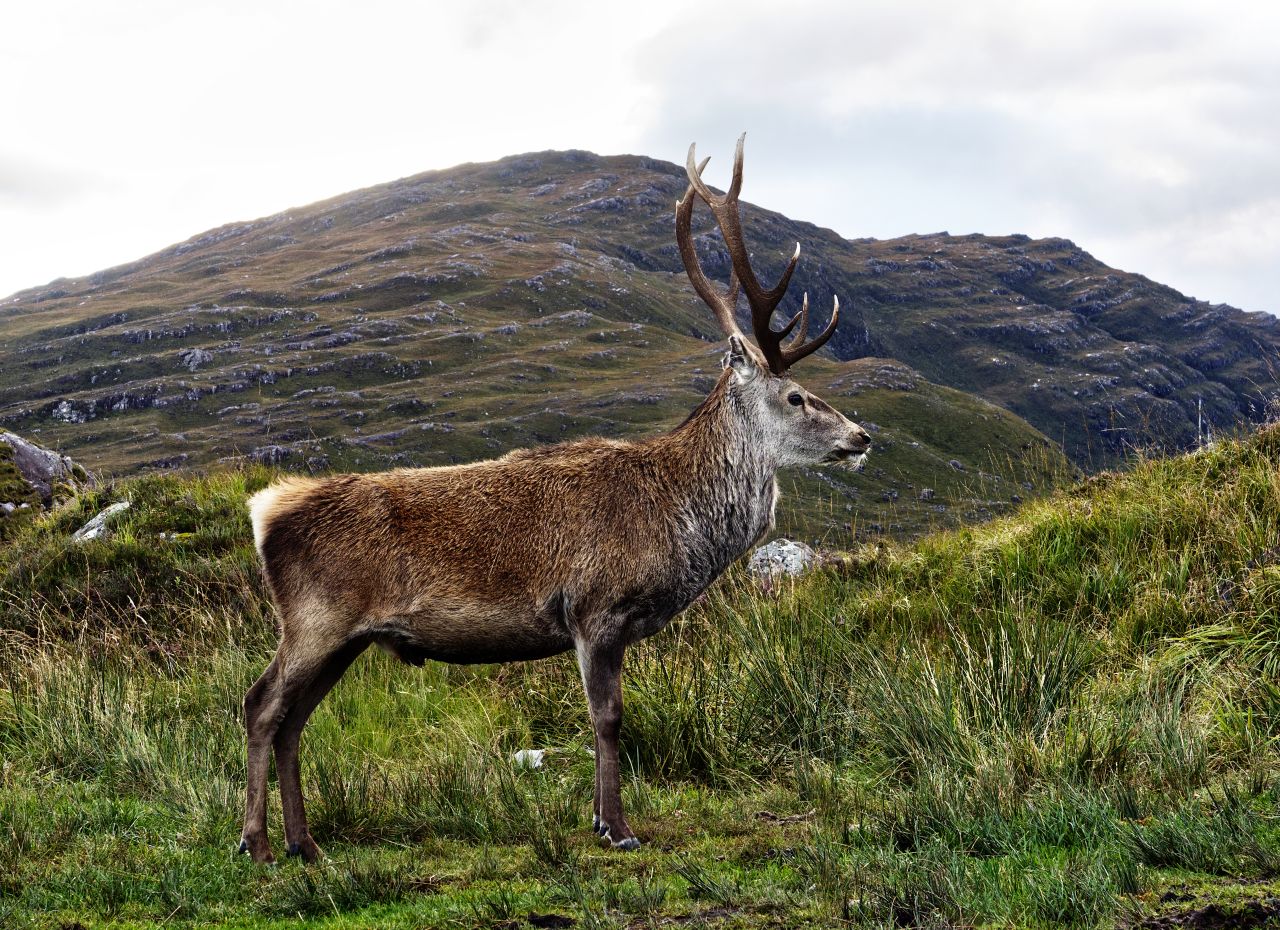
Local Torridon resident and Facebook celebrity, Callum the stagWildlife meets modern human – which one is the dumb creature!
Callum had turned up in Torridon about six years earlier, in a poor state of health. Several locals had started taking buckets of vegetables out to the semi-emaciated stag, and he had bounced back to health. Before long, he had become a local attraction, and tourists were using Facebook to find out where they could see Callum. Sadly, the rescue mission by the locals has become a bit of a circus, with people forgetting that they are dealing with a wild animal, not a Disney character. It’s amazing that no one has been injured – yet!
Meet the family – the missus and babyCloser view of the calfThe rutting call – almost as old as the hills
In the meantime, Callum now has a Mrs Calum and Baby Callum (and yes, the name can be used for females as well as males). We were in Torridon at the end of September, marking the start of the rutting (mating) season. Although Callum is a bit of an ‘old boy’ now, hundreds of years of evolution tell him it’s time to find more females for his harem, and we were frequently treated to Callum’s rutting bellow, though I’m not sure treated is the correct word – if you can imagine what a noisy chainsaw sounds like, you are on the right track.
Our start point and the start of Coire Mhic Nobuil ….…. Setting out through shadowy woods ….…. before bursting into the light, with the hills of Beinn Alligin aboveHeading out up Coire Mhic Nobuil….…. with Beinn Dearg ahead
So, on our taxi ride to our start point at the start of Coire Mhic Nobuil, we were given a history of Callum and family, along with other fascinating local stuff – taxi drivers are brilliant at that sort of thing. Once at our destination, we were soon ready to start our wee trek. One nice thing about being taxied to a start point is that there is a sense of commitment – our camper was about 12kms away along mountain tracks, so if we wanted to eat that night, we would have to get moving!
Bridge over the Abhainn (River) Coire Mhic NobuilThe hills of Beinn Alligin, seen from near the footbridgeBeinn Dearg getting closer (left) with a distant view of Beinn Eighe (right)Now Beinn Eighe (ahead) getting closer, and Liathach peeping out on the right
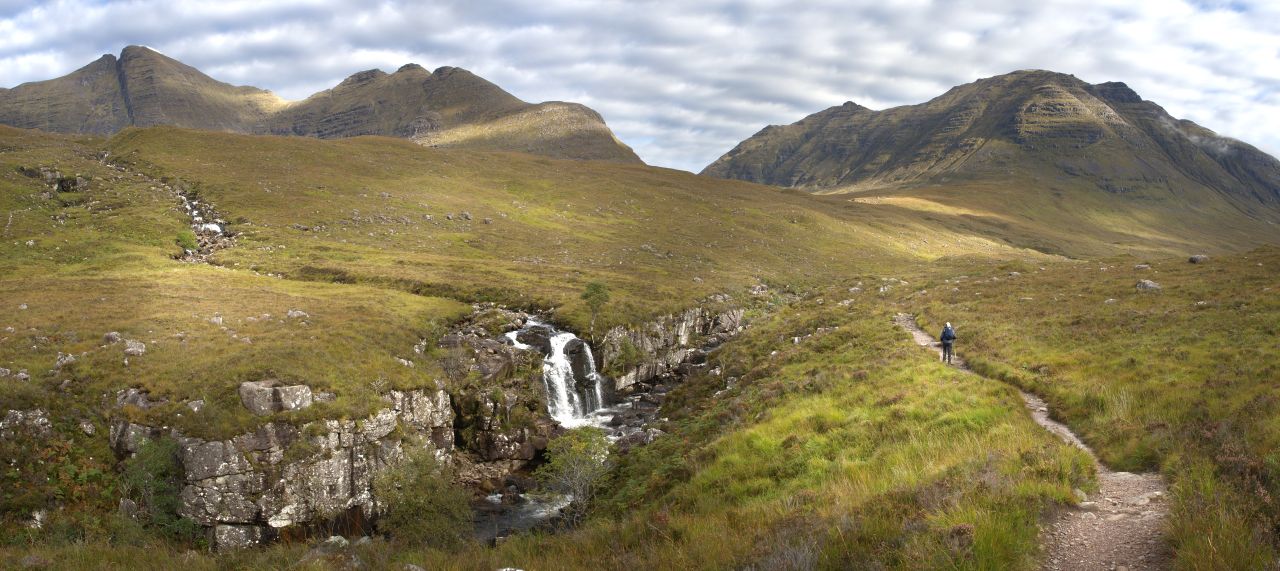
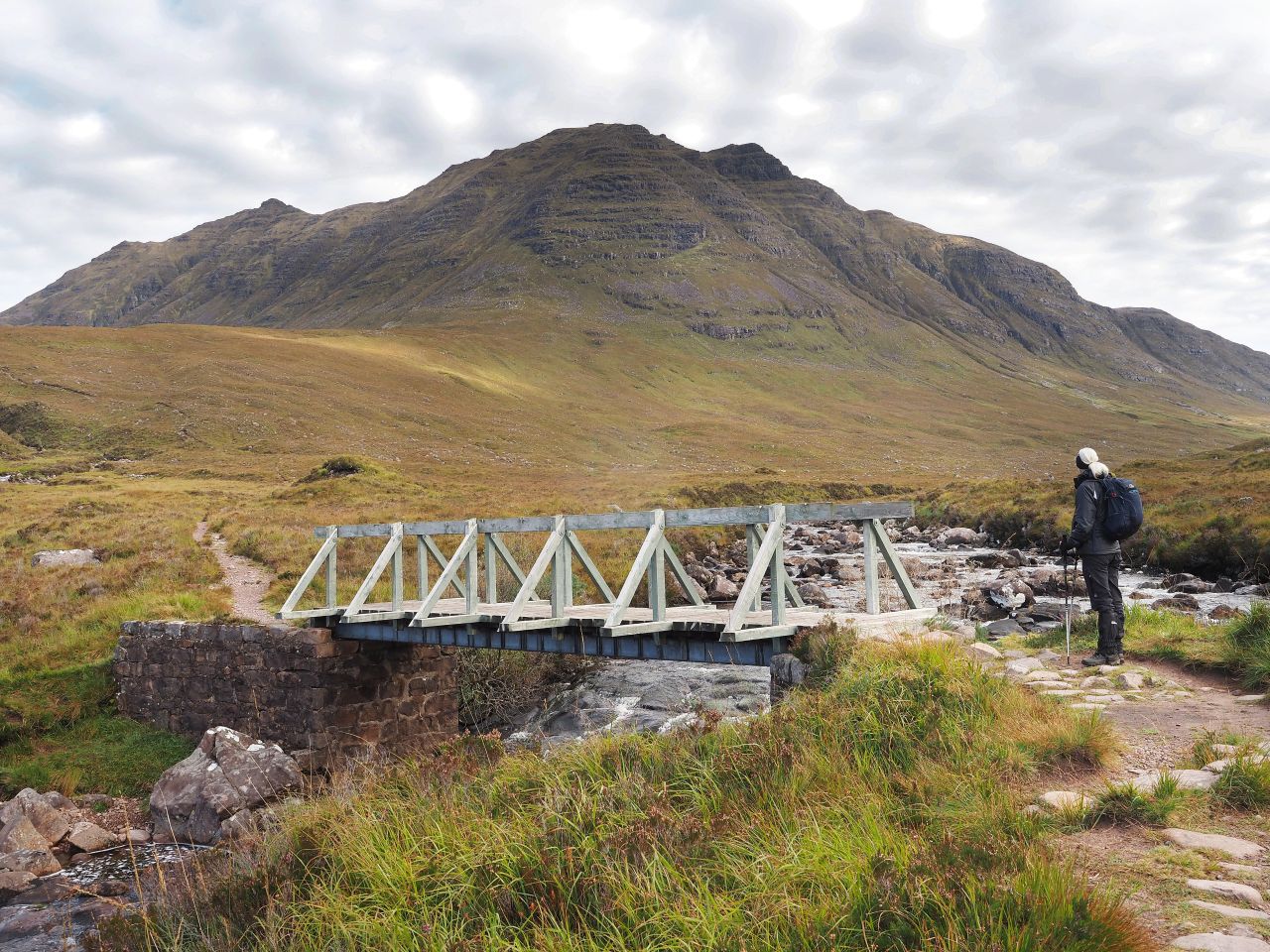
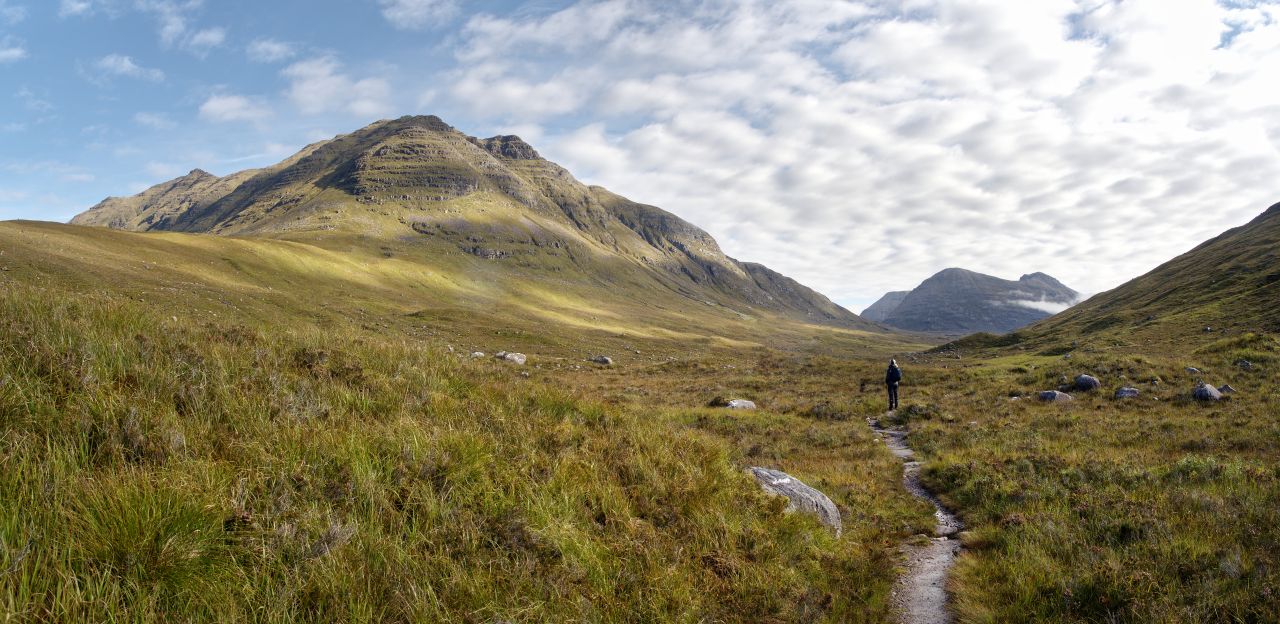
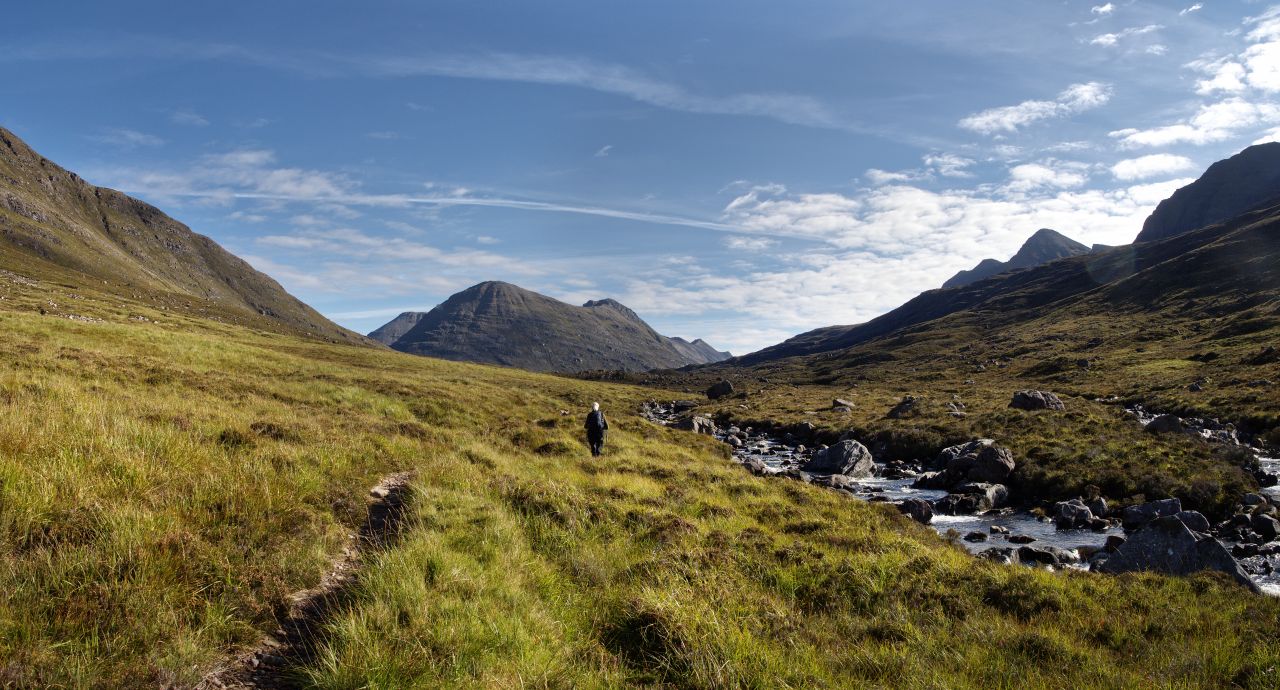
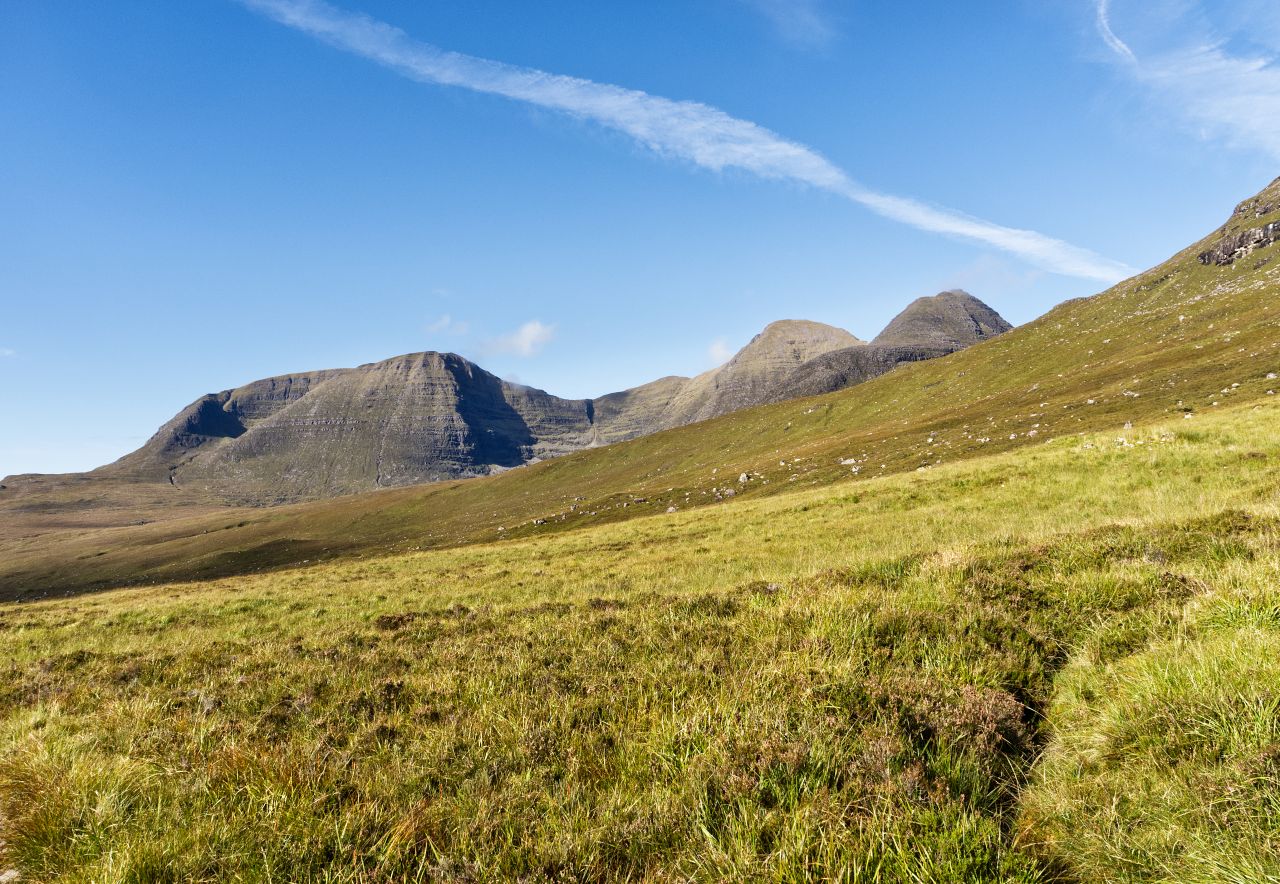
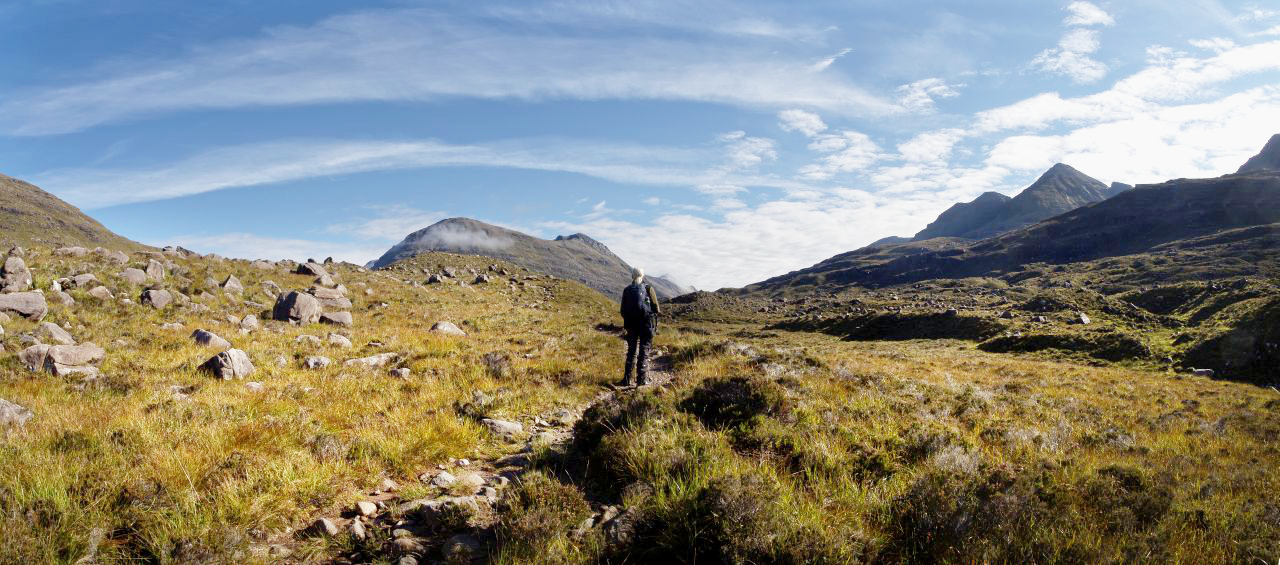
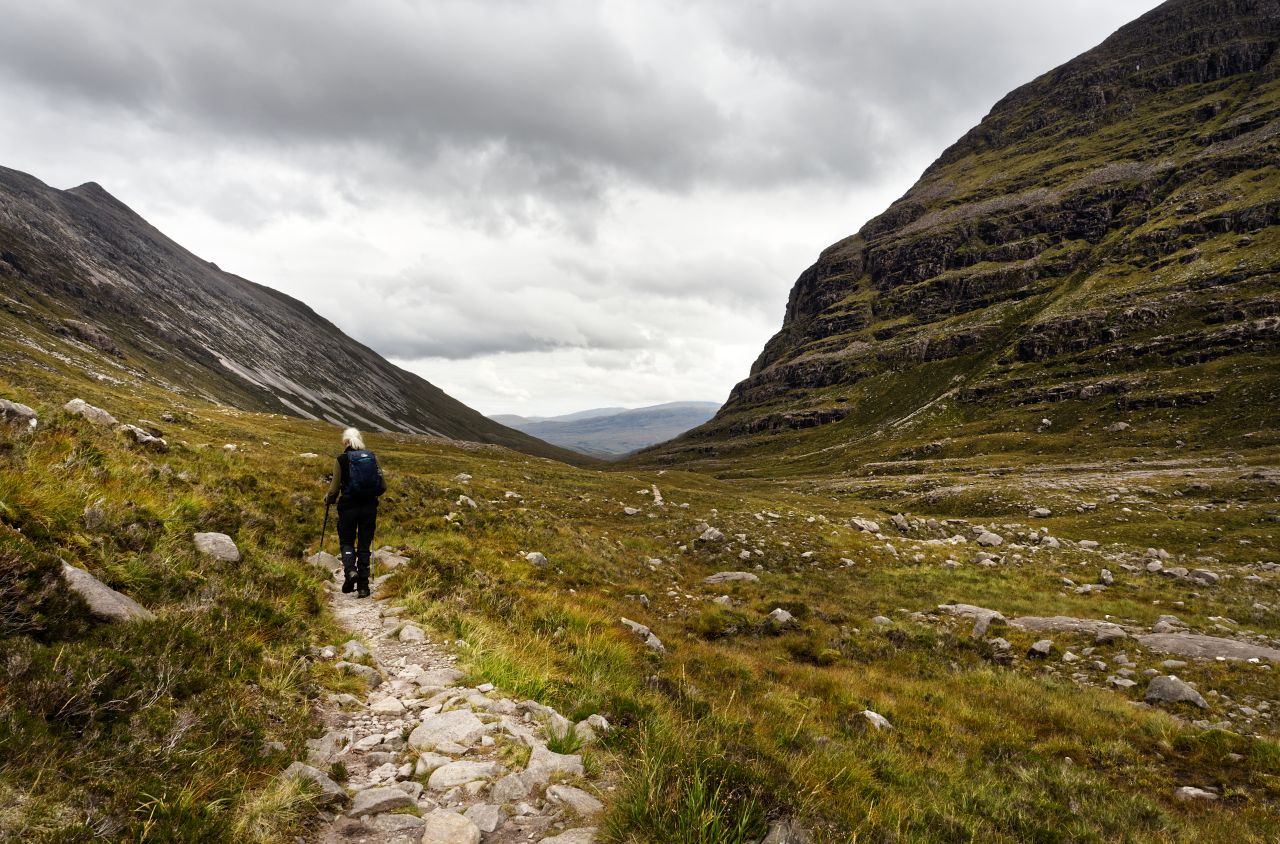
As it was, we had great weather for the trip, and good light for photographs. The path rising through Coire Mhic Nobuil was a typical stalkers path taking the most efficient route through the hills. The main attraction early on was the bunch of hills known collectively as Beinn Alligin – once past Alligin, we traversed below Beinn Dearg and eventually an old friend in the form of Beinn Eighe came into view (see posts #230 and #246).
A final view back to Beinn Alligin ….….with Beinn Eighe ahead getting ever closerThe Am Fasarinan Pinnacles on the Liathach ridge, on the south side of our routeThe lump of Sail Mhor (Beinn Eighe) looming ahead
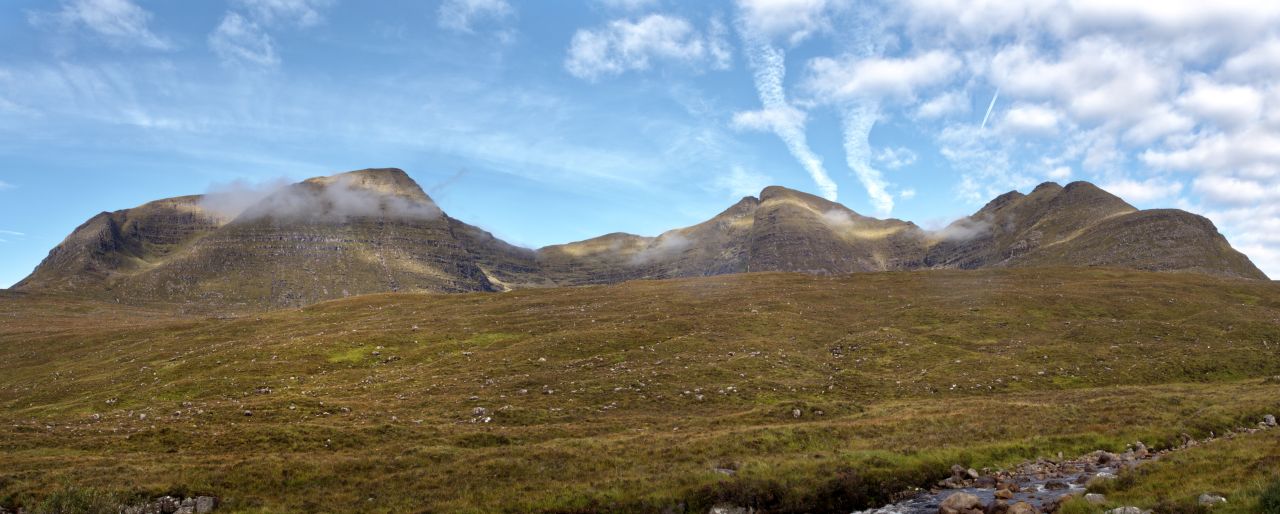
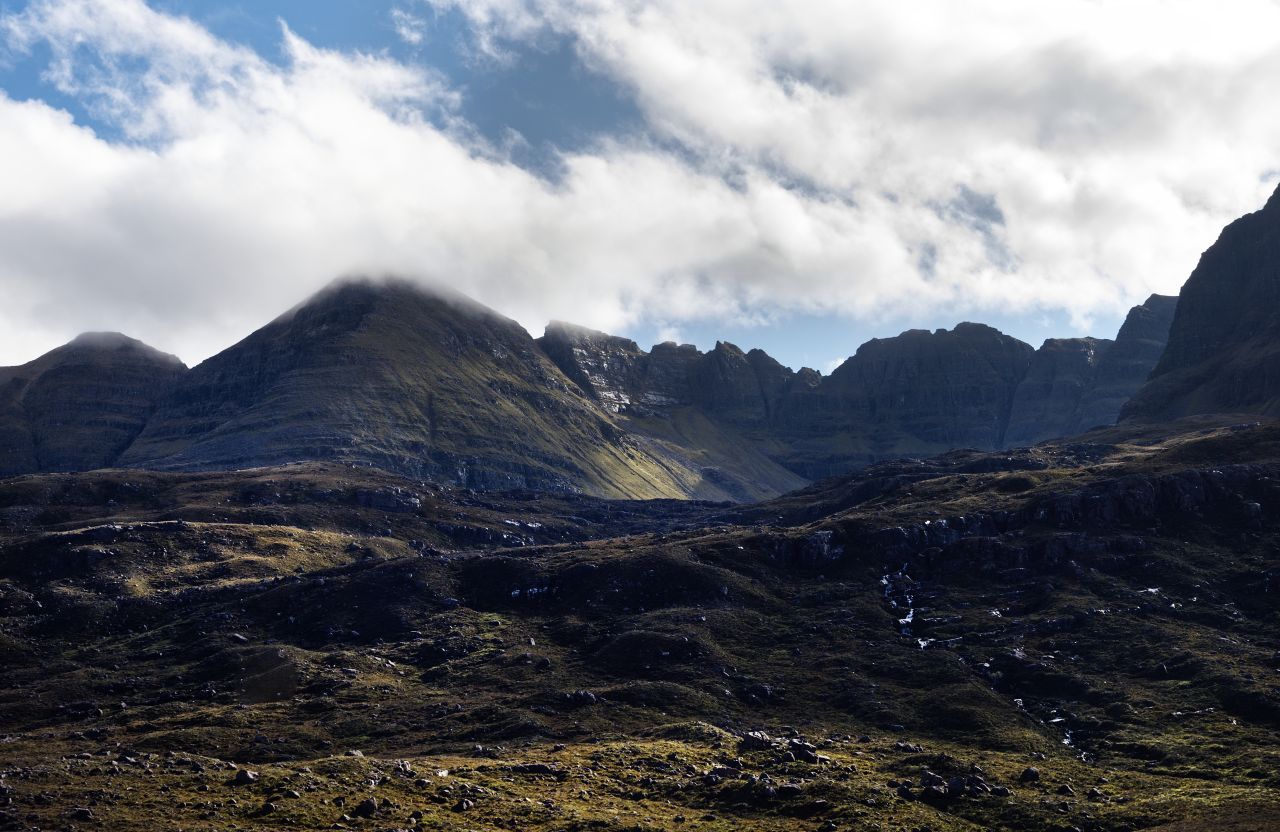
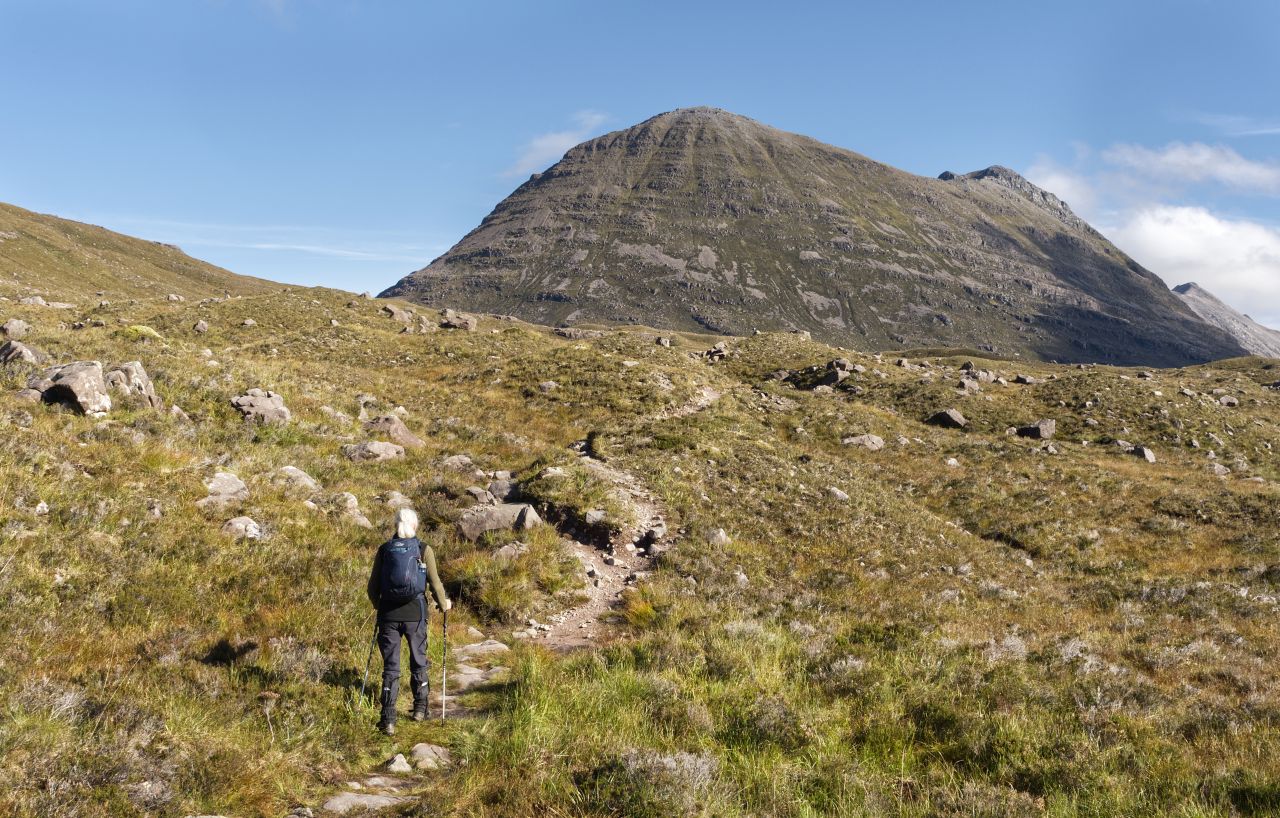
OK, so this wasn’t exactly a ‘thrill seeking’ kind of a day – what we did get for our efforts was a pleasant wander through some of the most dramatic mountain scenery in the UK. And what’s more, we didn’t see a soul! With Beinn Alligin and Beinn Dearg behind us, the path entered a bealach (pass) with Liathach and its pinnacles on one side and the huge bulk of Sail Mor marking the start of the Beinn Eighe hills.
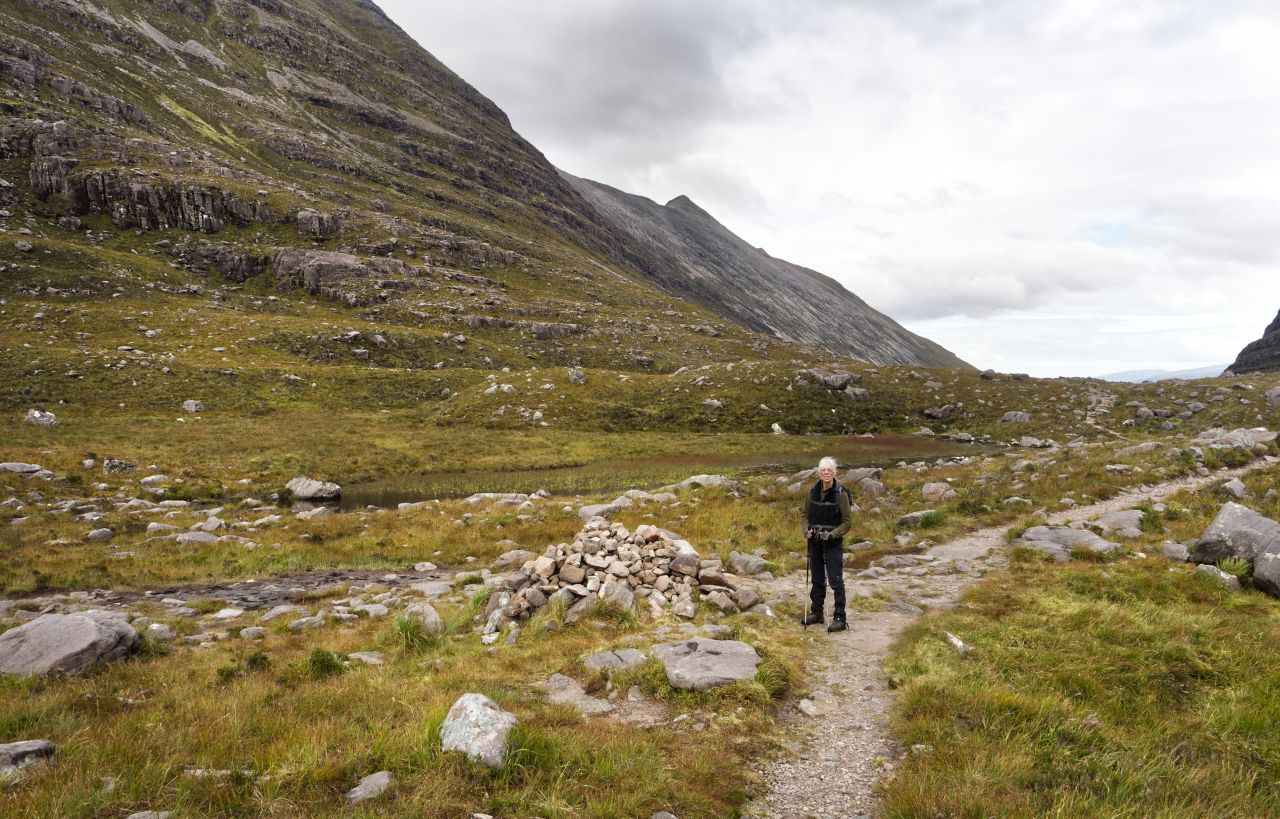
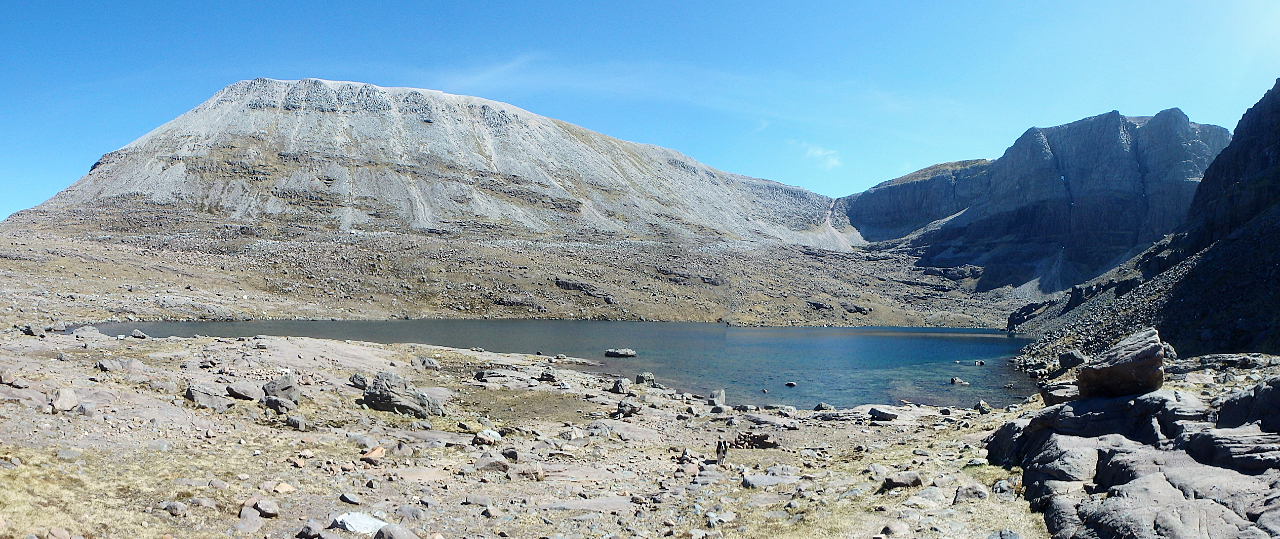
The cairn marking the fork in the path leading to Coire Mhic FhearchairThe wild lonely corrie of Coire Mhic Fhearchair, seen in 2017
Soon after we started the descent of Coire Dubh Mor, we passed the cairn marking the path out to Coire Mhic Fhearchair, a magnificent lonely corrie that we have visited before and will almost certainly visit again (see post #227). That wasn’t the plan for this trip though – the steady familiar descent of Coire Dubh Mor soon brought us back to the camper and our noisy neighbour, Callum.
For us, it’s time to head for home ….…. and our noisy neighbour
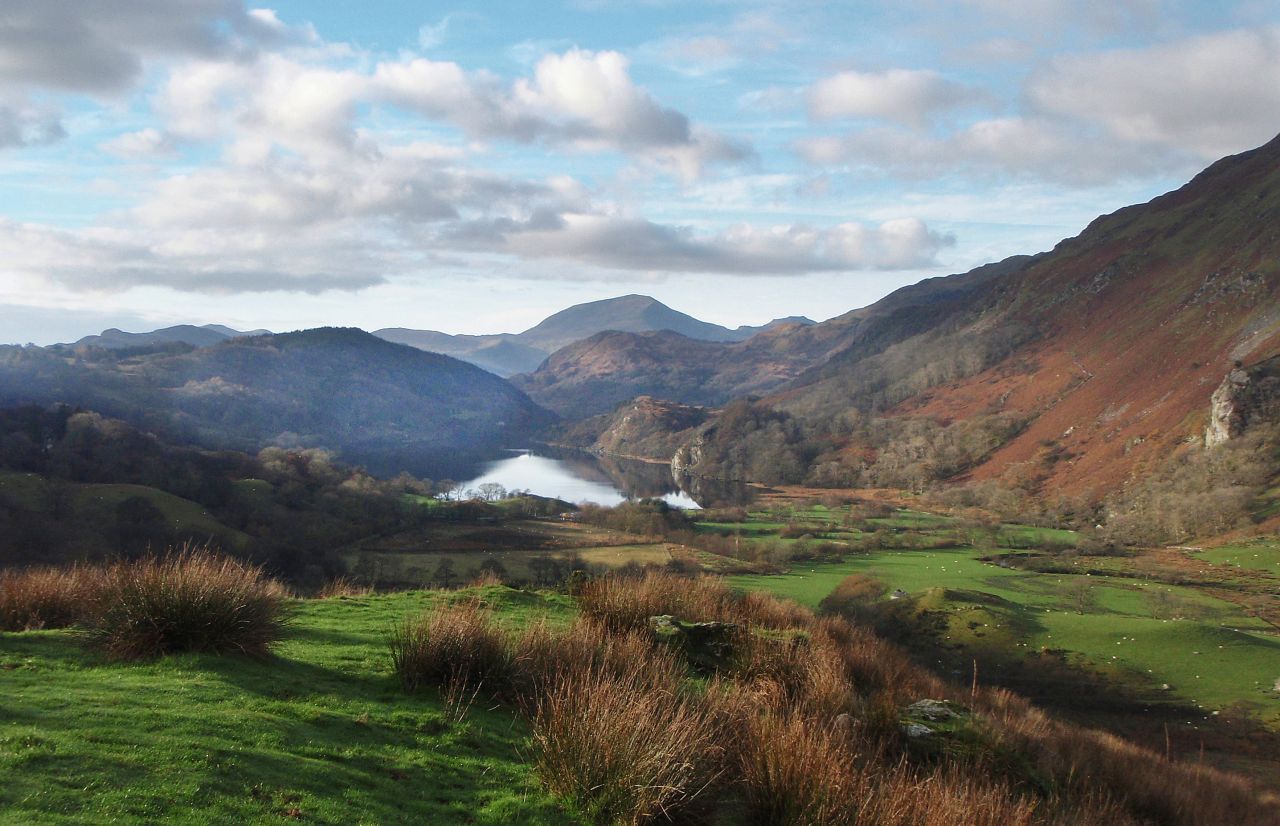
Looking southwest over Llyn Gwynant, with Moel Hebog rising in the distance
For the best viewing experience, left-click the images and maps to zoom in to a new window, then exit that window to go back – go on, it really does work!
The Snowdonia National Park, now more correctly referred to as Parc Cenedlaethol Eryri, recently made the decision to use the Welsh names for Snowdon (Yr Wyddfa) and Snowdonia (Eryri) instead of the English forms. About time too – I’ve been ahead of the game in using the Welsh (or should I say Cymraeg) name for the mountains for some time now, after all we don’t call Mont Blanc ‘the White Mountain’, do we? Australia’s ‘Ayers Rock’ is now Uluru, ‘Mount McKinley’ in Alaska is now Denali, so it’s been long overdue to give Yr Wyddfa its proper name.
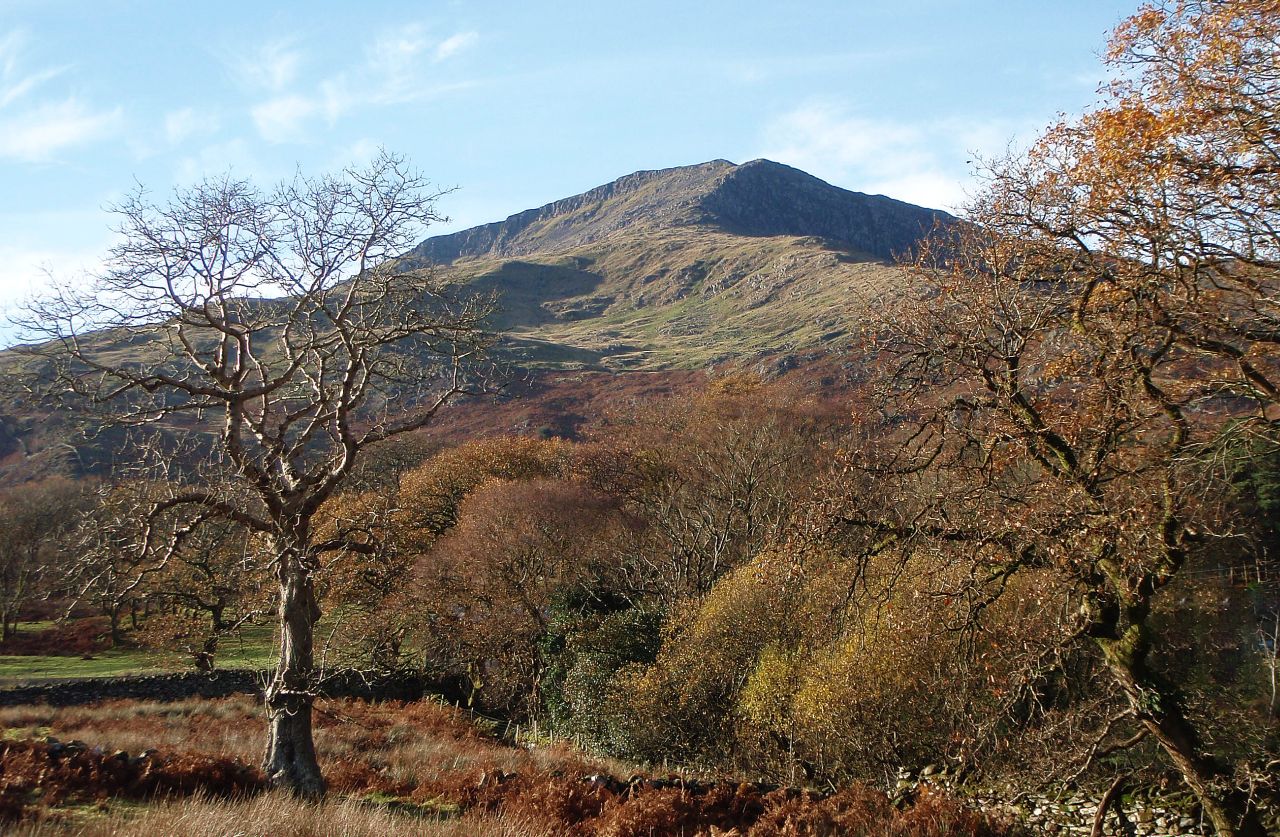
Closer view of Moel Hebog, seen from just outside Beddgelert
Some of the Cymraeg names of the mountain ranges of Eryri are easy enough to recognise for us English speakers, such as Carneddau for Carnedds, Glyderau for the Glyders and Moelwynion for the Moelwyns, and personally I think that they sound more interesting and romantic when the Welsh name is used, but one mountain range that might have English speaking hikers scratching their heads over is Eifionydd.
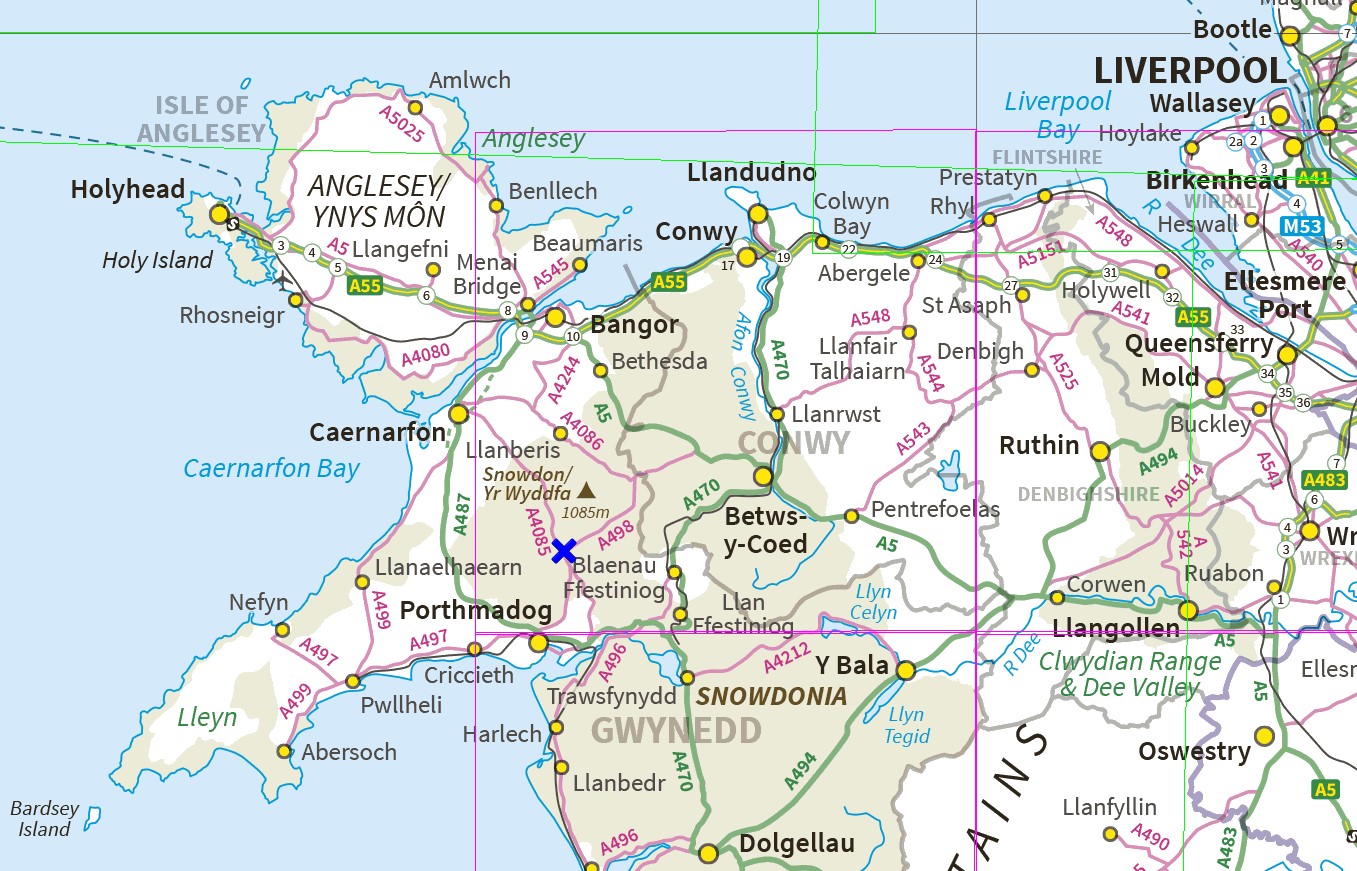
North Wales, with the walk start point at the blue cross
The main problem for English speakers is often in the pronunciation of the Welsh language, but once you know a few basic rules, Cymraeg is far more predictable than Scots Gaelic, for example. So, try saying Eifionydd as ‘Eye-vi-on-ith’ – not perfect phonetically, but a Welsh speaker would recognise what you were saying. The range lies to the west of Beddgelert, Rhyd Ddu and Tremadog and the main highlight for many is Moel Hebog (‘Bare Hill of the Hawk’) above Beddgelert.
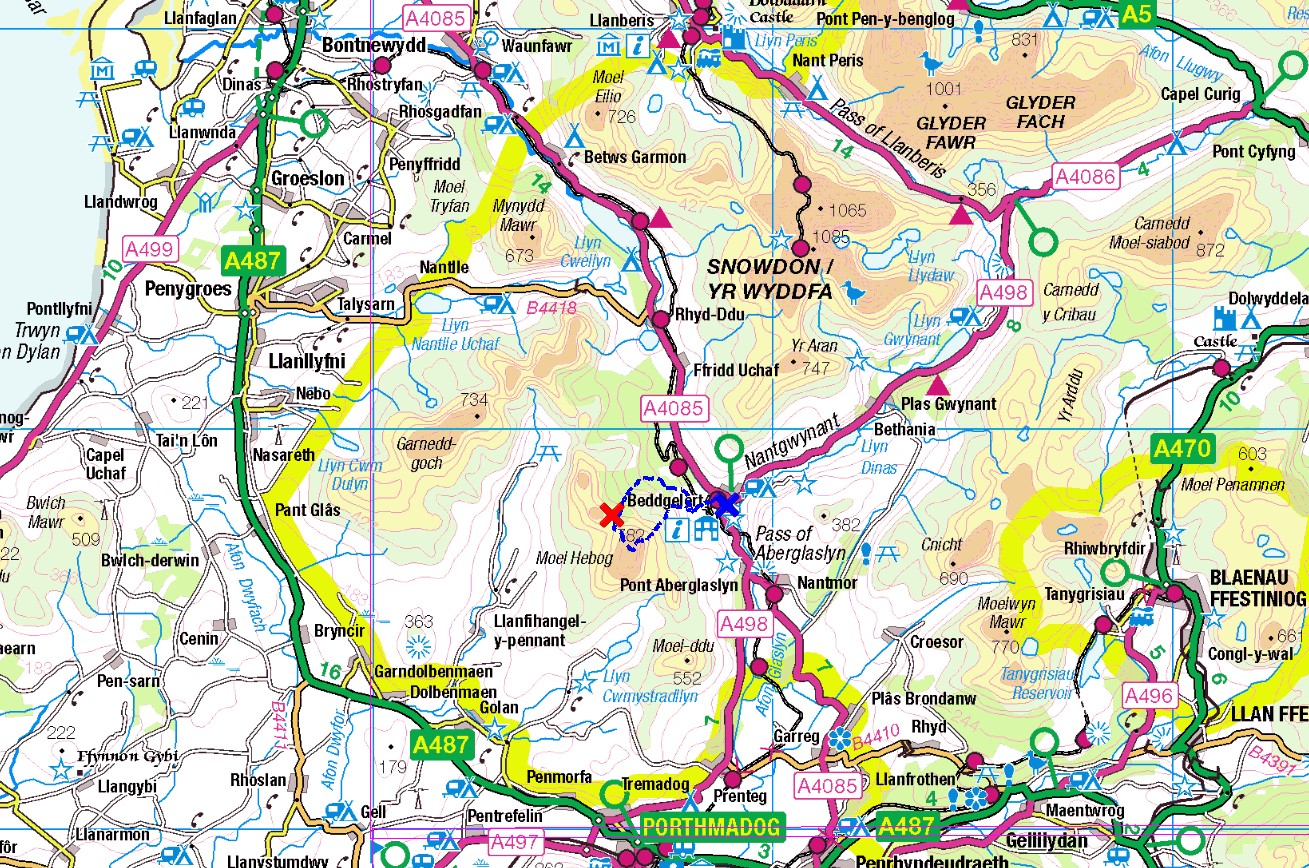
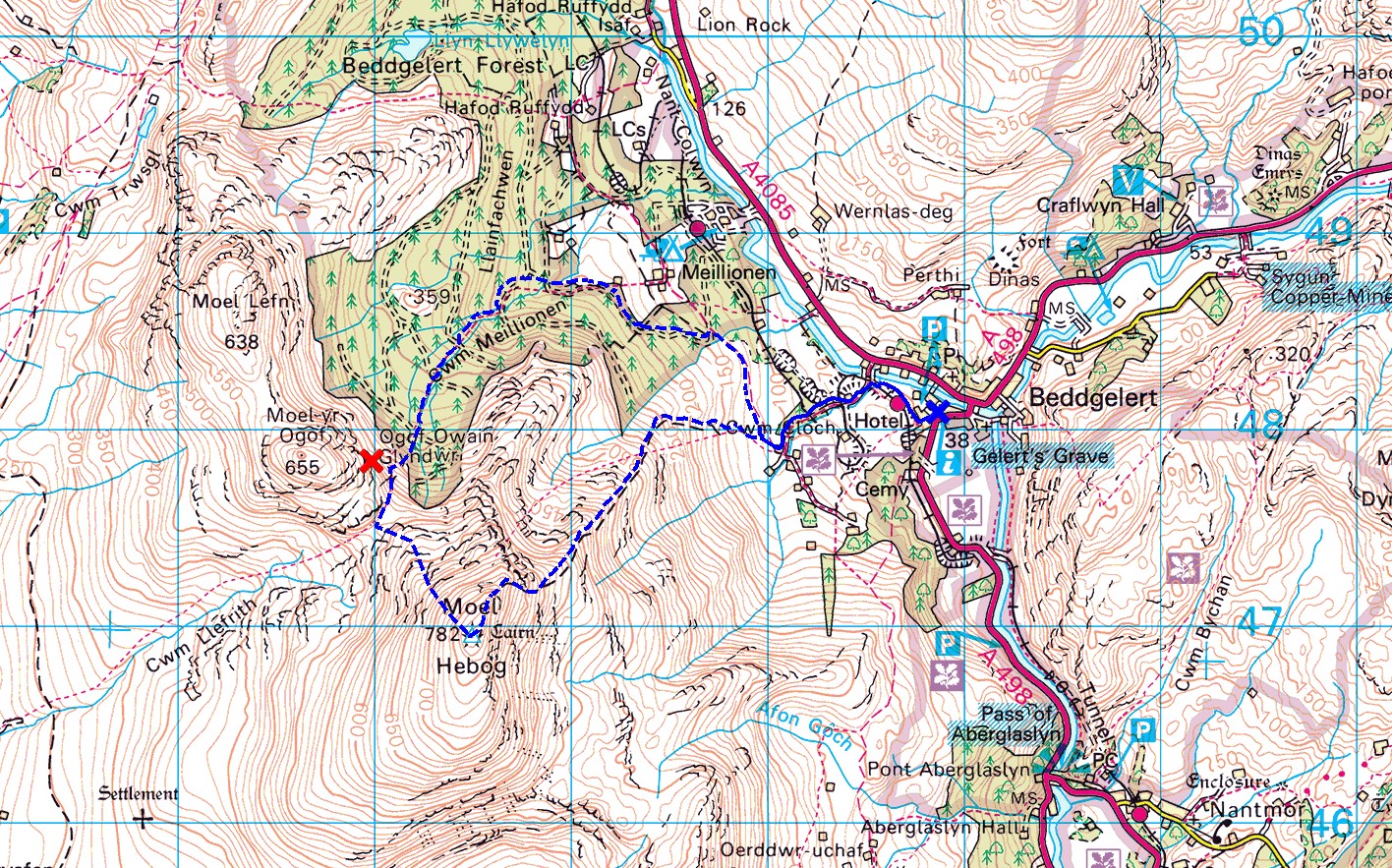
Moel Hebog, with the start point (blue cross) and Owain Glyndwr’s cave (red cross)Closer view of the route
I’ve had a few trips out on Moel Hebog over the years (see posts #93 and #164) and I’ve usually gone for the continuation ridge route over Moel yr Ogof and Moel Lefn, but this time the intention was to cut down to the east side of Moel yr Ogof to make a shorter walk for Chris and to try to spot the cave reputed to have been used by Welsh rebel (or hero depending on your point of view) Owain Glyndwr whilst hiding from pursuit by the English.
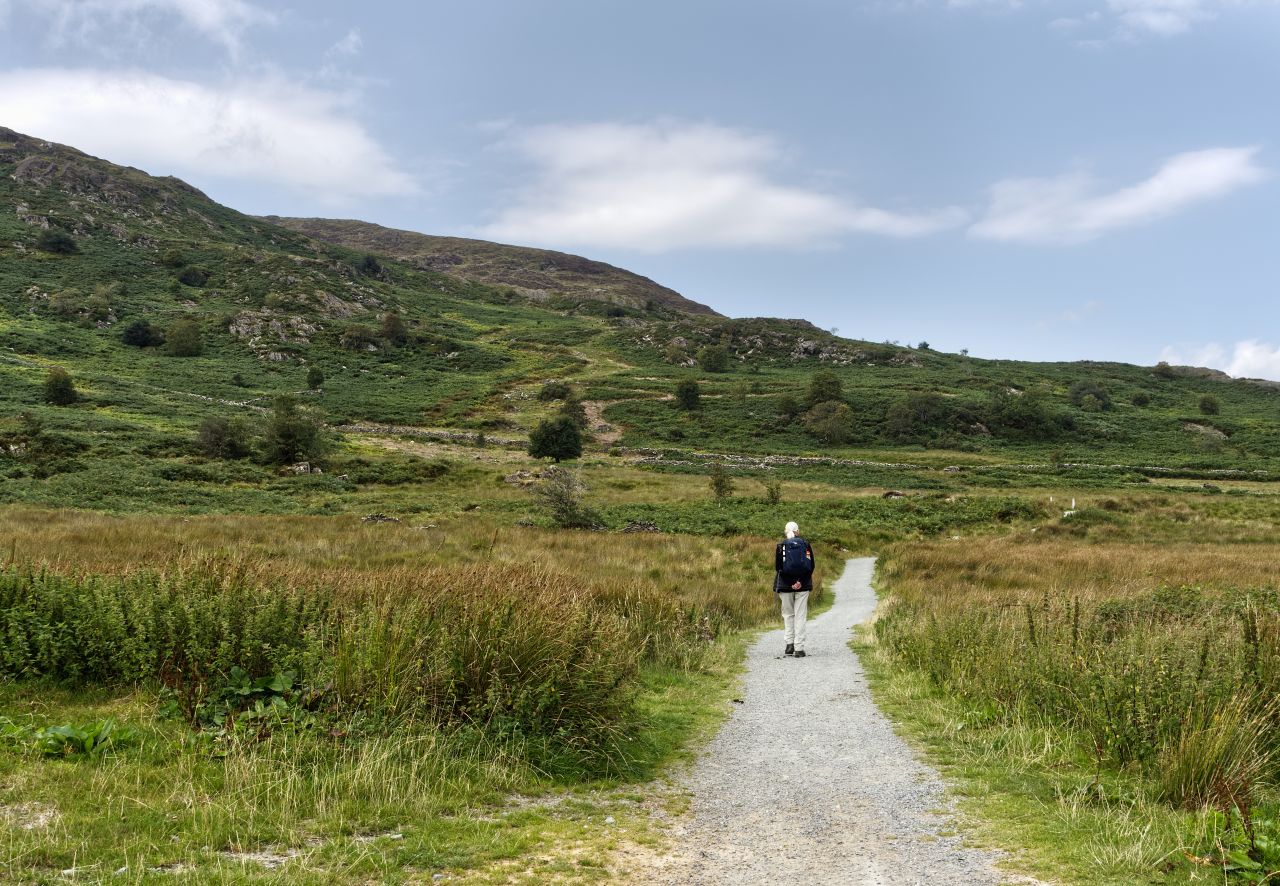
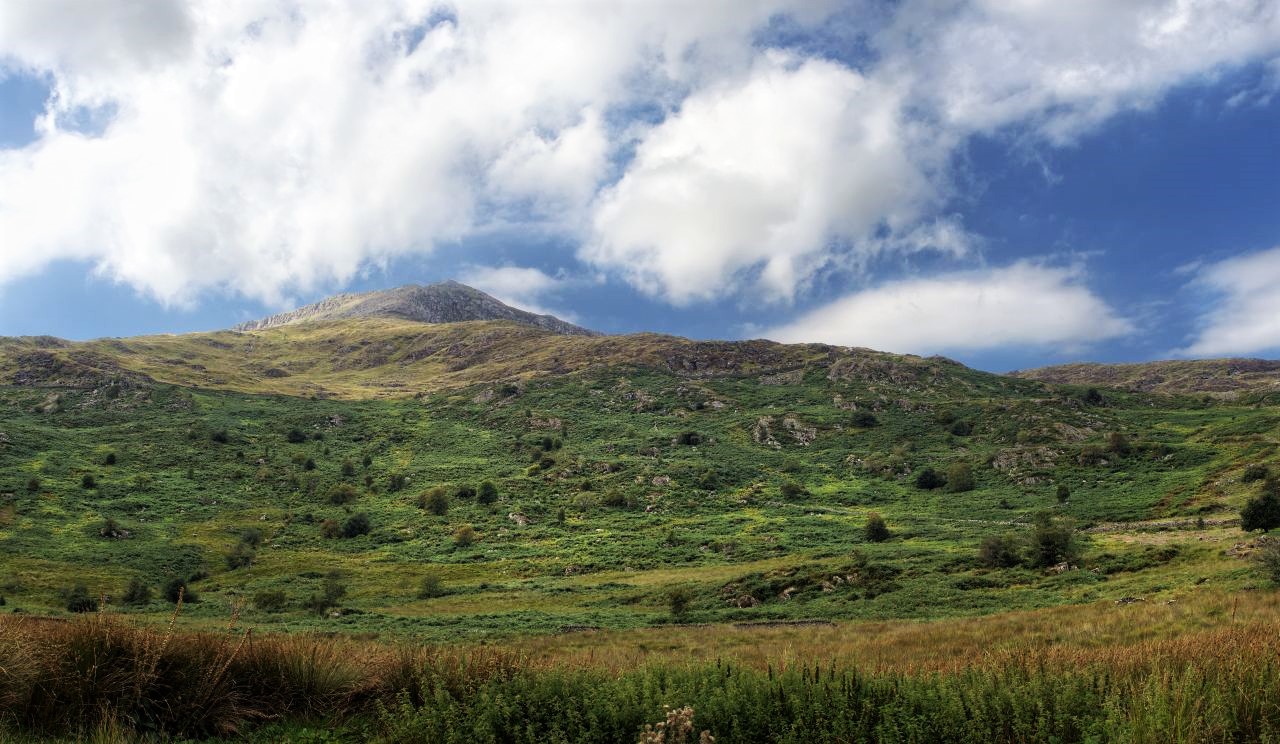
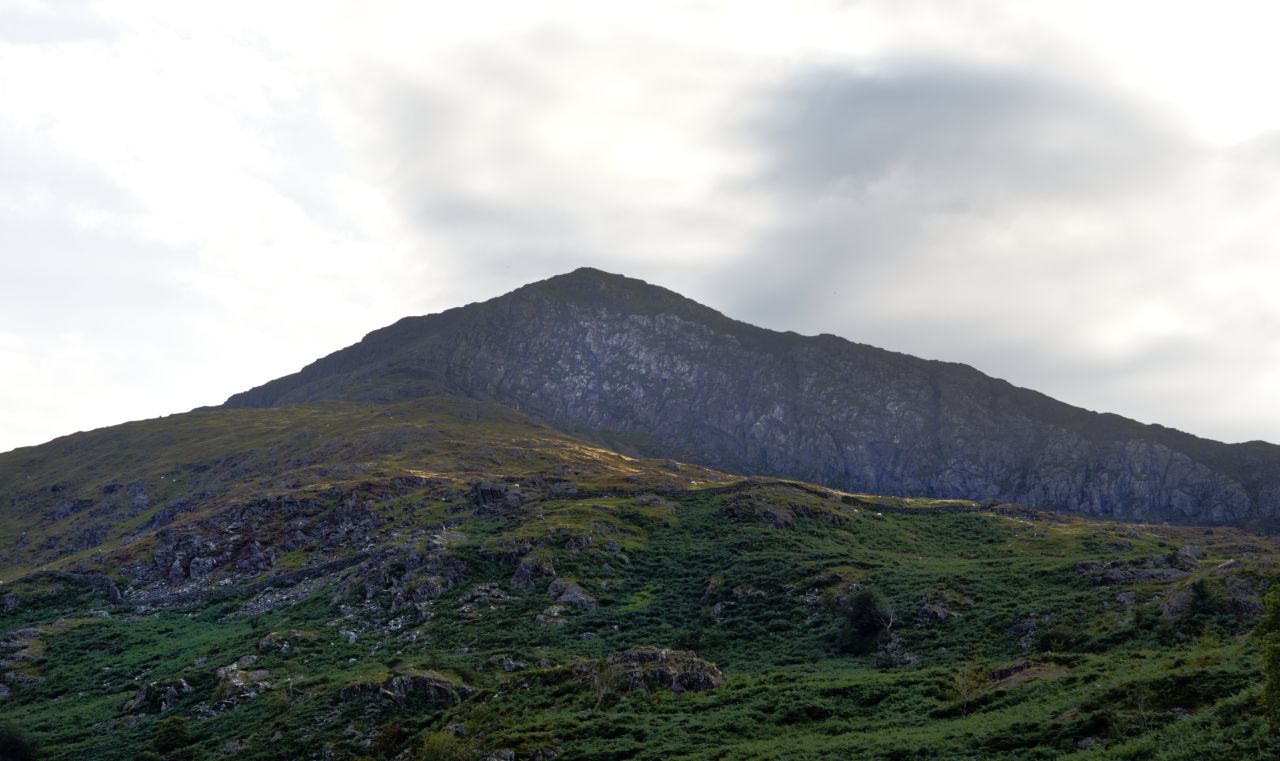
Setting out near Beddgelert …. …. with Moel Hebog rising aboveAt last – getting a bit closer ….….with the northeast view looking towards Yr Wyddfa (Snowdon) ….…. and the southeast view looking towards the mountains of the Moelwynion (Moelwyns)
Our route set off from Beddgelert, with Moel Hebog initially hidden from view – the ascent doesn’t seem to make much headway at first, but after a while the ‘Bare Hill of the Hawk’ starts to look a bit closer. If I’m honest though, at this point the best views are towards Yr Wyddfa to the northeast and the mountains of the Moelwynion to the southeast.
After looking at the views, it’s time to get stuck in to the ascent ….…. with Beddgelert now looking a long way behind
Eventually, things start to get a bit steeper, and Beddgelert starts to look a long way behind. I had forgotten that there are a couple of short rock scrambles on the higher section – these aren’t technically difficult but slowed Chris down enough for me to offer her the security of a confidence rope. I didn’t have to offer twice, and after a short scrabble in my pack for the rope, we were moving again – the bit that unnerved Chris was no more than a couple of moves, but better a short delay to deploy the rope than a long delay (or worse) if she had slipped.
Finally – The summit with views over Bae Tremadog (Tremadoc Bay) looking south ….….and the Nantlle Ridge to the north (Moel yr Ogof the nearest peak below and left)
And then it’s all over, with the summit coming into view. The view down to the sea at Tremadog was a bit hazy, but the view north to the magnificent Nantlle Ridge (see post #21) made up for that. From the summit viewpoint, it’s possible to spot (haze allowing) just about all of the mountains of Eifionydd including Mynydd Mawr (see post #30) to the north of Nantlle.
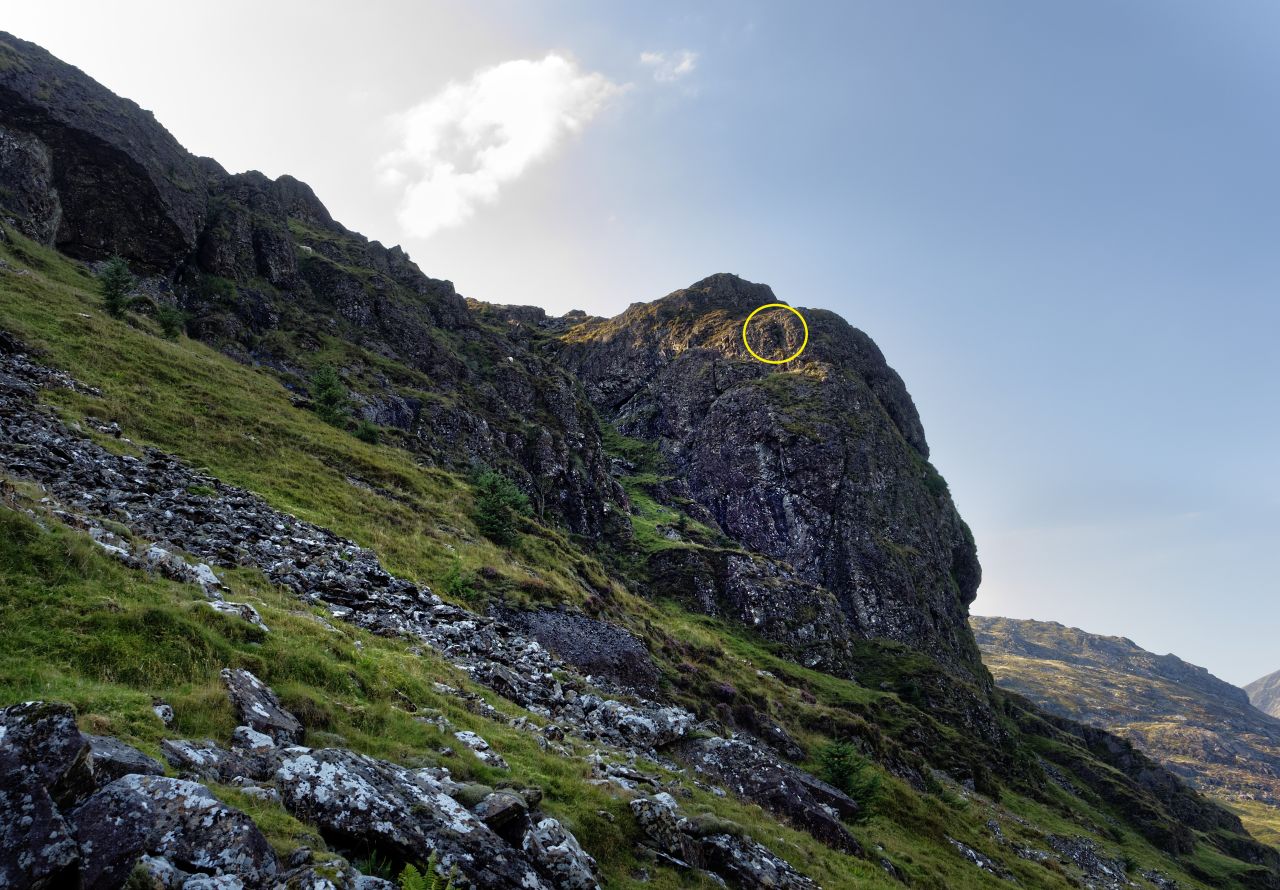
The descent from Moel Hebog, with Moel yr Ogof below on the leftBelow the East Face of Moel yr Ogof ….….with Ogof Owain Glyndwr (Owain Glyndwr’s Cave) peeping out
Having finished with the mountain spotting, it was time to start to head down. At the col between Moel Hebog and Moel yr Ogof, we swung to the east to go round Moel yr Ogof instead of my usual route over the top. This gave us a view up the steep east side of the mountain towards Ogof Owain Glyndwr (Owain Glyndwr’s cave). Caves seem to be fairly popular with fugitive national heroes such as Glyndwr, Robert the Bruce or Bonny Prince Charlie, but far be it for me to undermine a local legend, it seemed to be a mucky scramble to reach an exposed hole in the crag.
The descent continues, with a bit if minor bushwhacking
Heading up to the cave had not been on the menu for the day, though I think it would soon have been vetoed had I suggested it to Chris. Instead, we cut down through the forest on narrow paths that almost qualified as minor bushwacking, before we hit the wide forest ride that joins the Rhyd Ddu–Beddgelert bridleway. It was time to head for home.
For the best viewing experience, left-click the images and maps to zoom in to a new window, then exit that window to go back – go on, it really does work!
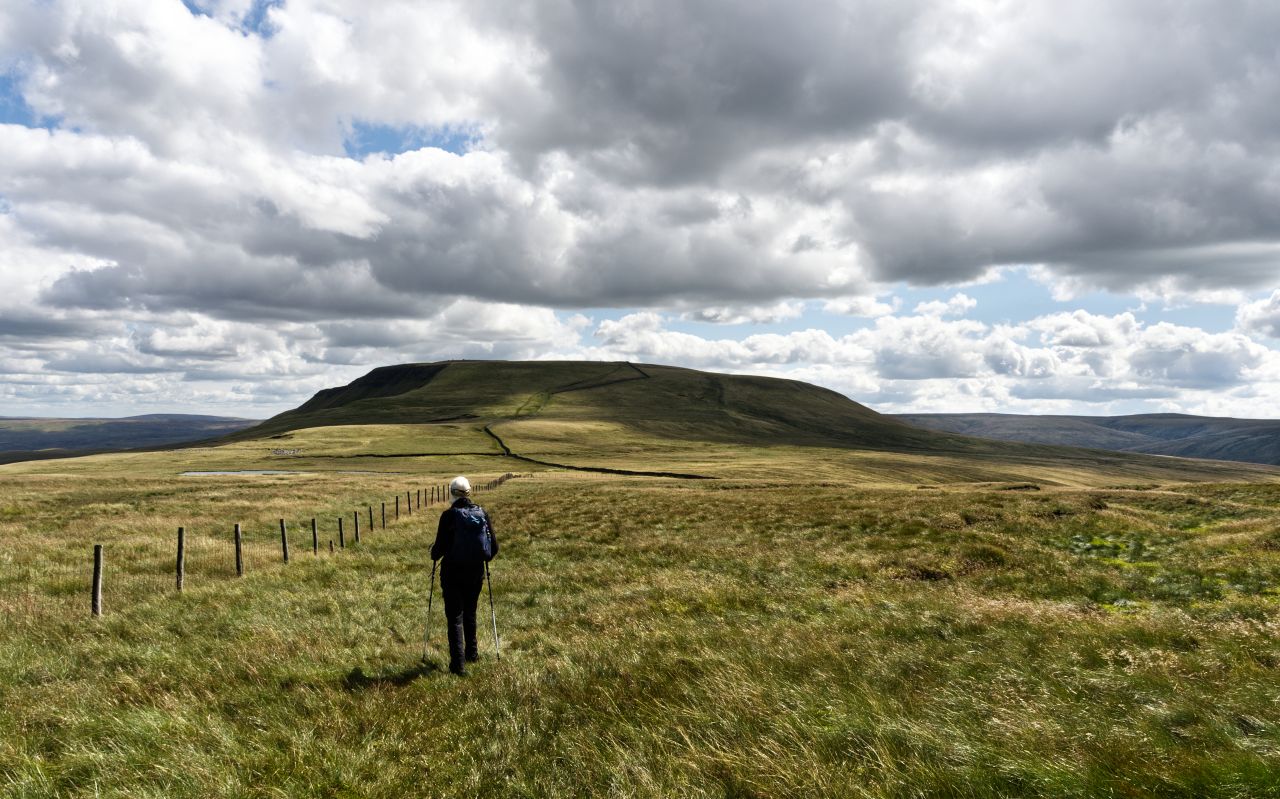
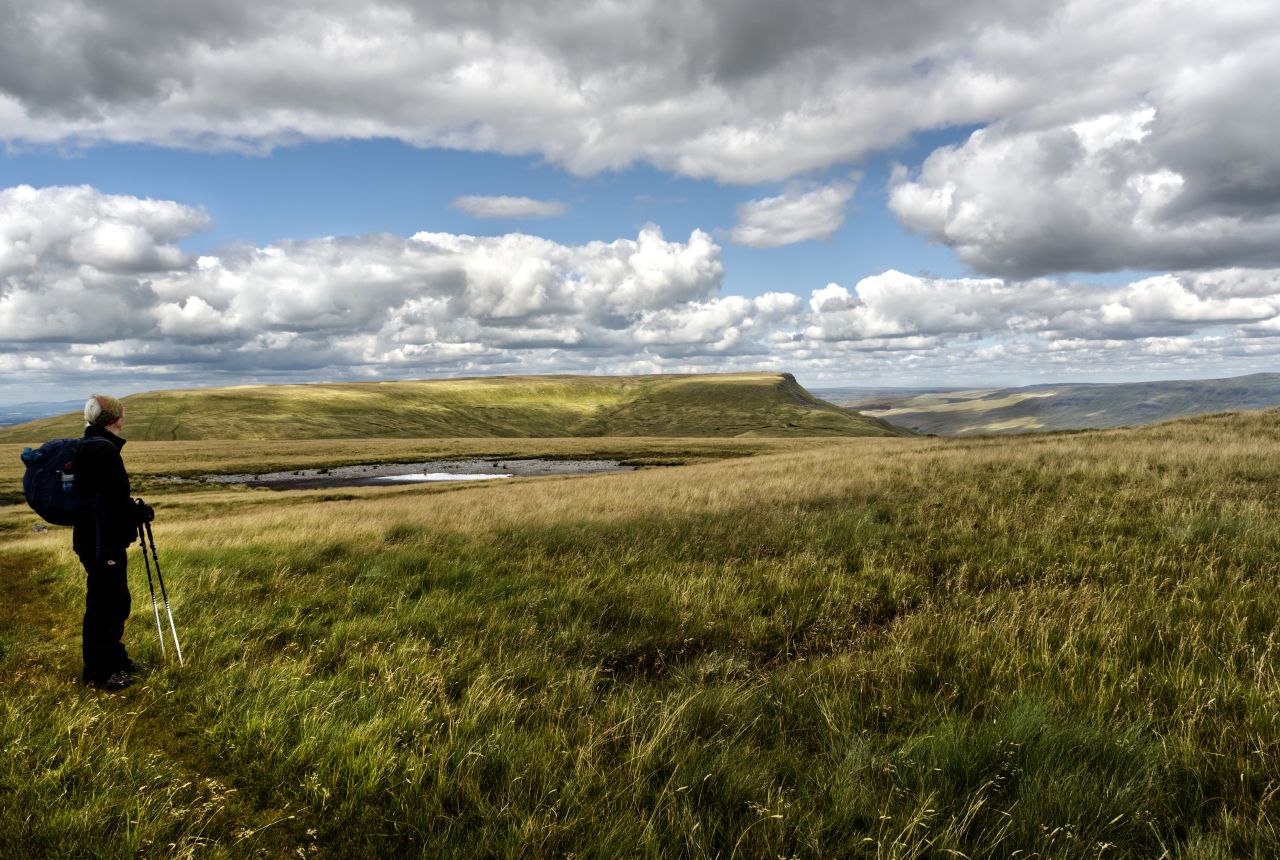
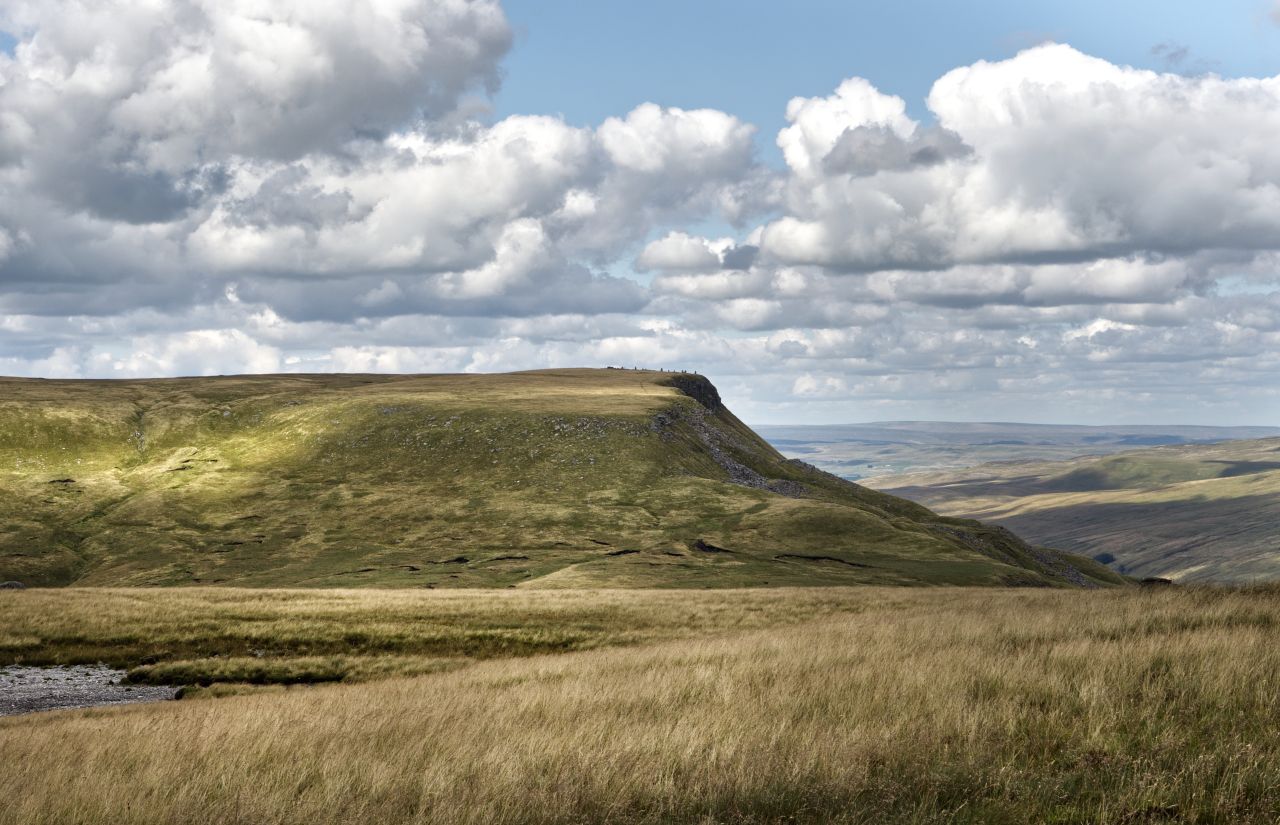
Over the space of forty years, I had nearly been up Wild Boar Fell twice. Both occasions were on training sessions with Penrith and Kirkby Stephen Mountain Rescue Teams, and both times the exercise incident was concluded before I got anywhere near the summit. The thing is, there isn’t much else on the west side of the Mallerstang valley other than Wild Boar Fell – if I wanted the summit, I was going to have to make a special trip. That special trip had to wait until August 2022.
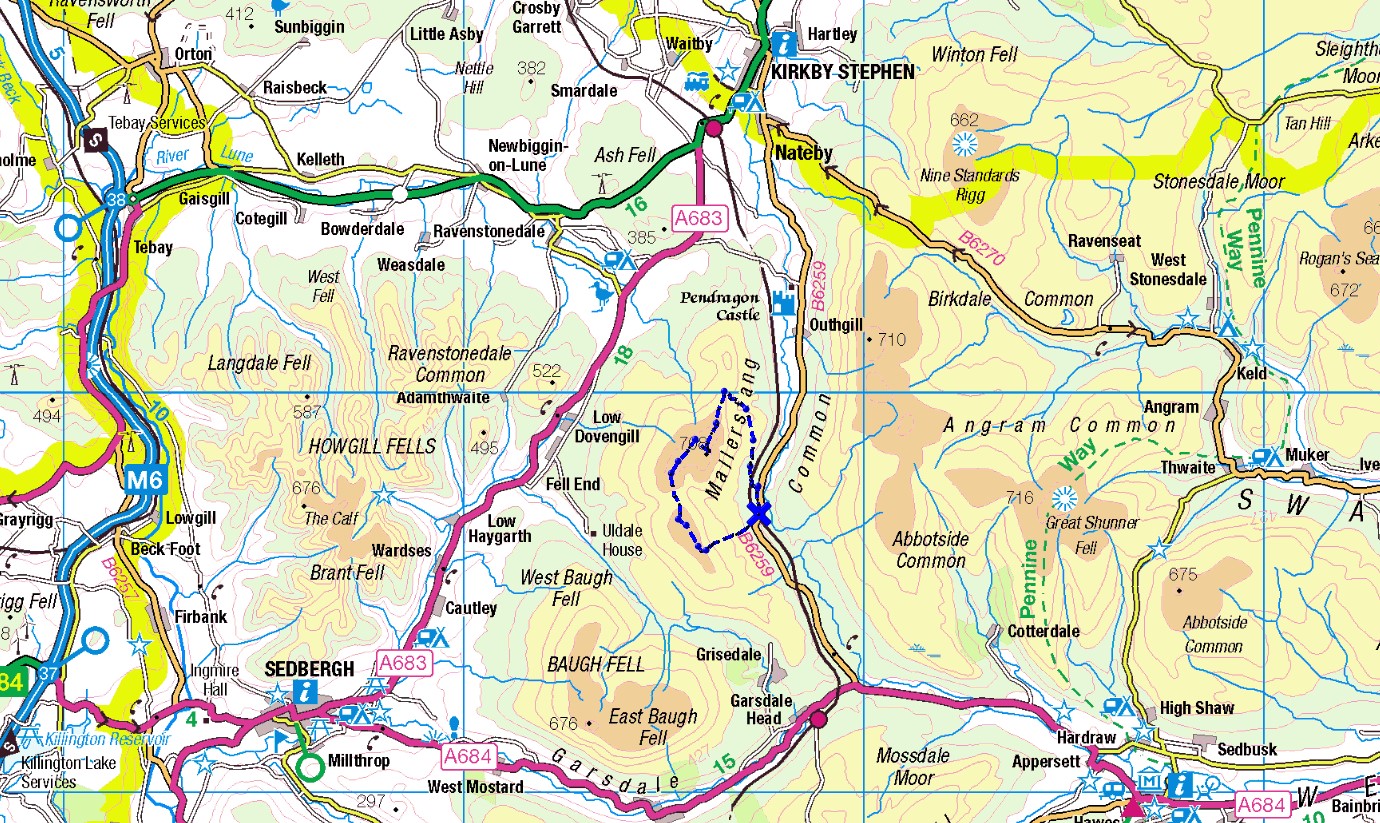
The northern end of the Yorkshire Dales National Park, with Wild Boar Fell in the centre
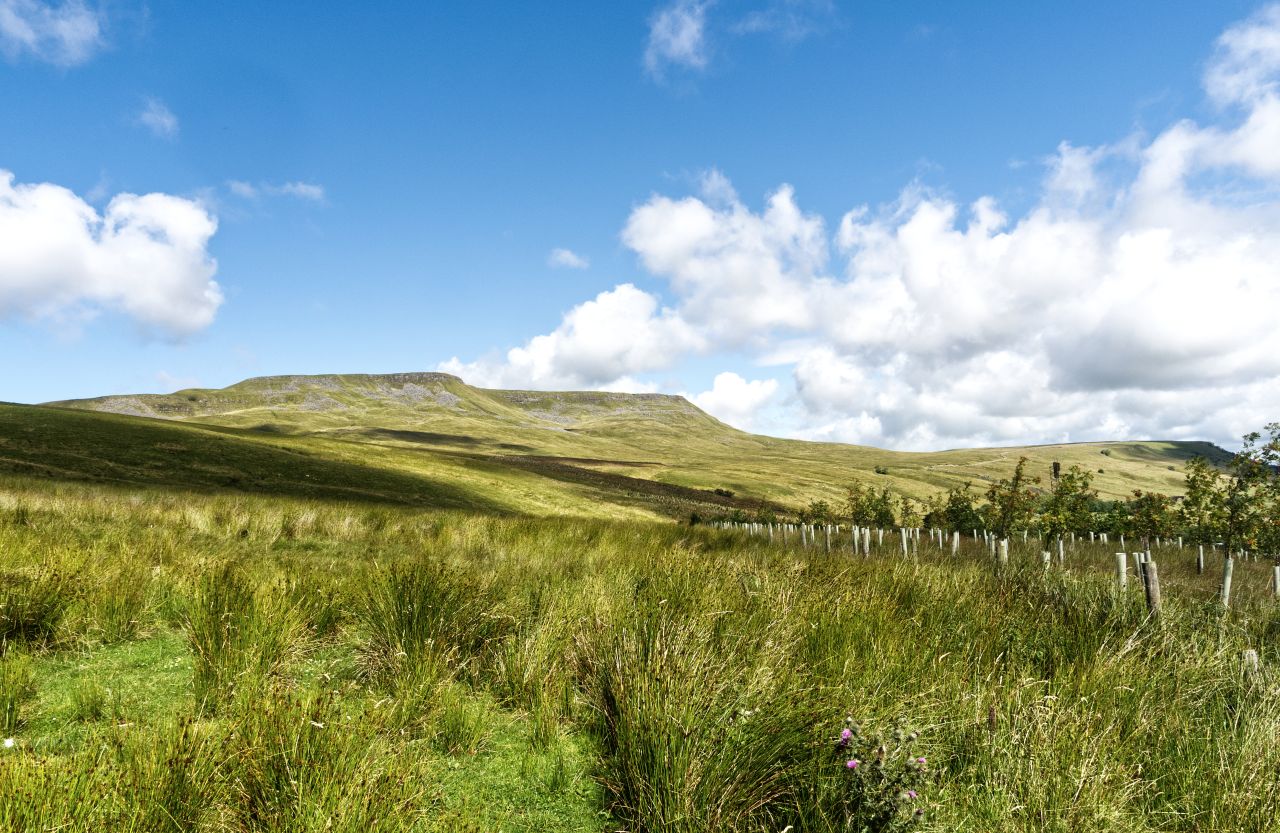
Wild Boar Fell stands alone, refusing to be tied down to a popular area. The mountain is in Cumbria, but Cumbria is the Lake District National Park, isn’t it? Wild Boar Fell is actually part of the Yorkshire Dales National Park, but refuses to join in with being part of Yorkshire – if you really must tie things down, it’s at the very head of the Eden Valley, which starts in Mallerstang before taking a 100-kilometre wander through Kirkby Stephen, Appleby and Langwathby, before finally reaching the sea beyond Carlisle. That will do then – it’s in Eden.
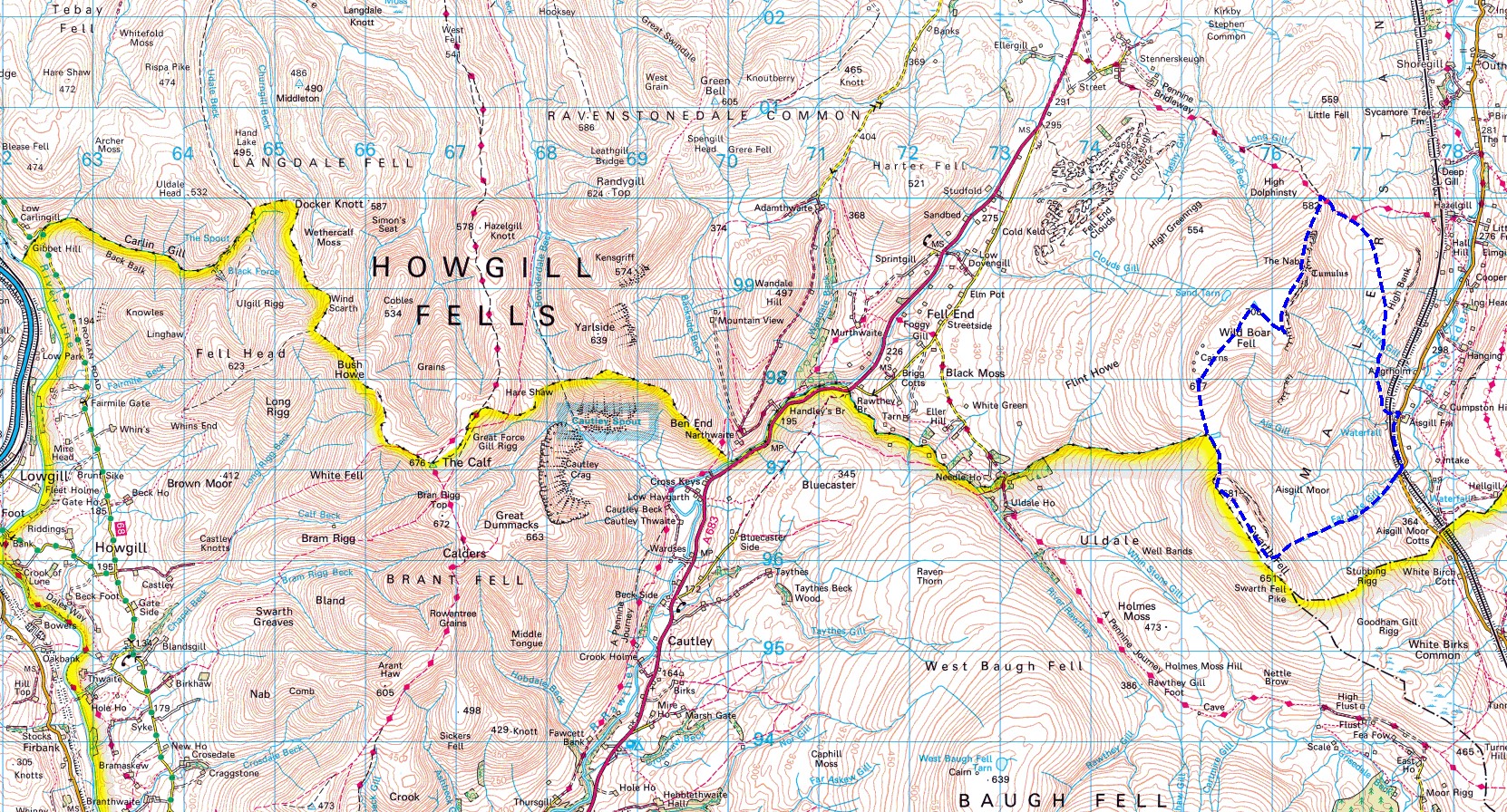
Wild Boar Fell (route in blue) and the Howgill Fells
Although alone, Wild Boar Fell does have notable neighbours, these being the Howgill Fells. For over sixty years, Wild Boar Fell and the Northern Howgills did not have National Park status – that changed in 2016, with a good bit of Cumbria becoming part of the Yorkshire Dales NP. It isn’t as daft as it sounds – the present county might be Cumbria, but until 1974 this was Westmorland. So, we’re in the Garden of Eden in the lost county of Westmorland.
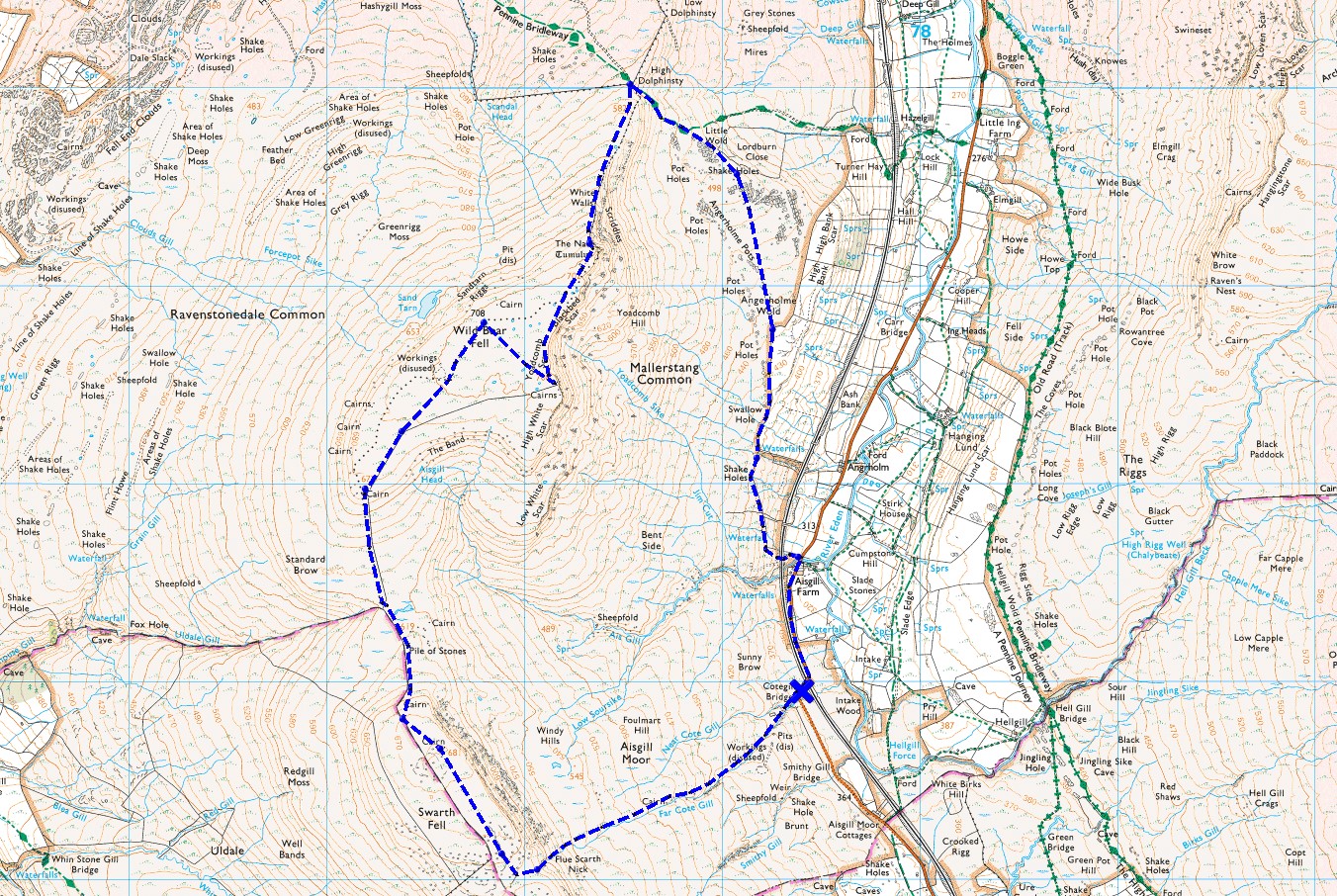
The route – anti-clockwise from the blue cross
Our plan was to walk over the mass of Wild Boar Fell from north to south, starting in Mallerstang to make a circular route of around 11 kilometres (7 miles). One thing that was quite certain was that we wouldn’t see many other hikers – these hills don’t get a lot of pedestrian traffic, possibly because of their ambiguous location. There aren’t many bragging points in saying that you have been wandering in Eden. However, before heading for the Wild Boar, we had another visit in mind – we were going to visit red squirrels.
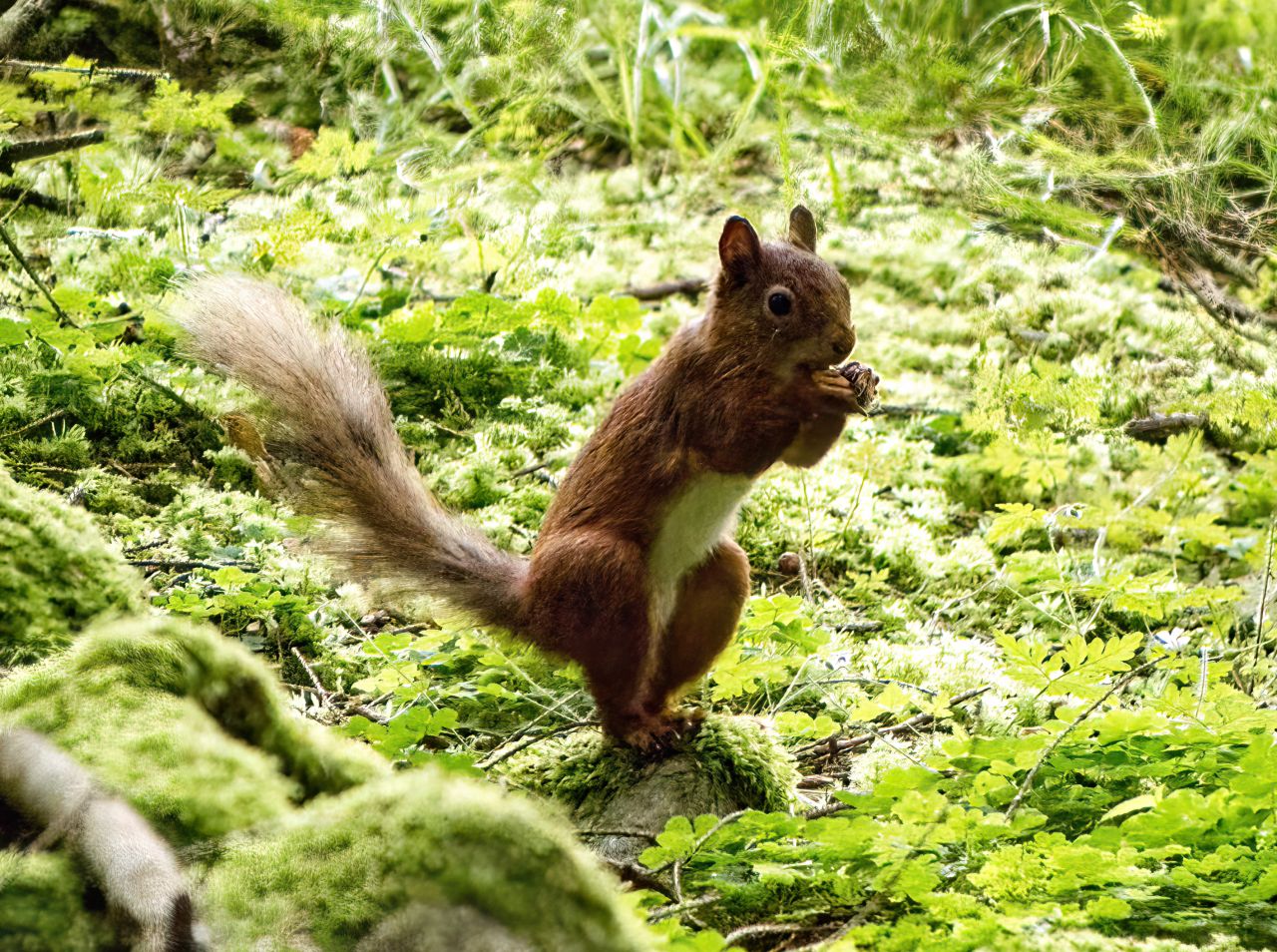
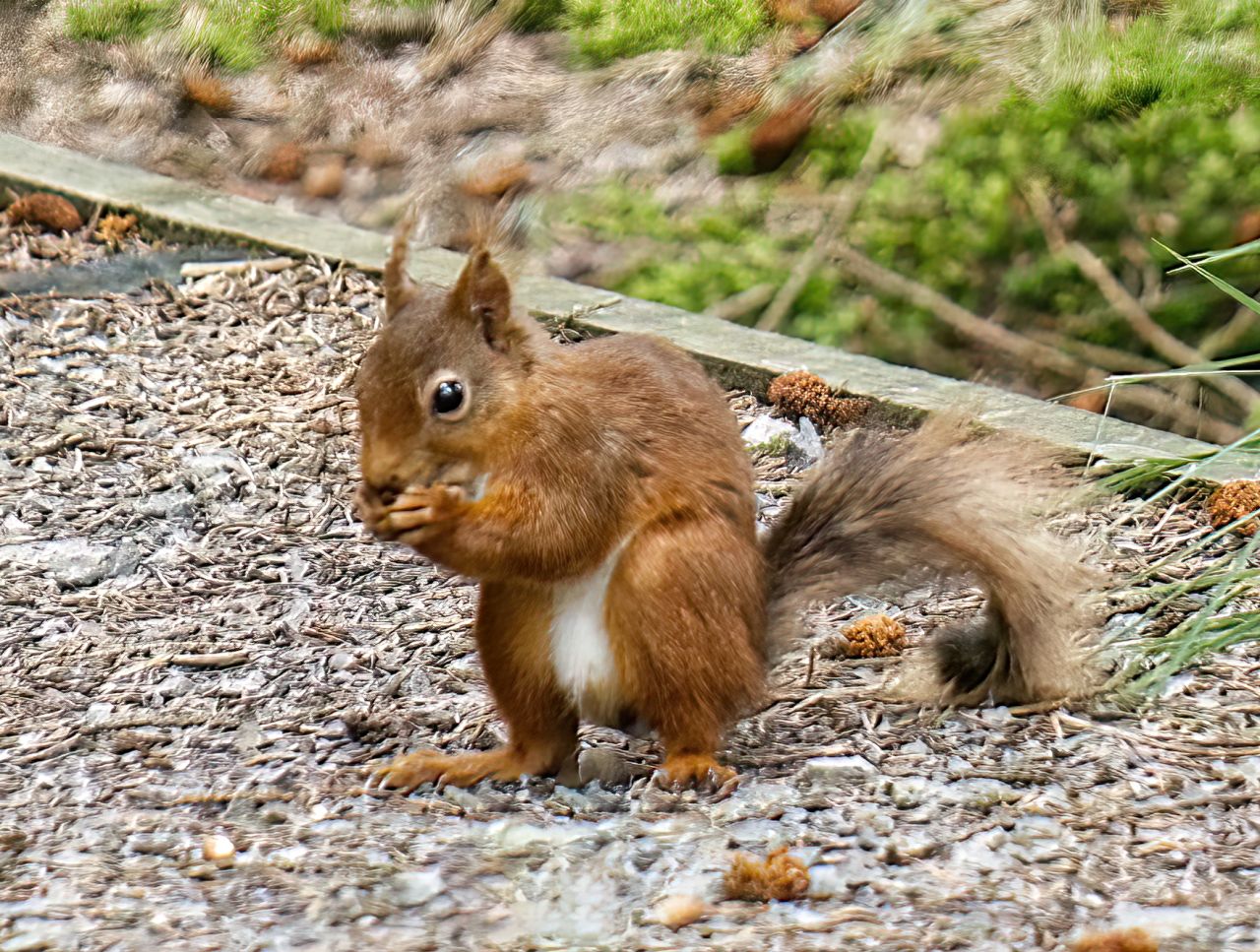
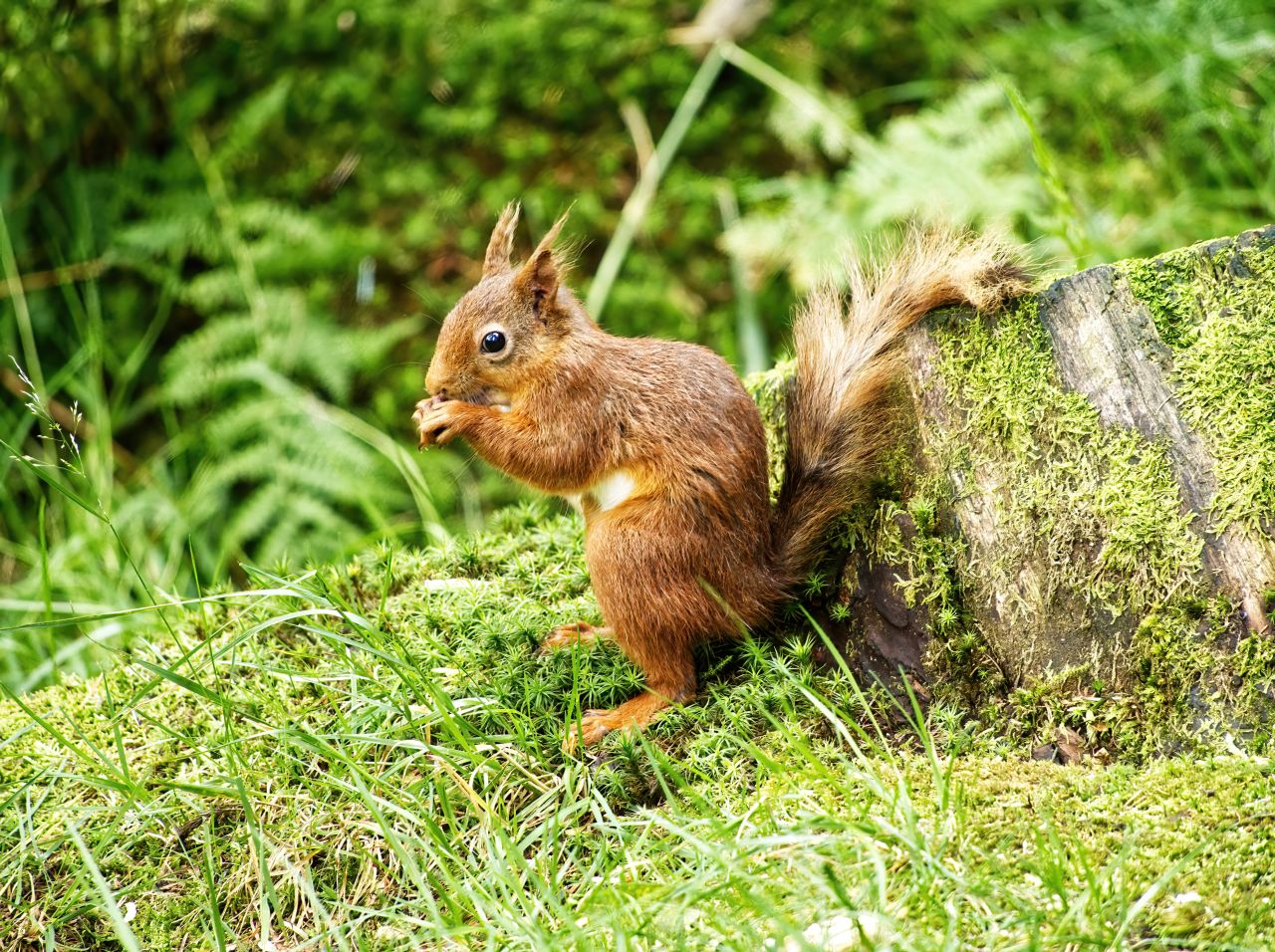
Red squirrel at Snaizeholme
The red squirrel is native to the British Isles and for 10,000 years was widespread here. In the 1800s, the grey squirrel was introduced from America as a ‘pretty’ addition to country estates. It wasn’t realised at the time that the greys are highly destructive to forestry, as well as out-competing the native reds. Reds are still to be found in Scotland, but in England and Wales they have barely clung on. There are several sanctuaries where reds can still be found, and the day before our meeting with the Wild Boar, we went to visit the Snaizeholme squirrels.
Main occupations in life –Eating! And looking pretty
Snaizeholme is near to Hawes in Wensleydale, and the lack of forested hills in the area makes it more difficult for the greys to colonise – they simply don’t have the corridors of trees leading to the areas populated by the reds. The Yorkshire Dales NP and local landowners have co-operated to provide a sanctuary at Snaizeholme, where these normally shy creatures can be seen on a regular basis, and although you can’t rely on wild creatures turning up to order, there’s always a good chance of seeing reds here.
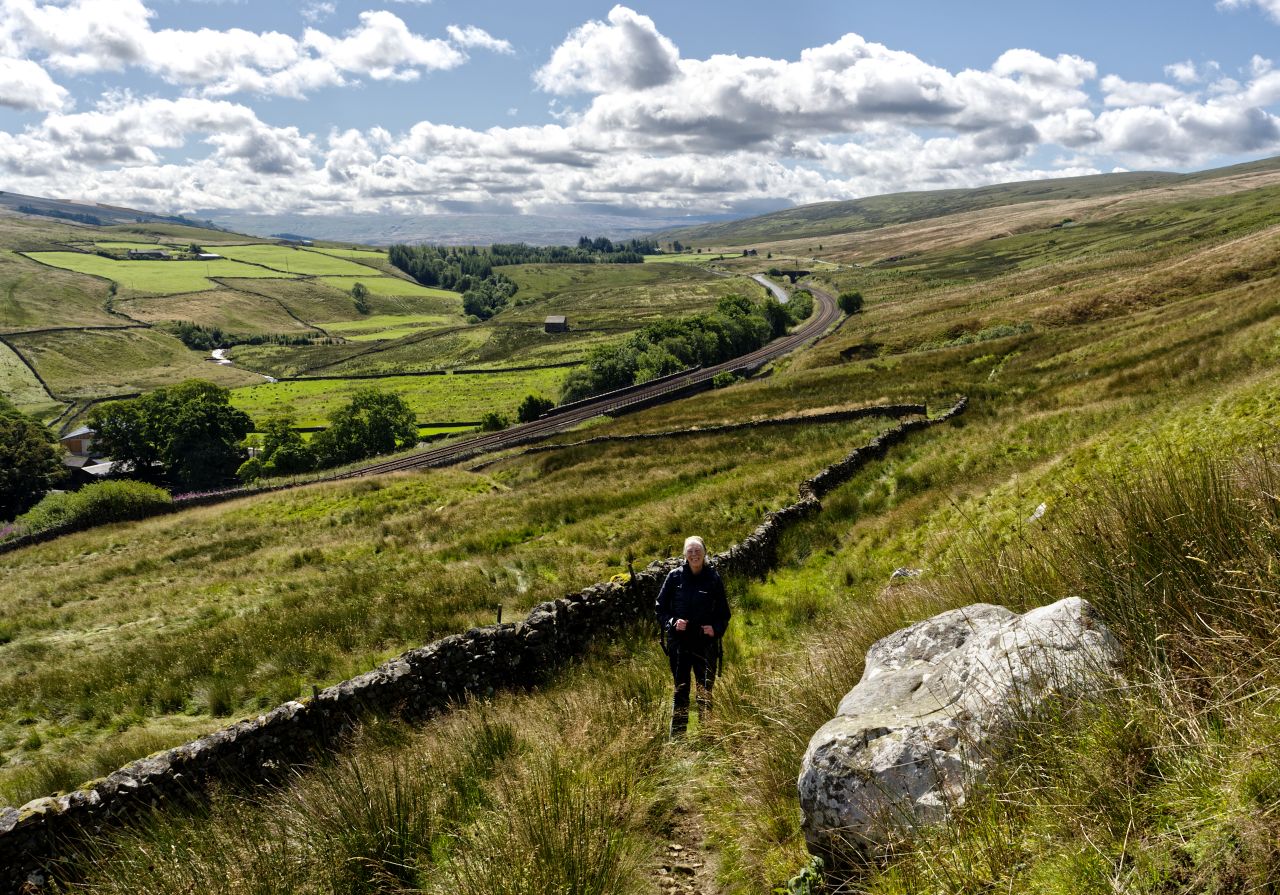
Setting out near to Aisgill, with Wild Boar Fell in the centreLooking back, with the Settle-Carlisle railway in the valleyOn the way out ….…with constantly changing views of Wild Boar Fell above
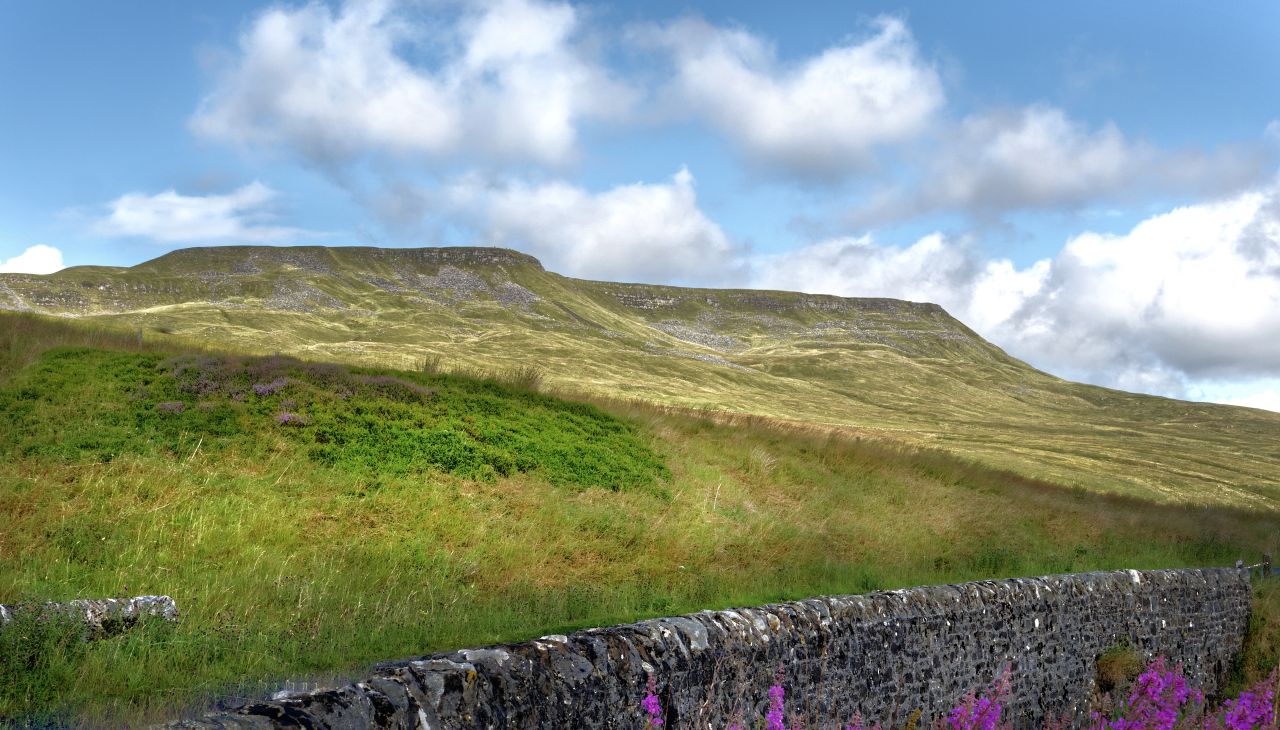
The next day found us parked up near Aisgill in Mallerstang. At 708 metres altitude (2323 ft), Wild Boar Fell is the fifth highest peak in the Yorkshire Dales NP after Whernside, Ingleborough, Great Shunner Fell and near neighbour High Seat, but as our start point was about 300 metres, we had a bit of height advantage. Before long we were exchanging views of the Settle-Carlisle railway for the eastern escarpment of Wild Boar Fell.
Starting up the broad northern ridge ….…. with The Nab coming into view (the two tiny figures in the centre give an idea of scale)Looking north down the ridgeApproaching The Nab ….…. with the collection of ‘stone men’ (cairns) coming into view
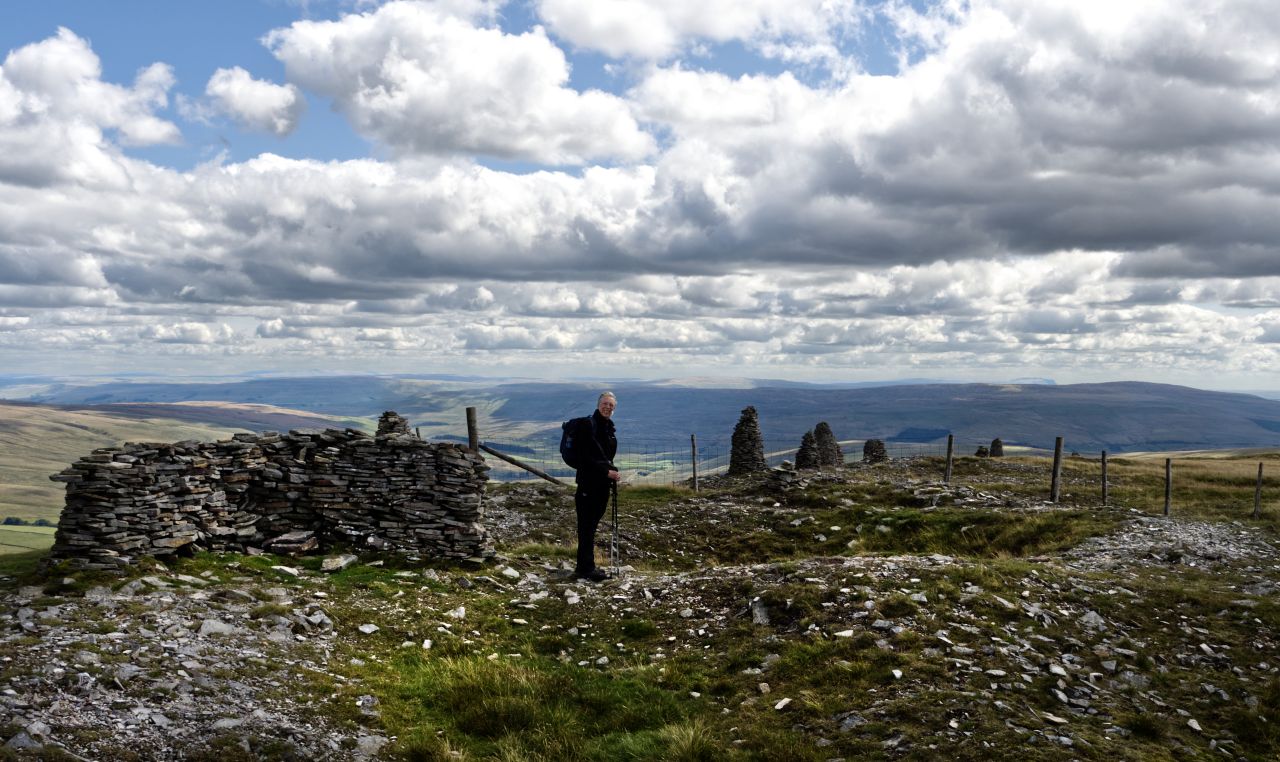
It is said that wild boar lived on the fell up to 500 years ago. It is also said that the wild boar tusk kept in the church at nearby Kirkby Stephen came from the last boar to be hunted and killed on the fell. Whatever, you won’t find wild boar there nowadays – what you will find though, is a collection of ‘stone men’, otherwise better known to UK hillwalkers as cairns.
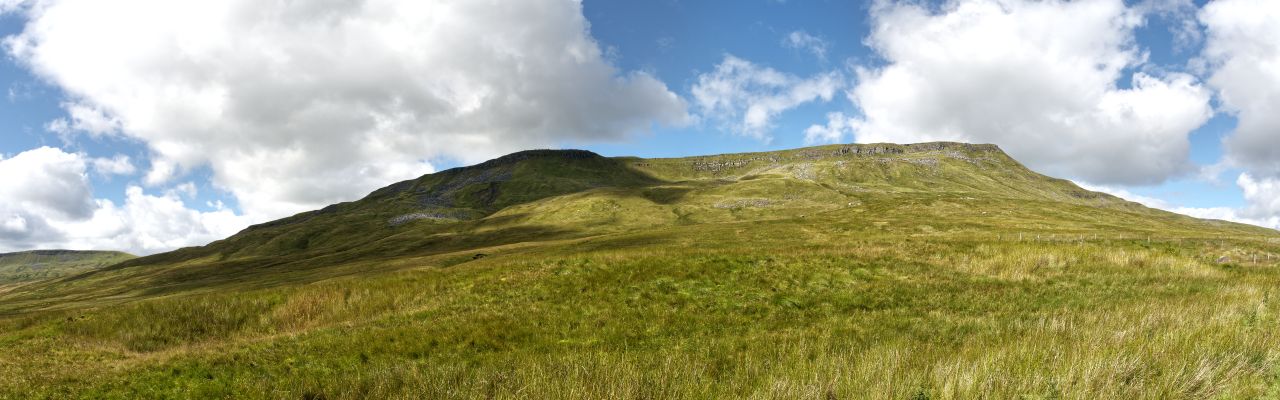
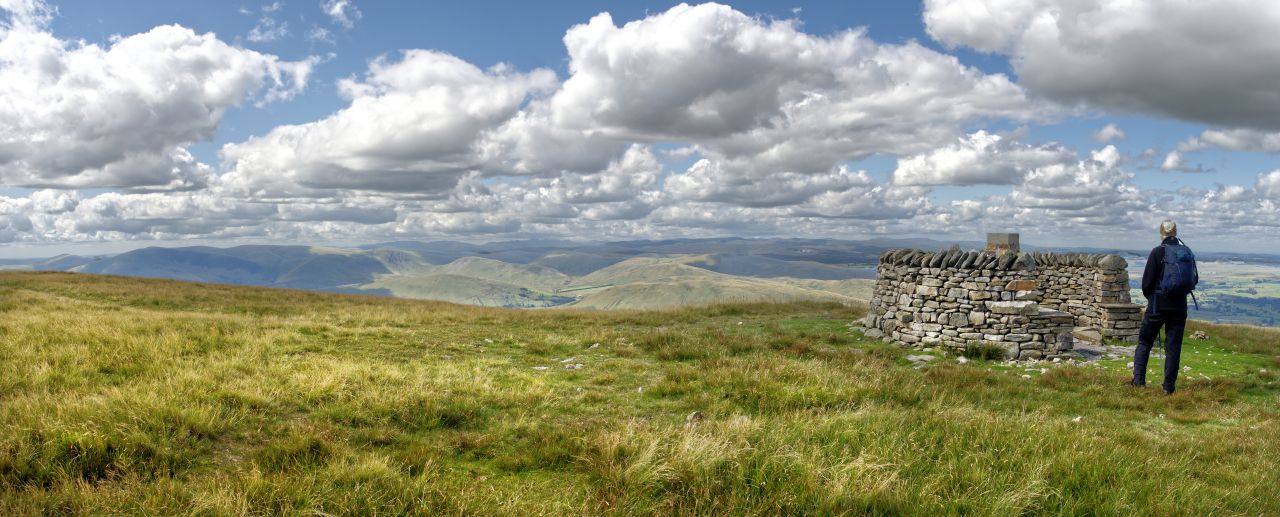
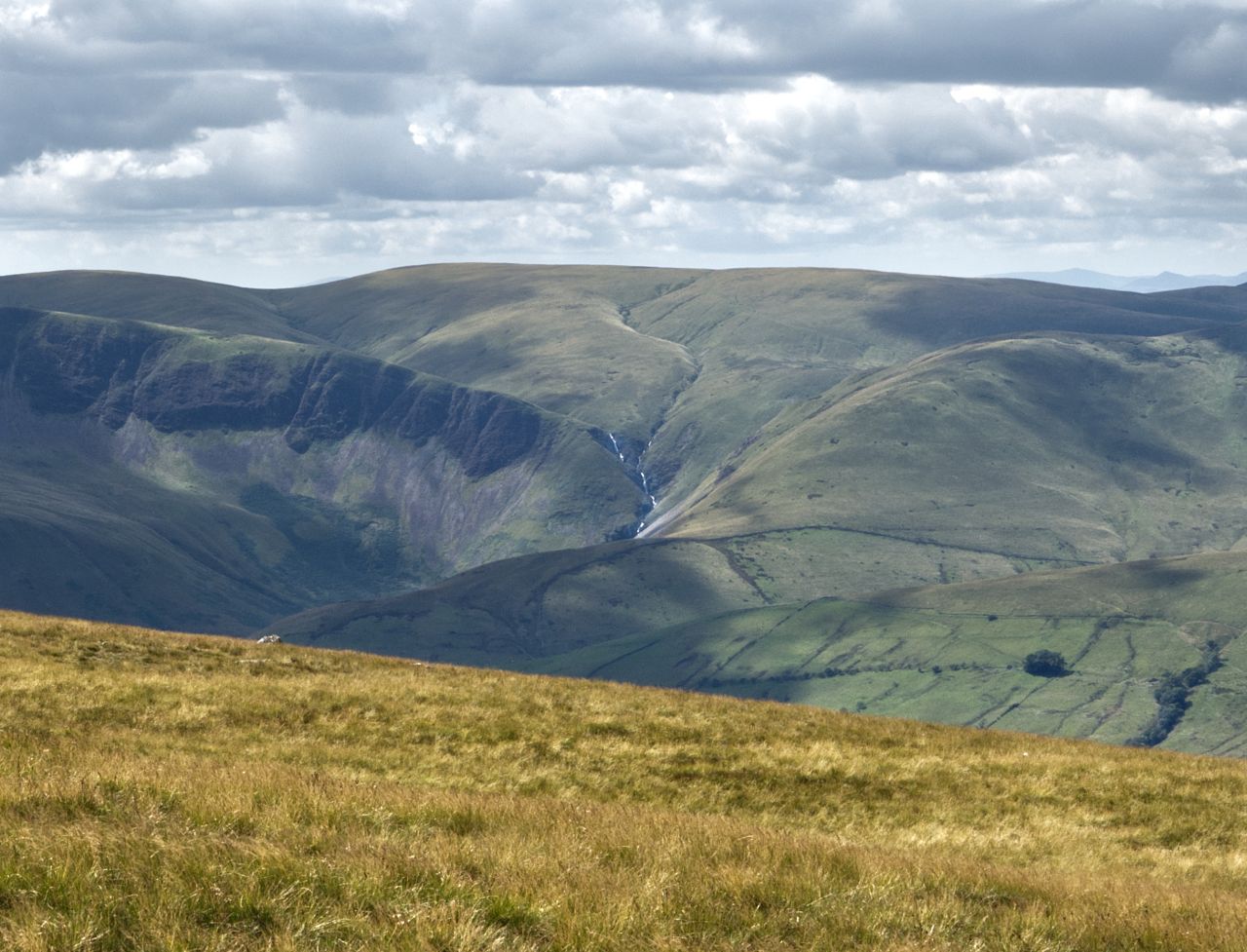
The diversion to the cairns near High White ScarAt the cairnsThe summit of Wild Boar Fell, with the Howgill Fells beyondA zoom view of Cautley Spout, about 8 kms (5 miles) to the west
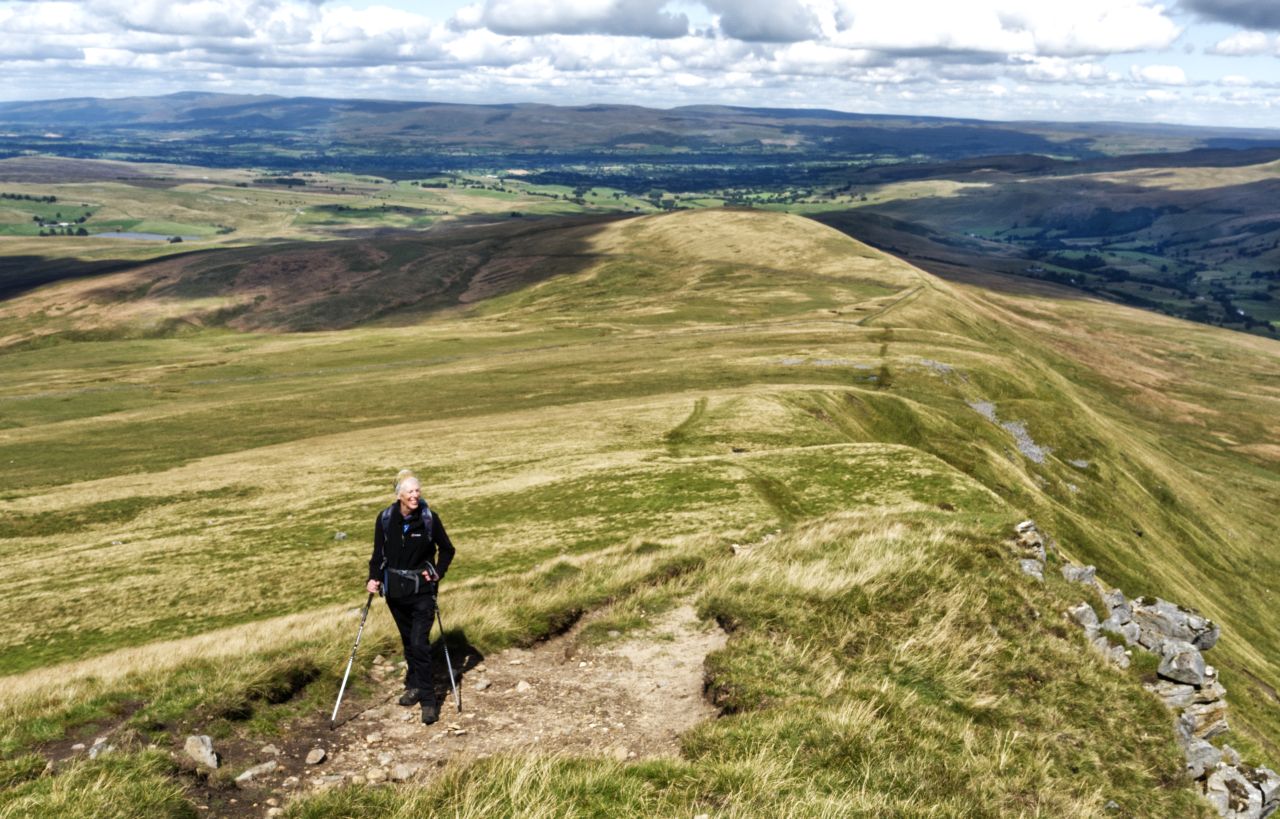
A visit to the cairns took us away from the path to the summit, but seeing that it had taken me forty years to get this far, I thought it a good idea to make a visit, as I might not be around in another forty years! That being done (and a fine collection of cairns they are), Chris and I wandered about 500 metres across to a neat stone shelter at the summit, with great views west to the Howgill Fells. Full zoom on the camera brought the impressive waterfalls of Cautley Spout into view (see post #16) though it does help if you know what you are looking for and where to look.
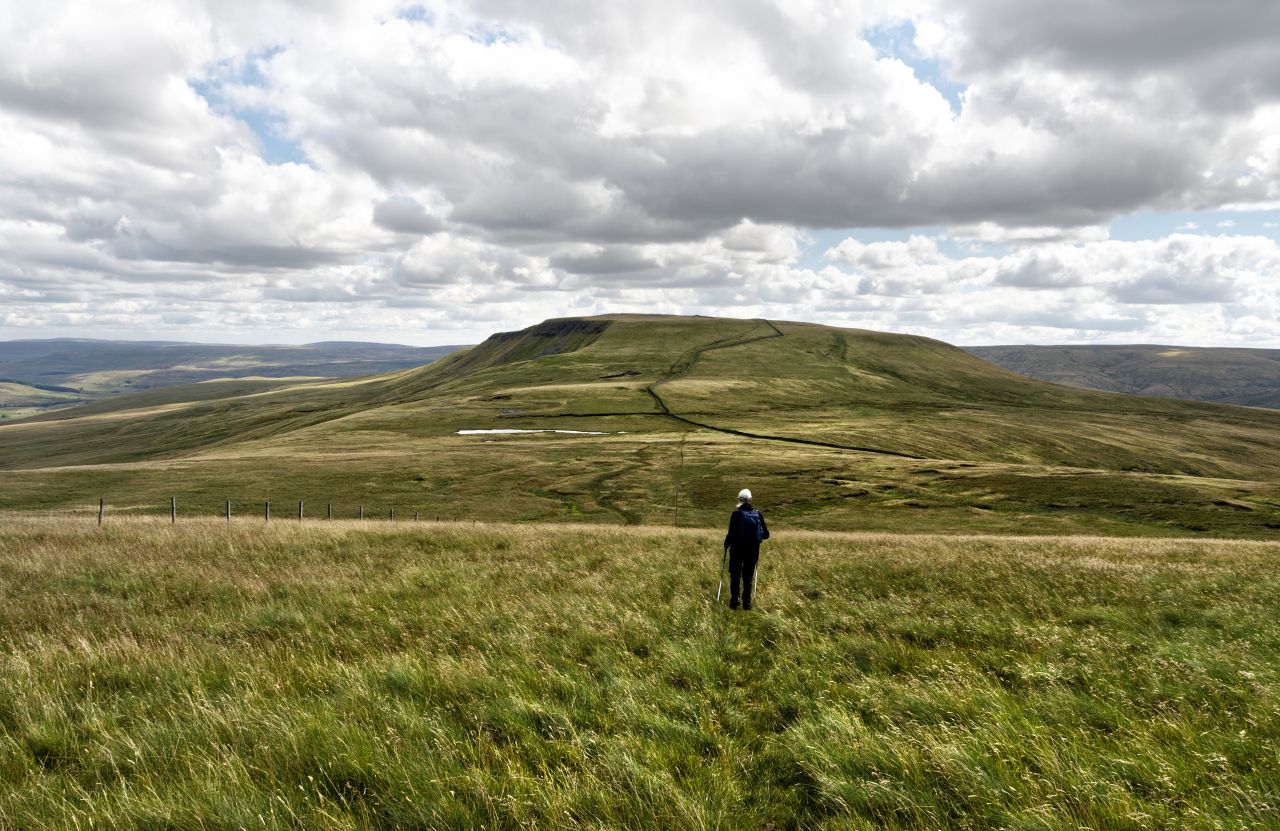
Heading south from the summit of Wild Boar Fell ….…. with Swarth Fell aheadLooking back ti Wild Boar Fell ….…. with the collection of cairns visible near High White Scar
Clear visibility made the descent south from the summit easy to navigate, and after a little over 3 kms it was time to turn left to follow the line of Far Cote Gill back to the valley, and our start point. We had different views of Wild Boar Fell as we started down, but one of the best views of the day was the combination of the fell and the Mallerstang Valley seen in the afternoon sun. I’m still a bit surprised it took me forty years to get round to it.
Time to start the descentA final view of Wild Boar Fell and Mallerstang valley – time to head for home
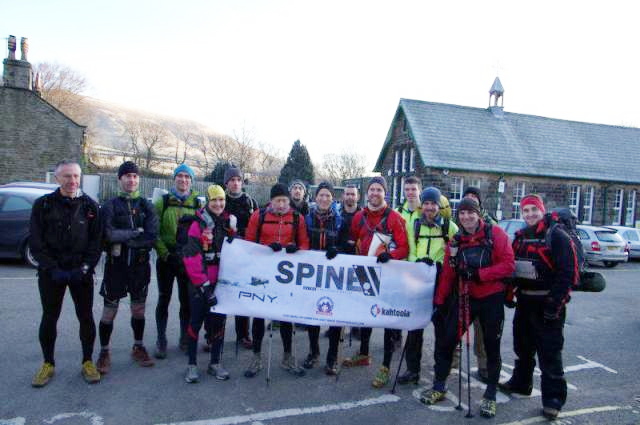
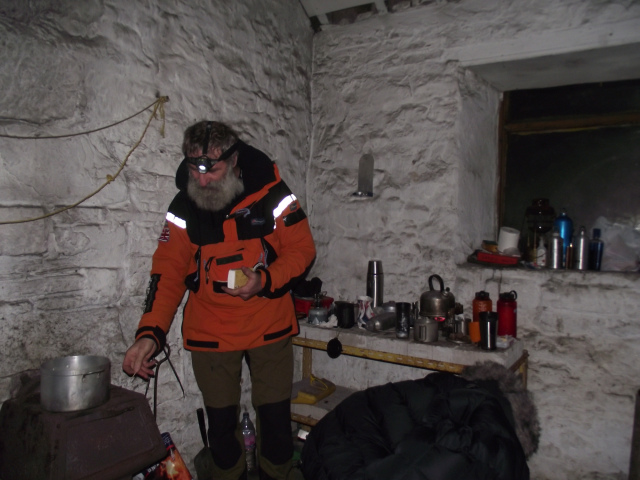
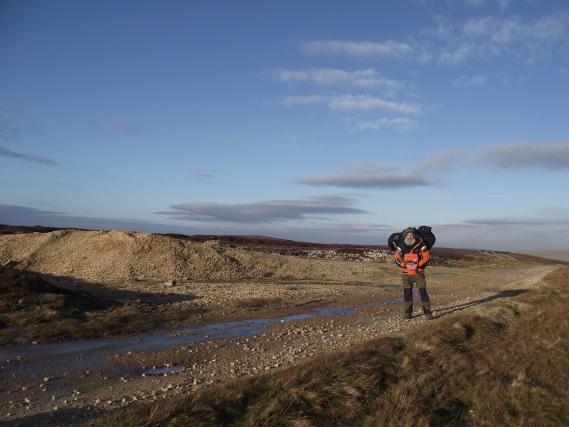
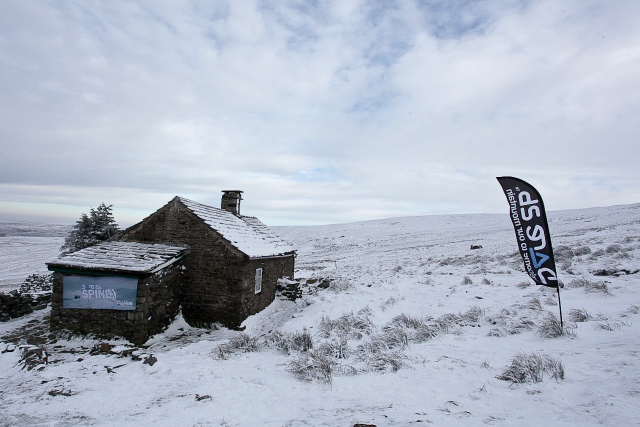
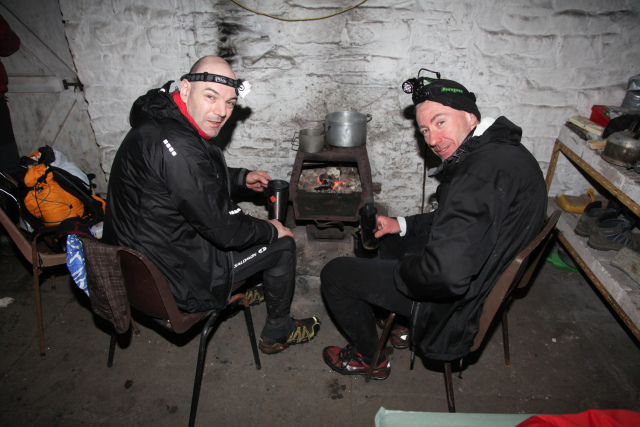
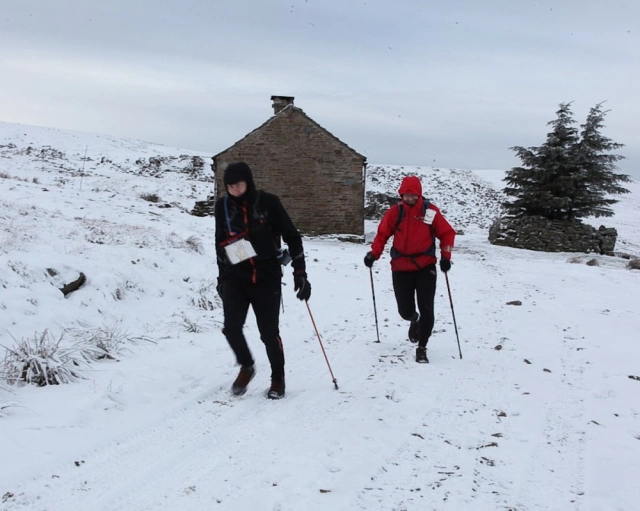
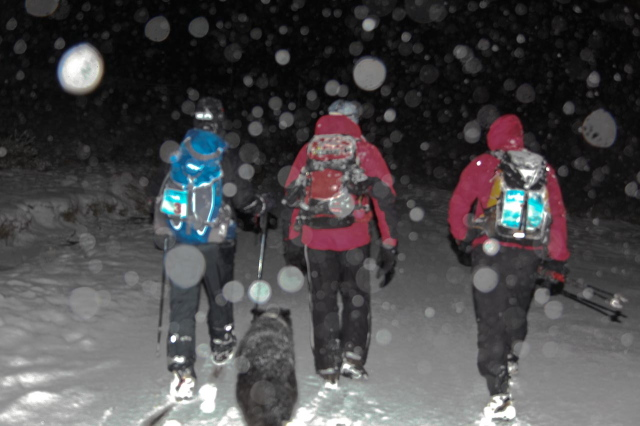
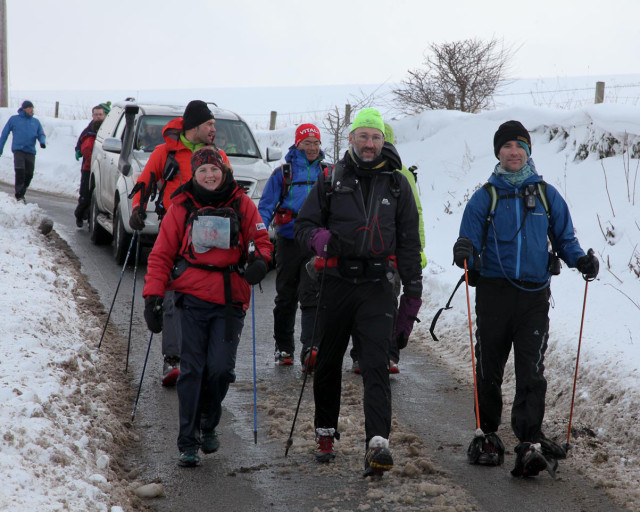
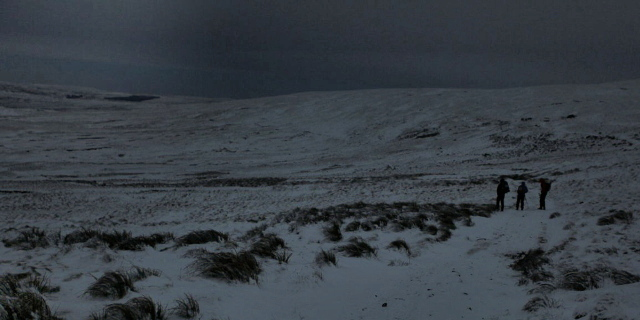
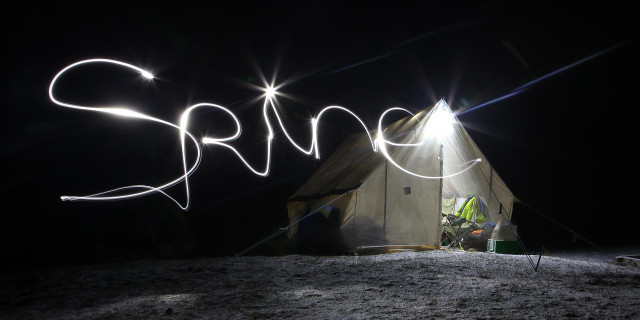
A little bit late with the blog this week – I’ve been working away from home on the Spine Race, as safety cover in a remote Pennine bothy. The bothy and its Spine Race occupants have become part of the Spine mythology, but today I can come out and say it was me who first named our Greg’s Hut safety station the ‘Highest Noodle Bar in the UK’
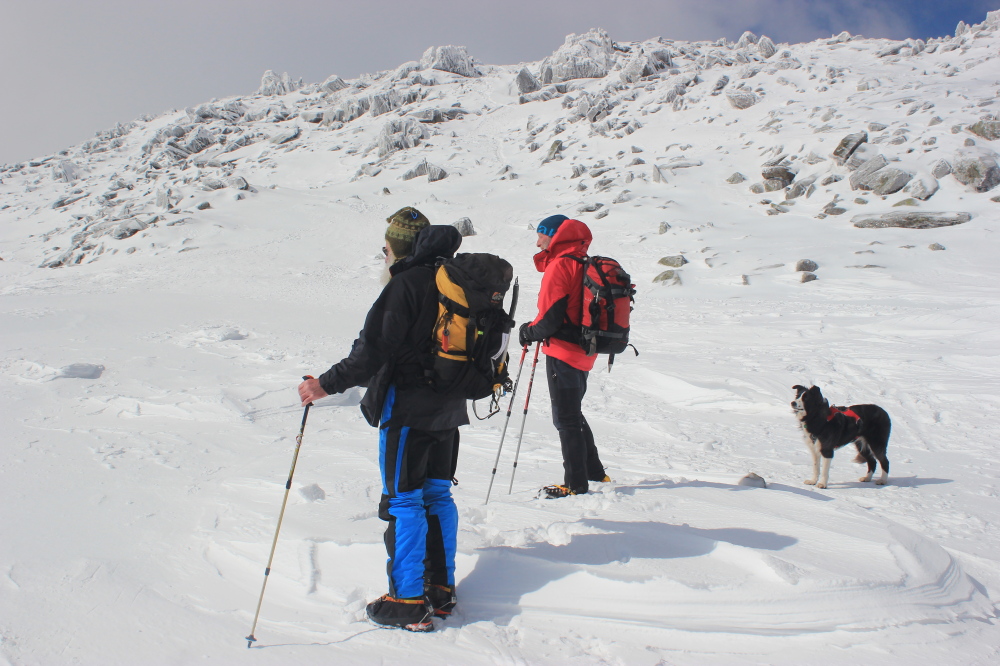
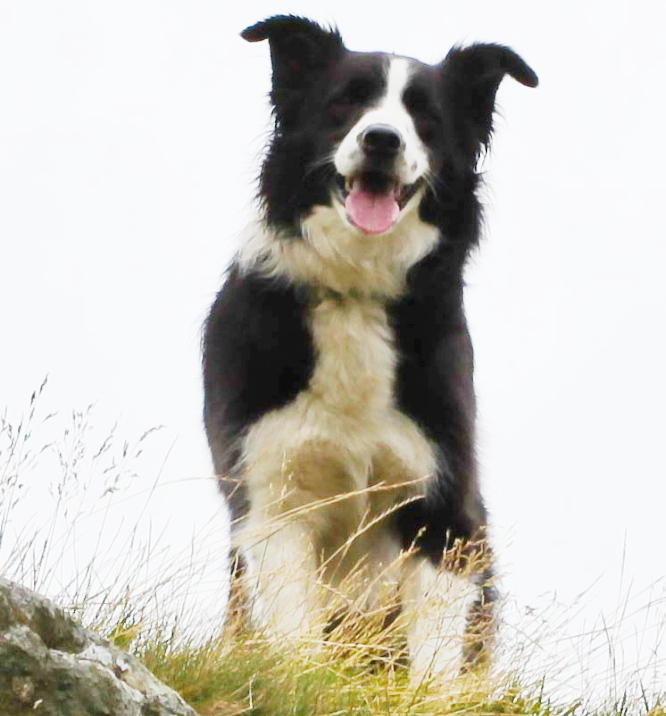
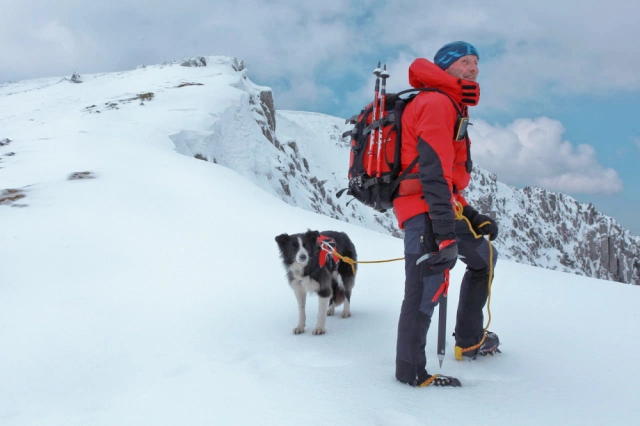
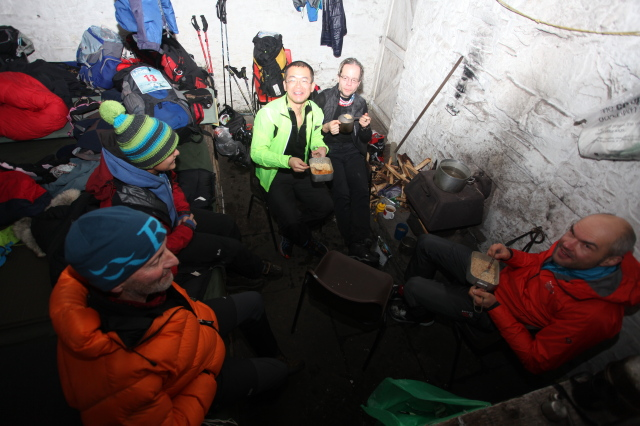
Every year, John Bamber and I set up the ‘Noodle Bar., offering noodles (with or without John’s chili!), a brew and occasionally a shoulder to cry on if needed. Our only companions over the years have been some excellent doctors and medics, some of who actually volunteered to come out here, plus my Border Collie ‘Mist’, sadly no longer with us.
This post first went out in 2013 – I’m reprising this one last time, mainly for newcomers to the Spine Race, who perhaps know little of the history of the race, but also for regular readers of this blog who may have missed it, and wonder why I disappear every January (except during Covid lockdowns).
So, settle back and read the story of the first two editions of the Spine Race, and the inauguration of the Highest Noodle Bar in the UK.
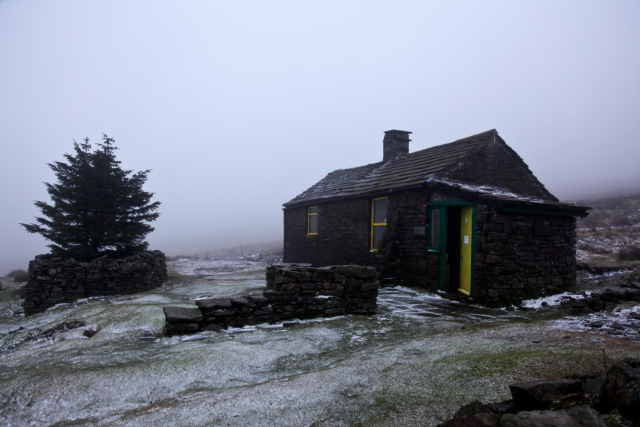
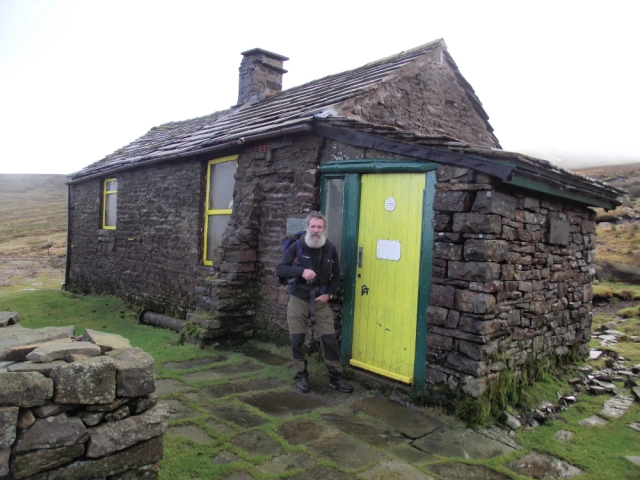
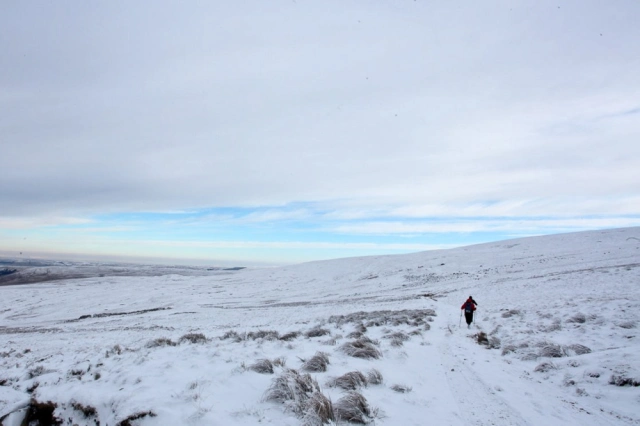
Two men and a dog ….. and the highest noodle bar in the UK (JB)Greg’s Hut in January, altitude 700 metres – outlook bleak!
“Do you fancy a couple of days up at Greg’s Hut in January?”
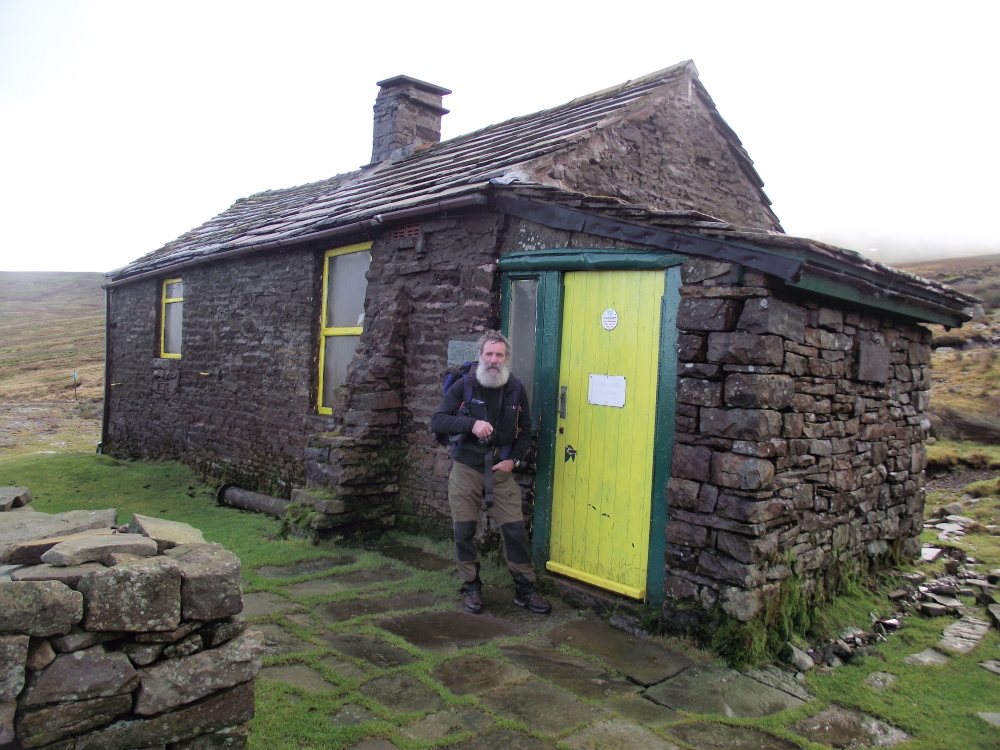
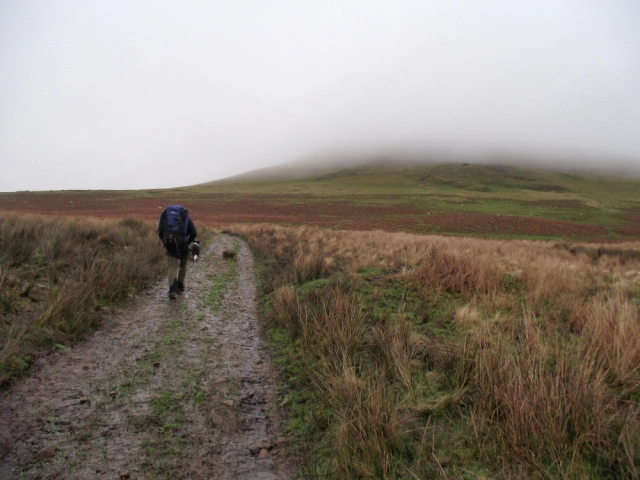
If anyone other than John Bamber had asked the question, I would probably have answered with a reply that included sex and travel! For those who don’t know it, Greg’s Hut is a bothy, high on the flanks of Cross Fell in the Pennines. At 700 metres altitude, it can be cold and cheerless in summer, so the prospect of staying there in a Pennine winter was not on my short list of ‘Fun Things To Do’. Why did I say, “Sounds like a good idea” ? … Ask the dog ….
Ask the dog ….Having fun in Snowdonia …. (JB)
…. with the man with the beard
Never just an ordinary day out! (JB)
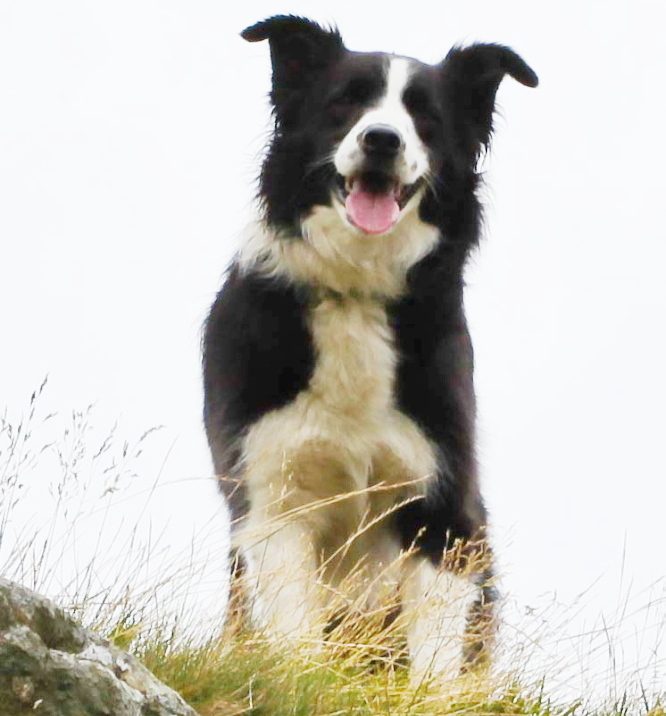
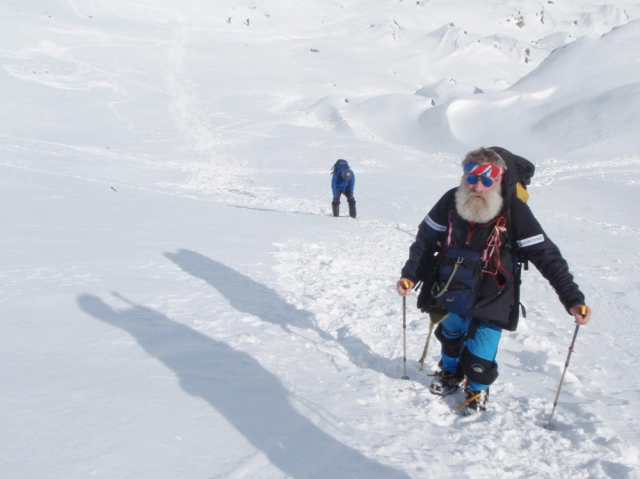
Mist – “I’m getting used to the boss and his daft schemes, but I know there’s something going on when his mate John (the bloke with the big beard) turns up. Don’t get me wrong, John is a lot of fun, and I’ve had some great hill days with him, but it’s never going to be just an ordinary day out. I suppose that’s why the boss said yes to the Greg’s Hut trip – those two are both as daft as each other! Mind you, when they said I could go as well, I was packed and ready before them!”
Setting out on the Greg’s Hut recce for the first Spine Race 2012
It was autumn 2011, and John had signed up as one of the Support Team for the first ‘Spine Race’ to be held in January 2012 – not having anything better to do, I said that I would join him. We decided that it might be a good idea to do a recce beforehand – I hadn’t been to the bothy in over twenty years, and John hadn’t seen it at all, so a check on luxuries such as a functioning roof seemed to be a good idea.
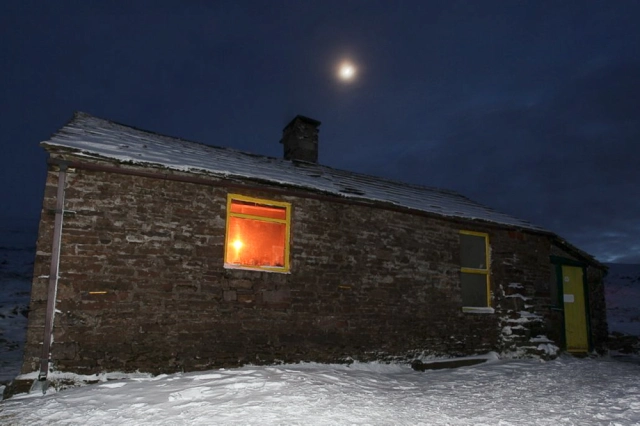
Greg’s Hut – roof intact!
Mist – “Haha … I still remember that walk! I always think that the boss carries too much when we are in the hills – a bag of dog biscuits is all you really need if you think about it – but John turned up with this stuff called ‘coal’ in his rucksack. It certainly looked heavy, and I was laughing all the way to the hut. Humans never cease to amaze me ….!”
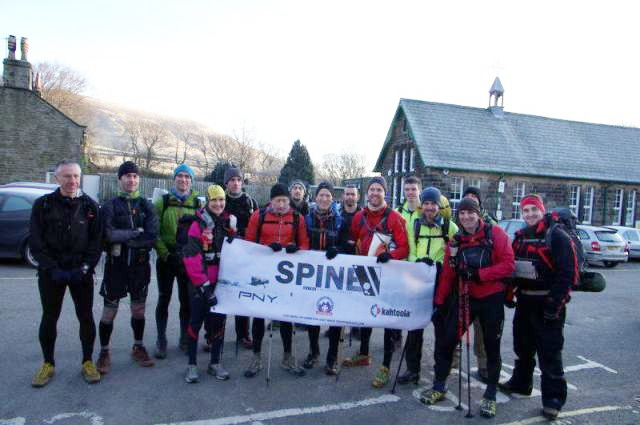
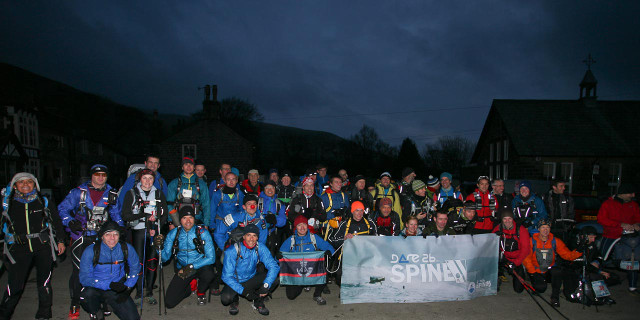
Spine Race start line 2012
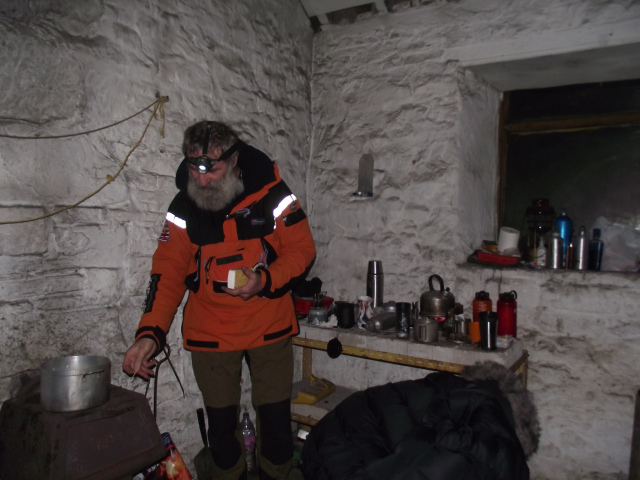
John sets up the highest Noodle Bar in the UK
Two happy customers – 2012 winners Gary Morrison and Steve Thompson
Yes, it’s true, John carried about 10 kilos of coal in on that trip. Just over a week later we were back again, with John setting up what was probably the highest ‘Coffee and Noodle’ bar in the UK – if it wasn’t the highest, it was certainly the most difficult to get to. We had four visitors out of sixteen original starters, with the Hall of Fame including joint 2012 winners Gary Morrison and Steve Thompson, followed later by Mark Caldwell and Andy Collister. Those guys had to work to get their noodles!
Spine Race start line 2013‘Mist’ search training in Snowdonia (DH)
CP 1.5 at Malham Tarn (JB)
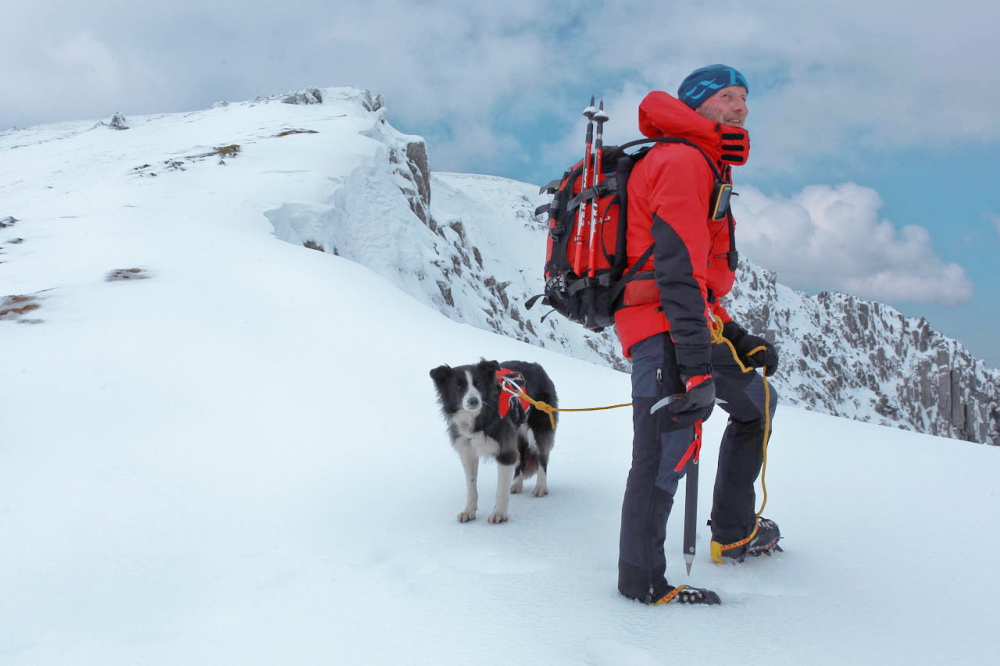
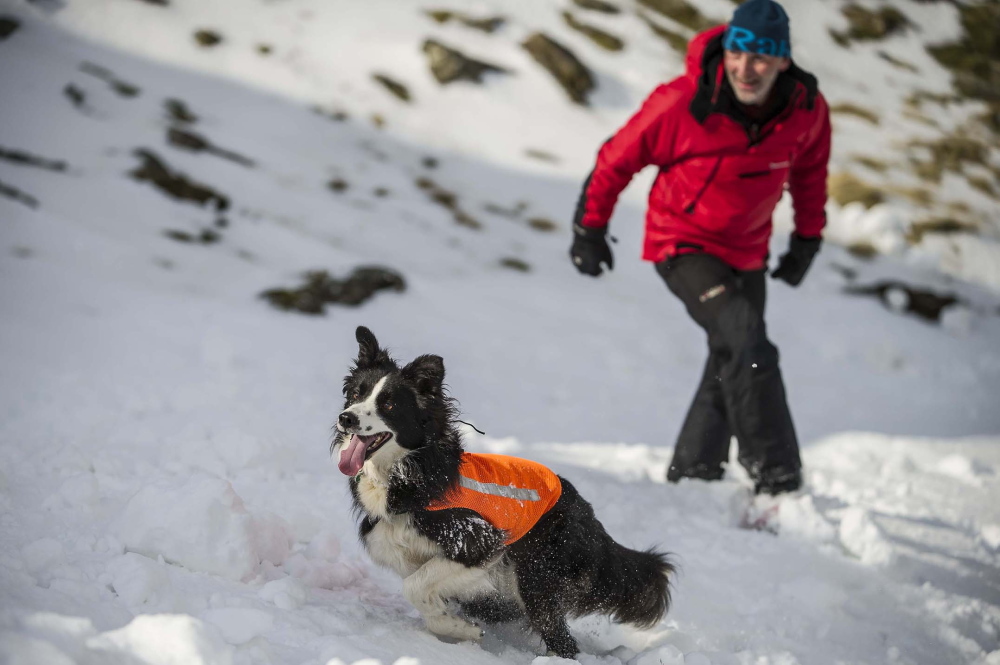
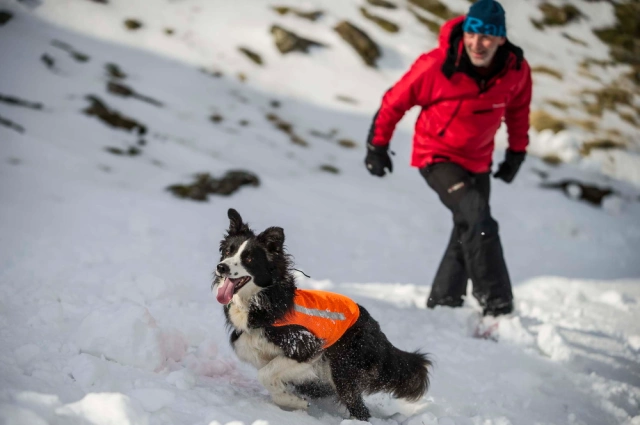
‘Mist’ and I were not at the start line for the 2013 event – we had a race of our own to run. Whilst 47 elite athletes were starting the race at Edale, ‘Mist’ was completing her obedience and stock safety tests to begin training as a search and rescue dog with SARDA (Search And Rescue Dog Association) Wales. The two of us made the grade and were accepted as a trainee search team, and on the Sunday evening we set off from North Wales to catch the race up at CP 1.5 at Malham Tarn.
Life in the big dog kennel (JB)
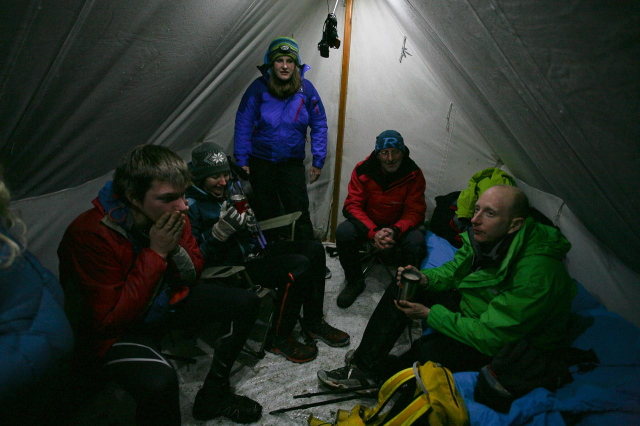
Mist – “Laugh!! I nearly wet meself! John (the one with the big beard, remember – pay attention at the back!) – John had brought this huge kennel along (I think he called it a tent, but I know what a kennel looks like – I AM a dog, after all). Anyway, it snowed all night, and I had a great time chasing snowballs around, but it didn’t look like a lot of fun in that kennel, what with loads of cold, wet humans in there. John was having fun, though”
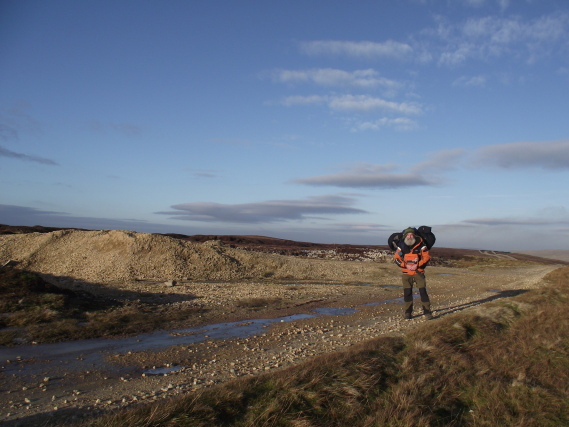
2012 – backpacking the gear to Greg’s Hut
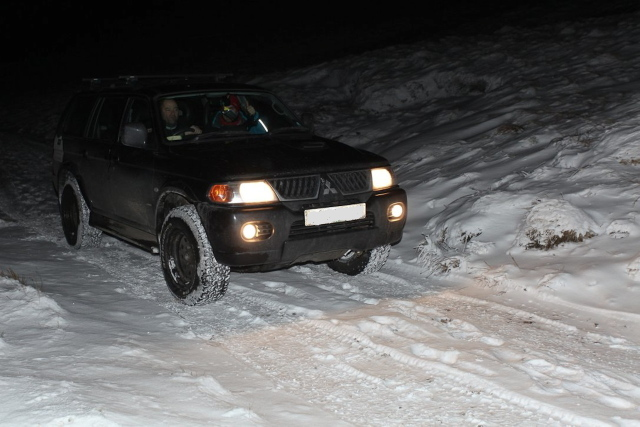
2013 – travelling in style (JB)
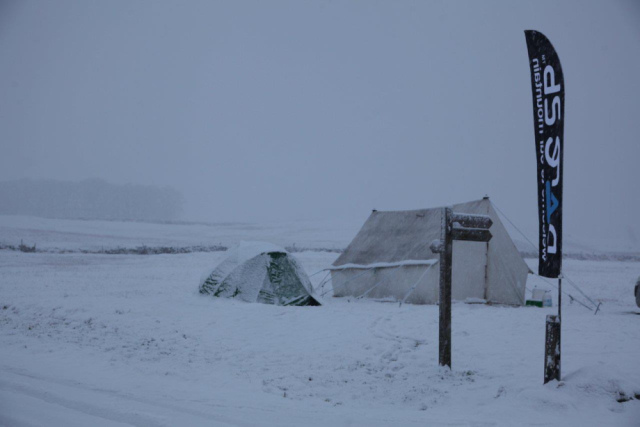
Yet again, John showed the world that an extremely large dump of snow was not going to interrupt his new career of ‘extreme noodle chef’. Having sent all the happy customers on their way, we then set our sights on our old friend, Greg’s Hut. The previous year we had to backpack all our gear in, assisted by a group of porters who didn’t hide quickly enough when we went looking for help – this time we had a ride up the hill track in Phil’s 4X4.
‘Johnnie’s Noodle Bar’ open and ready for business (JB)
Mist – “Yes, that was quite a trip – just as well we had the help, ‘cos I didn’t fancy carrying in two days worth of dog biscuits! John must have had a brainstorm, ‘cos the week before he carried up twice as much of that black stuff (coal, isn’t it?!) to the hut – didn’t we all fall about laughing when we arrived and found that it had all gone!!”
Racers leaving Greg’s Hut …. (JB)…. with a long, cold run ahead (JB)
It’s true – over the space of a week, someone had either used or pinched 20 kilos of coal from one of the most deserted places south of the Scottish border. If they burned it in the stove, they must have inaugurated the highest sauna in the UK – if it was pinched, I hope they suffered a hundred bad backs carrying it away! A re-supply carried us through, and ‘Johnnie’s Noodle Bar’ was open for business once again.
A busy night at ‘Johnnie’s Noodle Bar’ (JB)
All good things have to come to an end though, and in less than two days the surviving athletes had passed through ‘Greg’s’ – time to hit the road again. After a day at Bellingham we set off for the finish line at Kirk Yetholm. However, there was a cloud on the horizon – in fact there were lots of clouds, accompanied by a storm warning from the Met Office. Our little corner of the UK was about to get a visit from Mr Snow!
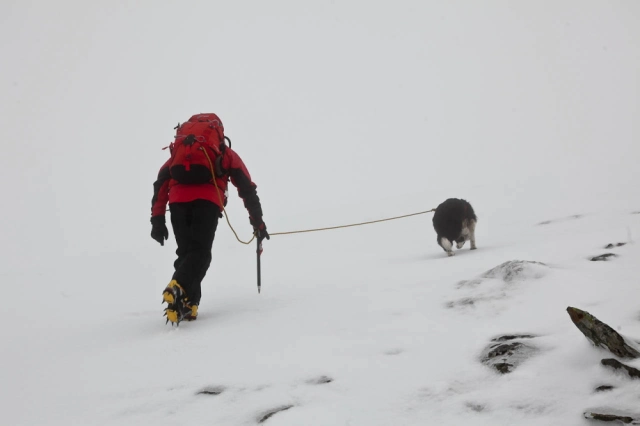
Mist – “Snow? I should say so! Some of the time you couldn’t see your paw in front of your face!”
Just before the blizzard arrived (JB)Heading for the finish (JB)
People who say that they have been in a blizzard in the UK are usually mistaken – a heavy snow fall with a bit of wind ‘doth not a blizzard make’. However, having been in a couple of blizzards over the years, I can confirm that THIS was a blizzard! What’s more, we still had two teams out on the final ridge of the Cheviots. These are ‘little’ hills, around 500-700 metres in altitude, but sometimes latitude means as much as altitude, with the latitude of the Cheviots being about the same as that of Moscow.
Last group to finish, heads held high (JB)
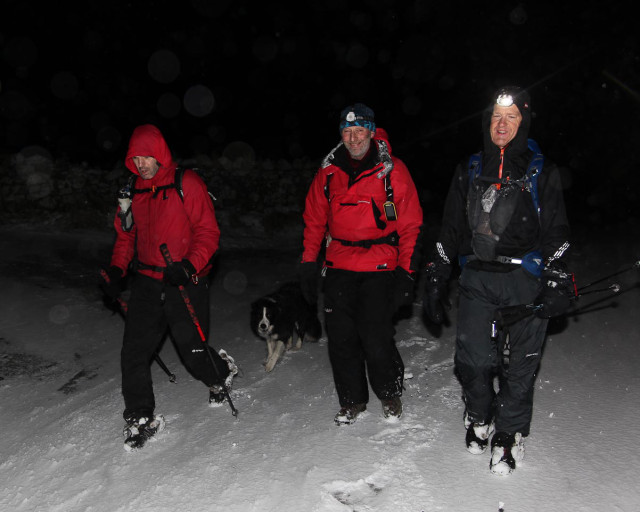
The next day the storm had passed. The two groups had done exactly the right thing, and had gone to ground in two different mountain refuges on the ridge (the term ‘refuge’ is used loosely – think more along the lines of garden sheds). During the night Stu and Joe from the support team had gone up on the ridge for a welfare check, with John and I as backup, and found themselves looking out for their own welfare instead! The ‘garden sheds’ were life savers though, and the next day the two groups mustered themselves and walked off the ridge with heads held high.
The loneliness of the Pennines in winter (JB)
There’s a narrow line between adventure and misadventure, and these athletes know all about that – their performances are frequently heroic, often inspirational. They make the week of the Spine Race an event to look forward to each year, and being a member of the Spine ‘Mountain & Medic’ Support Team is very special to me – that and my part time job as sous chef at the highest noodle bar in the UK.
Mist – “Couldn’t have put it better meself – any noodles left, John?”
(JB – assisted by Naomi Dodds and Olivia Cheetham)
The wild Preseli Hills – on the Golden Road, looking east
For the best viewing experience, left-click the images and maps to zoom in to a new window, then exit that window to go back – go on, it really does work!
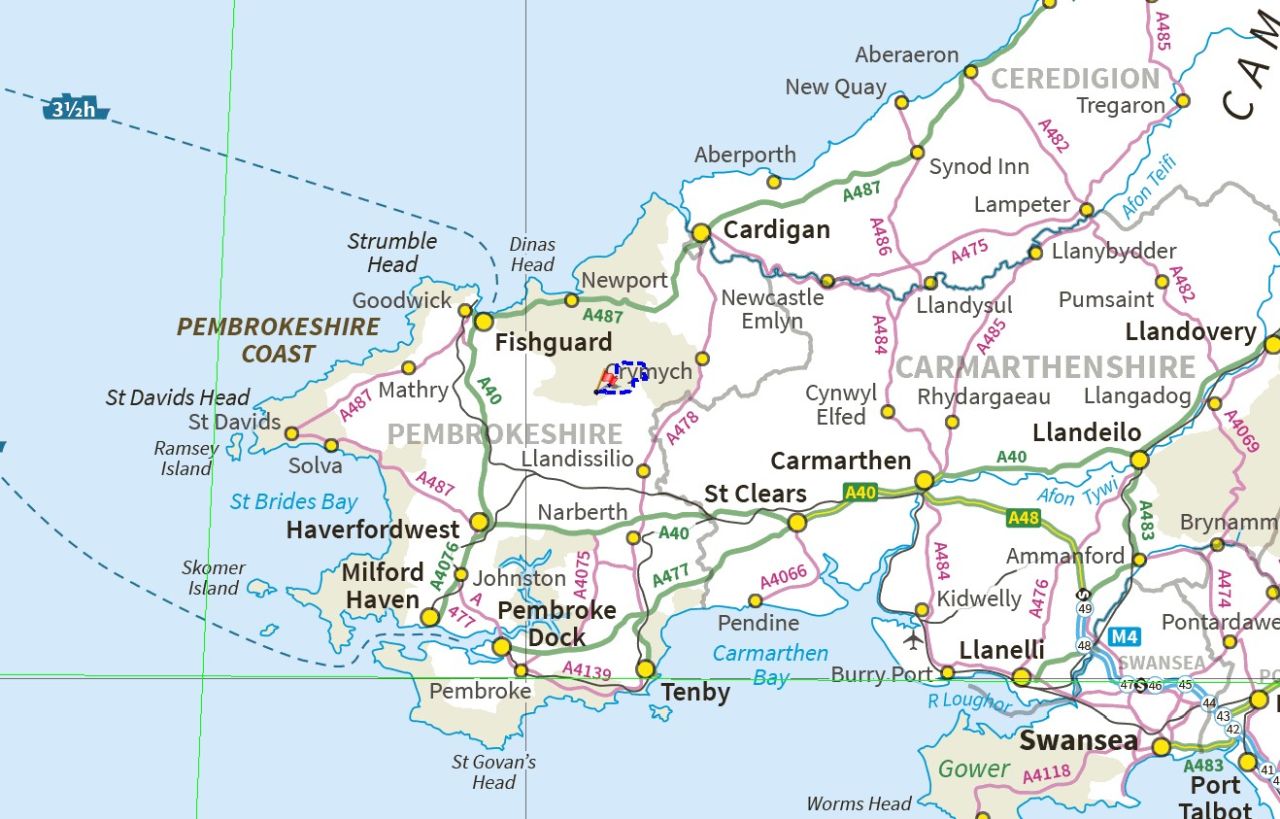
Southwest Wales, with the Preseli route in the centre
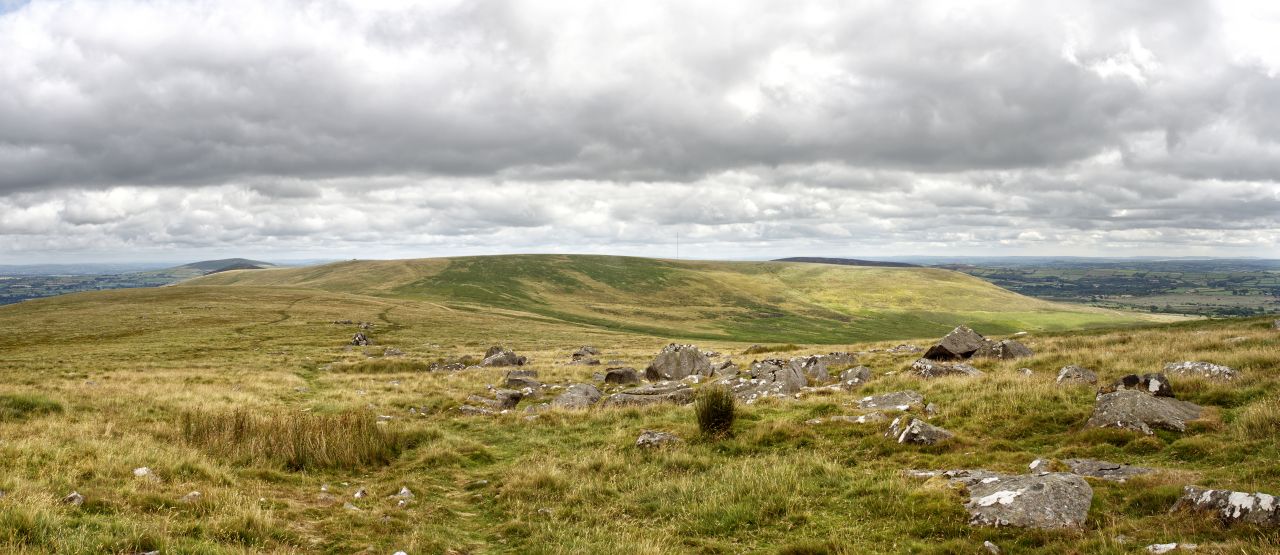
If you are reading this, wondering where on earth the Preseli Hills are, you will be in good company. The highest point in these little-known Pembrokeshire hills, is Foel Cwmcerwyn, a mere 536 metres (1759 ft) in altitude, and the upland areas are grassy, rolling moors with occasional rocky tors. For many, these tors are the major interest – 4000 years ago, some of these rocks were transported 140 miles (225km) to become part of Stonehenge, a major feat of logistics at any time in history!
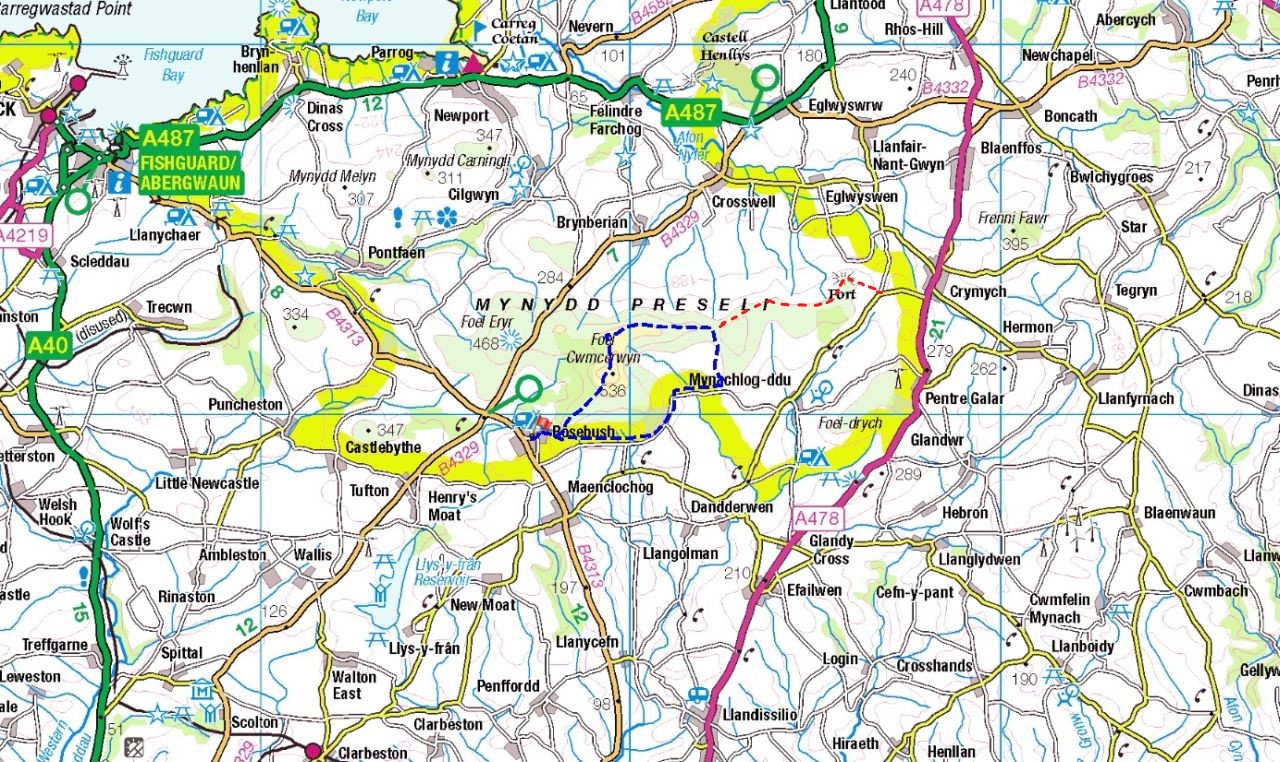
A closer view of Mynydd Preseli (The Preseli Mountains) – 2014 route in red, right of the blue route
This was a second visit to Preseli for Chris and I – in 2014 we had walked part of an ancient roadway known as the Golden Road (the 2014 route shown in red in the above map). It’s possible that the Golden Road may have been one of the original Ridgeways of Britain, used in prehistory to avoid the dense forests in the valleys, but it is also believed to have been used 5000 years ago by Neolithic travellers, trading gold mined in the Wicklow Mountains of Ireland with Wessex. Whatever, it’s old!
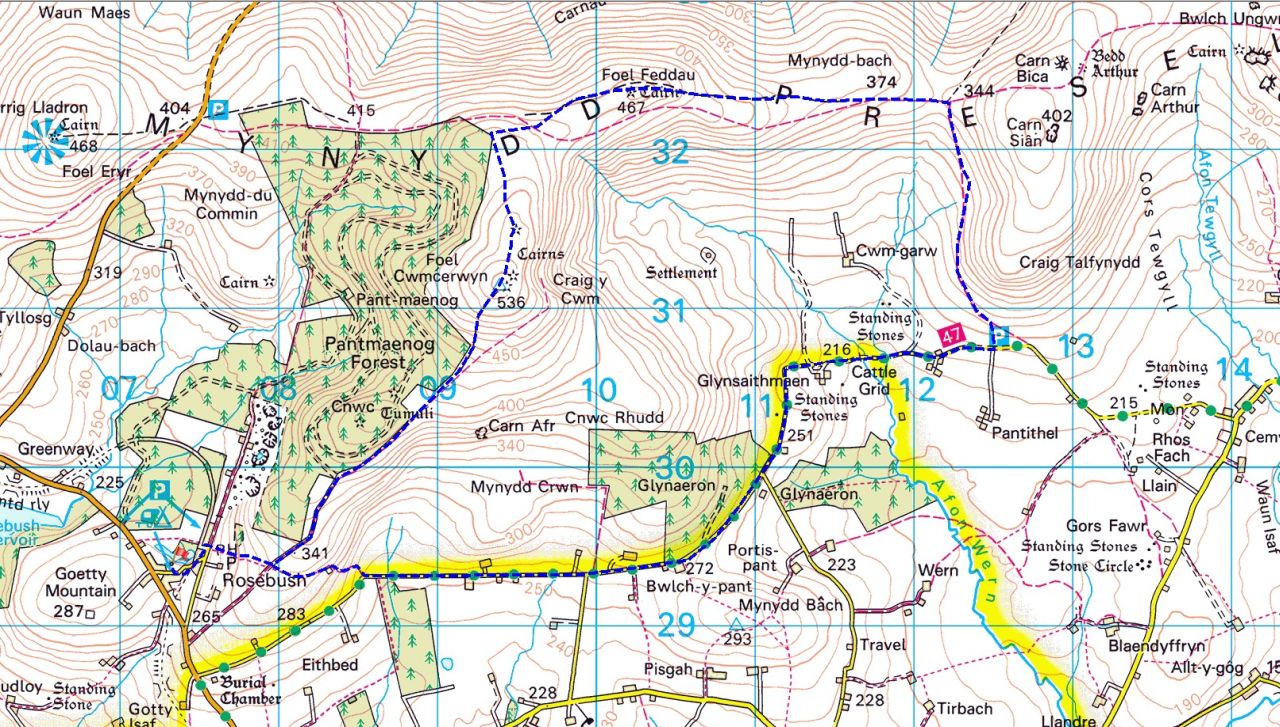
The route, clockwise from Rosebush in the bottom left
Our trip wasn’t going to involve any gold trading; it was a ‘filling in the gaps’ route to include part of the Golden Road that we had missed out in 2014. Our base was the village of Rosebush, a Welsh village with a well-known pub where customers in the bar are encouraged to order their drinks in the Welsh language. Ironically, the village name is English – Rosebush is assumed to be an anglicised version of the Welsh Rhos y Bwlch, which means the Pass of the Moor.
Setting out from RosebushHeading up towards Pantmaenog ForestThe view looking backFoel Cwmcerwyn ahead, the highest of the Preseli peaks at a lofty 536 metresThe summit trig point …. …. with the author getting in the action as a model!
Virtually all our height gain on the route was in the first 3kms from Rosebush to the summit of Foel Cwmcerwyn – lowland fields with sheep led us to a prominent track heading up to Pantmaenog Forest. Beyond there, the ground started to look more like moorland, rather than farmers’ fields, and a steady walk took us almost 300 metres higher than our start point in the village, to the summit trig point at 536 metres altitude.
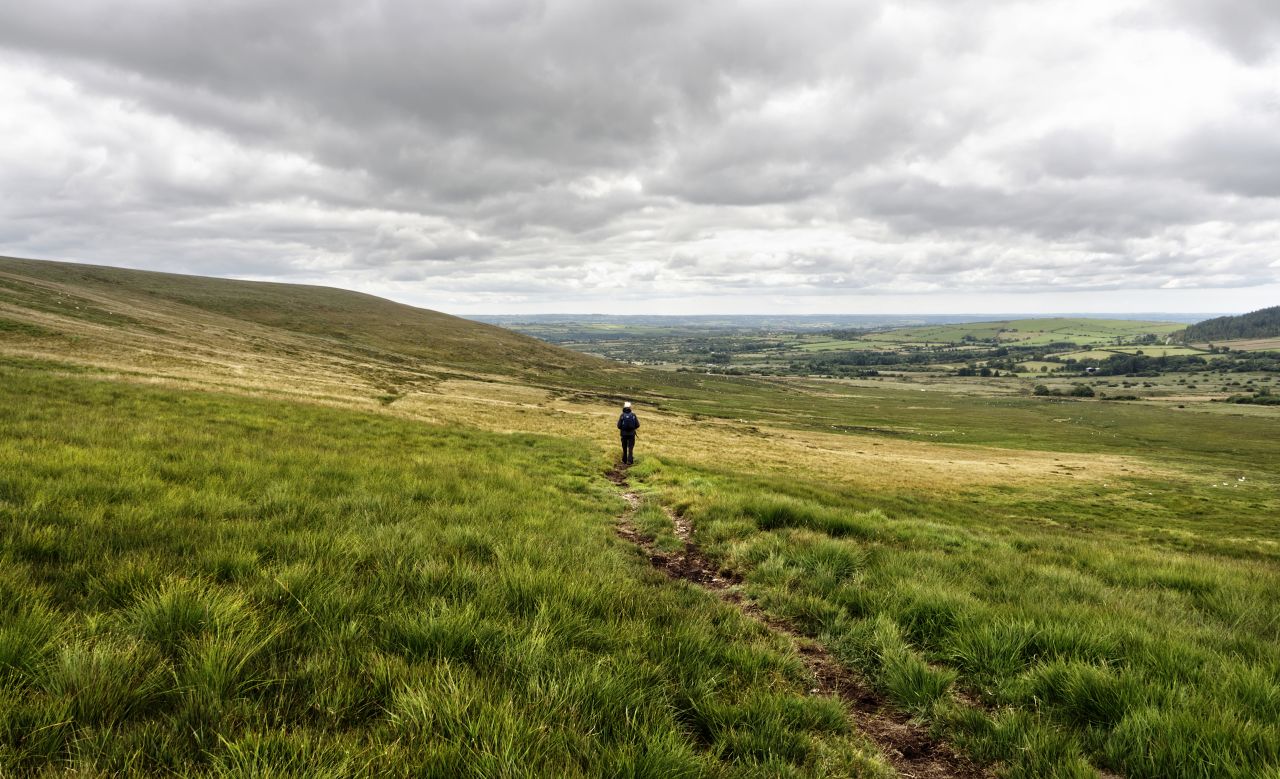
Heading from Foel Cwmcerwyn towards the main Preseli ridge and the Golden RoadThe next objective in the distance – Foel Feddau, 467 metres in altitudeThe final slopes of Foel Feddau ….…. before reaching the summit
Views from Foel Cwmcerwyn were extensive and included a good bit of our intended route. Foel Feddau was our next hill feature, and a faint path across the moor took us in the right direction. A small amount of descent was followed by some minor uphill before arriving at our second summit and its Bronze Age burial cairn, probably around 4000 years old.
Next objective -the ridge just left of centre ….…. and the faint path leading to itTypical Preseli scenery ….…. with rock tors scattered aboutLooking back to where we had come from ….…. with Foel Feddau in the centre and Foel Cwmcerwyn on the left
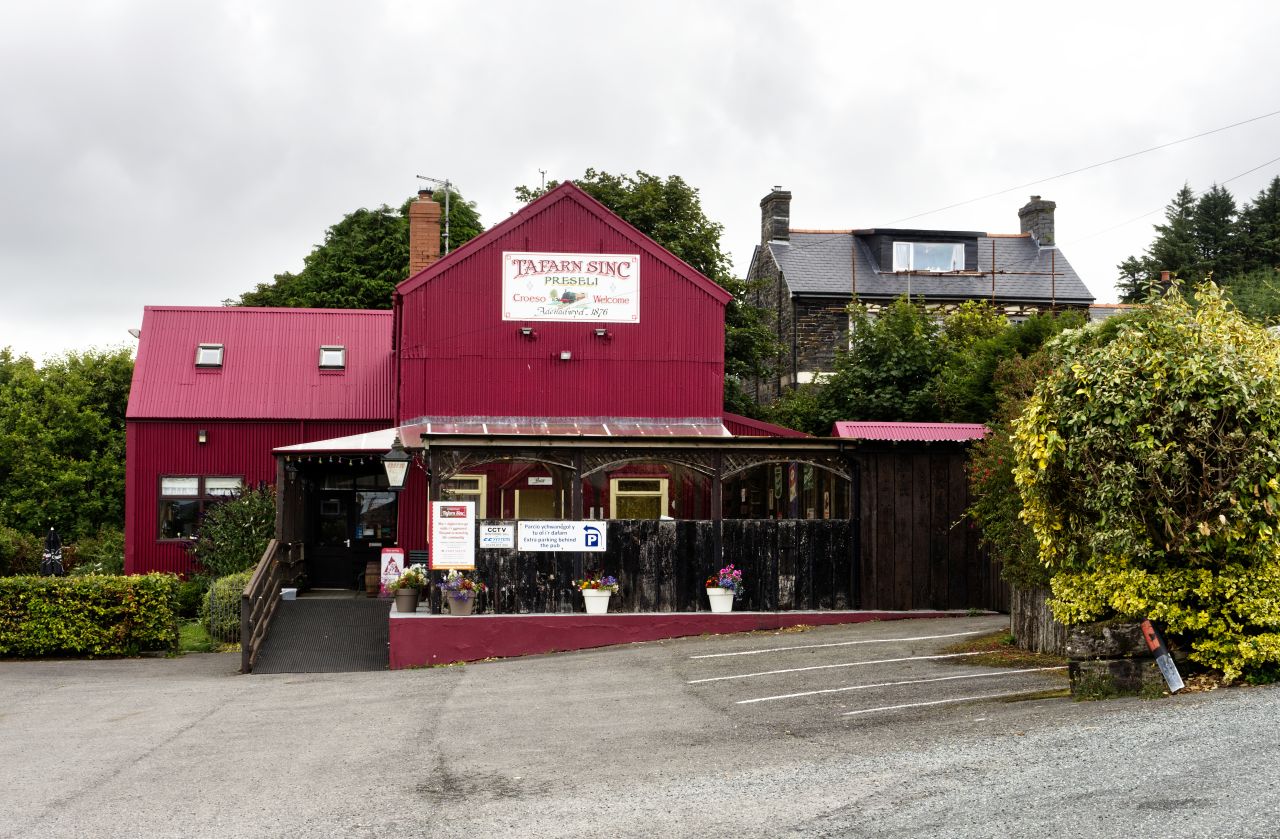
From there it was moorland wandering, pleasant enough in good weather but probably a bit more challenging in bad weather conditions. The route was picked to get some distance back in our legs, after being restricted to shorter walks for a while. 15kms wasn’t exactly earth-shattering, but ‘it gets you out of the house’ as the saying goes. 5kms of that was on a quiet road, but that gave ample opportunity to brush up on my Welsh for the Tafarn Sinc pub – “peint a hanner o seidr, os gwelwch yn dda” would do nicely (“a pint and a half of cider, please” if you are struggling with that!).
Time to head for home ….….before arriving here – Tafarn Sinc at Rosebush

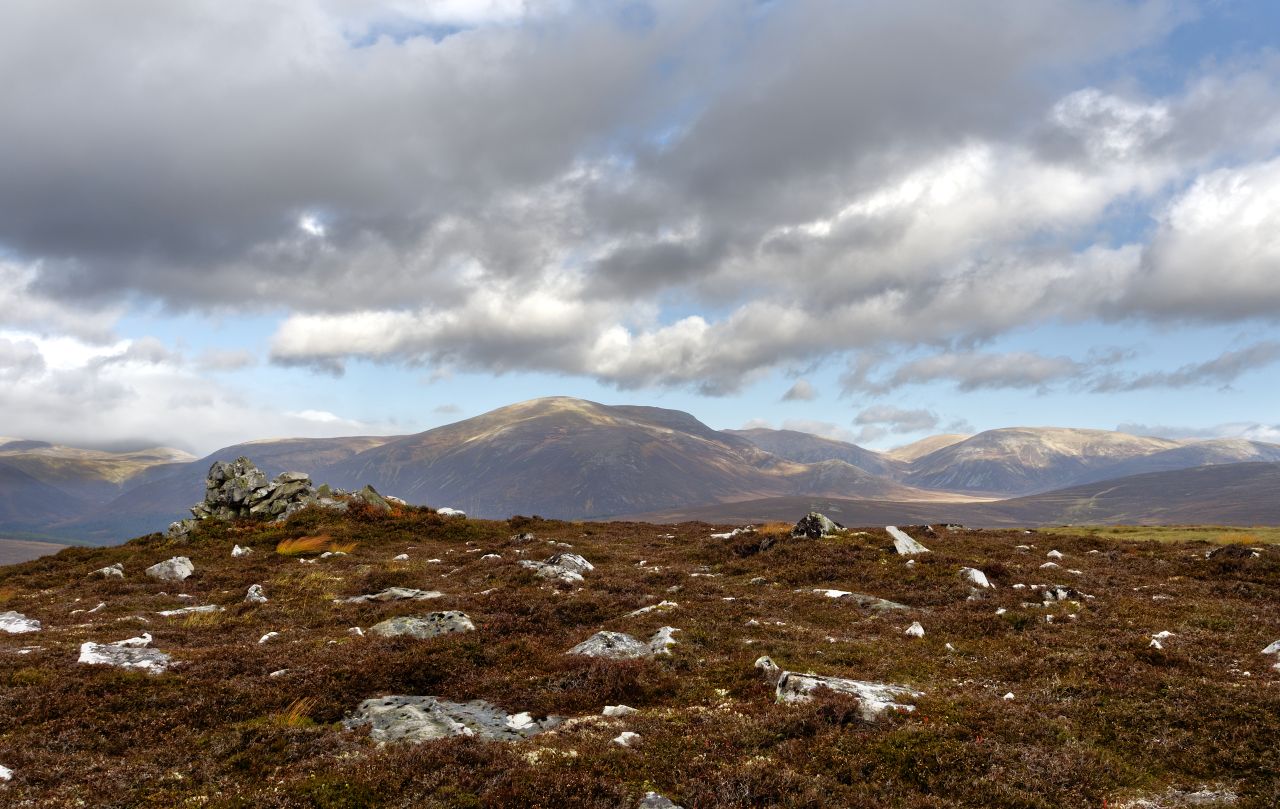
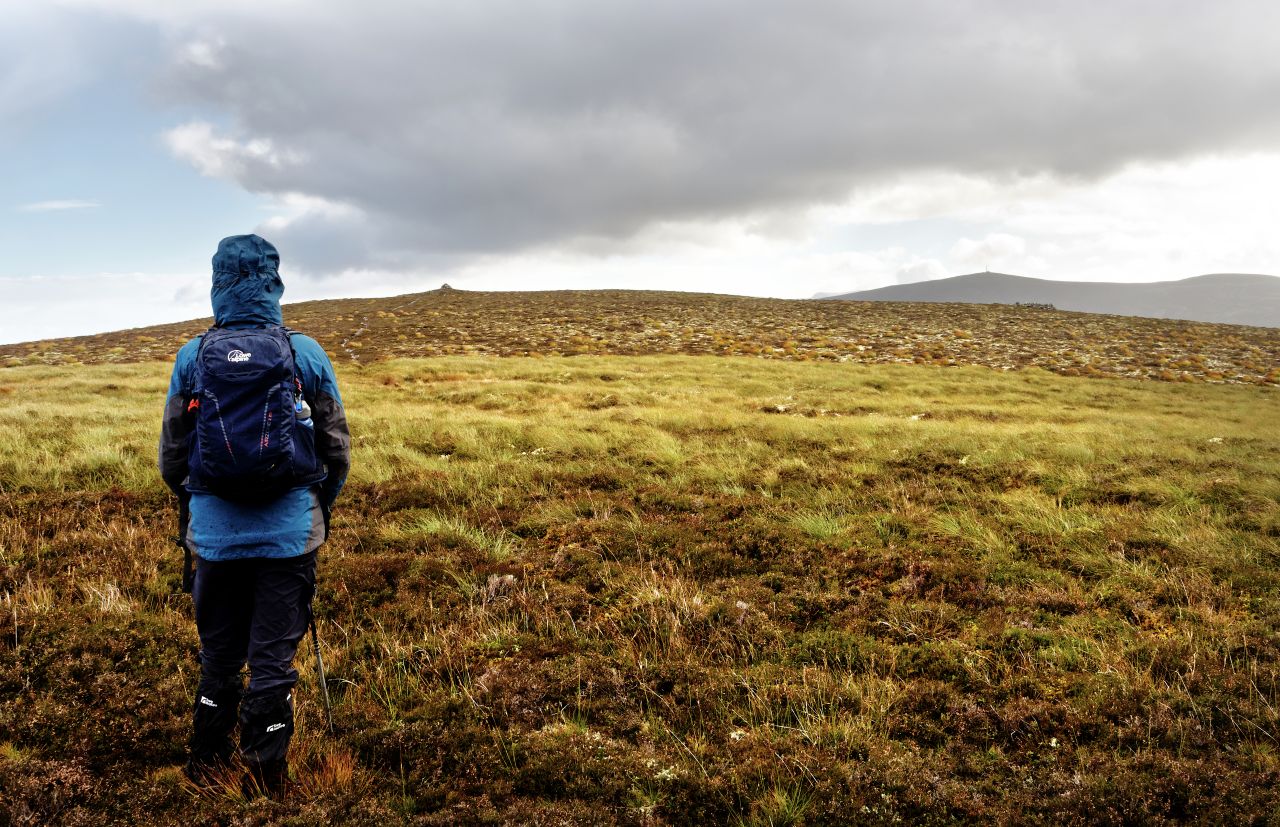
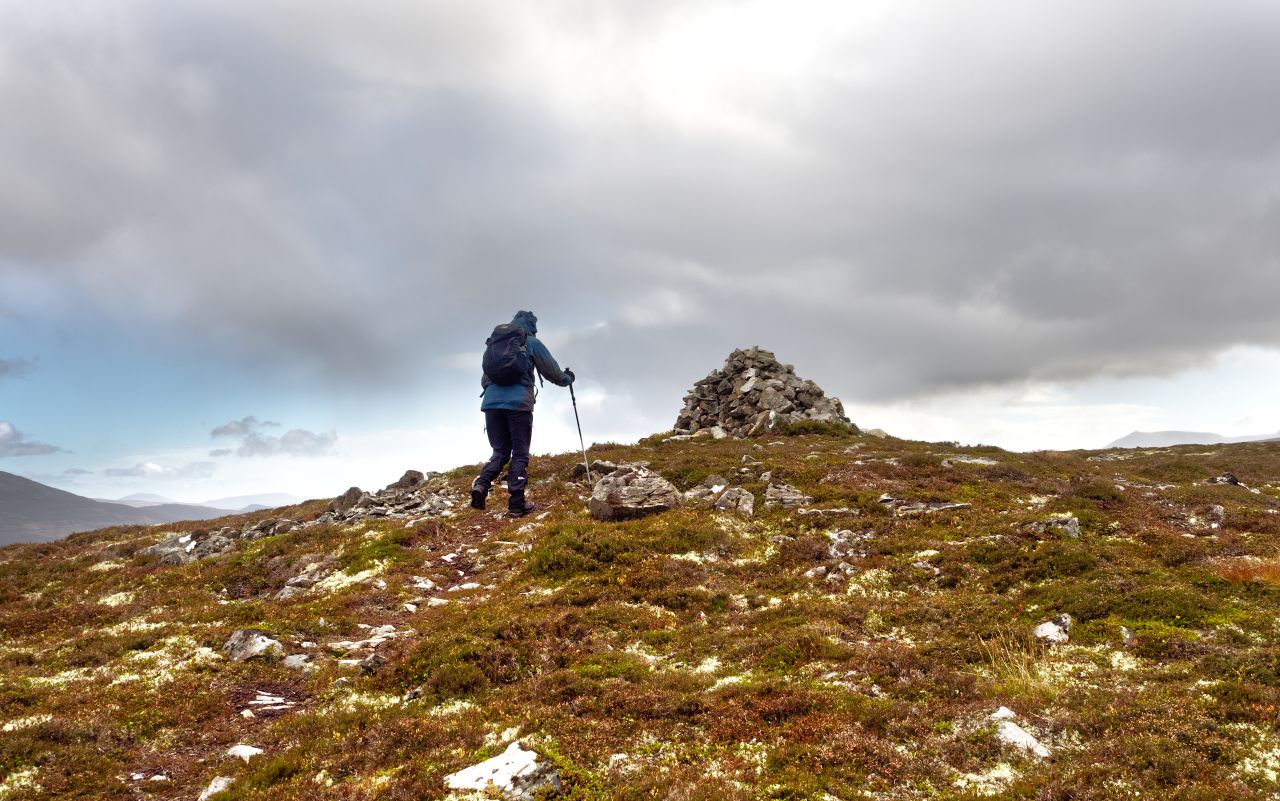
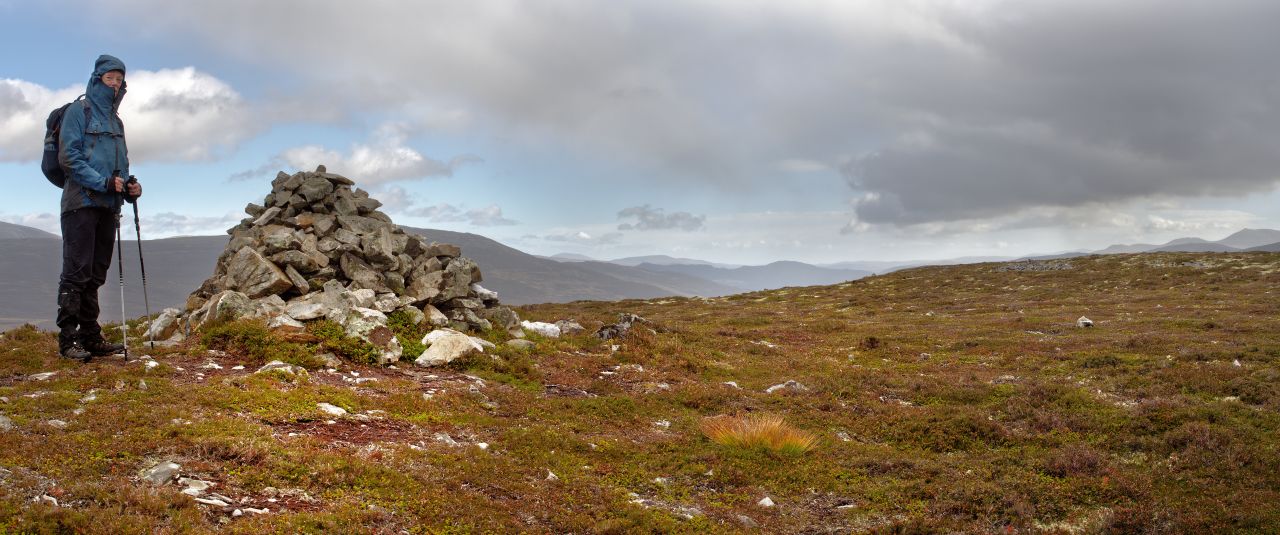



 Paul Shorrock - One Man's Mountains AKA One Pillock's Hillocks